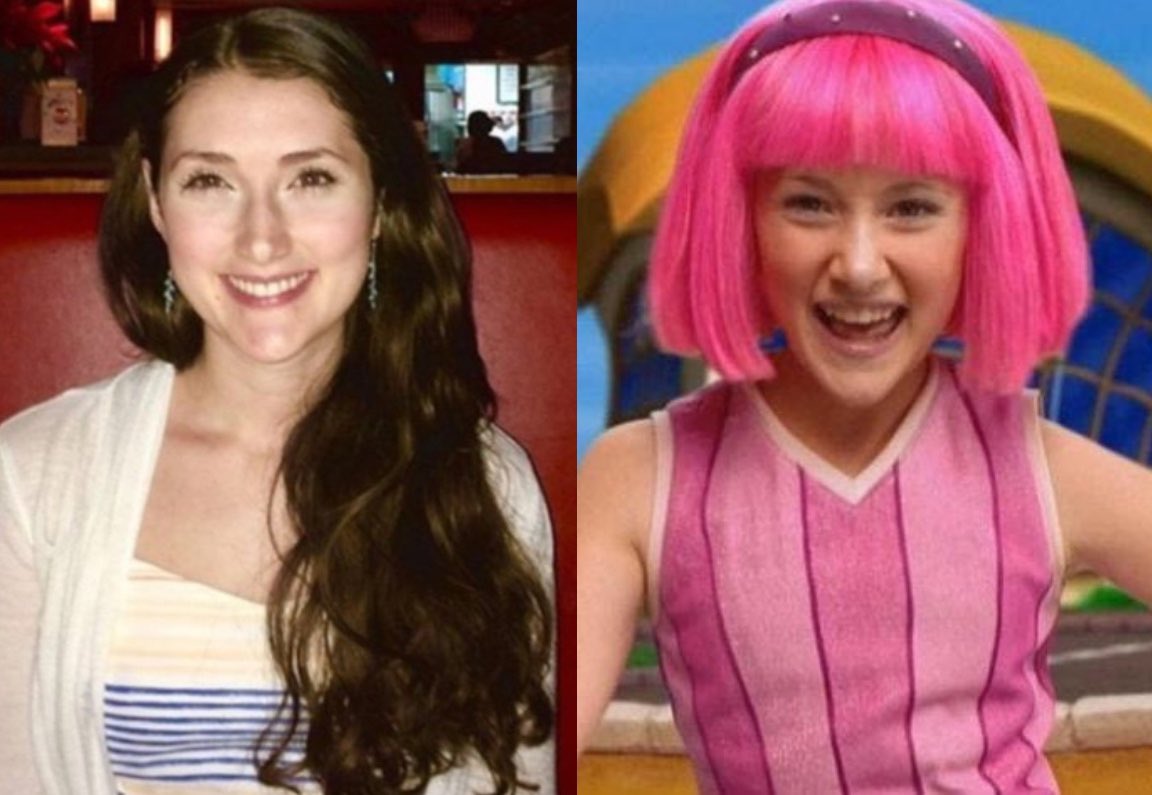
The LazyTown Actress Now Works in Therapy: Julianna Rose Mauriello’s Career Transition
Julianna Rose Mauriello, best known for playing Stephanie in the hit children’s television series LazyTown, transitioned away from acting to build a full-time career in healthcare. After completing her post-secondary education, she ear...
Julianna Rose Mauriello, best known for playing Stephanie in the hit children’s television series LazyTown, transitioned away from acting to build a full-time career in healthcare. After completing her post-secondary education, she earned a Master of Science in Occupational Therapy from Columbia University and currently practices as a licensed occupational therapist (OTR/L).
Contents
From Pink Wig to Clinical Practice: The Journey of Julianna Rose Mauriello
During the mid-2000s, LazyTown emerged as a unique international television phenomenon. Created by Icelandic gymnast Magnús Scheving, the show combined live-action performances, puppetry, and CGI animation to promote physical fitness, balanced nutrition, and healthy habits for children. Central to the narrative was Stephanie, an optimistic, pink-haired girl who used singing, dancing, and athletic play to inspire the residents of LazyTown to stay active.
Julianna Rose Mauriello was cast as Stephanie for the show's initial two seasons, which aired between 2004 and 2007. Born in 1991 in New Jersey, Mauriello was an accomplished child performer prior to landing the role, having appeared in Broadway productions such as Oklahoma!, Gypsy, and A Christmas Carol.
Her performance in LazyTown required intensive physical conditioning, high-energy dance routines, and extended filming schedules on set in Iceland. Her portrayal earned a Daytime Emmy Award nomination in 2006. However, as the production took a hiatus after Season 2 and Mauriello aged out of the character's physical demographic, she made a deliberate choice to shift her long-term focus from professional acting toward academic advancement and clinical practice.
The Academic Path: Studying Occupational Therapy at Columbia University
Transitioning from child stardom to healthcare requires significant academic rigor and dedicated clinical preparation. Unlike traditional performing arts trajectories, entering allied health professions requires fulfilling prerequisite natural science coursework, accumulating observational healthcare hours, and undergoing competitive graduate admissions processes.
Mauriello pursued her higher education in New York, enrolling in undergraduate studies before applying to graduate programs in rehabilitation medicine. She gained admission to Columbia University’s Vagelos College of Physicians and Surgeons, enrolling in its esteemed Occupational Therapy program.
- Undergraduate Studies
- Observational Clinical Hours
- Graduate Program at Columbia
- NBCOT Board Certification
- Licensed OTR/L Practice
At Columbia, she completed rigorous coursework encompassing neuroanatomy, human movement analysis, pediatric developmental psychology, and therapeutic modalities. After completing mandatory clinical rotations across varied healthcare settings, Mauriello graduated with a Master of Science in Occupational Therapy (MSOT). Following graduation, she passed the National Board for Certification in Occupational Therapy (NBCOT) exam, earning the formal credential of Occupational Therapist, Registered (OTR), alongside state-level professional licensure.
What Does an Occupational Therapist Do?
Occupational therapy (OT) is a healthcare discipline focused on helping individuals across the lifespan participate in the daily activities ("occupations") they want and need to do. When physical, developmental, emotional, or neurological conditions disrupt a person’s functional independence, occupational therapists design individualized interventions to restore capability or modify environments.
While physical therapy (PT) concentrates primarily on gross motor strength, joint range of motion, and gait restoration, occupational therapy focuses on fine motor coordination, sensory processing, cognitive integration, and daily living activities.
| OCCUPATIONAL THERAPY SCOPE |
|---|
| Fine Motor Skills & Hand Dexterity |
| Sensory Integration & Regulation |
| Daily Living Activities (Dressing, Hygiene, Feeding) |
| Cognitive & Executive Function Training |
| Adaptive Equipment & Environmental Modification |
Pediatric Occupational Therapy Focus Areas
Practicing in pediatric occupational therapy involves supporting children facing developmental challenges. Key intervention areas include:
- Sensory Processing Integration: Helping children who experience hypersensitivity or hyposensitivity to tactile, auditory, or visual input adapt to daily classroom and home environments.
- Fine Motor and Graphomotor Development: Improving hand-eye coordination, pencil grasp, scissor usage, and digital manipulation necessary for academic success.
- Self-Care Independence: Training children in dressing, buttoning, feeding, and personal hygiene management.
- Visual-Motor and Spatial Integration: Developing spatial awareness, tracking ability, and perceptual skills required for reading, writing, and movement.
- Social and Emotional Regulation: Utilizing structured play routines to teach emotional control, turn-taking, and peer interaction.
For former performers, background training in dance, rhythm, and body awareness provides a strong intuitive framework for analyzing human movement, designing sensory games, and maintaining high engagement during pediatric therapy sessions.
Comparing LazyTown Lead Cast Members’ Career Trajectories
The main performers who built LazyTown followed remarkably distinct career paths following their time on the show. While some remained in media and live production, others shifted completely into healthcare, public advocacy, or digital content creation.
| Cast Member | Role in LazyTown | Active Production Years | Career Transition & Subsequent Focus |
|---|---|---|---|
| Julianna Rose Mauriello | Stephanie (Seasons 1–2) | 2004–2007 | Graduated from Columbia University; practicing licensed Occupational Therapist (OTR/L). |
| Chloe Lang | Stephanie (Seasons 3–4) | 2013–2014 | Continued performing arts, dance instruction, digital content creation, and film production. |
| Magnús Scheving | Sportacus (Creator/Lead) | 2004–2014 | International health public speaker, entrepreneur, athletic advocate, and restaurant creator. |
| Stefán Karl Stefánsson | Robbie Rotten | 2004–2014 | Active in theatrical production and anti-bullying advocacy; passed away in 2018 from bile duct cancer. |
Why Former Child Stars Choose Healthcare Careers
Julianna Rose Mauriello’s transition from television to allied health reflects a broader trend among former child performers seeking careers outside the entertainment industry. A transition to clinical medicine or rehabilitation therapy offers several distinct structural benefits:
- Direct and Measurable Impact: Clinical healthcare provides direct, tangible outcomes. Assisting a pediatric patient in mastering motor planning or self-care provides immediate, functional utility.
- Privacy and Professional Boundaries: Unlike public performance careers, clinical work operates under strict privacy protections (such as HIPAA regulations in the U.S.), establishing clear boundaries between a practitioner's professional duties and public persona.
- Career Longevity and Stability: Healthcare careers offer clear credentialing pathways, continuous demand, and structured career advancement independent of age, physical appearance, or casting trends.
- Application of Expressive Skills: Performing skills—including public speaking, body language awareness, active listening, and creative engagement—directly enhance a clinician's bedside manner and therapeutic rapport with pediatric patients.
How Professional Credentials in Occupational Therapy Are Verified
In the United States, practicing as an occupational therapist requires adherence to strict educational, examination, and state-licensing standards. Patients, employers, and healthcare consumers can independently verify an OT professional’s background using established public databases:
1. The National Board Certification Registry
The National Board for Certification in Occupational Therapy (NBCOT) maintains a official public registry of certified practitioners. Professionals who maintain their certification hold the designation "OTR" (Occupational Therapist, Registered).
2. State Licensing Boards
Every U.S. state operates a public licensing portal where healthcare consumers can check a clinician's active license status, issuance date, expiration date, and disciplinary history. For example, in New York State, public licenses are verified through the New York State Education Department Office of the Professions.
3. National Provider Identifier (NPI) Registry
Healthcare providers who submit insurance claims possess a unique 10-digit NPI number assigned by the Centers for Medicare & Medicaid Services (CMS). This registry confirms operational practice areas, clinical taxonomy codes, and facility affiliations via the official NPPES NPI Registry.
Frequently Asked Questions
Which LazyTown actress became an occupational therapist?
Julianna Rose Mauriello, who played Stephanie in Seasons 1 and 2 of LazyTown, retired from professional child acting and qualified as a licensed occupational therapist.
What degree did Julianna Rose Mauriello earn for her therapy career?
She earned a Master of Science in Occupational Therapy (MSOT) from Columbia University College of Physicians and Surgeons in New York.
Did Chloe Lang, the second Stephanie, also enter healthcare?
No. Chloe Lang, who portrayed Stephanie in Seasons 3 and 4 of LazyTown, has maintained a career focused on dance, entertainment, acting, and social media content creation.
What is the primary difference between physical therapy and occupational therapy?
Physical therapy focuses primarily on improving gross motor movement, joint mobility, muscle strength, and gait. Occupational therapy focuses on improving fine motor coordination, cognitive processing, sensory integration, and the functional skills necessary for daily living activities.
Can former child actors maintain active therapy licenses while keeping a private life?
Yes. Professional licensing boards enforce regulatory standards focused entirely on clinical competence, ethical behavior, and continuing education. Healthcare privacy laws (such as HIPAA) safeguard the clinical setting, allowing former public figures to practice privately without public intrusion.
Professional Next Actions and Resources
For readers interested in learning more about career paths in allied health or verifying professional credentials:
- Explore OT Programs: Individuals considering a career transition into clinical healthcare can review accredited graduate programs through the American Occupational Therapy Association (AOTA).
- Verify Healthcare Credentials: Utilize state education departments or the national NBCOT Verification Portal to confirm the active status of licensed rehabilitation therapists.
- Understand Pediatric Development: Parents seeking pediatric occupational therapy services should consult their primary pediatrician for referrals to certified OTR/L professionals specialized in sensory integration and motor skill development.
Image Gallery