Who Angela Bassett Lost the Oscar to in 1994: The Story of a Historic Race
At the 66th Academy Awards in 1994, Angela Bassett lost the Oscar for Best Actress in a Leading Role to Holly Hunter, who won for her performance as Ada McGrath in The Piano. While Bassett’s portrayal of Tina Turner was critically accl...
At the 66th Academy Awards in 1994, Angela Bassett lost the Oscar for Best Actress in a Leading Role to Holly Hunter, who won for her performance as Ada McGrath in The Piano. While Bassett’s portrayal of Tina Turner was critically acclaimed, Hunter’s silent, emotive performance dominated the awards season.
Contents
The 1994 Oscar race remains one of the most discussed in cinematic history, not only for the caliber of the performances but also for the long-term impact it had on the careers of the nominees. Angela Bassett’s transformation into rock legend Tina Turner in What’s Love Got to Do with It is frequently cited as one of the greatest "snubs" in Academy history. However, to understand why the vote went the way it did, one must examine the specific cultural and critical landscape of 1993 and 1994.
The Cultural Landscape of the 66th Academy Awards
The 66th Academy Awards, held on March 21, 1994, at the Dorothy Chandler Pavilion in Los Angeles, celebrated a year of monumental filmmaking. This was the year of Schindler’s List, Jurassic Park, and Philadelphia. The ceremony was hosted by Whoopi Goldberg, who became the first African American woman to host the Oscars solo.
The Best Actress category that year was exceptionally competitive. It featured veteran performers and rising stars, all of whom delivered career-defining work. The nominees were:
- Angela Bassett — What’s Love Got to Do with It
- Holly Hunter — The Piano
- Stockard Channing — Six Degrees of Separation
- Emma Thompson — The Remains of the Day
- Debra Winger — Shadowlands
While all five women delivered powerhouse performances, the race eventually narrowed down to a head-to-head battle between Angela Bassett and Holly Hunter.
Holly Hunter’s Performance in The Piano
Holly Hunter’s win for The Piano was the culmination of a nearly clean sweep of the 1993–1994 awards season. In the film, directed by Jane Campion, Hunter played Ada McGrath, a mute Scotswoman sent to colonial New Zealand for an arranged marriage.
The Difficulty Level of the Role
Hunter’s performance was considered a technical and emotional marvel for several reasons:
- Muteness: Because her character did not speak, Hunter had to convey a complex range of emotions—willfulness, passion, grief, and sensuality—entirely through her eyes, facial expressions, and British Sign Language.
- Musical Skill: Hunter, a trained pianist, actually performed the piano pieces seen in the film. This authenticity added a layer of realism that resonated deeply with Academy voters, who traditionally favor roles that require the acquisition of difficult physical skills.
- Critical Momentum: Before the Oscars, Hunter had already secured the Best Actress prize at the Cannes Film Festival, the BAFTA Awards, and the Golden Globes (Best Actress – Motion Picture Drama). This momentum often creates an air of inevitability around a win.
Angela Bassett’s Transformation as Tina Turner
Angela Bassett’s portrayal of Tina Turner in What’s Love Got to Do with It is widely regarded as one of the most physically and emotionally demanding biographical performances ever captured on film. Bassett did more than just imitate Turner; she channeled her essence.
Physical Rigor and Preparation
Bassett’s preparation for the role was legendary. She underwent a grueling fitness regimen to replicate Turner’s famously athletic physique. Beyond the muscle tone, Bassett had to master Turner’s high-octane stage presence. While Turner provided the singing vocals for the film’s soundtrack, Bassett had to learn the complex choreography and lip-sync with such precision that the artifice vanished.
The emotional core of the film—the depiction of the domestic abuse Bassett’s character suffered at the hands of Ike Turner (played by Laurence Fishburne)—required a vulnerability that balanced the strength shown in the concert scenes. Bassett won the Golden Globe for Best Actress – Motion Picture Musical or Comedy, making her the first Black woman to win in that specific category. This victory signaled that she was the primary challenger to Hunter’s frontrunner status.
Comparison of the 1994 Best Actress Nominees
To provide a clearer picture of the competition Bassett faced, the following table breaks down the 1994 nominees, their roles, and their critical standing at the time.
| Nominee | Film | Role | Key Pre-Oscar Wins |
|---|---|---|---|
| Holly Hunter | The Piano | Ada McGrath | Golden Globe (Drama), BAFTA, Cannes, SAG |
| Angela Bassett | What's Love Got to Do with It | Tina Turner | Golden Globe (Musical/Comedy) |
| Emma Thompson | The Remains of the Day | Miss Kenton | NBR (National Board of Review) |
| Stockard Channing | Six Degrees of Separation | Ouisa Kittredge | None (Major nominations) |
| Debra Winger | Shadowlands | Joy Gresham | None (Major nominations) |
Why Did Holly Hunter Win Over Angela Bassett?
In the decades since 1994, film historians and fans have debated why Bassett did not take home the statue. Several factors likely influenced the Academy’s final decision:
The "Auteur" Factor
The Piano was an "art-house" darling. It was a winner of the Palme d'Or at Cannes and was seen as a high-brow, sophisticated piece of cinema. Academy voters in the early 90s often leaned toward period dramas and international co-productions when choosing winners in the major acting categories.
The Sweep Effect
When a performance gains "frontrunner" status early in the season—as Hunter’s did at Cannes—it becomes very difficult to disrupt that narrative. The Academy often reflects the consensus of the larger industry guilds and critics' circles. Hunter had won nearly every major precursor award, creating a sense that it was "her year."
Biographical Fatigue
While the Academy loves biopics, there is occasionally a bias against performances that involve lip-syncing, even when the acting is superlative. Some voters may have unfairly credited the "power" of the performance to Tina Turner’s voice rather than Bassett’s acting, a common hurdle for actors in musical biographies.
The Long-Term Impact of the 1994 Loss
Angela Bassett’s loss in 1994 became a touchstone for discussions regarding the Academy’s historical struggle to recognize Black actresses in lead roles. For nearly 30 years, Bassett remained one of the most prominent examples of an actor whose career was defined by a performance that "should have won."
The 2023 Race and the Honorary Oscar
The conversation around Bassett’s 1994 loss resurfaced in 2023 when she was nominated for Best Supporting Actress for her role as Queen Ramonda in Black Panther: Wakanda Forever. Although she was a favorite to win, she ultimately lost to Jamie Lee Curtis.
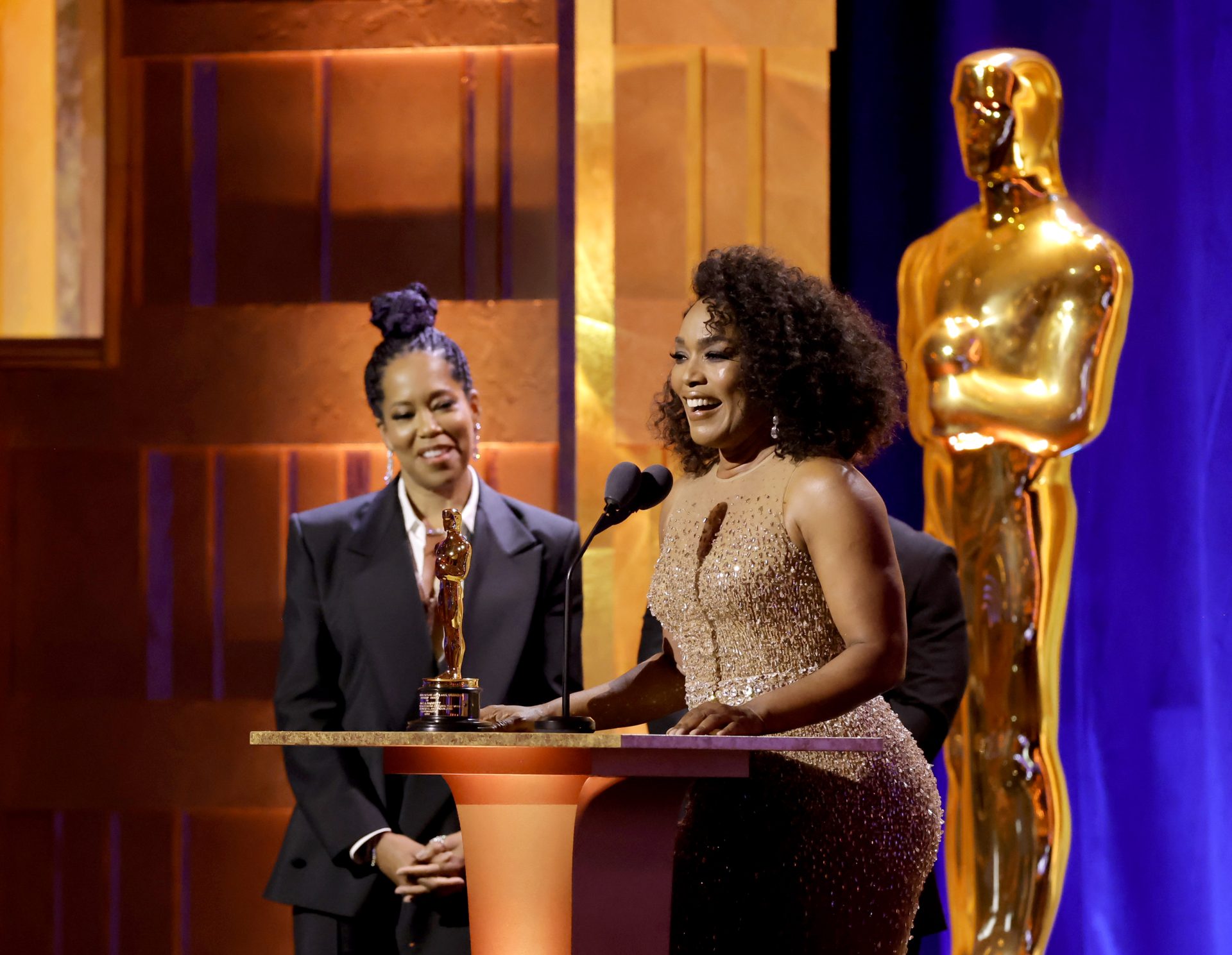
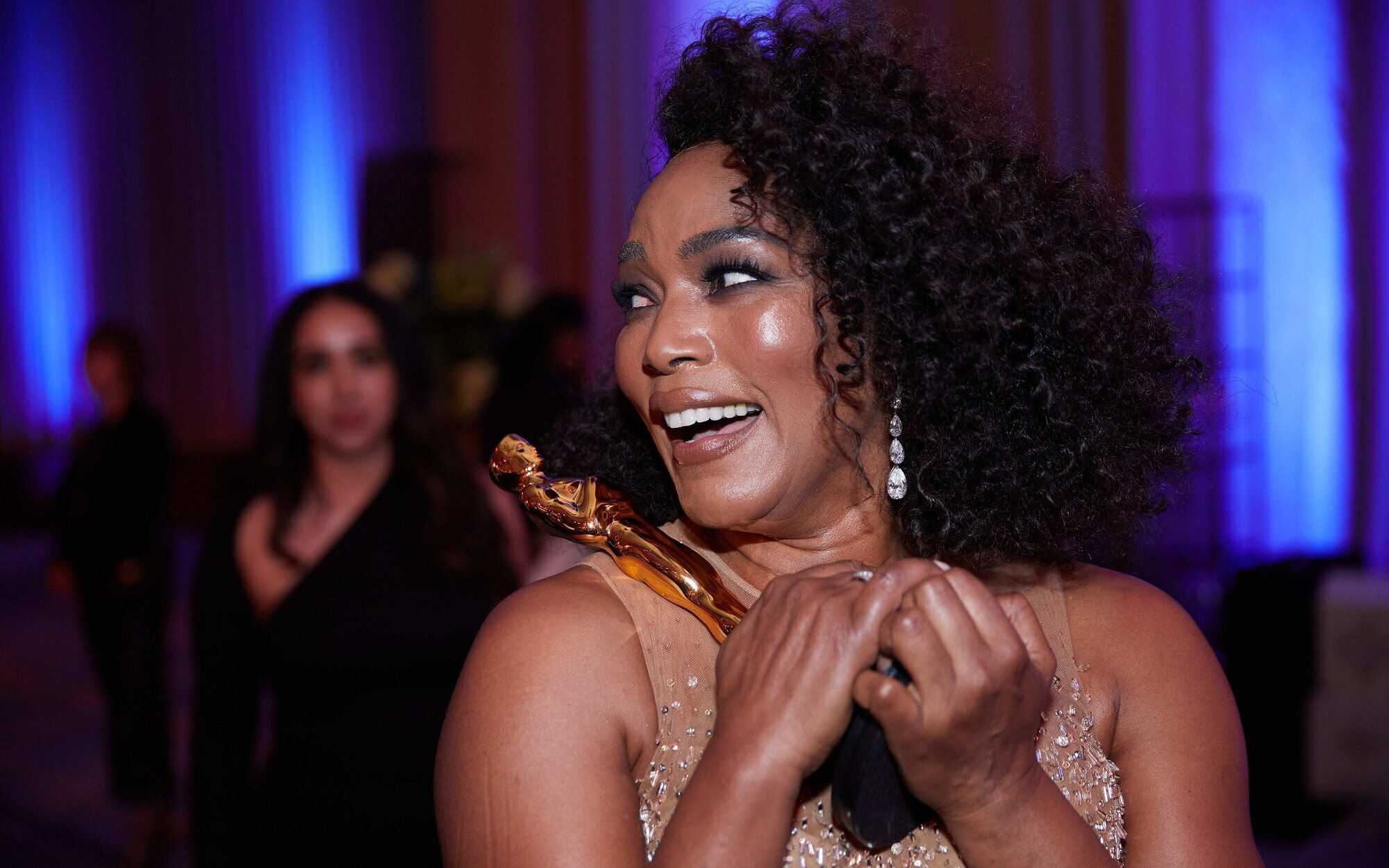
Recognizing her immense contribution to cinema and perhaps acknowledging the missed opportunities of the past, the Academy of Motion Picture Arts and Sciences awarded Angela Bassett an Honorary Oscar at the 14th Governors Awards. During her acceptance speech, Bassett noted the significance of the moment, paying tribute to the Black actresses who came before her and those who continue to strive for recognition.
Frequently Asked Questions
Did Angela Bassett win any awards for What’s Love Got to Do with It?
Yes. Angela Bassett won the Golden Globe Award for Best Actress – Motion Picture Musical or Comedy. She was also nominated for an Academy Award and an NAACP Image Award for the role. Her Golden Globe win was historic, as she was the first Black woman to win in that specific category.
Who else was nominated for Best Actress in 1994?
Aside from Holly Hunter and Angela Bassett, the other nominees were Emma Thompson for The Remains of the Day, Stockard Channing for Six Degrees of Separation, and Debra Winger for Shadowlands.
Did Laurence Fishburne win an Oscar for his role in the same film?
No. Laurence Fishburne was nominated for Best Actor in a Leading Role for his portrayal of Ike Turner, but he lost to Tom Hanks, who won for his role in Philadelphia.
How many Oscar nominations does Angela Bassett have?
As of 2026, Angela Bassett has two competitive Oscar nominations: Best Actress for What’s Love Got to Do with It (1994) and Best Supporting Actress for Black Panther: Wakanda Forever (2023). She also holds an Honorary Academy Award, which she received in early 2024 (part of the 2023 awards cycle).
Was Holly Hunter's win in 1994 considered a surprise?
No, Holly Hunter’s win was widely expected. She had won the vast majority of the precursor awards, including the Golden Globe, the BAFTA, and the SAG Award. While Bassett’s performance was beloved, Hunter was the clear statistical favorite heading into the ceremony.
Final Perspective on the 1994 Best Actress Race
While Angela Bassett did not take home the Oscar in 1994, her performance as Tina Turner has achieved a level of cultural immortality that few Oscar winners ever reach. It remains the definitive portrayal of a survivor and a musical icon. For viewers today, the 1994 race serves as a reminder of a year when the Academy had to choose between two undeniable masterpieces of acting.
If you are interested in exploring the history of these performances further, viewing both The Piano and What’s Love Got to Do with It back-to-back provides a fascinating study in contrast: one actress using silence to speak volumes, and another using an explosive, physical vibrance to reclaim a life from the ashes of abuse.
Image Gallery