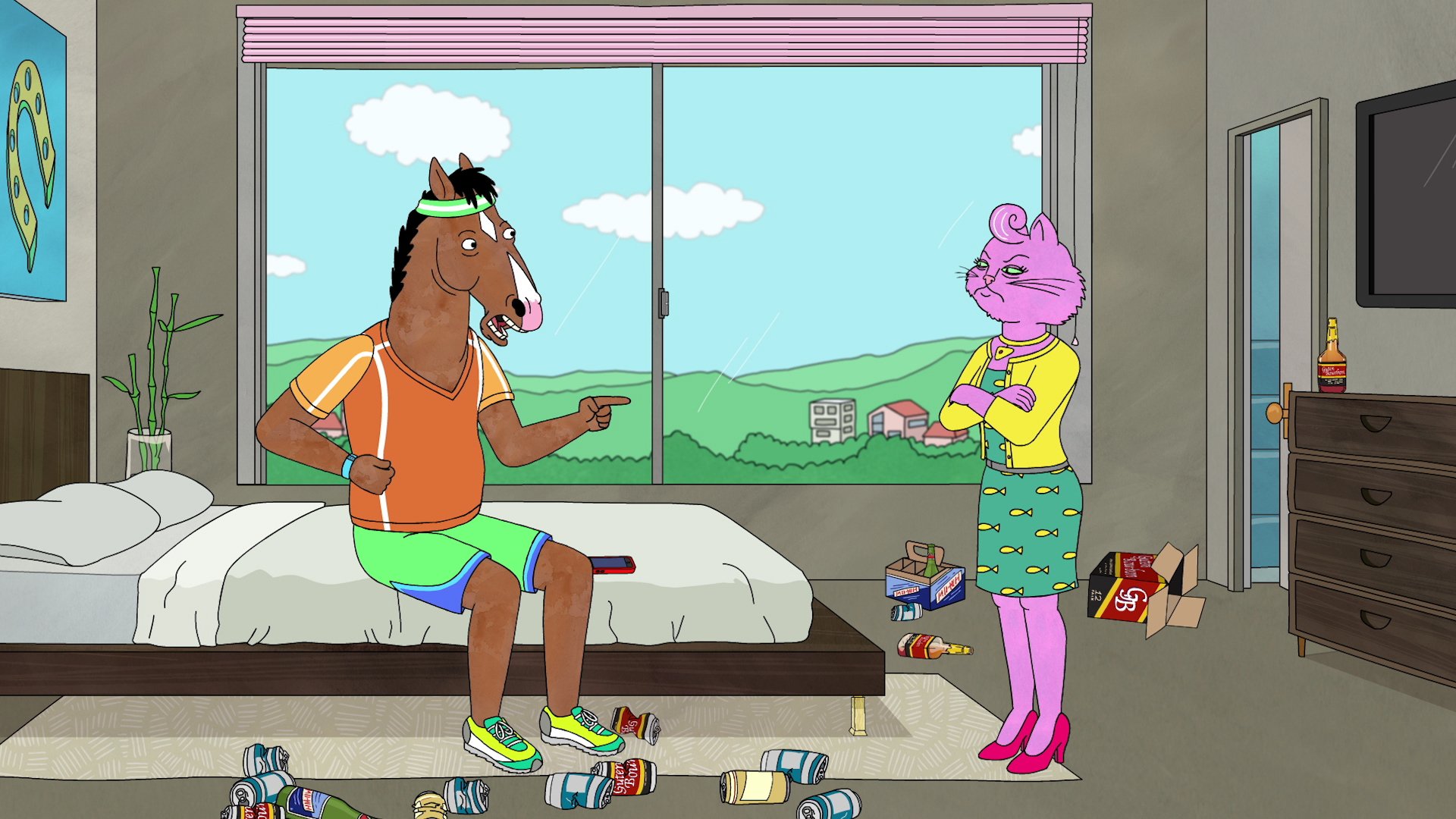
Who Plays BoJack in the Show? Meet the Voice Behind the Horse
The character of BoJack Horseman is voiced by Canadian-American actor Will Arnett. Known for his distinctively gravelly baritone and impeccable comedic timing, Arnett provided the voice for the titular character throughout the entire s...
The character of BoJack Horseman is voiced by Canadian-American actor Will Arnett. Known for his distinctively gravelly baritone and impeccable comedic timing, Arnett provided the voice for the titular character throughout the entire six-season run of the Netflix original series, which aired from 2014 to 2020. Arnett’s performance is widely regarded as one of the most nuanced portrayals of a deeply flawed protagonist in the history of adult animation.
Contents
Will Arnett: The Man Behind the Mane
To understand who plays BoJack, one must look at the career of Will Arnett. Before taking on the role of a washed-up 90s sitcom star, Arnett was already a household name in comedy. He is perhaps best known for his role as George Oscar "Gob" Bluth II in the critically acclaimed series Arrested Development. His performance as Gob—a failing magician with an inflated ego and deep-seated insecurities—served as a spiritual precursor to the complex psyche of BoJack Horseman.
In BoJack Horseman, Arnett had to balance the character’s biting cynicism with moments of profound vulnerability. Unlike many animated shows where the voice acting remains consistently high-energy or one-note, Arnett utilized his natural vocal register to convey BoJack's exhaustion, depression, and occasional flashes of genuine hope. By the time the show concluded in 2020, Arnett had transformed BoJack from a simple parody of celebrity culture into a tragic, multi-dimensional figure.
Beyond BoJack, Arnett has maintained a prolific career in both live-action and voiceover work. In 2026, he remains a prominent figure in the industry, having voiced Batman in The LEGO Movie franchise and starring in the improvisational murder mystery series Murderville. His ability to navigate between absurdity and emotional weight is the primary reason the character of BoJack resonated so deeply with audiences worldwide.
The Complexity of Voicing BoJack Horseman
Playing BoJack was more than just reading lines in a recording booth; it required a deep understanding of the character's traumatic history. BoJack is a character defined by his past—specifically his time starring in the fictional 90s sitcom Horsin' Around and his abusive upbringing by his parents, Butterscotch and Beatrice Horseman.
The Challenge of "Free Churro"
One of the most significant milestones in Arnett’s portrayal occurred in the Season 5 episode "Free Churro." The episode consists almost entirely of a single 25-minute monologue delivered by BoJack at his mother’s funeral. This was a massive technical and emotional undertaking for a voice actor. Arnett had to carry the entire narrative weight of the episode using only his voice, navigating through anger, resentment, confusion, and grief without the support of other cast members or high-octane action.
Balancing Comedy and Tragedy
The show’s creator, Raphael Bob-Waksberg, often noted that Arnett was the only actor who could make BoJack’s "terrible" behavior feel grounded in a recognizable human (or horse) experience. Arnett’s delivery of the show’s dark humor—often centered on self-loathing or nihilism—required a specific cadence that prevented the character from becoming purely unlikable. Because Arnett’s voice carries a natural "warmth" despite its raspy texture, the audience remains tethered to BoJack even as he makes catastrophic life choices.
The Supporting Cast of BoJack Horseman
While Will Arnett is the central pillar of the show, the "Who plays BoJack" question often leads to curiosity about the ensemble cast that surrounded him. The chemistry between these actors was vital to the show’s success, as BoJack’s identity was frequently defined by his interactions with his friends, colleagues, and rivals.
| Character | Voice Actor | Significance to BoJack |
|---|---|---|
| Todd Chavez | Aaron Paul | BoJack's accidental roommate and moral compass. |
| Princess Carolyn | Amy Sedaris | BoJack's agent, ex-girlfriend, and the show's "fixer." |
| Diane Nguyen | Alison Brie | BoJack's ghostwriter and the person who understands him best. |
| Mr. Peanutbutter | Paul F. Tompkins | BoJack's rival and unintentional "best friend." |
| Sarah Lynn | Kristen Schaal | BoJack's former co-star and a tragic figure in his life. |
| Beatrice Horseman | Wendie Malick | BoJack's mother, whose influence shaped his trauma. |
Aaron Paul as Todd Chavez
Coming off his massive success in Breaking Bad, Aaron Paul took on the role of Todd Chavez. Todd provided the levity and "zany" B-plots that balanced BoJack’s darker arcs. Paul’s performance evolved as Todd discovered his own identity (specifically his asexuality), and his eventual fallout with BoJack provided some of the series' most emotional moments.
Amy Sedaris as Princess Carolyn
Princess Carolyn is a pink Persian cat and a powerhouse talent agent. Amy Sedaris brought an incredible manic energy to the role, particularly in episodes involving rapid-fire tongue twisters and professional crises. Her relationship with BoJack is one of the most complex "on-again, off-again" dynamics in modern television.
Production and Creative Vision
To understand why Will Arnett was cast, one must look at the creative vision of Raphael Bob-Waksberg and production designer Lisa Hanawalt. The show was produced by The Tornante Company and ShadowMachine, and it was Netflix's first foray into original adult animated content.
The decision to cast Arnett was influenced by his ability to play "the lovable jerk." In the early episodes of Season 1, the show presented itself as a more traditional animated satire. However, as the series progressed into deep explorations of mental health, addiction, and the "Me Too" movement, the demands on Arnett increased. The creative team worked closely with Arnett to ensure that BoJack’s voice aged and changed as the character faced the physical and emotional tolls of his lifestyle.
The Visual Language of BoJack
Lisa Hanawalt’s character designs featured human bodies with animal heads, a choice that could have felt gimmicky if the voice acting didn't ground the characters. Because Arnett and the rest of the cast played their roles with complete sincerity, the audience quickly forgot they were watching a talking horse and instead saw a middle-aged man struggling with his legacy.
Legacy of the Performance in 2026
As of 2026, BoJack Horseman continues to hold a 100% or near-perfect rating on various critic aggregators for its later seasons. The show is frequently cited in university courses on psychology and media studies for its accurate depiction of clinical depression and the cycle of generational trauma.
Will Arnett’s performance is often used as a benchmark for voice acting in the "prestige" era of streaming. He proved that animation could be used for more than just slapstick or crude humor; it could be a medium for high-stakes drama. Even years after the series finale ("Nice While It Lasted"), new viewers discovering the show on Netflix frequently search for the actor behind the voice, surprised to find the same man who played the incompetent magician Gob Bluth or the gravelly-voiced LEGO Batman.
Awards and Recognition
While voice acting is often overlooked at major awards ceremonies like the Primetime Emmys in favor of live-action performances, Arnett received numerous nominations and universal acclaim from the Critics' Choice Television Awards and the Annie Awards. His work on BoJack Horseman remains the most critically lauded role of his career.
Frequently Asked Questions
Did Will Arnett also sing the theme song for BoJack Horseman?
No, Will Arnett did not sing the opening theme song. The iconic instrumental opening was composed by Patrick Carney (of The Black Keys) and his uncle Ralph Carney. However, the closing credits song, "Back in the 90s," was performed by the indie-pop group Grouplove.
Is BoJack Horseman based on a real person?
BoJack is not based on a single real-world person, but rather a composite of various 80s and 90s sitcom stars who struggled with the transition out of the limelight. Critics often point to similarities with actors like Bob Saget, Charlie Sheen, or Matthew Perry, but the character is an original creation of Raphael Bob-Waksberg.
How many seasons did Will Arnett play BoJack?
Will Arnett played BoJack for a total of six seasons. The show premiered on August 22, 2014, and concluded with its final episodes on January 31, 2020. In total, there are 77 episodes, plus a Christmas special.
Does Will Arnett voice any other characters in the show?
While Arnett focuses primarily on BoJack, he occasionally voiced minor background characters or variations of BoJack (such as BoJack's father, Butterscotch Horseman, in specific flashback sequences). This added a layer of depth to the "generational cycle" theme, as the father and son shared the same vocal DNA.
Why was the show canceled?
While often described as a cancellation, the decision to end BoJack Horseman with Season 6 was a collaborative process between Netflix and the creators. Raphael Bob-Waksberg has stated in interviews that Netflix gave him enough notice to wrap up the story properly, allowing the series to have a definitive and satisfying ending.
Summary of Next Actions for Fans
If you have just finished the show or are looking to dive deeper into Will Arnett’s work, consider the following steps:
- Watch the "Free Churro" Episode: Even if you aren't watching the series in order, this episode stands as a masterclass in voice acting.
- Explore the Art Book: BoJack Horseman: The Art Before the Horse provides incredible insight into how Will Arnett's voice was paired with Lisa Hanawalt's designs.
- Check Out "Murderville": To see Arnett’s improvisational skills in a live-action setting, his recent work on Netflix offers a lighter, yet equally talented, side of his acting range.
- Listen to "SmartLess": Will Arnett co-hosts a popular podcast where he often discusses his career and the technical aspects of his roles with fellow actors.
Image Gallery