Best Food Processor Reviews: Top-Rated Models for 2026 Performance
Choosing the best food processor requires balancing motor durability, blade precision, and ease of cleaning. In 2026, the market favors high-torque induction motors and modular attachments that handle everything from heavy dough to del...
Choosing the best food processor requires balancing motor durability, blade precision, and ease of cleaning. In 2026, the market favors high-torque induction motors and modular attachments that handle everything from heavy dough to delicate dicing. Leading models from Magimix, Breville, and Cuisinart continue to dominate professional and home kitchens due to their superior build quality.
Contents
Understanding Modern Food Processor Technology
The food processor remains the most versatile appliance in the kitchen, bridging the gap between manual knife work and specialized tools like stand mixers or blenders. Unlike a blender, which relies on high speed to liquefy ingredients, a food processor utilizes high torque and lower speeds to chop, slice, grate, and emulsify without destroying the texture of the food.
In 2026, the distinction between "budget" and "premium" models is primarily defined by the motor type. Premium units typically utilize induction motors, which are brushless, quieter, and significantly more durable. These motors adjust their power output based on the resistance of the food, making them ideal for kneading heavy bread doughs. Conversely, entry-level models often use universal motors, which are louder and prone to overheating during extended use.
When evaluating reviews, it is essential to consider the "S-blade" geometry. The spacing between the blade and the bottom of the bowl determines how efficiently the machine processes small quantities. If the blade sits too high, garlic cloves or herbs will simply spin underneath it without being cut. The best-reviewed models for 2026 have addressed this with lowered blade profiles and bowl-scraping attachments.
Top 5 Food Processor Reviews for 2026
The following models represent the pinnacle of performance across different categories, from professional-grade workhorses to space-saving designs.
1. Magimix 5200XL: The Longevity Leader
Originally designed for commercial use in France, the Magimix 5200XL remains a top choice for those prioritizing sustainability and power. Its standout feature is the ultra-quiet induction motor, which often comes with a 30-year manufacturer warranty.
- Performance: It excels at heavy-duty tasks like grating hard cheeses or kneading 1kg of dough. The inclusion of three different bowl sizes (mini, midi, and main) allows users to process small amounts of pesto or large batches of soup without needing multiple appliances.
- Pros: Exceptional durability, quiet operation, and BPA-free Tritan bowls.
- Cons: Heavy footprint and a steeper learning curve for the interlocking safety mechanism.
2. Breville/Sage Sous Chef 16 Pro: Precision Engineering
If dicing and uniform slicing are your primary goals, the Breville Sous Chef 16 Pro is unrivaled. It features an adjustable slicing disc with 24 separate settings, ranging from paper-thin (0.3mm) to thick-cut (8mm).
- Performance: The wide 5.5-inch feed chute eliminates the need to pre-cut most vegetables. Its dicing kit is a 2026 favorite, producing perfect cubes of potatoes or carrots in seconds—a task that usually takes home cooks ten times longer by hand.
- Pros: Most versatile attachment set, high-torque motor, and excellent storage case for blades.
- Cons: Higher price point and many components are not dishwasher-safe, requiring manual cleaning to preserve the plastic’s integrity.
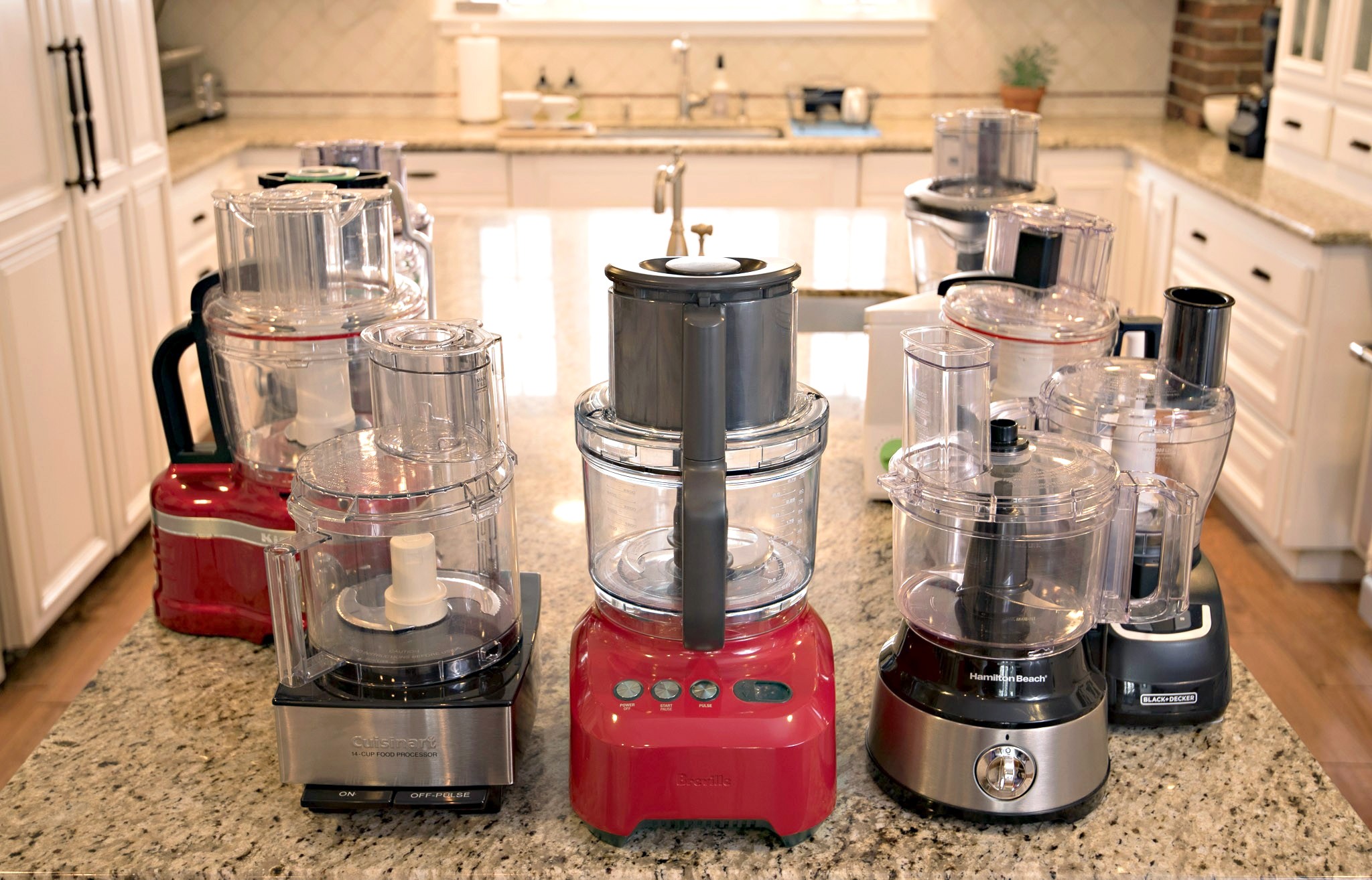
3. Cuisinart Custom 14-Cup: The Timeless Workhorse
The Cuisinart Custom 14 has maintained a nearly identical design for decades because it works. It avoids digital screens in favor of two simple paddles: "On" and "Pulse."
- Performance: This model is famous for its massive feed tube and powerful motor that handles large batches of dough with ease. It is often the top-rated model for bakers who need a reliable machine for pie crusts and biscuits.
- Pros: Simple operation, large capacity, and very easy to clean due to the flat-front design.
- Cons: Fewer specialized attachments (like dicing or whisking) compared to newer competitors.
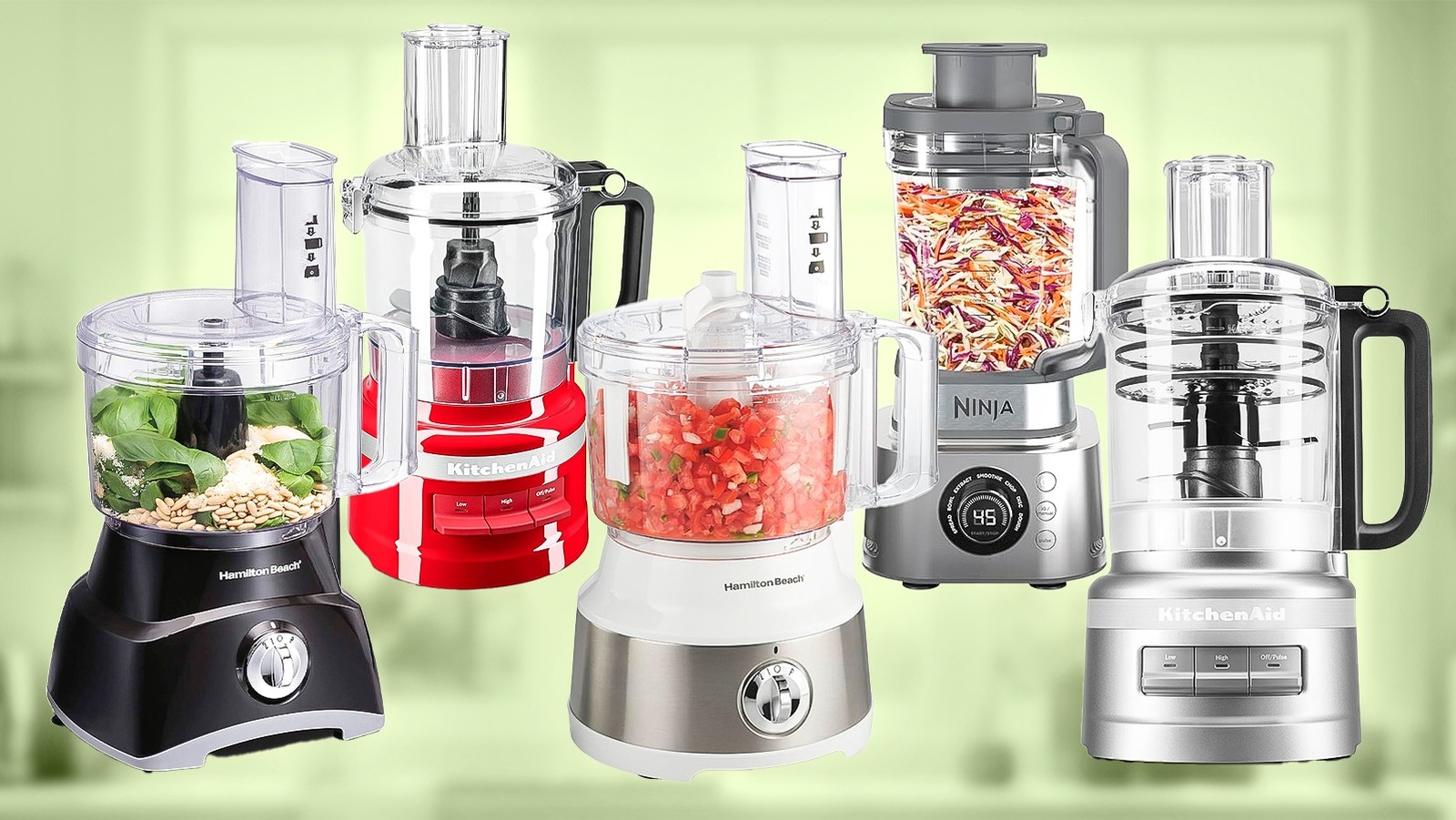
4. KitchenAid 13-Cup Food Processor: User-Friendly Design
KitchenAid has focused on solving the "assembly frustration" common in many processors. Their 2026 13-cup model features a latched, lever-locked bowl that does not require the traditional "twist and click" movement.
- Performance: The "ExactSlice" system allows you to adjust slicing thickness using an external lever while the machine is running. This is a significant safety and convenience upgrade for 2026, as it prevents the user from having to open the lid to change discs.
- Pros: One-click bowl assembly, organized storage caddy, and sleek aesthetic.
- Cons: The motor is not quite as powerful as the Magimix or Breville for dense doughs.
5. Ninja Professional Plus Food Processor: Best Value
For those who need speed and power without a premium price tag, the Ninja Professional Plus is a standout. It utilizes a unique triple-blade tower rather than a single S-blade at the bottom.
- Performance: It is exceptionally fast at chopping vegetables and making quick salsas. However, because it lacks an induction motor, it is significantly louder than its competitors.
- Pros: Affordable, very fast chopping, and easy-to-clean design.
- Cons: Not ideal for precise slicing or grating; the plastic bowl is less durable than Tritan alternatives.
Technical Specifications Comparison
| Feature | Magimix 5200XL | Breville Sous Chef 16 | Cuisinart Custom 14 | KitchenAid 13-Cup |
|---|---|---|---|---|
| Motor Type | Induction (950W) | Peak Power (1200W) | Induction (720W) | DC Motor |
| Primary Capacity | 3.6 Liters | 3.8 Liters | 3.3 Liters | 3.1 Liters |
| Warranty | 30-Year Motor | 2-Year Limited | 3-Year Limited | 1-Year Limited |
| Dishwasher Safe | Yes (Low Temp) | Hand Wash Recommended | Yes | Yes (Top Rack) |
| Key Accessory | 3 Bowls in 1 | Dicing Kit | Large S-Blade | Adjustable Lever |
Critical Buying Factors: How to Choose
When reading food processor reviews, it is easy to get distracted by the number of attachments. However, the most important factors for long-term satisfaction are often technical and structural.
Motor Power and Torque
Wattage is a common marketing metric, but it can be misleading. A 1200W universal motor may struggle more with pizza dough than a 650W induction motor. Induction motors provide consistent torque, meaning they don't slow down when the bowl is full. If you plan to use your processor for bread or nut butters, an induction motor is a non-negotiable requirement.
Feed Tube Width
The size of the feed tube determines how much prep work you have to do before using the machine. "Wide-mouth" or "Big-mouth" tubes allow for whole potatoes, cucumbers, or blocks of cheese. Some models in 2026 feature a 3-in-1 feed tube system, which includes a very small pusher for vertical items like carrots or celery, preventing them from tipping over during the slicing process.
Safety Interlocks and Stability
Food processors are high-speed cutting tools. Modern safety standards require multiple interlock points—usually, the bowl must be locked to the base and the lid locked to the bowl before the motor will engage. Additionally, consider the weight of the base. A heavy base (usually found in models with induction motors) prevents the machine from "walking" across your counter when processing heavy loads.
Ease of Maintenance
Plastic bowls can become cloudy over time if washed in high-heat dishwashers. In 2026, many manufacturers have improved the chemical resistance of their plastics, but hand-washing the clear components remains the best way to ensure longevity. Look for models with flat touch-pad controls, as physical buttons can trap flour and food particles.
Common Performance Issues and Troubleshooting
Even the best-rated food processors can encounter issues if used incorrectly. Understanding these common pitfalls will help you maintain your machine’s performance.
- The Motor Won't Start: This is almost always an alignment issue. Ensure the bowl is clicked fully into the "locked" position and that the pusher is inserted into the feed tube (many models have a safety sensor in the pusher).
- Uneven Chopping: This usually happens when the bowl is overfilled. For a consistent chop, fill the bowl no more than one-third to one-half full. Use the "Pulse" function rather than "On" to prevent the bottom layer from becoming a puree while the top stays chunky.
- Leaking Liquid: If you are processing soups or sauces, do not fill past the "Max Liquid" line marked on the bowl. Most food processors do not have a liquid-tight seal around the central spindle.
- Overheating: If the machine stops during a heavy task, the thermal overload protection has likely been triggered. Unplug the unit and let it cool for at least 30 minutes before resuming.
Frequently Asked Questions
Can a food processor replace a blender?
While a food processor can perform some blender tasks like making pesto or hummus, it cannot replace a blender for high-liquid tasks. Blenders are designed to create a vortex that pulls food into the blades for a completely smooth finish, whereas food processors are designed for textured results. Using a processor for smoothies often results in leaks and a gritty texture.
What is the best size for a family of four?
A 12-cup to 14-cup model is generally considered the "sweet spot" for most families. This size is large enough to handle a full batch of dough or a large salad, but not so massive that it becomes difficult to store. If you frequently host large gatherings or meal prep for the week, a 16-cup model may be more appropriate.
Is it worth paying more for an induction motor?
Yes, if you use the appliance more than once a week. Induction motors are much quieter and are built to last for decades rather than years. They also handle the resistance of dough much better than cheaper alternatives, preventing the motor from burning out prematurely.
Are dicing attachments actually effective?
In 2026, dicing attachments have become highly sophisticated. While early versions were prone to clogging, current models from Breville and KitchenAid use a two-step process (slice then grid-cut) that produces very consistent results. They are particularly effective for firm vegetables like onions, peppers, and potatoes.
Can I grate soft cheese in a food processor?
Yes, but with a trick: place soft cheeses like mozzarella in the freezer for 15-20 minutes before grating. This firms up the fat content and prevents the cheese from gumming up the grating disc. Use high speed and light pressure for the best results.
Final Recommendation
For the best overall performance and lifelong reliability in 2026, the Magimix 5200XL remains the premier choice due to its induction motor and exceptional warranty. However, for those who prioritize precision dicing and adjustable slicing, the Breville Sous Chef 16 Pro offers the most advanced feature set currently available. If you are looking for a reliable, no-frills machine that has stood the test of time, the Cuisinart Custom 14 continues to be the best value for serious home cooks.
Image Gallery