The Story Behind the JFK Jr. Photo Salute: History, Photographers, and Legacy
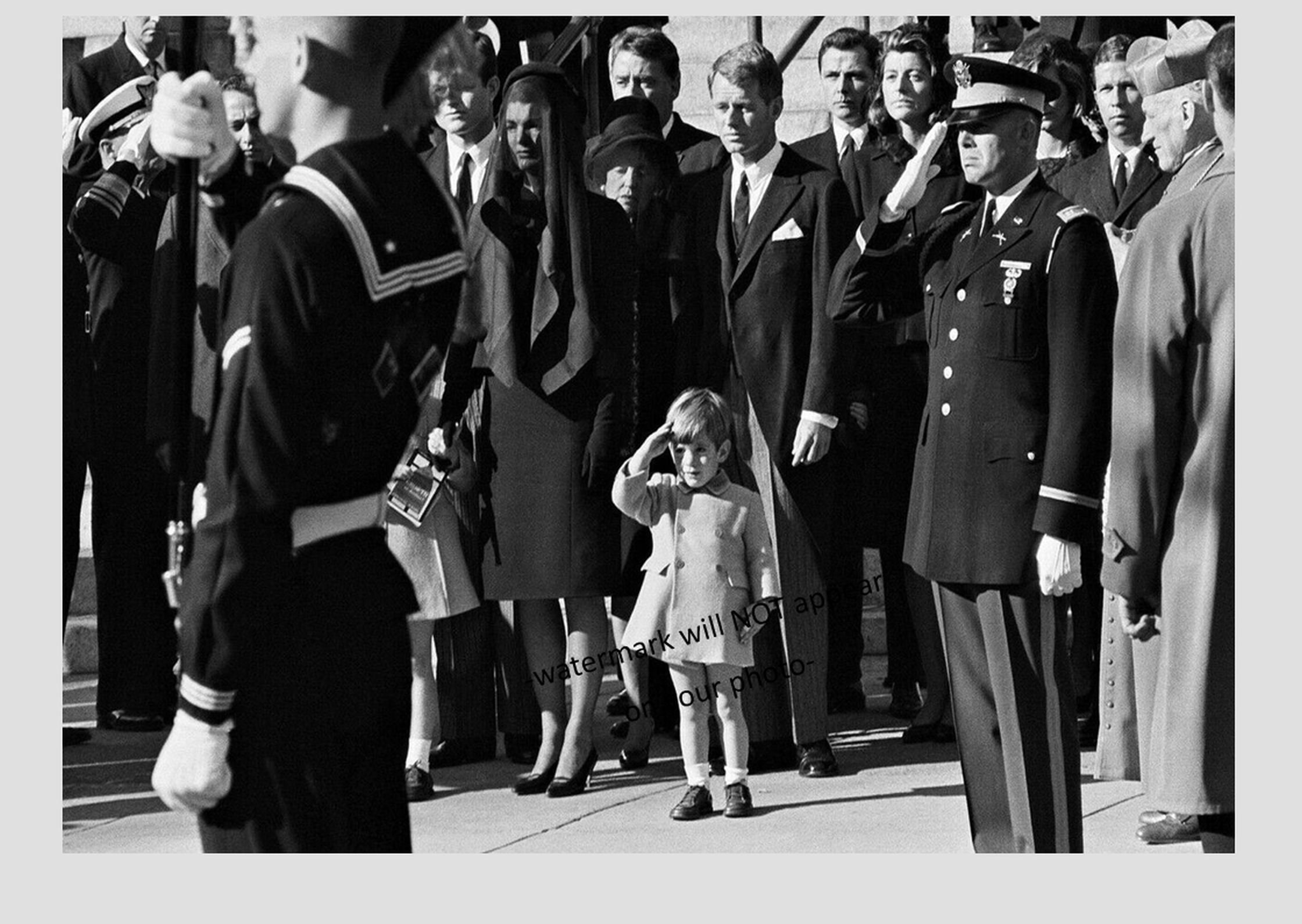
The iconic photo of John F. Kennedy Jr. saluting his father’s casket on November 25, 1963, remains one of the most powerful visual symbols in American history. Captured outside St. Matthew’s Cathedral on the child’s third birthday, the...
The iconic photo of John F. Kennedy Jr. saluting his father’s casket on November 25, 1963, remains one of the most powerful visual symbols in American history. Captured outside St. Matthew’s Cathedral on the child’s third birthday, the image crystallized a grieving nation's heartbreak during President John F. Kennedy’s state funeral.
Contents
The Historical Context: November 25, 1963
On November 22, 1963, President John F. Kennedy was assassinated in Dallas, Texas. Three days later, on Monday, November 25, the nation observed a national day of mourning as the fallen president was honored with a state funeral in Washington, D.C.
The day coincided with the third birthday of the president's son, John F. Kennedy Jr., known affectionately to the public as "John-John." The funeral procession moved from the United States Capitol, where the president had lain in state, to St. Matthew’s Cathedral for a solemn Requiem Mass. World leaders, military honor guards, and thousands of spectators lined the streets of the capital, while tens of millions watched the live broadcast on television.
Following the funeral Mass inside St. Matthew’s, the casket was carried down the cathedral steps to be placed onto the caisson for the final journey to Arlington National Cemetery. Standing on the steps were First Lady Jacqueline Kennedy, dressed in black with a heavy veil, alongside her two children, six-year-old Caroline and three-year-old John Jr., flanked by the late president's brothers, Attorney General Robert F. Kennedy and Senator Edward "Ted" Kennedy.
As the casket passed in front of the family, young John Jr. stepped forward, raised his right hand to his forehead, and delivered a crisp military salute. The sudden, dignified gesture by a toddler on his birthday instantly became the defining photographic image of the tragedy.
The Photographers Behind the Famous Images
While millions saw the salute live on black-and-white television broadcasts, several photojournalists standing in the crowded press area captured the moment on film. Two specific photographs became internationally famous, often leading to historical confusion over who actually took "the" salute photo.
- St. Matthew's Cathedral Steps
- Stan Stearns / UPI
- Wide/Full-body shot
- Syndicated globally
- Iconic standalone framing
- Dan Farrell / NY Daily News
- Tighter profile angle
- Pulitzer runner-up (1964)
- Emphasized family context
- Stan Stearns / UPI
Stan Stearns (United Press International)
The most famous full-length photograph was taken by Stan Stearns, a 28-year-old staff photographer for United Press International (UPI). Stearns was positioned across the street from St. Matthew’s Cathedral among a pool of dozens of press photographers.
Recognizing that most photographers were using long telephoto lenses to capture close-up facial expressions of Jacqueline Kennedy, Stearns chose to use a 200mm lens to maintain a wider perspective of the family. When he saw John Jr. step out and raise his hand, Stearns made a split-second decision not to wait for directions from his editor. He squeezed the shutter once, capturing the entire scene: young John Jr. in his light blue coat and shorts, flanked by his mother and sister, saluting the flag-draped casket.
Fearing that another photographer might get to the wire room first, Stearns left his assigned post immediately after taking the shot. He rode a press transport directly to the UPI bureau to process the film. His gamble paid off: UPI transmitted the image worldwide, and it appeared on the front pages of hundreds of newspapers the following morning.
Dan Farrell (New York Daily News)
Another widely published photograph of the exact same moment was captured by Dan Farrell of the New York Daily News. Positioned near Stearns, Farrell took a slightly different angle that captured the solemnity of the family unit while keeping John Jr.'s profile in sharp focus.
Farrell’s photograph was nominated for the 1964 Pulitzer Prize for Photography and became one of the most requested images in the archive of the New York Daily News. While Stearns’ image focused heavily on the stark isolation of the boy's salute, Farrell’s frame highlighted the surrounding military guards and family reaction.
Other Photographers at the Scene
- Joseph O'Donnell: Working for the United States Information Agency (USIA), O'Donnell captured a close-up angle of the salute. His photograph is preserved in the official government archives of the United States.
- Edward Clark: A veteran photojournalist for LIFE Magazine, Clark captured extensive coverage of the family on the cathedral steps, contributing to LIFE's historic funeral commemorative issue.
What Prompted the Salute? The Story Behind the Gesture
For decades, historians and the public debated whether the three-year-old's salute was a spontaneous act of childhood imitation or a coached gesture.
Subsequent accounts from Secret Service agents, military aides, and Jacqueline Kennedy herself clarified how the moment occurred:
- Imitating Military Guards: During his father's presidency, John Jr. was frequently exposed to military ceremonies at the White House and Camp David. He often observed military aides, Marines, and Secret Service agents saluting President Kennedy. Members of the presidential detail frequently exchanged playful salutes with the young boy on the White House lawn.
- Jacqueline Kennedy's Whisper: As the caisson stopped in front of the cathedral steps and the honor guard prepared to move the casket, Jacqueline Kennedy leaned down slightly to her son. She quietly leaned over and whispered, "John, salute," encouraging him to honor his father.
- Reflexive Precision: Having practiced saluting with military personnel during his three years, John Jr. executed the posture with surprising correctness—standing erect, right hand raised to his forehead, elbows aligned.
The contrast between the child's small stature, his light-colored ceremonial dress coat, and the grave military procession created a striking visual metaphor for lost continuity and national grief.
Comparative Analysis of Key Salute Photographs
Because multiple photographers captured the moment simultaneously, comparing their positions, camera gear, and visual compositions helps explain why certain images endured in global collective memory.
| Attribute | Stan Stearns (UPI) | Dan Farrell (NY Daily News) | Joseph O'Donnell (USIA) |
|---|---|---|---|
| Organization | United Press International | New York Daily News | U.S. Information Agency |
| Primary Framing | Full-body wide framing including family | Medium frame, profile-focused | Close-range framing on John Jr. |
| Lens/Camera Type | 200mm lens on 35mm SLR | 35mm SLR with telephoto lens | Standard press camera |
| Key Visual Elements | Isolation of John Jr. against white background | Family grouping & surrounding detail | Intimate emotional perspective |
| Historical Recognition | Most widely syndicated globally | 1964 Pulitzer Prize Finalist | Stored in U.S. National Archives |
| Archive Holdings | UPI / Corbis / Getty Images | New York Daily News Archive | National Archives and Records Administration (NARA) |
Technical and Compositional Breakdown
From an artistic and photojournalistic standpoint, Stan Stearns' photograph succeeded due to precise compositional choices made under extreme pressure:
Subject Isolation and Contrast
John Jr. wore a light-colored, double-breasted woolen coat and matching shorts designed by French designer Marc Bohan for Christian Dior. Set against the dark mourning attire of Jacqueline, Caroline, Robert, and Edward Kennedy, as well as the dark uniforms of the military pallbearers, the child stood out as a solitary focal point of light.
Geometric Balance
Stearns’ framing placed John Jr. slightly off-center, creating a leading visual line that moved from the boy's extended right arm directly toward the flag-draped casket on the caisson. This visual connection bridged the human element on the cathedral steps with the formal state ceremony occurring in the street.
Depth of Field
Using a 200mm telephoto lens allowed Stearns to compress the background depth while keeping both the foreground family and the caisson in sharp detail. The resulting image avoided clutter, directing the viewer’s eye immediately to the toddler's right hand.
The Legacy and Cultural Impact of the Image
The salute photograph immediately transcended standard press coverage to become an enduring icon of 20th-century history.
A Symbol of National Mourning
In November 1963, the United States was navigating the turmoil of the Cold War and the sudden loss of a young president. The image of the president's son honoring his father served as a quiet, dignified resolution to a weekend of national shock. It shifted the visual narrative of the assassination away from violence toward patriotic honor and family resilience.
Impact on John F. Kennedy Jr.’s Life
For the rest of his life, John F. Kennedy Jr. was tied to the 1963 photograph. As he grew into adulthood, launched George magazine in the 1990s, and lived as a prominent public figure in New York City, journalists frequently referenced the image. Kennedy himself rarely discussed the moment publicly, viewing it as a private childhood event that had been thrust into public ownership. Following his death in a plane crash in July 1999, news outlets worldwide republished the 1963 salute photo as the definitive visual bookmark of his life.
Historical Preservation and Institutional Ownership
Today, original negatives, wire prints, and licensed press photographs of the salute are preserved in major public and private archives across the United States:
- The John F. Kennedy Presidential Library and Museum (Boston, MA): Holds extensive photographic records of the funeral, including oral histories from White House staff regarding the family on November 25, 1963. Researchers can explore digitized collections via the John F. Kennedy Presidential Library.
- The Library of Congress (Washington, D.C.): Maintains thousands of photographic prints from the press pool present during the state funeral, accessible through the Library of Congress Prints and Photographs Division.
- The National Archives and Records Administration (NARA): Preserves government documentation, including official USIA photos taken by Joseph O'Donnell and military coverage of the funeral procession.
Frequently Asked Questions
How old was JFK Jr. when he saluted his father's casket?
John F. Kennedy Jr. was exactly three years old. He was born on November 25, 1960, and his father’s state funeral took place on his third birthday, November 25, 1963.
Who took the most famous photograph of JFK Jr. saluting?
The primary photograph syndicated around the world was taken by Stan Stearns of United Press International (UPI). Another famous version from a similar position was taken by Dan Farrell of the New York Daily News.
Did Jackie Kennedy instruct John Jr. to salute?
Yes. According to family accounts and eyewitness testimony from Secret Service agents, Jacqueline Kennedy quietly leaned down to her son as the casket passed St. Matthew’s Cathedral and said, "John, salute."
Where was the photograph taken?
The photo was taken on the steps outside St. Matthew’s Cathedral (The Cathedral of Saint Matthew the Apostle) on Rhode Island Avenue in Washington, D.C., following the funeral Mass.
Where can researchers view original prints of the salute photo today?
Original physical prints and high-resolution digital copies are housed at the John F. Kennedy Presidential Library and Museum in Boston, Massachusetts, as well as the Library of Congress in Washington, D.C.
Research Guidance and Next Steps for Historians
For researchers, students, and photojournalism professionals analyzing the JFK Jr. salute photograph, the following resources provide deeper primary source verification:
- Examine Wire Service Archives: Consult the UPI historical records (managed within the Getty Images collection) and the New York Daily News archives to study the original caption sheets, film rolls, and transmission logs from November 25, 1963.
- Review Oral History Transcripts: The John F. Kennedy Presidential Library maintains oral history interviews with photographers, Secret Service detail members (such as Clint Hill), and Kennedy family aides who detail the events outside St. Matthew's Cathedral.
- Study Photographic Technical Logs: For photography students, comparing Stan Stearns' shutter timing and focal choices against standard 1960s press equipment (such as Leica, Nikon, and Speed Graphic cameras) offers insight into cold-war era photojournalism techniques.
Image Gallery