Terminal Cash Flow Calculation Explained
Terminal cash flow represents the net cash generated by a business or project at the exact conclusion of its forecast period, incorporating asset liquidation, working capital recovery, and the terminal value itself. Accurately determin...
Terminal cash flow represents the net cash generated by a business or project at the exact conclusion of its forecast period, incorporating asset liquidation, working capital recovery, and the terminal value itself. Accurately determining this figure ensures that corporate finance professionals and investors do not undervalue long-term assets when performing Discounted Cash Flow (DCF) analyses.
Contents
Understanding Terminal Value and Terminal Cash Flow
To master the terminal cash flow calculation, one must first distinguish between terminal value and terminal cash flow. While financial analysts frequently use the terms interchangeably in casual conversation, they denote distinct metrics within formal financial modeling and corporate valuation exercises.
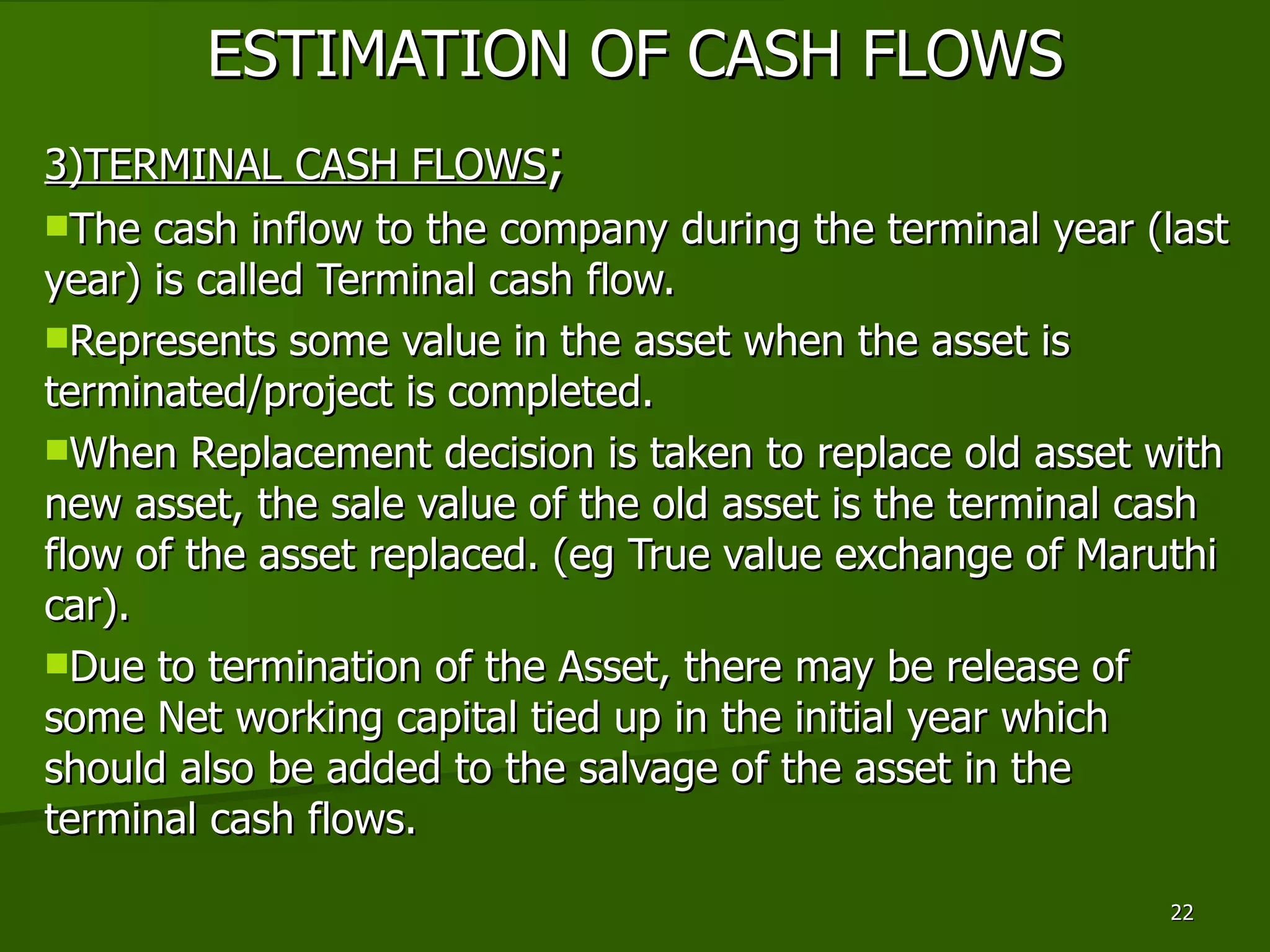
Terminal value (TV) measures the present value of all future cash flows beyond a projected forecast period, assuming stable, long-term growth. Conversely, terminal cash flow specifically targets the net monetary inflow or outflow occurring during the final discrete period of a project or business lifecycle—typically the final year of a multi-year forecast. This final-year metric captures operational cash flows alongside non-operating adjustments unique to the exit horizon.
The Lifecycle of Corporate Projections
Standard valuation models typically project cash flows for a finite explicit period, such as five or ten years. Beyond this horizon, forecasting individual annual revenues and expenses becomes speculative.
- Explicit Forecast Period: Analysts project detailed line items including revenues, cost of goods sold, operating expenses, taxes, and capital expenditures year-by-year.
- Terminal Horizon: The final year of this explicit period serves as the baseline for terminal cash flow adjustments.
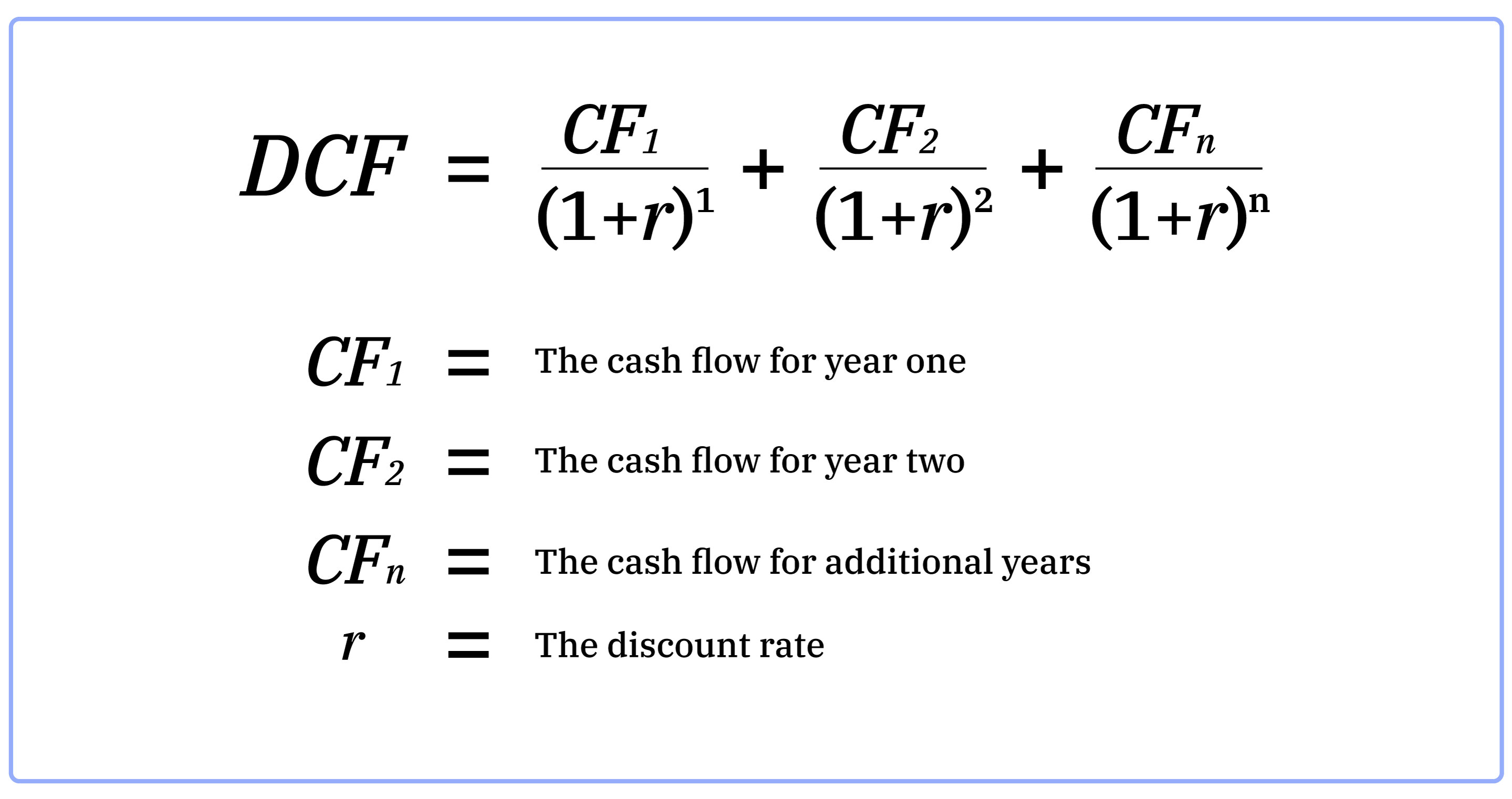
- Perpetuity or Exit: The calculated terminal cash flow or terminal value is then discounted back to present value using the weighted average cost of capital (WACC).
Failing to separate routine operating cash flows from terminal adjustments distorts corporate valuation. For instance, liquidating specialized machinery at a project's termination generates an immediate cash inflow that never repeats, making it a critical component of the terminal calculation rather than standard annual operating cash flow.
Core Components of the Terminal Cash Flow Equation
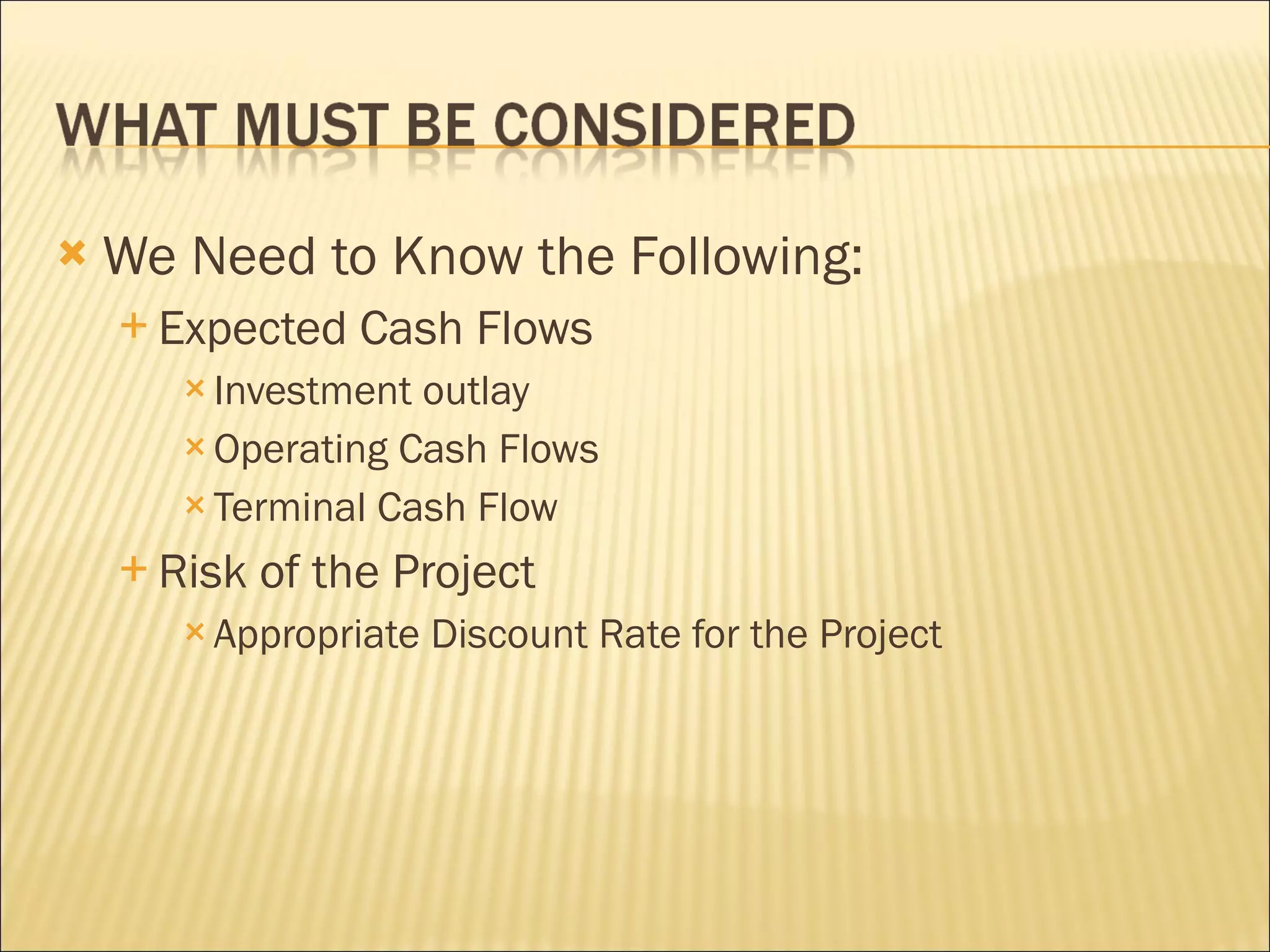
The terminal cash flow calculation relies on several distinct financial elements that materialize when a project ends or a business is sold. Omitting any single component results in an inaccurate valuation, potentially overpaying for an acquisition or underpricing an asset sale.
+ Terminal Year Operating Cash Flow + Net Salvage Value of Fixed Assets + Recovery of Net Working Capital - Termination or Cleanup Taxes = Total Terminal Cash Flow
Each of these components demands careful quantitative verification using historical accounting records, asset depreciation schedules, and tax regulations.
Terminal Year Net Operating Profit After Taxes (NOPAT)
The foundation of the calculation is the final year's operating performance. Analysts take the projected Net Operating Profit After Taxes for the last explicit forecast year and adjust it for non-cash expenses, such as depreciation and amortization, to arrive at net operating cash flow.
Salvage Value and Asset Liquidation
When a project concludes, its physical assets—such as real estate, manufacturing equipment, vehicles, and inventory—often retain residual market value. The terminal cash flow calculation includes the net salvage value of these assets.
Net salvage value equals the projected selling price of the asset minus any removal, auction, or brokerage fees. Analysts must also account for taxes on the sale of depreciated assets, commonly known as recapture taxes. If an asset sells for more than its book value, the difference is taxed at ordinary income tax rates, reducing the net cash proceeds.
Net Working Capital Recovery
Throughout a multi-year project, a company ties up capital in current assets such as accounts receivable and inventory, offset by current liabilities like accounts payable. This balance is known as Net Working Capital (NWC).
At project termination, operations wind down, inventory sells off, customers pay their remaining invoices, and the business settles its outstanding bills. Consequently, this locked capital is released back to the firm. The recovery of net working capital represents a significant cash inflow in the terminal period, typically added dollar-for-dollar to the final cash flow total.
Step-by-Step Terminal Cash Flow Calculation Methodology
Executing a reliable terminal cash flow calculation requires a disciplined, sequential approach. The process transitions from baseline operational adjustments to the final inclusion of asset liquidation values.
Step 1: Establish Final Operating Metrics
Begin with the final year of the projected cash flow statement. Extract the projected Net Operating Profit After Taxes (NOPAT) and add back non-cash charges like depreciation and amortization. Deduct projected capital expenditures required strictly for maintenance during that final year.
Step 2: Calculate Asset Disposition Proceeds
Identify all machinery, property, and equipment scheduled for sale or retirement at the end of the project life. Determine the book value of these assets by subtracting accumulated depreciation from their historical cost.
$$\text{Book Value} = \text{Historical Cost} - \text{Accumulated Depreciation}$$
Compare the estimated market salvage value against the book value. Calculate any tax liabilities triggered by gains on sale, and subtract these taxes from the gross salvage value to determine the net salvage proceeds.
Step 3: Account for Working Capital Adjustments
Review the initial net working capital investment required at the project's inception. Assuming the business or project recovers 100% of its working capital at termination, add the total NWC balance back into the calculation. If certain inventory items or receivables are written off as uncollectible, adjust the recovery figure downward to reflect realized values.
Step 4: Sum the Components and Discount to Present Value
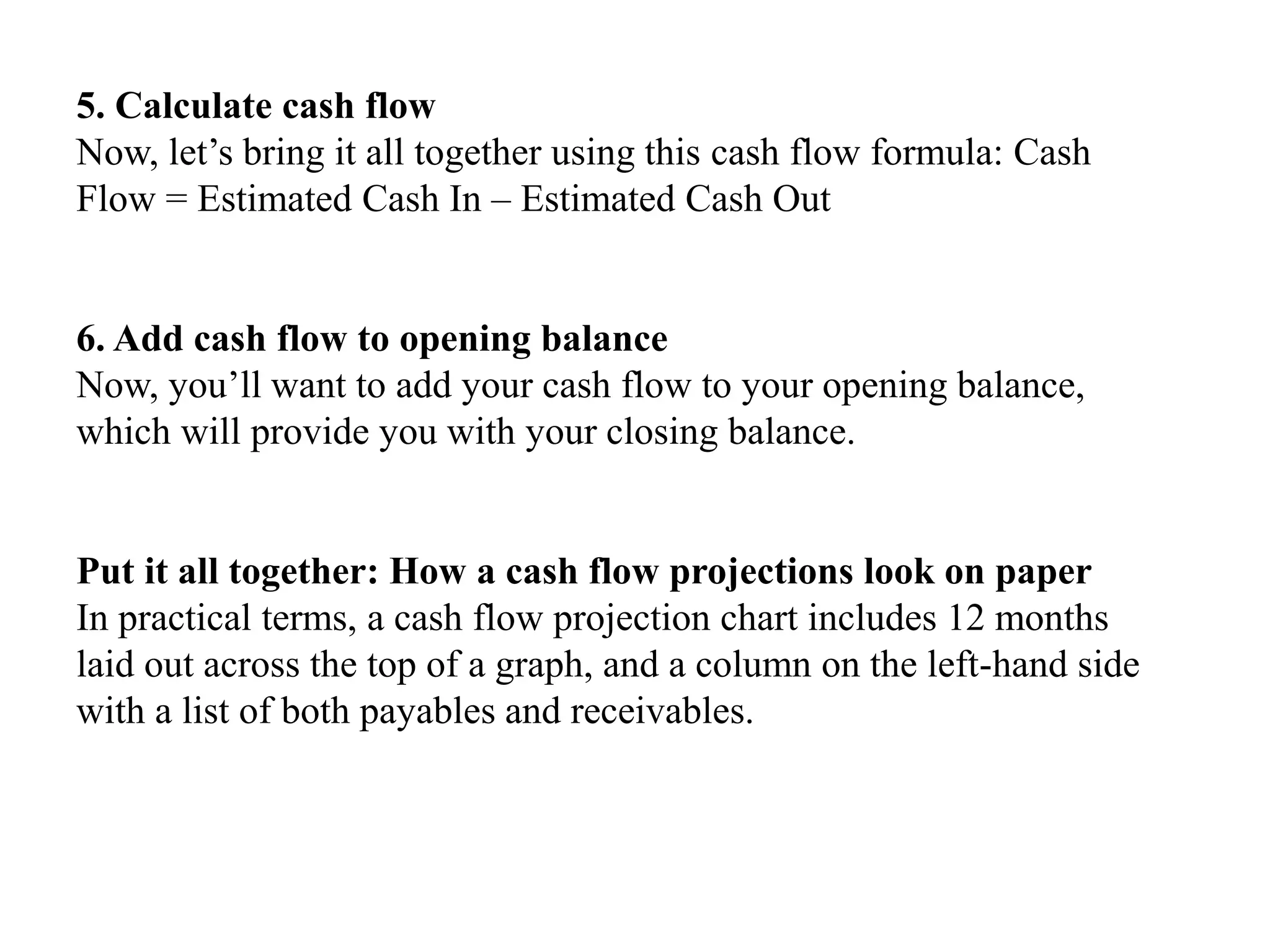
Combine the adjusted operating cash flow, net salvage proceeds, and working capital recovery to establish the undiscounted terminal cash flow figure.
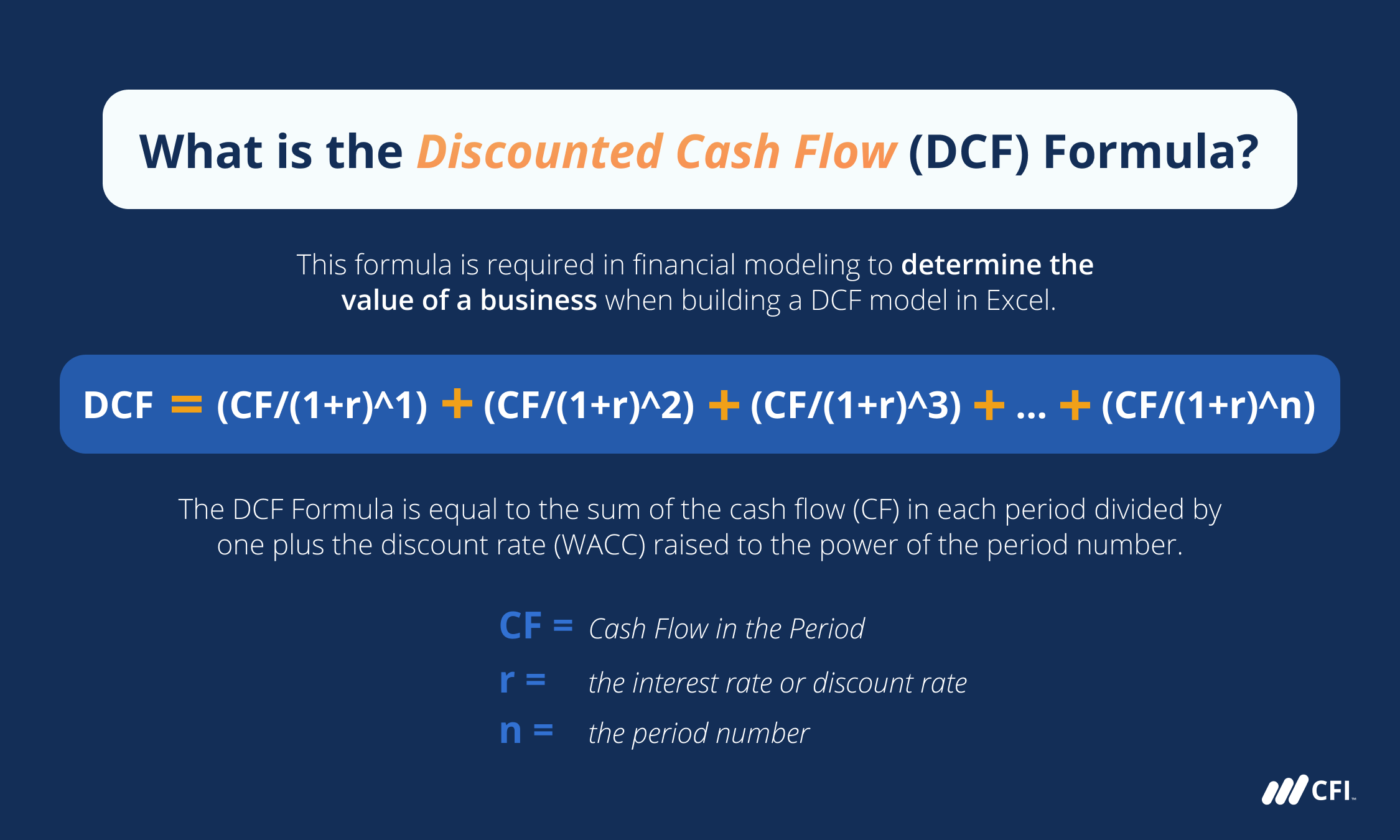
To determine its impact on the overarching valuation, discount this terminal figure back to the present value using the appropriate discount rate, such as the Weighted Average Cost of Capital (WACC), compounded over the number of forecast periods.
Comparison of Terminal Valuation Approaches
While terminal cash flow captures the final period's distinct inflows, overall business valuations also rely on broader terminal value methods. Understanding how terminal cash flow interacts with these methods prevents double-counting or valuation errors.
| Valuation Approach | Primary Mechanism | Key Advantages | Major Limitations |
|---|---|---|---|
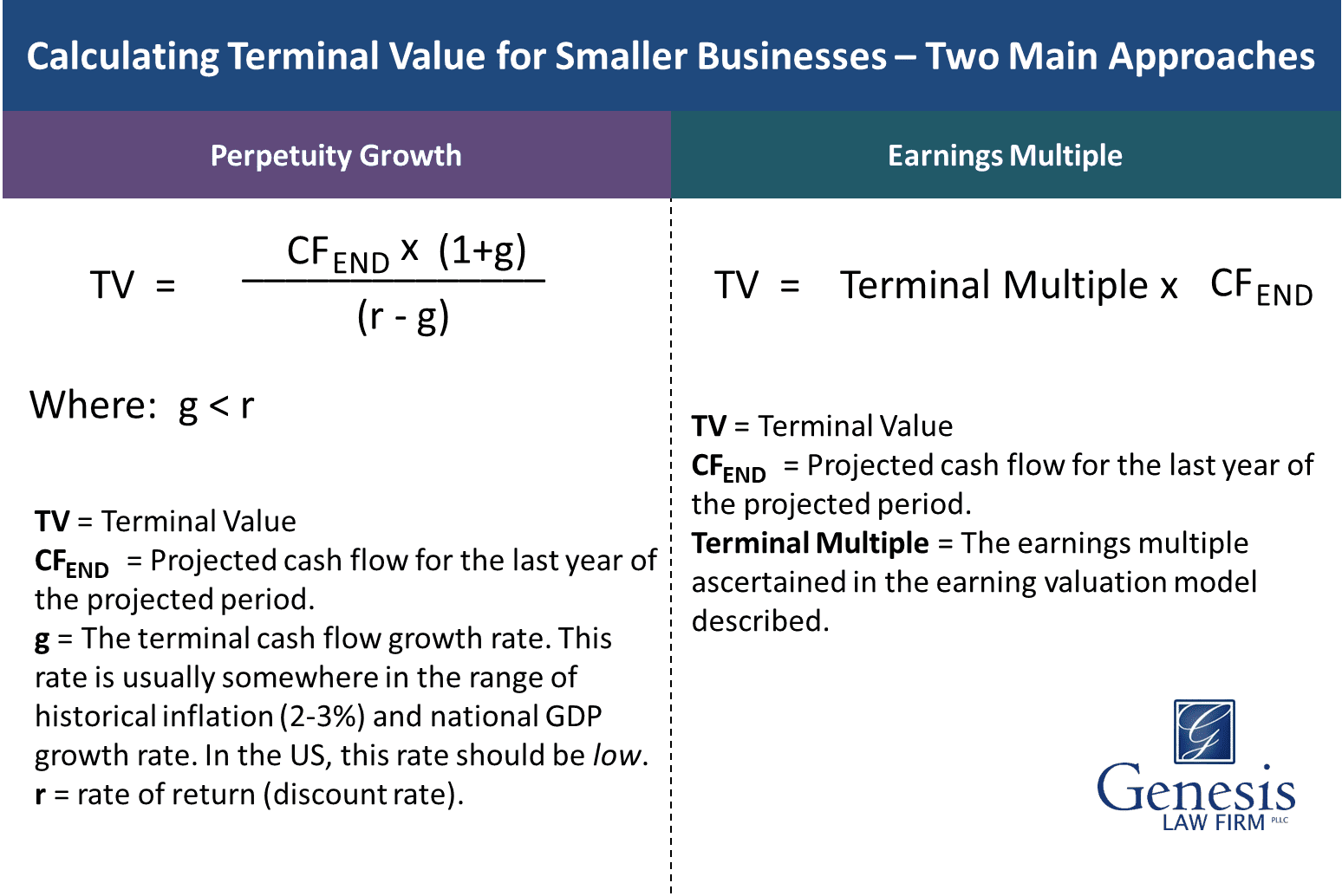
| Gordon Growth Model (Perpetuity) | Assumes cash flows grow at a constant rate infinitely beyond the forecast period. | Mathematically straightforward; captures infinite horizon value. | Highly sensitive to small changes in long-term growth and discount rates. |
| Exit Multiple Method | Applies an industry-standard EV/EBITDA or P/E multiple to the final year's earnings. | Relies on observable current market benchmarks and comparable transactions. | Market multiples fluctuate wildly across economic cycles and investor sentiment. |
| Liquidation Value Approach | Sums the net realizable value of all individual assets minus liabilities. | Highly reliable for distressed firms or projects with finite lifespans. | Ignores ongoing operational synergy and future earning potential. |
Selecting the appropriate method depends on industry characteristics. Capital-intensive sectors with clear asset retirements often benefit from liquidation-based terminal modeling, whereas high-growth technology firms rely more heavily on exit multiples or perpetuity growth assumptions.
Common Calculation Mistakes and Troubleshooting
Even experienced financial modelers occasionally introduce errors into terminal calculations due to faulty assumptions or mechanical oversights in tax accounting.
Ignoring Tax Consequences on Asset Sales
A frequent error involves treating the gross salvage value of equipment as a pure cash inflow. If an asset has been fully depreciated, its book value is zero. Selling it for a positive amount generates a taxable gain. Analysts who omit this tax liability artificially inflate the terminal cash flow, leading to an overvalued project.
Inconsistent Working Capital Assumptions
Failing to align working capital recovery with the initial investment assumptions creates severe distortions. If a model assumes growing working capital requirements throughout the explicit forecast period without releasing that capital at termination, the model implicitly assumes the business permanently abandons its cash inside inventory and accounts receivable.
Mixing Nominal and Real Figures
When calculating discount rates and cash flows, consistency is paramount. Mixing nominal cash flows (which include inflation) with real discount rates (which strip out inflation) ruins the present value calculation. Ensure that all inputs in the terminal calculation share the same inflationary baseline.
Frequently Asked Questions
What is the difference between terminal cash flow and terminal value?
Terminal cash flow refers specifically to the net cash generated during the final, discrete period of a project or forecast, including asset liquidation and working capital recovery. Terminal value is the broader present value of all subsequent cash flows stretching into perpetuity beyond the explicit forecast window.
How does net working capital recovery affect terminal cash flow?
Net working capital recovery acts as a cash inflow at the end of a project. When operations wind down, tied-up funds in inventory and receivables are collected and paid out, returning capital to the firm and increasing the final period's cash balance.
Are taxes always applied to asset salvage values?
Taxes apply whenever an asset is sold for an amount exceeding its current tax book value. If an asset is sold at a loss relative to its book value, the company may realize a tax shield, which can offset taxable income elsewhere in the business.
Which discount rate should be used for terminal cash flows?
Analysts typically use the firm's Weighted Average Cost of Capital (WACC) as the discount rate for terminal cash flows in corporate finance, as it reflects the average rate required by all capital providers to compensate for risk.
Can terminal cash flow be negative?
Yes. If a project requires massive environmental cleanup costs, decommissioning expenses, or severance payouts at the end of its life that exceed asset liquidation proceeds, the terminal cash flow can be negative.
Practical Next Actions
To apply these principles effectively, verify all historical balance sheet accounts to ensure accurate working capital figures before launching a DCF model. Review asset depreciation schedules against current market conditions to calculate net salvage values precisely, and consult a qualified financial advisor or corporate valuation expert before finalizing high-stakes capital allocation decisions.
Image Gallery