How Transport in Biology Works: Mechanisms, Systems, and Cellular Dynamics
Transport in biology refers to the intricate set of physical and biochemical mechanisms that cells and multi-cellular organisms use to move molecules, nutrients, gases, and waste products across membranes and throughout entire body sys...
Transport in biology refers to the intricate set of physical and biochemical mechanisms that cells and multi-cellular organisms use to move molecules, nutrients, gases, and waste products across membranes and throughout entire body systems to sustain life.
Contents
To understand how transport in biology works, one must examine life across two primary scales: the microscopic domain of cellular transport, where individual molecules cross semi-permeable membranes, and the macroscopic domain of systemic transport, where specialized organs move fluids, oxygen, and nutrients across complex organisms. Whether dealing with a single-celled bacterium absorbing glucose or a mammalian cardiovascular system pumping blood against gravity, biological transport relies on precise physical forces, concentration gradients, and specialized structural proteins to maintain dynamic equilibrium, known as homeostasis.
The Microscopic Foundation: Cellular Transport Mechanisms
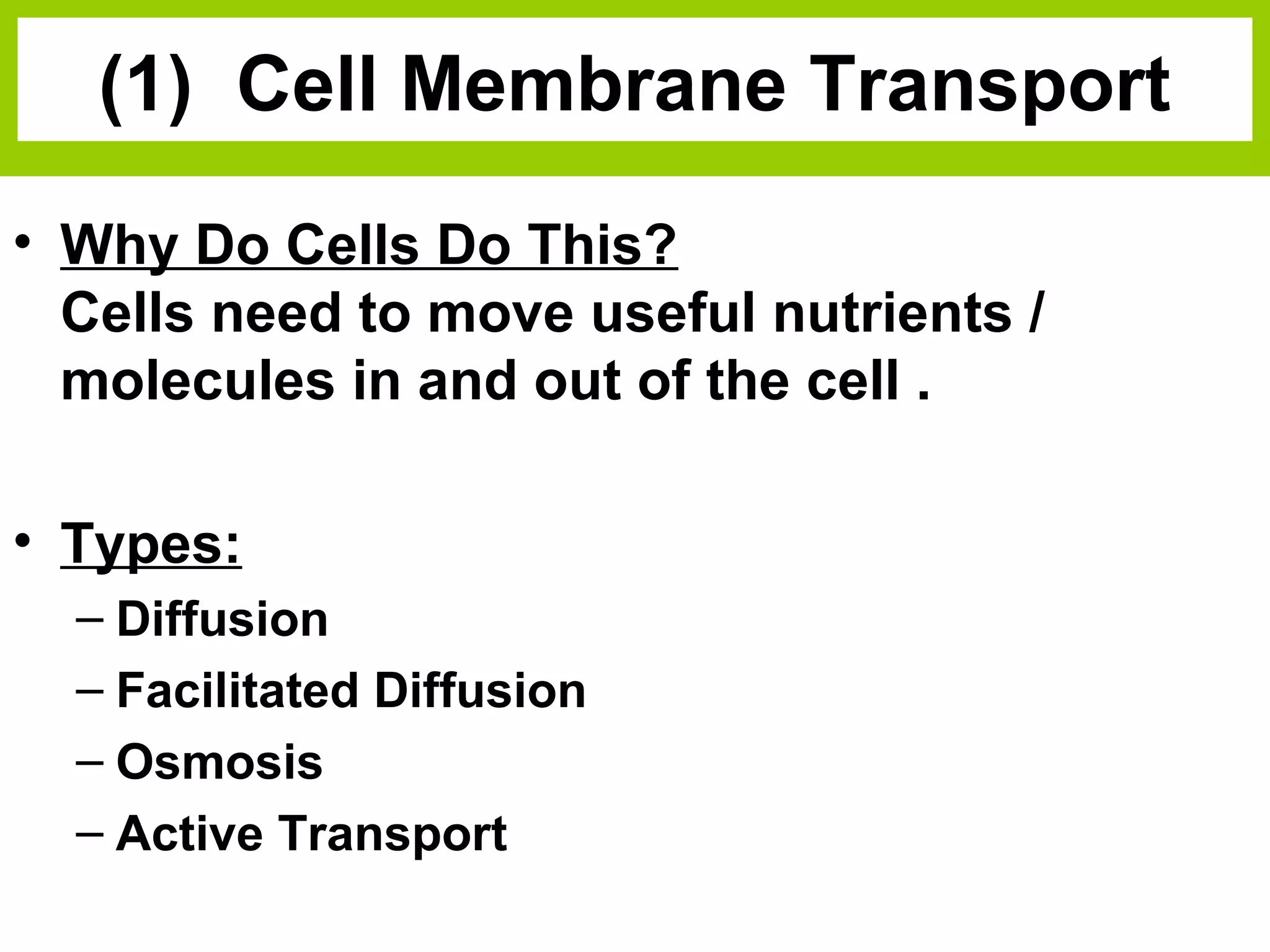
At the cellular level, transport mechanisms dictate what enters and exits the cell. The plasma membrane acts as a selective gatekeeper, composed of a phospholipid bilayer embedded with proteins that regulate molecular traffic. Cellular transport is broadly divided into two major categories: passive transport and active transport.
Passive Transport: Moving Along Concentration Gradients
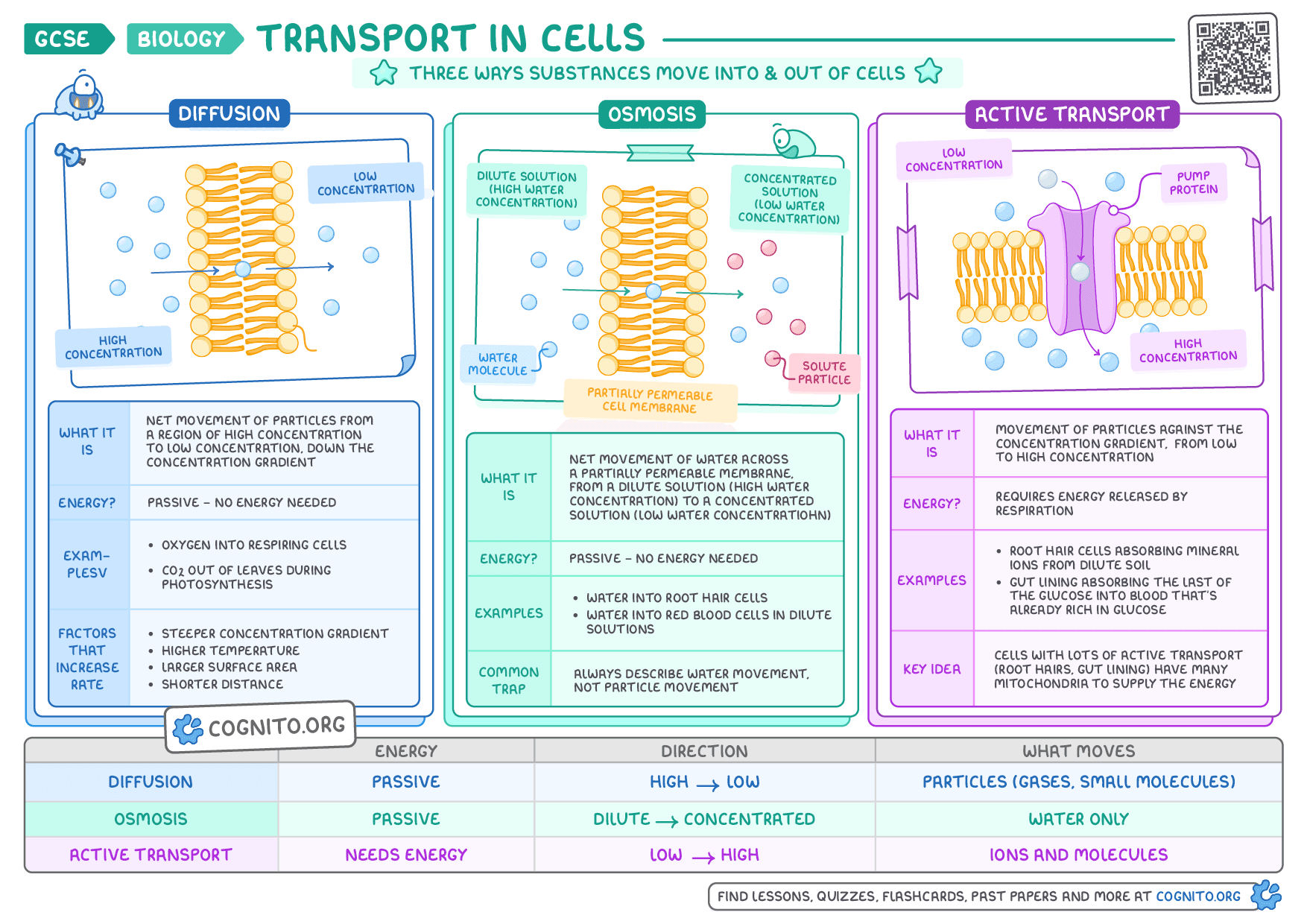
Passive transport requires no metabolic energy, such as adenosine triphosphate (ATP). Instead, it relies entirely on the kinetic energy of random molecular motion, moving substances from an area of higher concentration to an area of lower concentration down a concentration gradient.
- Simple Diffusion: Small, non-polar molecules like oxygen ($\text{O}_2$) and carbon dioxide ($\text{CO}_2$) slip directly through the hydrophobic core of the phospholipid bilayer without assistance.
- Facilitated Diffusion: Polar molecules and ions (such as glucose and sodium) cannot easily cross the lipid bilayer. They require transmembrane channel proteins or carrier proteins to facilitate their passage without expending cellular energy.
- Osmosis: This is the specialized passive diffusion of water molecules across a selectively permeable membrane from a region of lower solute concentration to higher solute concentration. Aquaporins—specialized water channel proteins—accelerate this process in many cell types.
Active Transport: Moving Against Gradients
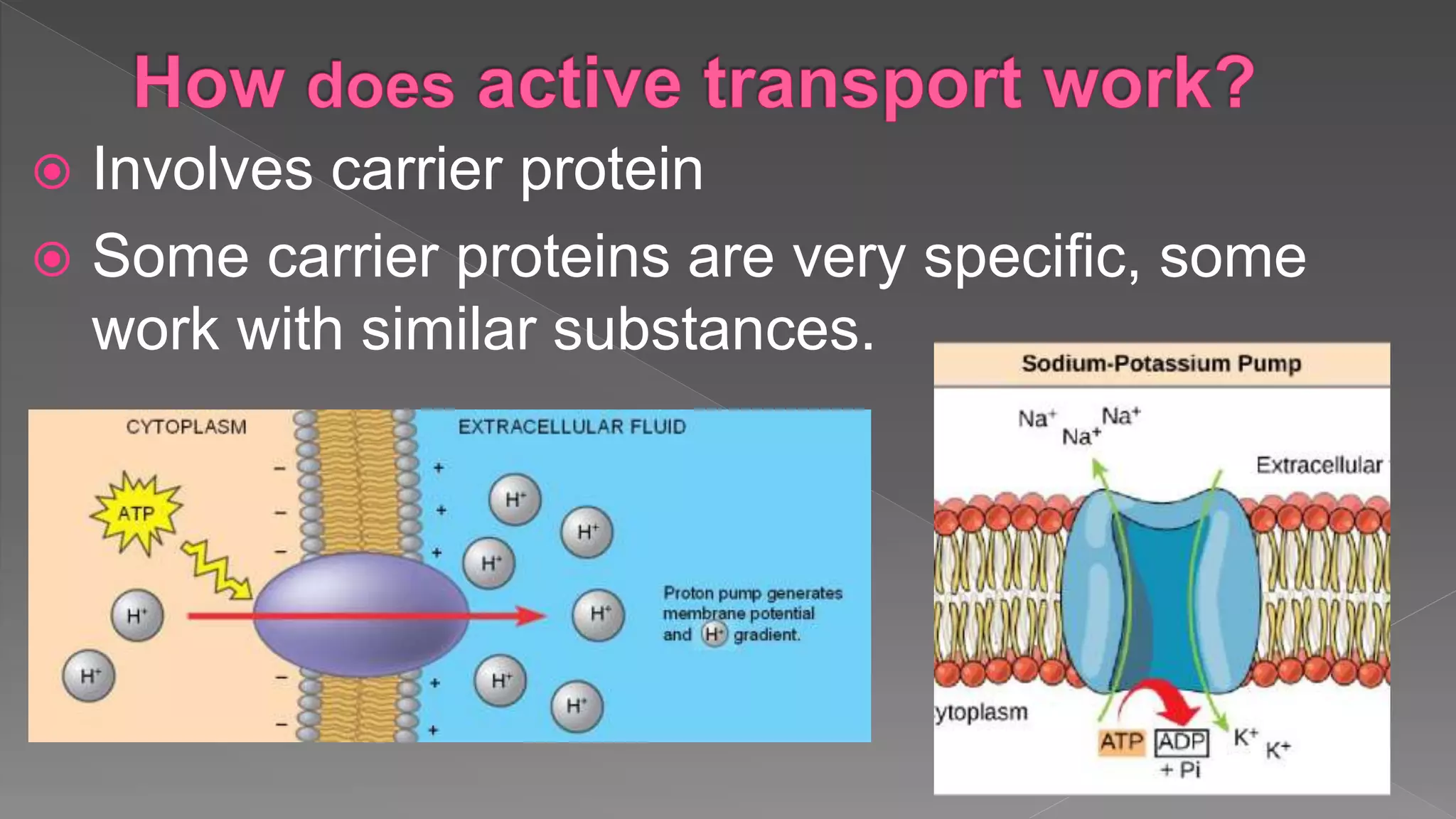
When a cell needs to accumulate a substance against its concentration gradient (from low to high concentration), it must employ active transport. This mechanism requires cellular energy, typically derived from the hydrolysis of ATP.
- Primary Active Transport: Proteins use energy directly from ATP to change shape and pump molecules across the membrane. The classic example is the sodium-potassium pump ($\text{Na}^+/\text{K}^+$-ATPase), which expels three sodium ions from the cell while importing two potassium ions for every molecule of ATP consumed, maintaining the resting membrane potential essential for nerve and muscle function.
- Secondary Active Transport (Cotransport): This method uses the electrochemical gradient established by primary active transport to move other substances. Symporters move two molecules in the same direction, while antiporters move them in opposite directions. For instance, intestinal cells use a sodium-glucose cotransporter to import glucose alongside sodium ions without directly spending ATP on the glucose molecule itself.
Bulk Transport: Endocytosis and Exocytosis
For macromolecules, large particles, or large volumes of fluid, cells utilize bulk transport, which requires significant amounts of energy and structural rearrangement of the plasma membrane.
- Endocytosis: The cell membrane folds inward, enclosing extracellular material to form a vesicle that pinches off inside the cytoplasm. Subtypes include phagocytosis ("cell eating" for large particles), pinocytosis ("cell drinking" for dissolved fluids), and receptor-mediated endocytosis, which captures specific target molecules bound to membrane receptors.
- Exocytosis: Intracellular vesicles fuse with the plasma membrane, releasing their contents (such as hormones, neurotransmitters, or waste products) into the extracellular space.
Comparison of Cellular Transport Mechanisms
To clarify how different substances cross cellular boundaries, the table below outlines the primary cellular transport mechanisms, their energy requirements, and typical cargo.
| Mechanism | Energy Required (ATP) | Direction of Movement | Typical Cargo |
|---|---|---|---|
| Simple Diffusion | No | Down concentration gradient | $\text{O}_2$, $\text{CO}_2$, small lipids |
| Facilitated Diffusion | No | Down concentration gradient | Glucose, amino acids, ions |
| Osmosis | No | Toward higher solute concentration | Water molecules |
| Primary Active Transport | Yes | Against concentration gradient | Ions ($\text{Na}^+$, $\text{K}^+$, $\text{Ca}^{2+}$) |
| Secondary Active Transport | Indirect (uses gradient) | Against concentration gradient | Glucose, amino acids coupled with ions |
| Endocytosis | Yes | Into the cell (bulk transport) | Macromolecules, pathogens, fluids |
| Exocytosis | Yes | Out of the cell (bulk transport) | Hormones, neurotransmitters, waste |
Macroscopic Transport in Plants: Vascular Dynamics
Plants are stationary organisms that must acquire water and minerals from the soil and sugars from their leaves, distributing them across structural axes that can reach dozens of meters in height. Plants achieve this through two dedicated vascular tissues: xylem and phloem.
Xylem Transport: Water and Mineral Ascent
The xylem is responsible for transporting water and dissolved inorganic minerals upward from the roots to the leaves. This transport system is largely driven by physical forces rather than metabolic pumping:
- Transpiration Pull: Water evaporates from microscopic pores in the leaves called stomata. This loss creates negative pressure (tension) in the leaf mesophyll.
- Cohesion-Tension Theory: Because water molecules form hydrogen bonds with one another (cohesion) and with the walls of xylem vessels (adhesion), they form a continuous water column. The tension created by transpiration pulls this entire column upward from the roots.
- Root Pressure: At night, when transpiration is low, roots actively pump mineral ions into the root xylem, lowering water potential and causing water to flow inward from the soil, generating a positive pressure that pushes fluid upward a short distance (often observed as guttation).
Phloem Transport: Translocation of Organic Nutrients
The phloem distributes organic compounds—primarily sucrose and amino acids synthesized via photosynthesis—from "sources" (mature leaves) to "sinks" (growing roots, developing fruits, and storage organs).
- Pressure-Flow Hypothesis: Sugars are actively loaded into sieve-tube elements at the source, causing water to follow via osmosis from adjacent xylem vessels. This influx of water creates high turgor pressure, which forces the sap to flow down toward regions of lower pressure at the sink, where sugars are actively unloaded and consumed or stored.
Macroscopic Transport in Animals: Circulatory Systems
As animals evolved to become larger and more complex, simple diffusion across body surfaces became insufficient to supply deep internal tissues with oxygen and nutrients. Consequently, animals developed specialized circulatory systems.
Open vs. Closed Circulatory Systems
- Open Circulatory Systems: Found in arthropods and most mollusks, these systems feature a heart that pumps a fluid called hemolymph into open body cavities (hemocoels), where it bathes organs directly before returning to the heart through pores called ostia.
- Closed Circulatory Systems: Found in annelids, cephalopods, and vertebrates, these systems keep blood confined within a continuous network of blood vessels (arteries, capillaries, and veins). This allows for higher blood pressure, faster delivery rates, and precise regulation of blood flow to specific organs.
The Human Cardiovascular Blueprint
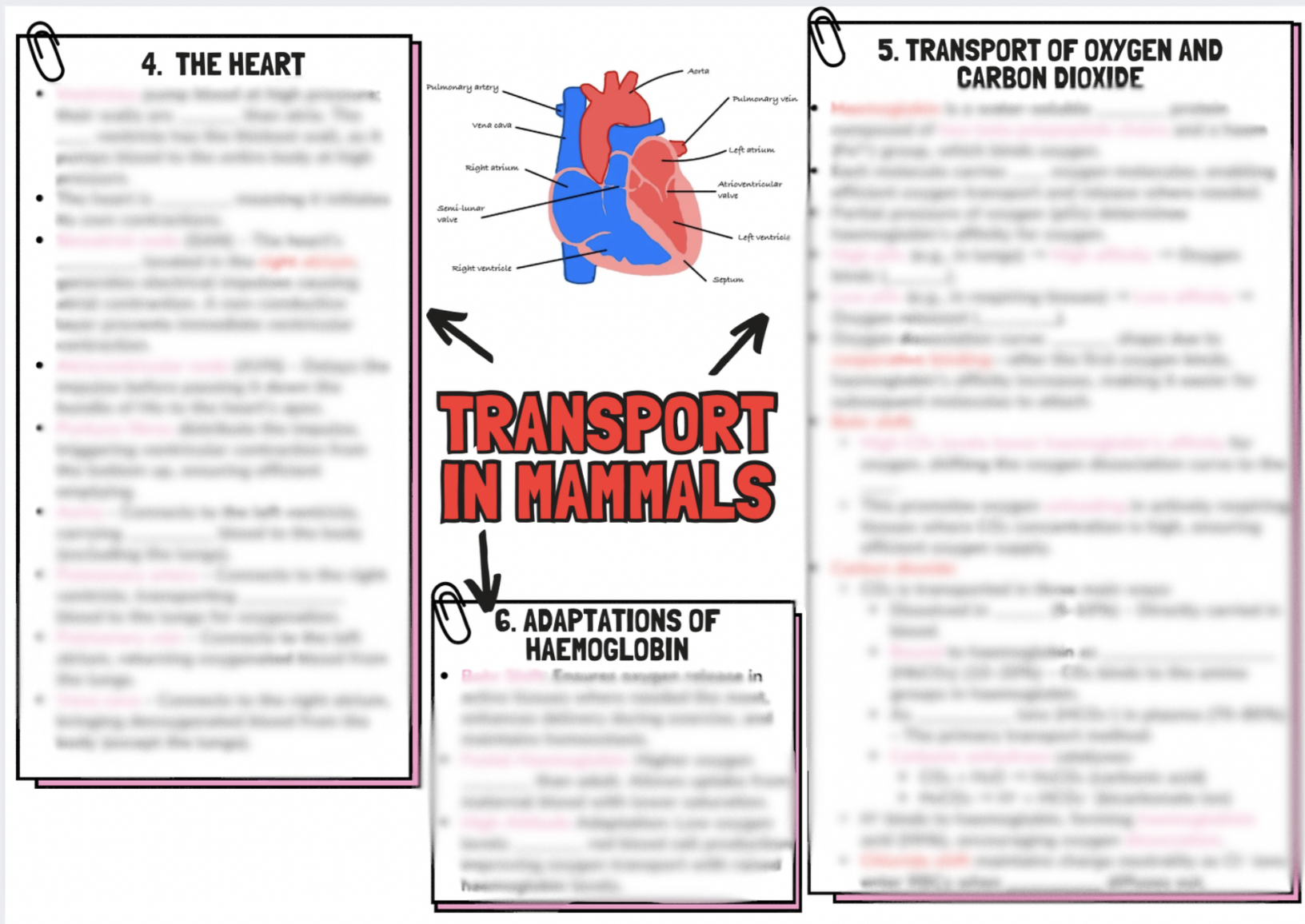
The human cardiovascular system exemplifies closed transport. Deoxygenated blood returns from the body via the superior and inferior vena cava into the right atrium, passes through the tricuspid valve into the right ventricle, and is pumped through the pulmonary arteries to the lungs. There, carbon dioxide is exchanged for oxygen via simple diffusion across the thin walls of pulmonary capillaries.
Oxygenated blood returns via the pulmonary veins to the left atrium, moves through the mitral valve into the left ventricle, and is forcefully ejected through the aorta into the systemic circulation. Artery walls withstand high pressures, branching into arterioles and microscopic capillaries where nutrient and gas exchange occurs, before converging into venules and veins that complete the circuit.
Common Challenges and Pathologies in Biological Transport
When biological transport systems fail, the consequences for the organism are immediate and severe. Understanding these disruptions highlights the critical nature of these transport networks.
- Cystic Fibrosis: A genetic disorder caused by mutations in the gene encoding the CFTR (Cystic Fibrosis Transmembrane Conductance Regulator) protein, which normally transports chloride ions across epithelial cell membranes. Defective transport leads to thick, sticky mucus buildup in the lungs and digestive tract.
- Edema: The abnormal accumulation of fluid in interstitial spaces, often caused by disruptions in capillary pressure balance, lymphatic obstruction, or protein deficiencies in the blood plasma.
- Drought Stress in Plants: Excessive evaporation combined with dry soil can break the water column in plant xylem vessels—a phenomenon called cavitation—preventing water transport and leading to wilting and tissue death.
Frequently Asked Questions
What is the main difference between passive and active transport?
Passive transport moves molecules down their concentration gradient without requiring cellular energy (ATP), whereas active transport moves molecules against their concentration gradient and requires direct or indirect input of cellular energy.
How do plants move water to great heights without a heart?
Plants rely on the cohesion-tension theory. Water evaporates from the leaves (transpiration), creating a negative pressure tension that pulls a continuous, cohesive column of water upward from the roots through the xylem vessels.
Why do multicellular organisms need circulatory systems?
Multicellular organisms have deep internal tissues that are too far from the external environment for simple diffusion to supply adequate oxygen, nutrients, and waste removal. Circulatory systems provide bulk flow transport to bridge this distance.
What role do proteins play in cellular transport?
Membrane proteins act as channels, carriers, and pumps. They provide pathways for polar and charged molecules that cannot cross the hydrophobic lipid bilayer on their own, and they execute active transport using ATP.
What happens during osmosis if a cell is placed in a hypertonic solution?
In a hypertonic solution (higher solute concentration outside the cell), water flows out of the cell via osmosis, causing animal cells to shrivel (crenation) and plant cell membranes to pull away from their cell walls (plasmolysis).
Next Actions and Further Study
To deepen your understanding of biological transport, examine the cellular respiration pathways that generate the ATP required for active transport, or study cardiovascular physiology texts to explore how autonomic nervous systems regulate blood distribution during physical exertion. Observing microscopic slides of plant stems and animal blood vessels under a microscope will also provide visual reinforcement of these structural transport systems.
Image Gallery