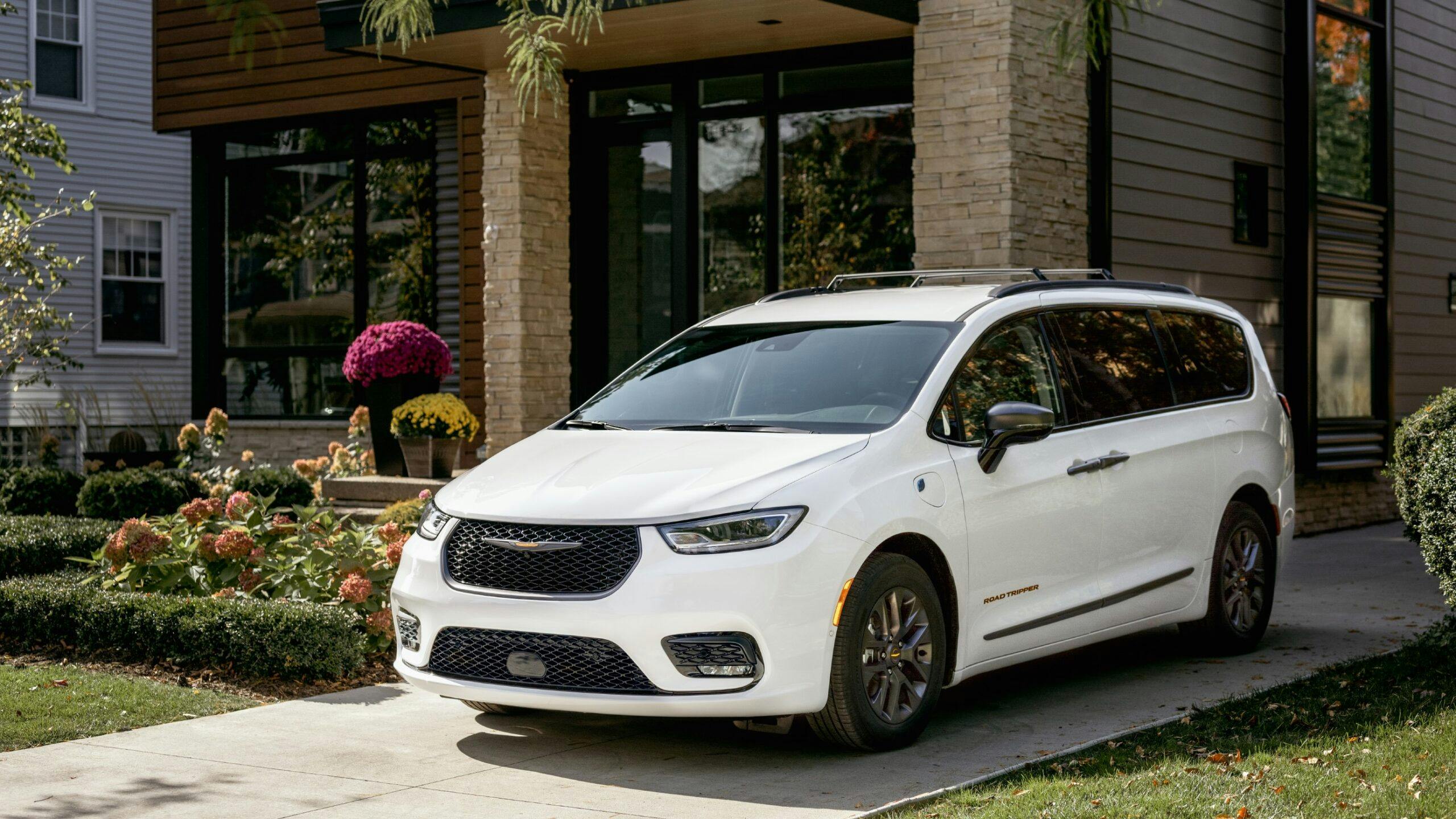
Do Minivans Have AWD? Available Models, Systems, and Buyer's Guide
Yes, select modern minivans offer All-Wheel Drive (AWD), though it is not a standard feature across the entire vehicle segment. Currently, buyers can get factory-installed AWD on the Toyota Sienna and gas-powered Chrysler Pacifica. Com...
Yes, select modern minivans offer All-Wheel Drive (AWD), though it is not a standard feature across the entire vehicle segment. Currently, buyers can get factory-installed AWD on the Toyota Sienna and gas-powered Chrysler Pacifica. Competitors like the Honda Odyssey and Kia Carnival remain strictly Front-Wheel Drive (FWD).
Contents
For decades, families seeking the passenger capacity and low load floor of a minivan had to compromise on winter weather traction or upgrade to a three-row crossover SUV. Drivetrain engineering has evolved significantly, allowing manufacturers to integrate AWD without sacrificing the flat floors, low step-in heights, and interior flexibility that define the minivan segment.
Understanding which minivans offer AWD, how their specific mechanical or electronic systems operate, and whether the added cost is necessary for your driving conditions is essential before making a purchase decision.
Minivans with AWD: Current Market Overview
While the minivan segment has consolidated over the past decade, manufacturers offering AWD have taken distinctly different mechanical approaches to achieve four-wheel traction.
| AVAILABLE WITH AWD | FWD ONLY (NO FACTORY AWD) |
|---|---|
| Toyota Sienna (e-AWD Standard or Optional across all trims) | Honda Odyssey |
| Chrysler Pacifica (Gas trims) | Kia Carnival |
| Chrysler Pacifica Hybrid |
Toyota Sienna
The Toyota Sienna was the sole minivan in North America to offer AWD for nearly two decades. In its current generation, Toyota redesigned the Sienna exclusively as a hybrid vehicle, utilizing an Electronic All-Wheel Drive (e-AWD) system.
Unlike traditional AWD systems that use a heavy steel driveshaft running from the front engine to the rear wheels, Toyota’s e-AWD utilizes an independent electric motor mounted directly on the rear axle. When the system detects front-wheel slip, or during initial acceleration to optimize launching traction, the rear electric motor engages instantly to provide torque to the rear wheels.
Because the e-AWD system is electronically controlled and lacks physical driveshaft components, it operates with minimal friction loss, allowing the Sienna to deliver all-weather capability while maintaining exceptional fuel efficiency.
Chrysler Pacifica
Chrysler re-introduced AWD to its minivan lineup to compete directly with all-weather SUVs. Unlike the Sienna's electric setup, the gas-powered Chrysler Pacifica uses a fully automatic mechanical AWD system.
The Pacifica’s system utilizes a power transfer unit (PTU), a two-piece driveshaft, and a rear drive module (RDM). Its defining feature is a seamless disconnect system. When the vehicle determines that four-wheel traction is unnecessary—such as cruising on dry highways at warm temperatures—it disengages the driveshaft and rear axle entirely. This eliminates parasitic drag, returning the minivan to pure front-wheel drive to save fuel.
The system automatically engages AWD under specific trigger conditions:
- Outside temperatures approaching freezing.
- Activation of the windshield wipers.
- Detection of front-wheel slippage or rapid acceleration.
- Steering wheel inputs indicating sharp cornering or aggressive driving.
Note: The Chrysler Pacifica Plug-in Hybrid (PHEV) does not offer AWD. Its high-voltage lithium-ion battery pack occupies the underfloor storage cavity where the mechanical AWD driveshaft and components would otherwise sit.
Minivans Without AWD (FWD Only)
Two major competitors in the minivan segment do not offer factory AWD options, relying instead on front-wheel drive paired with modern electronic traction control systems.
Honda Odyssey
The Honda Odyssey remains one of the top-selling minivans on the market, but Honda continues to build it exclusively with front-wheel drive. Honda engineers prioritize lower curb weight, simpler mechanical layouts, lower maintenance costs, and maximum interior volume. To assist drivers in adverse conditions, the Odyssey includes an Intelligent Traction Management system with dedicated Snow modes, which adjusts throttle mapping and brake vectoring to minimize wheelspin on slick surfaces.
Kia Carnival
The Kia Carnival features SUV-inspired styling, but underneath its boxy sheet metal lies a traditional front-wheel-drive minivan platform. Kia does not offer an AWD variant of the Carnival in North America. Like the Odyssey, the Carnival uses advanced electronic traction control, anti-lock braking systems (ABS), and drive-mode selectors to manage slippery roads, but mechanical torque is routed exclusively to the front tires.
Technical Deep-Dive: Mechanical AWD vs. Electronic AWD (e-AWD)
Understanding the distinction between mechanical and electronic AWD helps contextualize how these vehicles drive, how they consume fuel, and how they require long-term maintenance.
MECHANICAL AWD (e.g., Chrysler Pacifica)
- Engine / Trans
- PTU
- Driveshaft (Disconnects when not needed)
- Rear Drive Module
- Rear Wheels
ELECTRONIC AWD (e.g., Toyota Sienna)
- Front Driveline:
- Engine / Hybrid
- Front Electric/Gas Engine
- Front Wheels
- Rear Driveline:
- High-Voltage Battery
- Dedicated Rear Electric Motor
- Rear Wheels
Mechanical AWD Systems
Mechanical AWD systems rely on physical connections between the engine's transmission and the rear differential.
- Power Transfer Unit (PTU): Takes rotational power from the front transaxle and routes it toward the back of the vehicle.
- Driveshaft: A multi-piece rotating shaft running down the center tunnel beneath the cabin floor.
- Rear Drive Module (RDM): Contains a clutch pack that modulates how much torque reaches the rear axles.
Advantage: Can deliver substantial mechanical torque to the rear wheels, making it capable of handling heavy drag or low-traction scenarios like unpaved inclines or deep mud. Disadvantage: Adds physical weight, creates mechanical friction, and requires periodic fluid changes for the front PTU and rear differential.
Electronic AWD (e-AWD) Systems
Electronic AWD systems decouple the front and rear drivelines completely.
- Front Axle: Powered by the internal combustion engine paired with front electric motor-generators.
- Rear Axle: Powered strictly by a rear-mounted electric motor powered by the vehicle's hybrid battery pack.
- Control Unit: An electronic control unit (ECU) monitors wheel speeds, accelerator pedal position, and steering angles, sending electrical current to the rear motor in milliseconds when torque is required.
Advantage: Light weight, zero physical driveshaft intrusion into passenger space, no mechanical drag when cruising, and instantaneous electrical torque delivery. Disadvantage: The amount of power delivered to the rear wheels is limited by the output of the rear electric motor (rather than the full output of the primary gas engine).
Detailed Comparison of AWD Minivans and FWD Competitors
The table below outlines key technical specifications, fuel economy ratings, and drivetrain characteristics across the major minivan options.
| Model | Drivetrain | AWD System Type | Estimated MPG (City/Hwy/Combined) | Towing Capacity | Ground Clearance |
|---|---|---|---|---|---|
| Toyota Sienna AWD | AWD (Standard/Avail.) | Electronic (e-AWD Rear Motor) | 35 / 36 / 35 | 3,500 lbs | 6.37 inches |
| Chrysler Pacifica AWD | AWD (Available) | Mechanical with Automatic Disconnect | 17 / 25 / 20 | 3,600 lbs | 5.4 inches |
| Chrysler Pacifica FWD | FWD (Standard) | Front-Wheel Drive | 19 / 28 / 22 | 3,600 lbs | 5.4 inches |
| Chrysler Pacifica PHEV | FWD Only | Front-Wheel Drive (Plug-in Hybrid) | 82 MPGe / 30 Combined Gas | 3,600 lbs (Not Recommended) | 5.4 inches |
| Honda Odyssey | FWD Only | Front-Wheel Drive with Traction Management | 19 / 28 / 22 | 3,500 lbs | 4.5 inches |
| Kia Carnival | FWD Only | Front-Wheel Drive with Drive Modes | 19 / 26 / 22 | 3,500 lbs | 6.8 inches |
Pros and Cons of Choosing an AWD Minivan
Evaluating an AWD minivan requires balancing performance capabilities against initial purchase costs and ongoing ownership expenses.
Advantages
- Superior Launch Traction: AWD eliminates front wheelspin when accelerating from a complete stop on ice, wet pavement, gravel, or steep inclines.
- Enhanced Driving Confidence: In severe weather, four-wheel torque distribution keeps the vehicle tracking straight under acceleration, reducing driver stress.
- Stronger Resale Value: In cold-weather climates (often referred to as the "Snowbelt"), used AWD minivans retain a higher percentage of their original MSRP compared to FWD equivalents.
Disadvantages
- Higher Initial Cost: Selecting AWD generally adds between $1,500 and $3,000 to the MSRP, or forces the buyer into higher-tier trim levels.
- Ground Clearance Limitations: An AWD minivan is not an off-road vehicle. Minivans typically feature between 4.5 and 6.4 inches of ground clearance. While AWD helps with traction on slippery roads, it will not prevent a low-slung chassis from bottoming out in deep snow drifts.
- Increased Maintenance Requirements: Mechanical AWD systems (like the Pacifica's) require additional drivetrain fluid inspections and service intervals. On all AWD vehicles, tire circumference must be kept closely matched across all four wheels to prevent strain on the differential or electronic sensors.
AWD vs. Snow Tires on a FWD Minivan: What Do You Actually Need?
A common misconception among car buyers is that All-Wheel Drive is mandatory for safe winter driving. In reality, a vehicle's ability to stop and turn on ice or snow depends almost entirely on tire compound and tread design, not on how many wheels receive power from the engine.
- Drivetrain (AWD vs FWD): Helps ONLY with ACCELERATION and GETTING MOVING.
- Winter Tires: Helps with ACCELERATION, STOPPING, and CORNERING.
The Physics of Winter Traction
- All-Wheel Drive distributes engine power to four contact patches instead of two. This helps a vehicle accelerate from a stop and prevents getting stuck in unplowed parking spots. However, AWD provides zero assistance when braking or taking a sharp turn on ice.
- Winter Tires (Dedicated Snow Tires) use specialized rubber compounds that remain flexible in freezing temperatures, along with heavy siping (tiny slits in the tread blocks) that bite into packed snow and ice.
A front-wheel-drive minivan equipped with four high-quality winter tires will consistently outperform an all-wheel-drive minivan riding on standard all-season tires when it comes to stopping distance and cornering control on frozen roads.
If your primary concern is safely stopping and steering through harsh winters, investing in a dedicated set of winter tires for a FWD vehicle (such as a Honda Odyssey or Kia Carnival) is often more effective—and significantly less expensive—than purchasing an AWD trim level running on standard factory tires. However, for maximum cold-weather performance, combining an AWD minivan with dedicated winter tires provides the ultimate level of stability and control.
Tire Maintenance and Cost Considerations for AWD Minivans
Managing an AWD vehicle requires strict adherence to tire care guidelines to prevent mechanical damage or system errors.
Matching Tire Circumference
On mechanical AWD vehicles, all four tires must rotate at identical speeds while traveling in a straight line. If one tire is significantly newer or worn down more than the others, its smaller rolling diameter causes it to rotate faster. This speed differential tricks the AWD computer into sensing slippage, causing the system to engage continuously or putting severe rotational strain on the transfer case and differentials.
- The 2/32-inch Rule: Manufacturers generally recommend that all four tires on an AWD vehicle have tread depths within 2/32 of an inch of each other. If one tire suffers a non-repairable puncture, you may be forced to replace all four tires simultaneously, or have a replacement tire professionally shaved down to match the remaining three.
- Rotation Schedules: Routine tire rotations every 5,000 to 7,500 miles are critical for AWD minivans to ensure even tread wear between the heavily loaded front steering axle and the trailing rear axle.
Frequently Asked Questions
Does the Honda Odyssey come with AWD?
No. The Honda Odyssey is available exclusively with Front-Wheel Drive (FWD). Honda uses an Intelligent Traction Management system with a selectable Snow Mode to manage engine throttle response and traction control on slippery surfaces, but it does not offer a physical or electric AWD system.
Does the Chrysler Pacifica Hybrid have AWD?
No. The Chrysler Pacifica Plug-in Hybrid (PHEV) is FWD only. The high-voltage lithium-ion battery pack used in the hybrid system is installed beneath the floor in the area where the mechanical AWD driveshaft and rear differential would normally sit. AWD is only available on traditional, gas-powered Chrysler Pacifica models.
How does the Toyota Sienna e-AWD work without a driveshaft?
The Toyota Sienna uses an Electronic All-Wheel Drive (e-AWD) system. Instead of connecting the front engine to the rear wheels using a long metal driveshaft, Toyota installed a separate, dedicated electric motor on the rear axle. When the vehicle senses that the front wheels are slipping, the battery sends electrical power directly to the rear motor, providing instant rear-wheel traction without adding mechanical drag or intruding into interior cabin space.
Is an AWD minivan good in deep snow?
An AWD minivan performs well in light to moderate snow and slush, but its capability in deep snow is limited by ground clearance. Minivans generally have between 4.5 and 6.4 inches of ground clearance, which is lower than most midsize or full-size SUVs (which often range from 7.5 to 9.0 inches). If snow depth exceeds the minivan's ground clearance, the vehicle can become high-centered regardless of how many wheels receive power.
Do older or used minivans have AWD options?
Yes, but choices are limited. The Toyota Sienna offered mechanical AWD on various trim levels from the 2004 through 2020 model years (3rd generation) before switching to the e-AWD hybrid system in 2021. Chrysler offered AWD on select Town & Country and Dodge Caravan models in the late 1990s and early 2000s, but dropped the feature until re-introducing mechanical AWD on the Pacifica platform in 2020.
Final Recommendation: Which Drivetrain Should You Choose?
Selecting the right drivetrain depends on your geographical location, daily driving habits, and total cost of ownership goals:
- Choose the Toyota Sienna AWD if high fuel economy is your top priority alongside winter traction. Its hybrid e-AWD powertrain delivers four-wheel stability while maintaining impressive fuel efficiency, making it an ideal long-distance family cruiser in cold climates.
- Choose the Chrysler Pacifica AWD if you prefer a traditional V6 engine layout, require maximum mechanical torque for heavy load carrying, and want fully automatic disengagement for highway cruising.
- Choose a FWD Minivan (Honda Odyssey, Kia Carnival, or Pacifica FWD) if you live in a region with mild winters or flat terrain. Equipping a front-wheel-drive minivan with a quality set of dedicated winter tires during colder months provides excellent stopping and steering performance at a lower overall price point.
Image Gallery