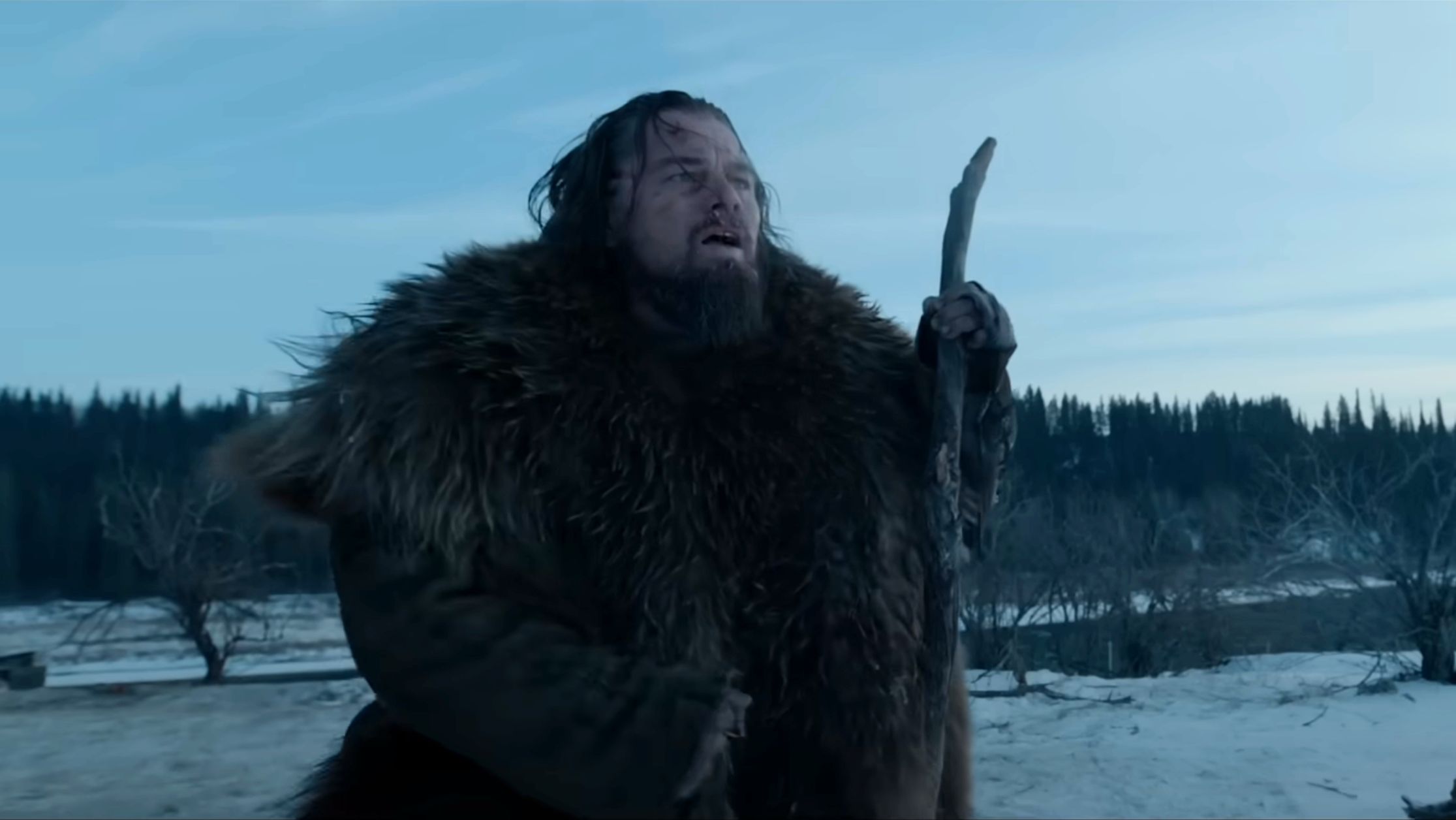
Detailed Breakdown of The Revenant Gross Revenue and Financial Performance
The worldwide gross revenue for The Revenant stands at approximately $533 million. This total is comprised of $183.6 million from the domestic (North American) market and $349.3 million from international territories. Produced on a sub...
The worldwide gross revenue for The Revenant stands at approximately $533 million. This total is comprised of $183.6 million from the domestic (North American) market and $349.3 million from international territories. Produced on a substantial budget of $135 million, the film overcame a difficult production cycle to become a significant commercial and critical success for 20th Century Fox.
Contents
The Financial Genesis: Budget and Production Challenges
To understand the scale of the gross revenue for The Revenant, one must first examine the massive financial investment and the risks associated with its production. Directed by Alejandro González Iñárritu, the film was initially greenlit with a budget significantly lower than its final $135 million price tag. Early estimates placed the production cost between $60 million and $95 million, but several factors led to a nearly 50% budget inflation.
The primary driver of these costs was Iñárritu’s insistence on using only natural light and shooting in chronological order. This artistic decision limited the filming window to only a few hours each day, drastically extending the production schedule. Furthermore, the search for authentic, snow-covered landscapes forced the production to move from Canada to southern Argentina when the Canadian winter melted prematurely. These logistical hurdles, combined with the high salaries for stars like Leonardo DiCaprio and Tom Hardy, made the film a massive financial gamble. In Hollywood terms, a "R-rated" survival epic with a $135 million budget usually requires a worldwide gross of at least $350 million to $400 million to reach the break-even point after accounting for marketing (P&A) and theater owner cuts.
Domestic Box Office Performance
The Revenant followed a strategic release pattern designed to maximize "awards buzz" while capturing the lucrative holiday audience. It opened in a limited release on December 25, 2015, playing in only four theaters to qualify for the Academy Awards. During this initial window, it maintained an incredible per-screen average, signaling high audience interest.
The wide release occurred on January 8, 2016, where it faced stiff competition from Star Wars: The Force Awakens. Despite the presence of a global juggernaut, The Revenant exceeded industry expectations by earning $39.8 million in its first weekend of wide release.
Key factors contributing to its domestic success included:
- Star Power: Leonardo DiCaprio’s quest for his first Oscar became a dominant cultural narrative, driving fans to theaters.
- Critical Acclaim: Strong reviews and a "must-see" reputation for its cinematography (by Emmanuel Lubezki) turned the film into an "event" movie for adult audiences.
- Longevity: Unlike many blockbusters that drop 50-60% in their second week, The Revenant showed remarkable "legs," staying in the domestic top ten for several weeks throughout the winter of 2016.
International Market Penetration
While the domestic performance was strong, the international market was the primary engine for the film’s $533 million total. International audiences often show a high affinity for visceral, visual storytelling and established American stars.
| Region/Country | Approximate Gross Revenue (USD) | Percentage of Total |
|---|---|---|
| United States & Canada | $183,637,894 | 34.4% |
| China | $58,600,000 | 11.0% |
| United Kingdom | $32,900,000 | 6.2% |
| Germany | $28,500,000 | 5.3% |
| France | $28,200,000 | 5.3% |
| Other International | $201,100,000 | 37.8% |
| Total Worldwide | $532,937,894 | 100% |
The performance in China was particularly noteworthy. Earning nearly $59 million, China became the film's largest international market. This was bolstered by a heavy promotional tour by Leonardo DiCaprio, who visited Beijing to support the release—a rare move for a star of his caliber for an R-rated drama.
The "Oscar Bump" and Revenue Sustainability
In the film industry, the "Oscar Bump" refers to the increase in ticket sales following Academy Award nominations and wins. For The Revenant, this effect was profound. The film received 12 nominations in mid-January 2016, just as it was entering its wide-release phase.
The narrative surrounding the film—man versus nature, the grueling conditions of the set, and DiCaprio’s potential victory—acted as a massive, unpaid marketing campaign. Data shows that ticket sales remained steady and even spiked in certain territories following its wins for Best Actor, Best Director, and Best Cinematography. By the time the film left theaters, it had grossed nearly four times its production budget, a feat rarely achieved by R-rated dramas in the modern era.
Profitability and Return on Investment (ROI)
To determine the actual profit, we must look beyond the $533 million gross. In 2016, industry analysts at Deadline Hollywood estimated the film’s total costs (production, marketing, talent participations, and interest) at roughly $350 million.
When factoring in:
- Theatrical Rentals: The portion of the gross returned to the studio (usually about 50% domestically and 40% internationally).
- Home Media: Revenue from Blu-ray, DVD, and digital sales (estimated at over $100 million).
- Television/Streaming Rights: Licensing deals with networks and platforms like Netflix or HBO.
After all revenue streams were tallied, The Revenant was estimated to have generated a net profit of over $70 million for 20th Century Fox and its co-financiers, New Regency and RatPac-Entertainment. While this profit margin is slimmer than that of a low-budget horror film or a billion-dollar superhero movie, it was a major victory for high-budget, "prestige" filmmaking.
Historical Comparison: High-Budget R-Rated Dramas
The Revenant belongs to a rare class of films that manage to combine high production costs with massive R-rated returns. Historically, studios are hesitant to spend over $100 million on films that exclude the younger "PG-13" demographic.
Compared to other films in this category:
- Gladiator (2000): Grossed $460 million on a $103 million budget.
- Saving Private Ryan (1998): Grossed $481 million on a $70 million budget.
- The Passion of the Christ (2004): Grossed $612 million on a $30 million budget.
The Revenant outperformed Gladiator in raw dollars, though when adjusted for inflation to 2026 standards, Gladiator remains a slightly larger cultural phenomenon. Nevertheless, The Revenant proved that adult audiences would show up in droves for a cinematic experience that prioritized atmosphere and intensity over traditional dialogue-heavy storytelling.
Post-Theatrical Revenue Streams
The financial life of The Revenant did not end in the theater. As of 2026, the film continues to generate revenue through various ancillary channels. Its status as a "modern classic" ensures it remains a staple on streaming platforms.
- Physical Media: In its first year alone, the film earned over $40 million in domestic DVD and Blu-ray sales.
- Digital Licensing: The film's stunning 4K visuals made it a popular choice for showcasing high-end home theater equipment, driving consistent digital purchases and rentals on platforms like Apple TV and Amazon.
- Global Syndication: International television rights remain valuable, as the film’s limited dialogue makes it easily accessible to non-English speaking audiences even without extensive dubbing.
Frequently Asked Questions
Did The Revenant lose money during production?
No. While there were concerns that the budget overruns would lead to a loss, the film’s strong box office performance ensured it was profitable. The budget increased from roughly $95 million to $135 million, but the $533 million gross comfortably covered these costs.
How much did Leonardo DiCaprio make from the gross revenue?
DiCaprio reportedly received an upfront salary of $20 million. However, as a major star, he also likely had "backend points," meaning he received a percentage of the film's gross or net profits. Given the film’s success, his total earnings likely exceeded $30 million.
Why was the budget for The Revenant so high?
The budget ballooned due to the decision to shoot in remote locations using only natural light, which shortened the filming day. Additionally, weather changes forced the crew to relocate the entire production from Canada to Argentina to find snow, adding millions in logistical costs.
What was the most profitable market for the film?
The United States was the most profitable single market, contributing $183.6 million. However, the combined international markets contributed nearly 66% of the total revenue, with China being the standout performer at $58.6 million.
How did the R-rating affect the gross revenue?
Typically, an R-rating limits the potential audience by excluding teenagers and families. However, The Revenant used its R-rating as a badge of "authenticity" and "intensity," which appealed to adult moviegoers looking for a visceral experience, ultimately helping rather than hurting its revenue.
Final Practical Takeaway
For investors and film industry students, the gross revenue of The Revenant serves as a case study in calculated risk. While the production was plagued by delays and cost overruns, the combination of a world-class director, a top-tier movie star, and a compelling "awards narrative" created a perfect storm for commercial success. The film's ability to earn $533 million demonstrates that there is still a massive global market for high-concept, R-rated adult dramas, provided they offer a visual experience that cannot be replicated on a television screen.
Image Gallery