The Olsen Twins Movies and TV Shows Evolution: From Child Stars to Cultural Icons
The evolution of Mary-Kate and Ashley Olsen’s movies and television shows represents a unique trajectory from child stardom to a multi-billion-dollar business empire. Starting with their shared role on Full House in 1987, they transiti...
The evolution of Mary-Kate and Ashley Olsen’s movies and television shows represents a unique trajectory from child stardom to a multi-billion-dollar business empire. Starting with their shared role on Full House in 1987, they transitioned through a prolific direct-to-video era and theatrical films before retiring from acting to become award-winning fashion designers.
Contents
The Foundation: The Full House Era (1987–1995)
The career of the Olsen twins began before they were even a year old. In 1987, they were cast as Michelle Tanner on the ABC sitcom Full House. Because of child labor laws, the twins shared the role, a common practice for infants in television. What began as a practical casting choice evolved into a cultural phenomenon.
As Michelle Tanner, the twins became the breakout stars of the series. Their comedic timing and catchphrases, such as "You got it, dude!" and "You're in big trouble, mister," endeared them to a global audience. The success of Full House provided the necessary leverage to launch their own production company, Dualstar Entertainment Group, in 1993. This move was unprecedented for child stars, making them some of the youngest producers in Hollywood history.
During the latter years of Full House, the twins began testing the waters for standalone projects. Their first major TV movie, To Grandmother's House We Go (1992), proved that the "Olsen Twin" brand could carry a narrative outside of the Tanner family dynamic. This set the stage for a decade of market dominance in the youth demographic.
The Direct-to-Video Empire and Dualstar Branding
Following the conclusion of Full House in 1995, Mary-Kate and Ashley did not follow the traditional path of child actors seeking "serious" roles. Instead, through Dualstar, they built a vertical empire of direct-to-video content. This era is characterized by two primary long-running series:
- The Adventures of Mary-Kate & Ashley: A musical mystery series where the twins played "trenchcoat twins" who would "solve any crime by dinner time."
- You're Invited to Mary-Kate & Ashley's...: A series of musical party videos focusing on themes like sleepovers, ballet, and Hawaiian luaus.
These releases were more than just entertainment; they were marketing vehicles. Each video often coincided with merchandise, including dolls, clothing lines at Walmart, and books. This period solidified their status as the most powerful teenagers in the world. By the late 1990s, the Olsen twins were not just actors; they were a global brand synonymous with "tween" culture.
Transition to Theatrical Films and Sitcom Returns
As the twins entered their teenage years, their content evolved to reflect more mature (though still family-friendly) themes such as travel, romance, and independence. This period saw a mix of theatrical releases and new television ventures.
Theatrical Milestones
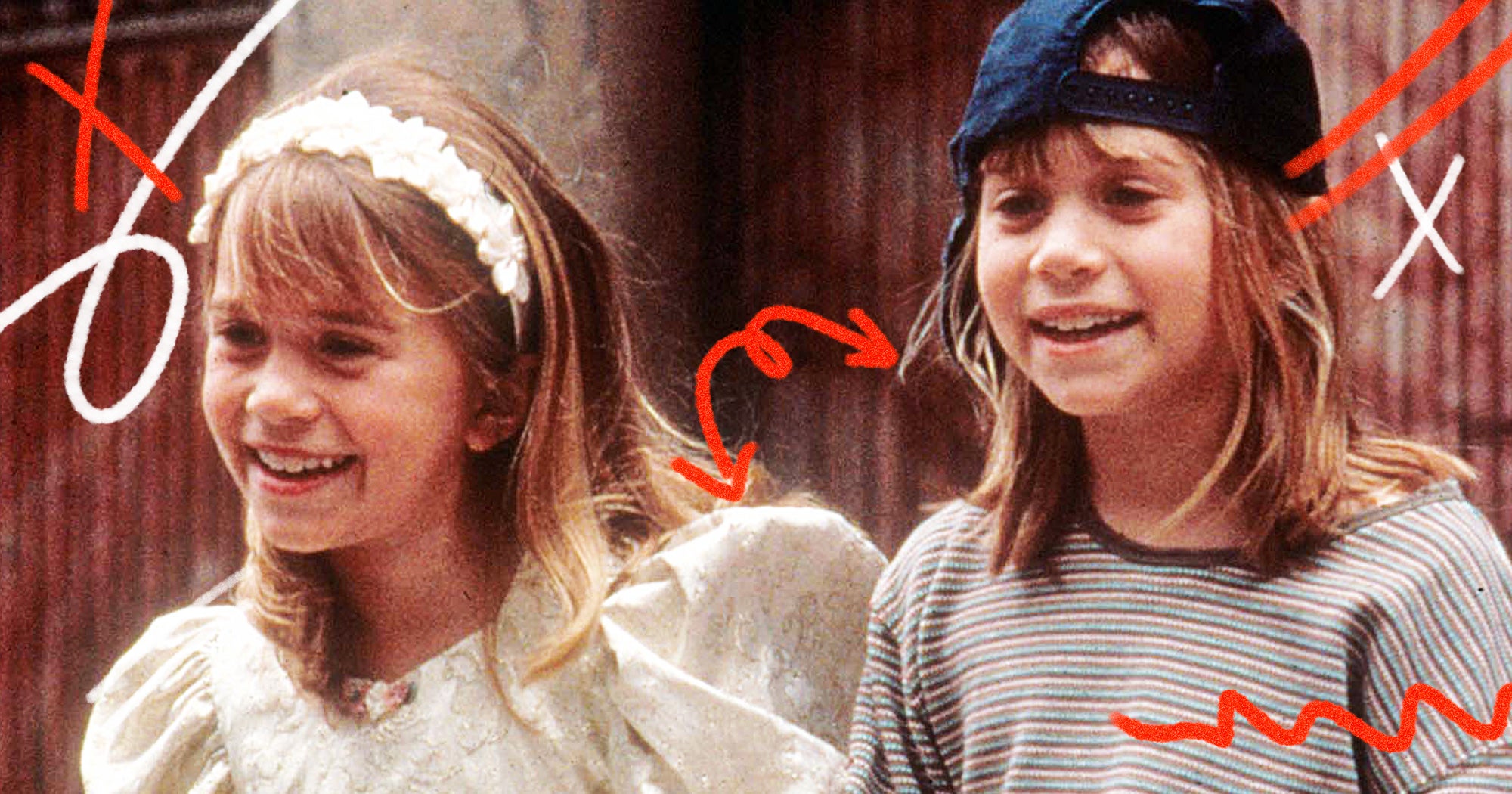
In 1995, they starred in It Takes Two alongside Kirstie Alley and Steve Guttenberg. This film was a critical step in proving their viability on the big screen, utilizing a "Prince and the Pauper" plot that allowed them to play distinct characters for the first time in a major production.
Their final theatrical effort, New York Minute (2004), was intended to be their transition into adult stardom. Starring as polar-opposite sisters in New York City, the film leaned into the distinct personalities the public had begun to associate with them: Mary-Kate as the "rebellious/bohemian" one and Ashley as the "organized/preppy" one.
Return to Television
The twins attempted to return to the sitcom format twice. Two of a Kind (1998–1999) featured them as sisters living with their widowed father. Though it only lasted one season, it was highly popular in syndication. They followed this with So Little Time (2001–2002), which earned Mary-Kate a Daytime Emmy Award nomination. This era marked the beginning of their shift toward personal style, as the wardrobe on So Little Time famously featured pieces that would later influence their fashion careers.
Comprehensive Evolution of Major Works
The following table summarizes the key milestones in the Olsen twins' media career, illustrating their transition across different formats.
| Period | Title | Format | Significance |
|---|---|---|---|
| 1987–1995 | Full House | TV Series | Global debut as Michelle Tanner; established their brand. |
| 1992 | To Grandmother's House We Go | TV Movie | First standalone project under their own brand. |
| 1993–2000 | The Adventures of Mary-Kate & Ashley | Video Series | Established the "Trenchcoat Twins" mystery franchise. |
| 1995 | It Takes Two | Theatrical Film | Their first major studio theatrical release. |
| 1998–1999 | Two of a Kind | TV Series | Return to sitcoms; transition to teen-oriented content. |
| 1999–2003 | Travel Film Series (Passport to Paris, etc.) | Direct-to-Video | Focused on international travel and teenage independence. |
| 2004 | New York Minute | Theatrical Film | Final joint acting project; marked the end of their film era. |
The Pivot: From the Screen to the Atelier
By 2004, the Olsen twins had reached a crossroads. Having spent 17 years in the public eye, they began to distance themselves from the Hollywood machine. The evolution of their movies and TV shows stopped not because of a lack of opportunity, but due to a calculated shift in passion.
In 2006, they founded The Row, a high-end luxury fashion house. This wasn't a celebrity "vanity project." They spent years refining their craft, focusing on exquisite tailoring and high-quality fabrics. They followed this with Elizabeth and James, a contemporary line that brought their aesthetic to a broader audience.
The transition was remarkably successful. They have won multiple CFDA (Council of Fashion Designers of America) Awards, the equivalent of Oscars in the fashion world. Their evolution from child stars to respected designers is often cited as the gold standard for career pivots. By 2026, The Row remains one of the most prestigious labels in the global fashion industry, known for its "quiet luxury" aesthetic.
Legacy and the Absence from Fuller House
The enduring impact of their screen evolution was highlighted in 2016 when Netflix premiered Fuller House, a sequel to the show that started it all. Mary-Kate and Ashley were the only original main cast members who chose not to return.
Their absence was a definitive statement on their evolution. They expressed that they no longer felt like "actors" and were fully committed to their roles as business owners and designers. While their movies and TV shows remain nostalgic touchstones for millions, the twins have successfully separated their adult identities from their childhood personas.
Frequently Asked Questions
Why did the Olsen twins stop acting after New York Minute?
The twins decided to pursue their interest in fashion and business. They felt that they had achieved everything they wanted in the entertainment industry and desired more control over their creative output, which they found in the fashion world through their labels, The Row and Elizabeth and James.
Are the Olsen twins involved in the fashion industry in 2026?
Yes, as of 2026, Mary-Kate and Ashley Olsen remain the creative directors of The Row. The brand is a staple of international fashion weeks and is recognized for its minimalist, luxury designs. They are widely regarded as serious designers rather than former child stars.
Did the Olsen twins ever play the same character after Full House?
Generally, no. After Full House, where they shared the role of Michelle Tanner, their projects almost always cast them as fraternal twins with distinct names and personalities. This allowed them to build individual brands while still capitalizing on their "twin" appeal.
Where can I watch the Olsen twins' old movies today?
Many of their classic titles, such as It Takes Two and Passport to Paris, are available on digital rental platforms like Amazon Prime Video and Apple TV. Due to licensing changes, their direct-to-video library occasionally rotates through streaming services like Hulu or Netflix.
What was the most successful Olsen twin movie?
Financially, It Takes Two is often considered their most successful theatrical venture, grossing over $11 million in its initial domestic run and becoming a massive hit on home video. However, their direct-to-video series collectively generated hundreds of millions in revenue through Dualstar.
Conclusion and Final Recommendations
The evolution of the Olsen twins' media career provides a blueprint for brand longevity. By leveraging their early television success into a production company, they maintained creative and financial control that few child actors ever achieve. Their transition into fashion was not a retreat but a progression into a field where they could exercise greater artistic maturity.
For those looking to revisit their work, start with the "travel" era of their direct-to-video films (1999–2002), as these titles best capture the bridge between their childhood fame and their eventual interest in high-end aesthetics. Whether viewed as a nostalgic journey or a case study in business branding, the Olsen twins' evolution remains one of the most fascinating chapters in modern pop culture history.
Image Gallery