Hyundai Santa Fe Windshield Wiper Size Guide: All Model Years (2001–2026)
The Hyundai Santa Fe requires specific windshield wiper blade sizes depending on its production year and trim variant. Modern Hyundai Santa Fe models (2019–2026) typically take a 26-inch driver-side blade, an 18-inch passenger-side bla...
The Hyundai Santa Fe requires specific windshield wiper blade sizes depending on its production year and trim variant. Modern Hyundai Santa Fe models (2019–2026) typically take a 26-inch driver-side blade, an 18-inch passenger-side blade, and an 11- to 12-inch rear blade. Earlier generations vary, featuring passenger blades ranging from 14 to 20 inches.
Contents
Comprehensive Hyundai Santa Fe Wiper Blade Size Chart
Selecting the exact replacement blade sizing prevents uneven wiping, glass scratching, or blade overhang. Below is a quick-reference chart organizing wiper blade specifications for every generation of the Hyundai Santa Fe from 2001 through 2026.
| Generation | Model Years | Driver Side (Front Left) | Passenger Side (Front Right) | Rear Window Blade | Front Connector Type |
|---|---|---|---|---|---|
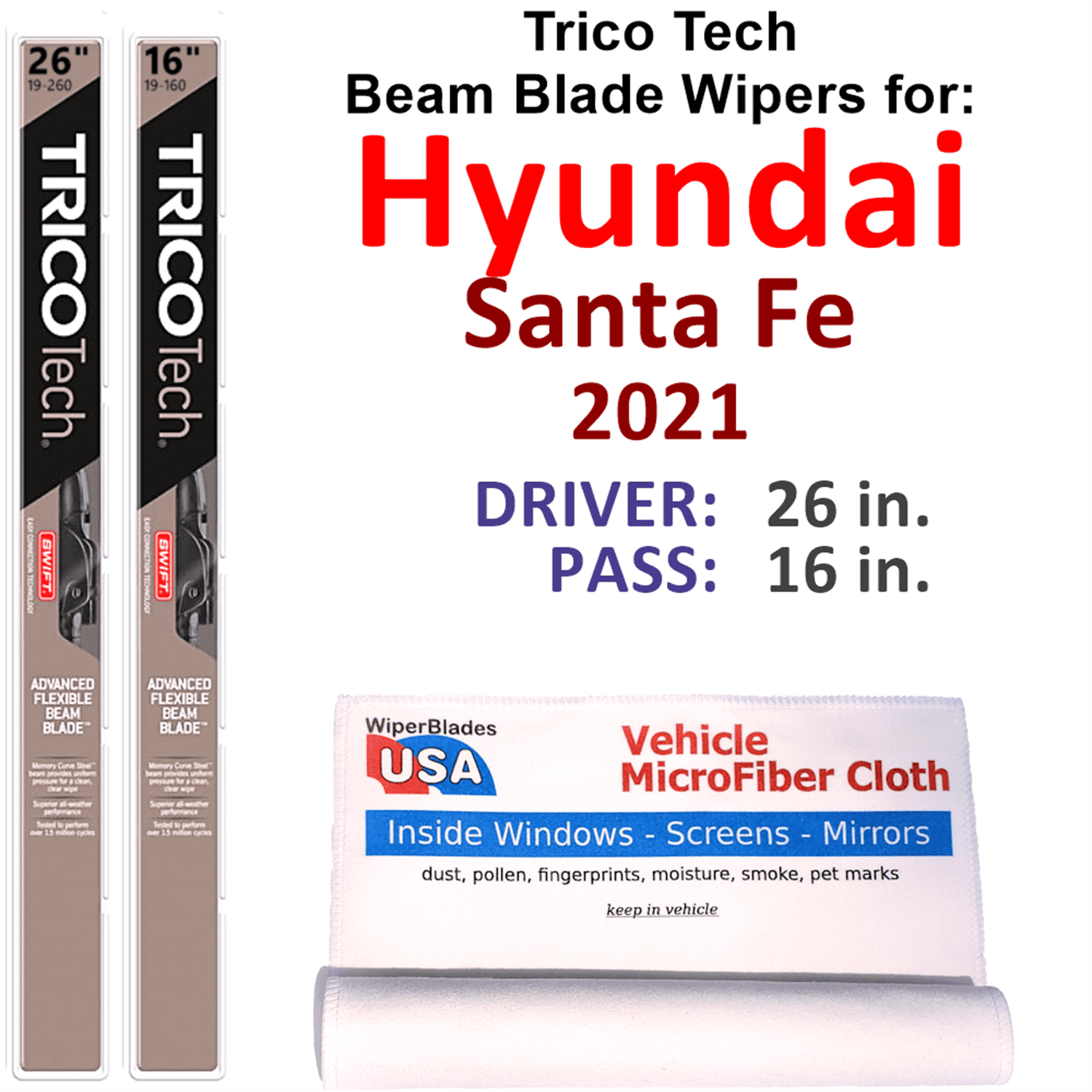
| 5th Generation | 2024–2026 | 26 inches (650 mm) | 18 inches (450 mm) | 12 inches (300 mm) | J-Hook (9x3mm) / Top-Lock |
| 4th Generation | 2019–2023 | 26 inches (650 mm) | 18 inches (450 mm) | 11–12 inches (280–300 mm) | J-Hook (9x3mm) |
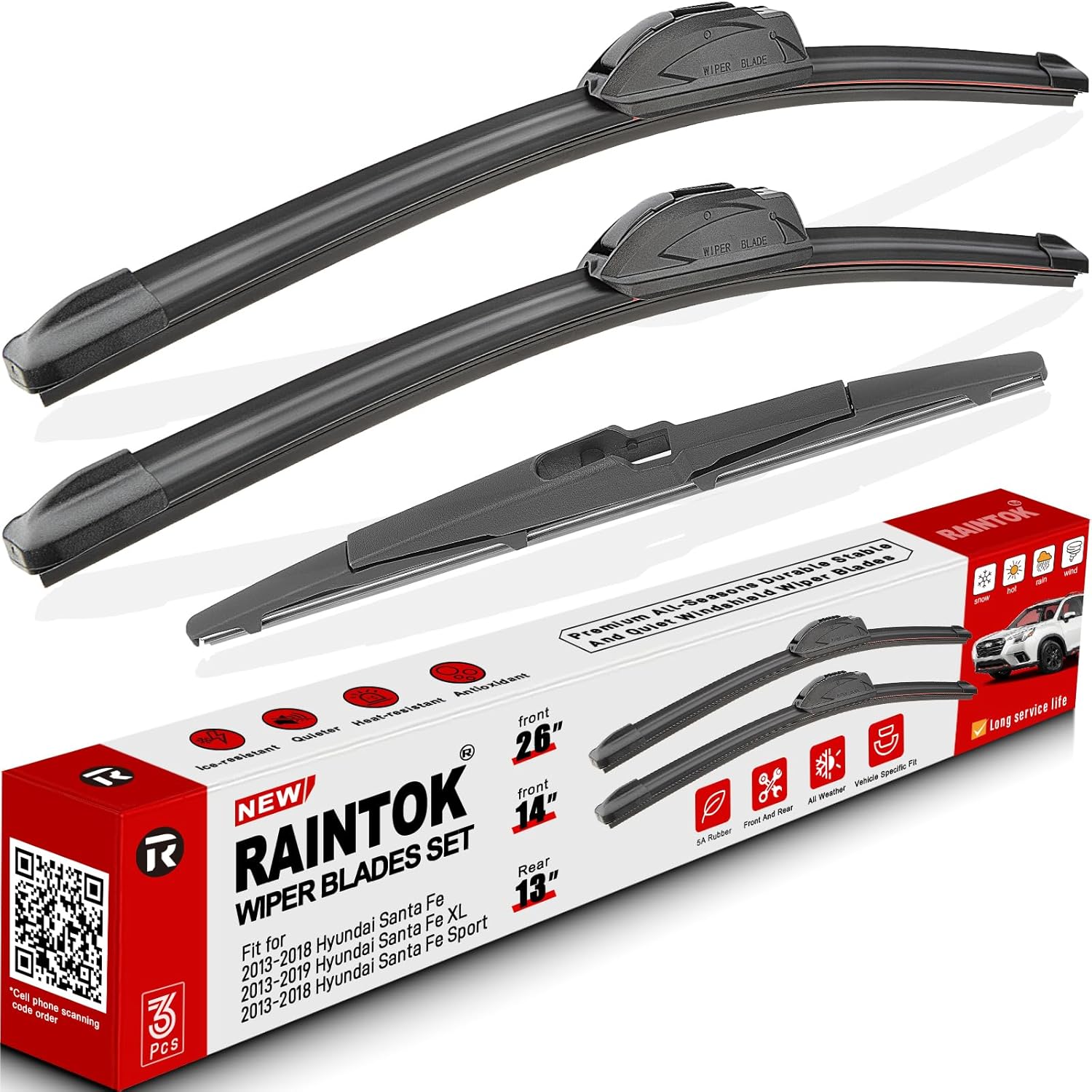
| 3rd Gen (Sport & XL) | 2013–2018 | 26 inches (650 mm) | 14 inches (350 mm) | 13 inches (330 mm) | J-Hook (9x3mm) |
| 2nd Generation | 2007–2012 | 24 inches (600 mm) | 18 inches (450 mm) | 14 inches (350 mm) | J-Hook (9x3mm) |
| 1st Generation | 2001–2006 | 22 inches (550 mm) | 20 inches (500 mm) | 13–14 inches (330–350 mm) | J-Hook (9x3mm) |
Sizing Breakdown by Hyundai Santa Fe Generation
Fifth Generation (2024–2026)
The redesigned fifth-generation Hyundai Santa Fe features a boxier exterior profile and updated windshield curvature. For all trim levels—including the SE, SEL, XRT, Limited, and Calligraphy—the driver side requires a 26-inch blade and the passenger side requires an 18-inch blade.
The rear window incorporates a dedicated 12-inch rear wiper blade assembly. Most trim levels use standard J-Hook style wiper arms, though some regional trims feature integrated aerodynamic beam clamps. Always verify the connector clip prior to purchase.
Fourth Generation (2019–2023)
The fourth-generation Santa Fe standardized its front windshield layout across mid-cycle refreshes. All model years in this range use a 26-inch driver blade and an 18-inch passenger blade.
The rear wiper arm uses a specialized plastic housing requiring an 11-inch or 12-inch rear blade (often designated as a Roc-Lock or Snap-Claw fitting). Using a standard front J-hook blade on the rear arm will not work due to the custom molded plastic pivot pin.
Third Generation (2013–2018)
The third-generation Santa Fe introduced multiple body variants, including the two-row Santa Fe Sport and the three-row Santa Fe (later designated as the Santa Fe XL).
Despite differences in overall vehicle length, both variants share the same front windshield wiper sizing:
- Driver Side: 26 inches (650 mm)
- Passenger Side: 14 inches (350 mm)
- Rear Side: 13 inches (330 mm)
The 14-inch passenger blade is intentionally short to account for the steep slope of the lower right corner of the windshield glass. Replacing this with a 16-inch or 18-inch blade will cause the rubber tip to collide with the windshield cowl molding.
Second Generation (2007–2012)
Second-generation Santa Fe models feature a balanced windshield wiper layout:
- Driver Side: 24 inches (600 mm)
- Passenger Side: 18 inches (450 mm)
- Rear Side: 14 inches (350 mm)
This generation uses universal 9x3mm J-hook wiper arms on both front positions, making aftermarket blade replacement straightforward across standard beam, conventional frame, and hybrid wiper styles.
First Generation (2001–2006)
The original Hyundai Santa Fe design utilizes:
- Driver Side: 22 inches (550 mm)
- Passenger Side: 20 inches (500 mm)
- Rear Side: 13 or 14 inches (330–350 mm)
Because the glass curvature on first-generation models is flatter than modern aerodynamic crossovers, standard metal-frame wiper blades work effectively, though modern beam blades can be retrofitted using the standard J-hook connector.
Choosing the Right Wiper Blade Type for Your Santa Fe
Selecting the correct size is only the first step; choosing the appropriate blade construction ensures clean visibility across severe rain, snow, and road debris.
| TYPE | DESIGN FEATURE | BEST FOR |
|---|---|---|
| Beam | Frameless continuous curved spring steel tension strip | Ice, snow, high-speed highway driving |
| Hybrid | Shielded metal frame with aerodynamic outer shell | All-season durability and OEM appearance |
| Conventional | External hinged steel frame with dual claw mounts | Budget replacements in warm climates |
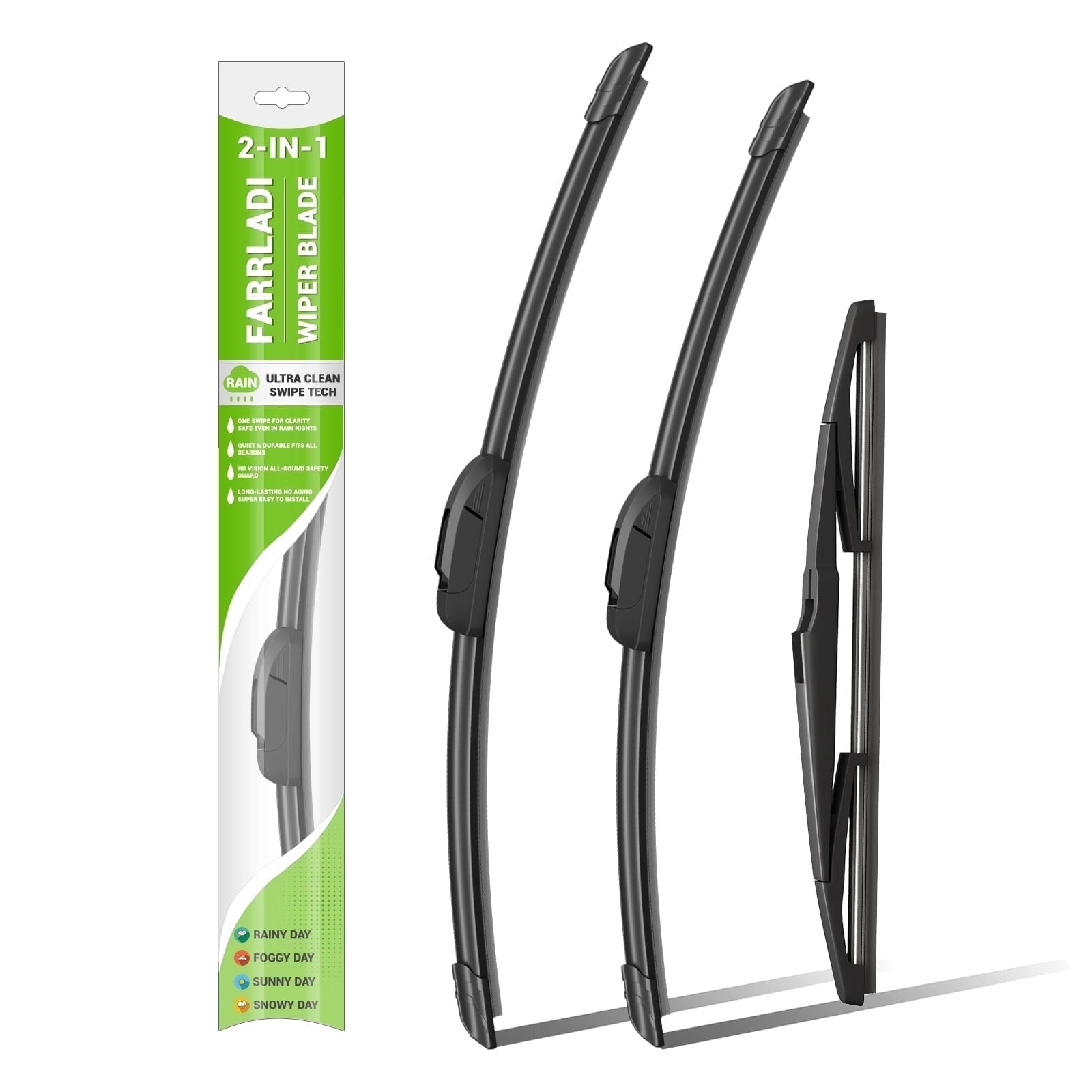
1. Beam Blades (Frameless / Flat Blades)
Beam blades utilize a single curved piece of spring steel enclosed inside a synthetic rubber shell.
- Pros: They apply uniform pressure across modern curved windshields, lack exposed metal joints that freeze in ice or snow, and offer reduced wind lift at highway speeds.
- Cons: Higher initial purchase cost.
- Recommendation: Beam blades (such as Bosch ICON, Rain-X Latitude, or Michelin Endurance) are the optimal choice for 2013–2026 Santa Fe models due to high windshield curvature.
2. Hybrid Wiper Blades
Hybrid blades combine the internal structural frame of conventional blades with an aerodynamic, plastic outer shroud. Many Hyundai factory original equipment (OEM) blades installed on the Santa Fe from the factory are hybrid style.
- Pros: Excellent aerodynamic stability, sleek low-profile appearance, and strong mid-blade pressure.
- Cons: Can retain packed snow inside the shroud joints during intense winter storms.
3. Conventional Frame Blades
Conventional blades rely on a exposed metal framework with pressure points (claws) to hold the rubber wiping element against the windshield.
- Pros: Lowest cost point; easy refill rubber insertion on select classic designs.
- Cons: Prone to lifting at high speeds, uneven wear on highly curved windshield edges, and joint freeze during winter operations.
Rubber Element Formulations: Silicone vs. Natural Rubber
The longevity of your replacement wipers depends significantly on the compound used in the squeegee element:
- Natural Rubber: Standard in lower-cost blades. Offers quiet operation and good flexibility when new, but degrades rapidly under intense ultraviolet (UV) sunlight and temperature fluctuations. Expect a lifespan of 6 to 9 months.
- Synthetic/Graphite-Coated Rubber: Features a graphite or PTFE friction-reducing layer applied over synthetic rubber. Reduces squeaking and resists chatter. Lifespan ranges from 9 to 12 months.
- Silicone Rubber: High-end silicone blades apply a water-repellent coating to the windshield as they operate. Silicone resists sun degradation, ozone exposure, and extreme cold far better than standard rubber. Lifespan often exceeds 18 to 24 months.
How to Measure and Verify Santa Fe Wiper Sizes
If you are unsure of your vehicle’s exact production year or want to verify aftermarket wipers already installed, follow this verification process:
- Measure the Rubber Element: Use a flexible tape measure or ruler directly along the curve of the rubber wiping edge from end to end. Round to the nearest inch.
- Check Driver vs. Passenger Side: Never assume both front wipers are identical. On most Santa Fe models produced after 2007, the driver side is significantly longer (24 to 26 inches) than the passenger side (14 to 18 inches).
- Inspect the Connector Mechanism:
- J-Hook (9x3mm or 9x4mm): The wiper arm end curves backward like the letter "U".
- Top-Lock / Push-Button: The wiper arm end is flat with a square tab or release button on top.
- Rear Snap-In: The rear arm features a crossbar pin embedded inside a molded plastic channel.
Step-by-Step Replacement Instructions for Hyundai Santa Fe
Replacing windshield wipers on a Hyundai Santa Fe requires no specialized tools and can be completed in under 15 minutes.
Service Mode Activation (Required for Select Modern Trims)
On certain 4th and 5th Generation Santa Fe models, the wiper arms rest below the hood line when turned off, preventing you from pulling the wiper arms straight up without striking the hood edge.
- Turn the ignition switch to the ON position and then turn it back OFF.
- Within 20 seconds, push the wiper control stalk upward to the MIST position and hold it for roughly 2 seconds.
- The wiper arms will sweep upward and stop in a vertical service position.
Front Wiper Replacement Process
- Protect the Windshield: Fold a thick microfiber towel or blanket and lay it flat across the glass directly beneath the wiper arms. If an arm snaps down without a blade installed, it can crack the windshield.
- Lift the Wiper Arm: Raise the driver-side arm away from the glass until it locks into its raised position.
- Release the Old Blade:
- For J-hook arms, locate the small plastic locking tab on the underside of the connector hinge.
- Depress the tab while sliding the wiper blade downward toward the hood to disengage it from the metal hook.
- Mount the New Blade:
- Orient the new blade adapter to line up with the open hook end.
- Insert the hook into the adapter connector and pull firmly upward until you hear an audible click, confirming the locking latch has engaged.
- Lower Gently: Lower the arm carefully back onto the glass. Repeat the process for the passenger side.
Rear Wiper Replacement Process
- Lift the Arm: Pull the rear wiper arm slightly away from the rear hatch glass (note that rear arms typically only raise 2 to 4 inches off the glass surface).
- Rotate the Blade: Pivot the bottom of the blade assembly outward away from the arm until it forms a 90-degree angle relative to the wiper arm.
- Unsnap the Pin: Apply firm, steady pressure to push the center plastic pivot pin out of the arm's mounting jaws.
- Install Replacement: Press the center bar of the new rear blade into the plastic arm socket until it snaps into place, then rotate the blade flat against the arm.
Troubleshooting Common Santa Fe Wiper Problems
Even with brand-new wiper blades, installation errors or windshield contamination can cause performance issues.
1. Streaking Across the Glass
- Cause: Accumulated road grime, tree sap, wax from automated car washes, or torn rubber edges.
- Solution: Clean the windshield glass using an automotive glass cleaner and a microfiber cloth. Wipe down the rubber edge of the wiper blade with rubbing alcohol on a paper towel until no black residue transfers.
2. Wiper Chatter or Skipping
- Cause: Bent wiper arm angle, hard dry rubber, or wax buildup that alters surface friction.
- Solution: Ensure the wiper arm holds the blade perpendicular to the glass surface. If the blade drags at an angle during the return stroke, gently twist the metal arm back into alignment using an adjustable wrench padded with a cloth.
3. Missed Contact Areas in Center of Sweep
- Cause: Weak tension spring inside the wiper arm, or using an overly stiff conventional frame blade on a curved glass area.
- Solution: Switch to a high-flex beam blade that conforms dynamically to the glass curvature. If pressure remains uneven, inspect the hinge at the base of the metal wiper arm for rust or binding springs.
Frequently Asked Questions
What size wiper blades fit a 2020 Hyundai Santa Fe?
The 2020 Hyundai Santa Fe requires a 26-inch blade for the driver side, an 18-inch blade for the passenger side, and an 11-inch or 12-inch specialized rear wiper blade.
What size wiper blades does a 2017 Hyundai Santa Fe Sport use?
The 2017 Hyundai Santa Fe Sport uses a 26-inch driver-side blade, a 14-inch passenger-side blade, and a 13-inch rear wiper blade.
Can I install a 26-inch passenger blade instead of a 14-inch blade on a 3rd-Gen Santa Fe?
No. Installing an oversized passenger blade on 2013–2018 models will cause the tip of the blade to strike the vehicle’s plastic cowl, roof pillar, or driver-side blade during operation, causing blade damage or mechanical binding.
Why does my replacement rear wiper blade not fit the rear arm?
Standard front windshield wiper blades use universal J-hook connectors, whereas Santa Fe rear wiper arms use dedicated molded plastic snap-in pins (such as Roc-Lock fittings). Ensure your replacement rear blade explicitly lists compatibility with rear snap-arm connectors.
How often should Hyundai Santa Fe wiper blades be replaced?
Wiper blades should generally be replaced every 6 to 12 months. If you live in regions with harsh freezing conditions, extreme summer heat, or heavy rainfall, inspect the rubber element quarterly for cracking, tearing, or stiffening.
Final Maintenance Recommendation
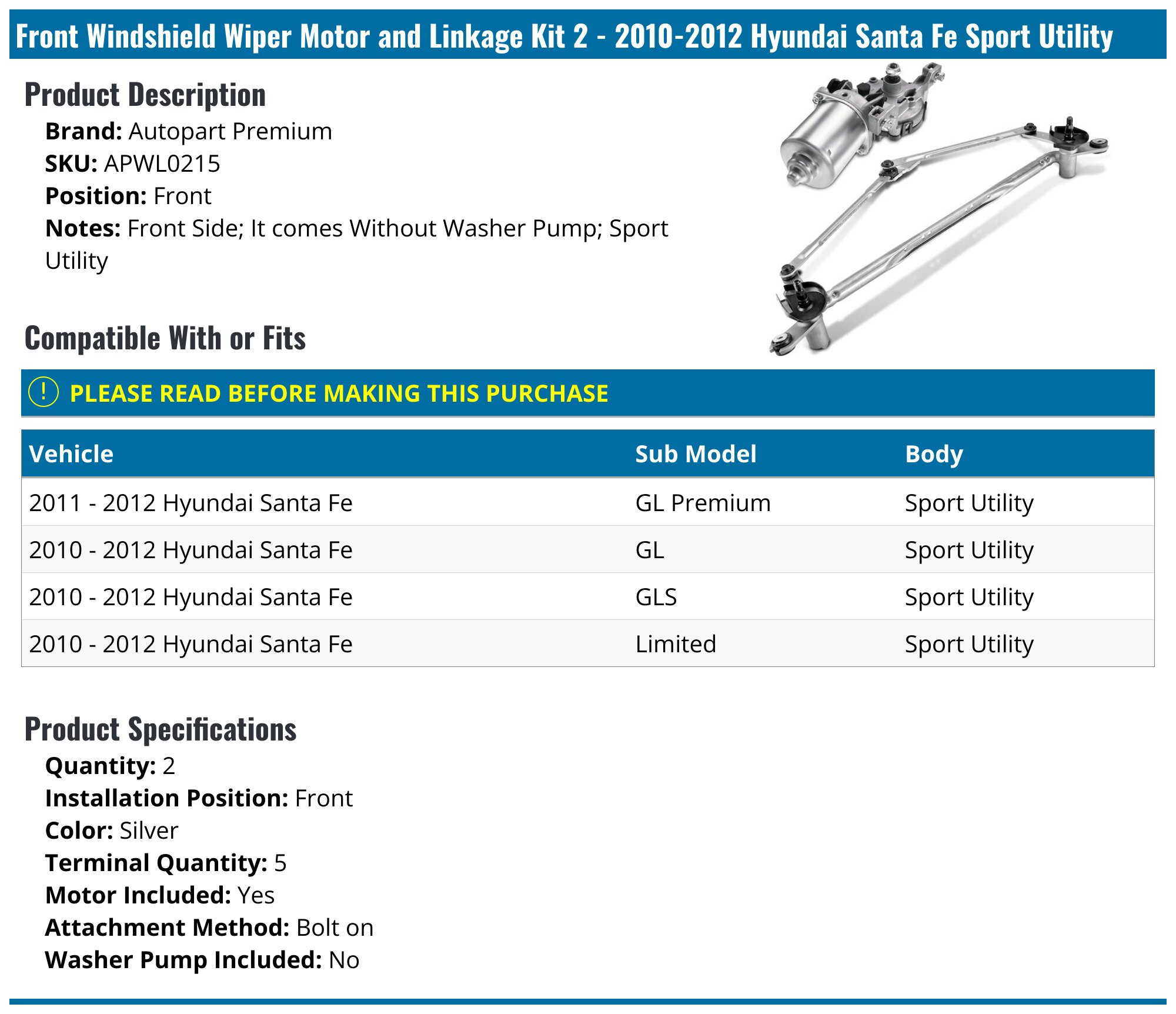
When replacing wiper blades on your Hyundai Santa Fe, replace both front blades simultaneously to maintain consistent visibility and even wear patterns across the driver and passenger viewpoints. For drivers in snowy or cold climates, upgrading from factory hybrid or conventional frames to frameless beam-style silicone blades provides superior frost resistance and extended operating life. Always clear heavy ice and snow from the windshield before engaging the wiper motor to prevent stripping the wiper arm linkage or blowing the wiper circuit fuse.
Image Gallery