What to Know About Tractor Specifications: A Comprehensive Guide for 2026
Understanding tractor specifications requires distinguishing between raw engine power and the actual work capacity delivered to implements. Key metrics include PTO horsepower, hydraulic flow rates (GPM), lift capacity at the three-poin...
Understanding tractor specifications requires distinguishing between raw engine power and the actual work capacity delivered to implements. Key metrics include PTO horsepower, hydraulic flow rates (GPM), lift capacity at the three-point hitch, and transmission type. These data points determine whether a machine can safely and efficiently handle specific tasks like heavy baling, precision planting, or loader work.
Contents
Selecting the right tractor in 2026 involves more than just picking a brand or a general size. As agricultural technology advances and equipment becomes more specialized, the specification sheet serves as the most reliable roadmap for performance, longevity, and return on investment. Whether you are managing a large-scale row-crop operation or a small hobby farm, the technical nuances of engine torque, hydraulic pressure, and chassis weight will dictate your operational success.
The Foundation: Engine Specifications and Power Metrics
When reviewing engine specifications, the most prominent number is usually the Gross Engine Horsepower. This represents the total power the engine produces without the parasitic loads of cooling fans, alternators, or water pumps. While useful for marketing, it is rarely the most important number for the operator.
Gross vs. PTO Horsepower
For most users, Power Take-Off (PTO) Horsepower is the critical metric. This is the amount of power actually available to run implements such as brush hogs, balers, or snowblowers. Because energy is lost as it moves through the drivetrain, PTO HP is typically 10% to 15% lower than gross engine HP. If an implement requires a minimum of 50 HP to operate effectively, buying a tractor with 50 Gross HP will likely lead to mechanical strain and poor performance.
Torque and Displacement
Torque is the "rotational force" that allows a tractor to start a heavy load or push through a tough spot without stalling. Engine Displacement, measured in liters or cubic inches, often correlates with torque. In 2026, many manufacturers use turbocharging to get higher horsepower out of smaller displacement engines. While efficient, a larger-displacement, naturally aspirated engine might provide a more stable torque curve for heavy, low-speed pulling.
Emissions Compliance
As of 2026, most diesel tractors must meet stringent Tier 4 Final or Stage V emissions standards. This involves systems like Selective Catalytic Reduction (SCR), which requires Diesel Exhaust Fluid (DEF), or Diesel Particulate Filters (DPF). Understanding the maintenance requirements of these systems—such as "regen" cycles—is a vital part of modern engine specs.
Transmission Systems: Choosing the Right Drive
The transmission dictates how power is transferred to the wheels and how much control the operator has over ground speed. The choice of transmission often depends on whether the work involves "shuttle" tasks (like loader work) or "draft" tasks (like plowing).
- Manual/Gear Transmissions: These are the most efficient at transferring power to the ground because they have a mechanical link. They are ideal for long hours of haying or tillage where a constant speed is required. However, they can be cumbersome for frequent direction changes.
- Hydrostatic (HST) Transmissions: Common in sub-compact and compact tractors, HST uses hydraulic fluid to control speed and direction via foot pedals. This provides infinitely variable speed and is unmatched for loader work or mowing around obstacles. The trade-off is a slight loss in power efficiency compared to gear drives.
- Power Shuttle: This system allows the operator to change direction (forward to reverse) without using the clutch. It is a middle ground that provides the efficiency of gears with the convenience of easier maneuvering.
- CVT/IVT (Continuously/Infinitely Variable Transmission): Found in higher-end utility and row-crop tractors, these computer-controlled systems optimize engine RPM and ground speed automatically. They offer peak fuel efficiency and ease of use but come with higher initial costs and more complex electronics.
Hydraulics and Lift Capacity
The hydraulic system is the lifeblood of modern tractor functionality. It powers the steering, the front-end loader, and the rear three-point hitch.
Hydraulic Flow (GPM)
Measured in Gallons Per Minute (GPM), this spec determines how fast your loader will move and whether you can run hydraulically driven motors (like those on some planters or wood splitters). It is important to look at the Implement Flow specifically, rather than the "Total Flow," which includes power steering requirements.
Lift Capacity: At the Pins vs. 24 Inches Behind
This is one of the most frequently misunderstood specifications. Manufacturers often list the lift capacity "at the pins." However, the center of gravity for most implements sits further back. The Lift Capacity at 24 inches behind the pins is a much more realistic measurement of what the tractor can actually pick up in the field. Using a tractor near its maximum pin capacity for a rear blade or mower can lead to front-end instability.
Dimensions, Weight, and Ballast
A common mistake is focusing solely on horsepower while ignoring the physical weight of the machine. A high-horsepower tractor that is too light will simply spin its tires when faced with a heavy load—a phenomenon known as being "power-hop limited."
- Operating Weight: This is the weight of the tractor with fluids and a standard operator. It determines how much traction the tires can grab.
- Ballast: To maximize pulling power, operators often add weight via suitcase weights on the front or liquid ballast (such as beet juice or calcium chloride) in the tires.
- Wheelbase and Width: A wider stance and longer wheelbase provide greater stability on slopes. If you are working in tight orchards or residential landscaping, a narrow width and short turning radius (often aided by "turn-assist" braking) are prioritized.
Tractor Class Comparison Table
The following table outlines the general specifications for different classes of tractors available in 2026. These figures are industry averages and may vary by manufacturer.
| Tractor Class | Typical HP Range | Transmission Types | Common Applications | Hydraulic Flow (Implement) |
|---|---|---|---|---|
| Sub-Compact | 18 – 25 HP | Hydrostatic (HST) | Mowing, light landscaping, snow removal | 3.5 – 5.5 GPM |
| Compact | 25 – 60 HP | HST or Gear | Small farms, fencing, food plots, loader work | 5.5 – 12 GPM |
| Utility | 60 – 140 HP | Power Shuttle or CVT | Haying, commercial loader work, heavy tillage | 12 – 25 GPM |
| Row-Crop | 140 – 400+ HP | PowerShift or CVT | Large-scale planting, harvesting, heavy draft | 25 – 60+ GPM |
PTO Standards and Speeds
The Power Take-Off system is standardized but has variations you must verify. The standard speed for most small to mid-sized implements is 540 RPM. Larger, heavy-duty implements often require 1000 RPM.
Many modern tractors feature an Economy PTO (540E). This setting allows the tractor to reach the 540 RPM PTO speed at a lower engine RPM. This is excellent for light-duty tasks like raking hay, as it saves fuel and reduces noise. However, it should not be used for heavy-duty tasks like thick brush cutting, as the engine may lack the torque to handle sudden loads at lower speeds.
Frequently Asked Questions
What is the difference between 4WD and MFWD?
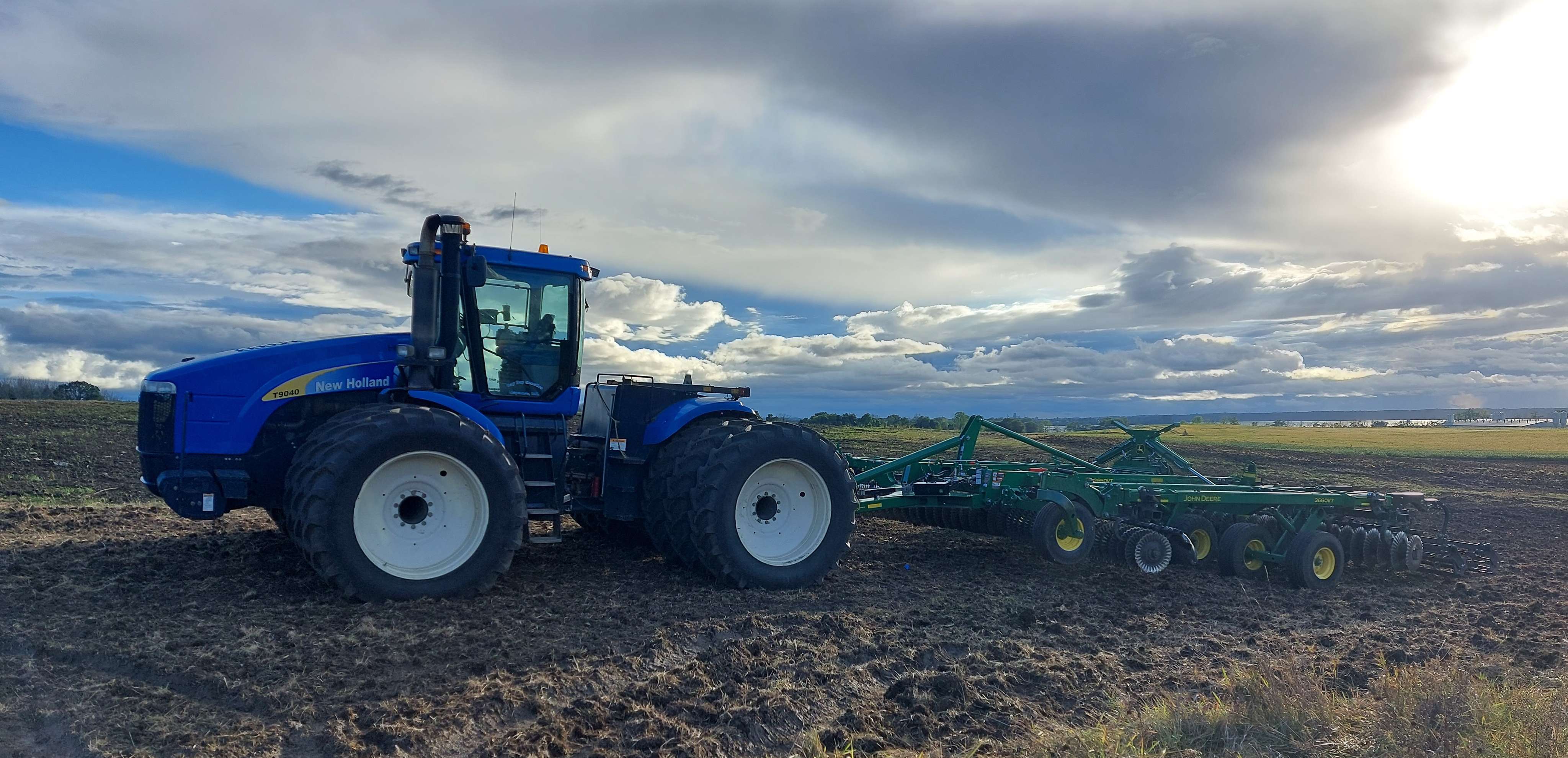
In the tractor world, 4WD usually refers to large articulated tractors where all four wheels are the same size. MFWD (Mechanical Front Wheel Drive) is what most people mean when they talk about a "4x4" tractor. MFWD uses smaller front wheels that assist with traction and steering. In 2026, MFWD is standard on almost all utility and compact tractors because it significantly increases pulling power and loader stability.
Why does "Lift Capacity to Full Height" matter for loaders?
A loader's lift capacity decreases as the arms move higher. If you need to stack large square bales or load high-sided trucks, you must check the capacity at the maximum lift height, not just the ground-level breakaway force. Breakaway force is the initial "pop" the loader can give to a stuck object, but it doesn't represent how much it can carry to its full extension.
Is a higher hydraulic GPM always better?
A higher GPM (Gallons Per Minute) allows for faster cycle times on a loader, meaning you can raise and lower the bucket more quickly. However, if the GPM is too high for a specific small implement, it can cause overheating or erratic movement. For most users, a "balanced" flow that matches the tractor’s intended class is sufficient, though those using hydraulic motors should always opt for the highest available flow.
How do I determine which tire tread pattern I need?
Tractor specs often list three main tire types: R-1 (Ag Tires) have deep lugs for maximum traction in mud and soil; R-3 (Turf Tires) have a flat, wide footprint to avoid damaging grass; and R-4 (Industrial Tires) are a compromise, offering durability for gravel and pavement with decent traction in the dirt. Most 2026 buyers opt for R-4 or the newer R-14 hybrid tires, which combine the benefits of all three.
What is "Telematics" in modern tractor specs?
Telematics refers to the tractor's ability to transmit data to a mobile app or computer. This includes fuel levels, GPS location, engine health alerts, and service intervals. In 2026, this is increasingly standard, allowing owners to troubleshoot codes remotely and optimize fuel consumption based on field data.
Final Recommendations for Buyers
Before finalizing a purchase, always request the Technical Specification Sheet rather than the promotional brochure. Cross-reference the requirements of your heaviest or most power-hungry implement with the tractor's PTO horsepower and hydraulic capacity.
A practical next step is to visit the Nebraska Tractor Test Laboratory, which provides independent, third-party verification of tractor performance specs for machines sold in the United States. Ensure that your chosen model has the weight and ballast capacity to safely handle your terrain, and never sacrifice hydraulic flow for a slightly lower price point, as it is one of the most expensive systems to upgrade after the fact.
Image Gallery