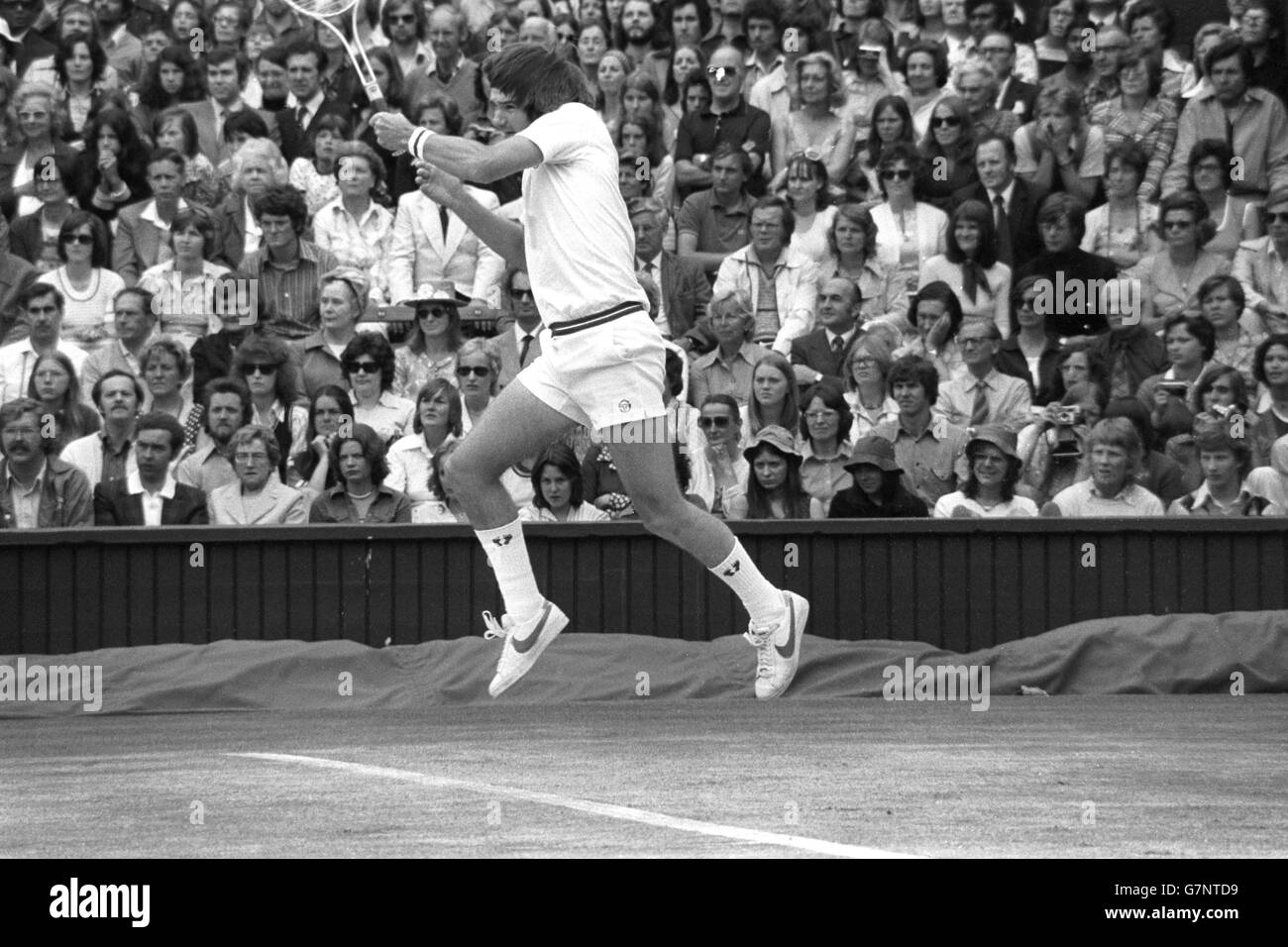
The Legacy of Jimmy Connors: Understanding His Eight Grand Slam Singles Titles
Jimmy Connors stands as one of the most resilient and influential figures in tennis history, defined by his professional longevity and his total of eight Grand Slam singles titles. These victories, achieved between 1974 and 1983, estab...
Jimmy Connors stands as one of the most resilient and influential figures in tennis history, defined by his professional longevity and his total of eight Grand Slam singles titles. These victories, achieved between 1974 and 1983, established him as a dominant force during an era of significant evolution in the sport, marking his transition from a baseline specialist to a global icon of the Open Era.
Contents
Defining the Grand Slam Accomplishments
In the context of professional tennis, a "Grand Slam" title refers to winning one of the four most prestigious annual tournaments: the Australian Open, Roland-Garros (the French Open), Wimbledon, and the US Open. Jimmy Connors reached the pinnacle of the sport eight times in singles competition. While he was prolific throughout his career, winning 109 ATP titles in total—a record that stood for decades—his eight major singles championships remain the primary metric for his elite status in the pantheon of tennis legends.
His success was defined by an aggressive return of serve, a two-handed backhand that revolutionized the game, and a relentless competitive spirit. Unlike many of his contemporaries who specialized in specific surfaces, Connors demonstrated remarkable versatility, capturing majors on grass, clay, and hard courts.
The Chronology of His Major Victories
The eight titles won by Connors occurred during a transformative decade for tennis. His breakout year, 1974, remains one of the greatest single seasons in the history of the sport.
- 1974 Australian Open: Defeated Phil Dent. This marked his first major triumph, setting the stage for a historic year.
- 1974 Wimbledon: Defeated Ken Rosewall. This victory cemented his status as the best player in the world at the time.
- 1974 US Open: Defeated Ken Rosewall. By winning three of the four majors in 1974, Connors established himself as a dominant, albeit polarizing, force.
- 1976 US Open: Defeated Björn Borg. This match-up began one of the most storied rivalries in tennis history.
- 1978 US Open: Defeated Björn Borg. Connors proved his capacity to perform under pressure against elite baseline competitors.
- 1982 Wimbledon: Defeated John McEnroe. This win, occurring eight years after his first Wimbledon title, showcased his longevity and ability to adapt his game to beat younger, tactical players.
- 1982 US Open: Defeated Ivan Lendl. This confirmed his resurgence as the world number one during the 1982 season.
- 1983 US Open: Defeated Ivan Lendl. His final Grand Slam title solidified his place as a master of the hard courts at Flushing Meadows.
Comparison of Surfaces and Strategy
Jimmy Connors’ ability to win eight titles across different environments highlights the technical shift occurring in tennis during the 1970s and 1980s.
| Tournament | Number of Wins | Primary Surface |
|---|---|---|
| US Open | 5 | Hard Court (and Clay*) |
| Wimbledon | 2 | Grass |
| Australian Open | 1 | Grass |
Note: The US Open was played on grass at Forest Hills until 1974, Har-Tru (green clay) from 1975 to 1977, and DecoTurf (hard court) starting in 1978. Connors won titles on all three surfaces, a rare feat in professional tennis.
The shift from grass to hard courts favored Connors’ style. His flat, low-trajectory shots and heavy reliance on the two-handed backhand allowed him to neutralize the serve-and-volley specialists who dominated the early 1970s. By mid-career, he was adept at changing pace, using his fitness to outlast opponents in long rallies, a tactical hallmark of his later major wins in 1982 and 1983.
The Evolution of the Open Era
Jimmy Connors was a quintessential product of the Open Era, which began in 1968 when the Grand Slam tournaments allowed professional players to compete alongside amateurs. Before this, the sport was bifurcated, with many top players barred from the biggest stages.
Connors entered the circuit as the sport was becoming a mass-media spectacle. His abrasive style—often involving arguments with officials and a "crowd-against-me" mentality—drew intense interest. While his personality often overshadowed his technical prowess, his tactical discipline during his eight winning runs was immense. He rarely relied on a singular massive serve; instead, he relied on an unparalleled ability to return the ball deep into the court, forcing his opponents into defensive positions from the very first strike.
Challenges and Limitations
Despite his eight titles, Connors famously missed out on several opportunities to increase his tally due to the nature of the tennis calendar at the time. Notably, he did not compete in the French Open for several years during his prime. His absence from Roland-Garros from 1975 to 1978 is often cited by tennis historians as a reason why his total major count remained at eight, as he was arguably the best player in the world during that window.
Furthermore, his career spanned the transition between different racquet technologies. The shift from wooden frames to graphite and composite materials in the early 1980s required a fundamental recalibration of his game. Connors’ success in 1982 and 1983—when he defeated younger stars like John McEnroe and Ivan Lendl—demonstrates his rare ability to evolve his technique in his 30s, an age that was considered past the professional prime for most tennis players of that generation.
Legacy and Lasting Impact
The influence of Jimmy Connors extends beyond the trophy count. His commitment to playing a high volume of matches and his "never-say-die" attitude helped professionalize the tour. By the time he retired from competitive singles play, he had set a standard for fitness and intensity that subsequent generations would strive to emulate.
His eight titles act as a bridge between the era of the serve-and-volley traditionalists and the modern, power-baseline era. For fans and analysts looking back from 2026, Connors is viewed as the bridge-builder who kept tennis relevant through sheer willpower and tactical innovation. His matches are still frequently studied to understand the mechanics of the two-handed backhand and the importance of mental resilience in high-stakes environments.
Frequently Asked Questions
Did Jimmy Connors ever win a French Open title? No, Jimmy Connors never won the French Open. He reached the semifinals four times but never successfully captured the title on clay in Paris, largely due to his intermittent participation in the tournament during his prime years.
Which Grand Slam tournament did Jimmy Connors win the most? Connors won the US Open five times. His success at the tournament spanned three different surface types, highlighting his adaptability throughout his career.
How does his total of eight titles compare to modern players? While eight titles are historically significant, the standard for "most majors" has been reset by the modern "Big Three" (Novak Djokovic, Rafael Nadal, and Roger Federer), who have each exceeded 20 titles. However, Connors’ 109 career ATP titles remains a distinct and celebrated achievement that differs from the focus on major counts in the modern era.
Why is Jimmy Connors considered a "revolutionary" player? Connors popularized the two-handed backhand, which was rare among top-tier men's players when he turned professional. This shot allowed him to return serves with significantly more control and power, effectively forcing the end of the era where serve-and-volley was the only viable path to winning majors.
What was the most notable aspect of his 1982 season? In 1982, Connors proved he could reclaim the world number one ranking despite being in his 30s. Winning both Wimbledon and the US Open in the same year—against younger, physically imposing opponents like McEnroe and Lendl—is often cited as his greatest competitive feat.
Recommendations for Further Study
To better understand the historical impact of Jimmy Connors, enthusiasts should look toward the official archives of the ATP Tour and the International Tennis Hall of Fame. These resources provide verified statistics and match-by-match breakdowns of his major runs. For those interested in the tactical development of his game, viewing recordings of his 1982 Wimbledon final against John McEnroe offers a masterclass in defensive tennis and situational court positioning.
Image Gallery