Comprehensive Guide to Virginia Flag Flying Regulations
In Virginia, flag flying regulations are governed by a combination of the federal United States Flag Code, the Code of Virginia, and specific state-level administrative guidelines. While the U.S. Flag Code provides the foundational eti...
In Virginia, flag flying regulations are governed by a combination of the federal United States Flag Code, the Code of Virginia, and specific state-level administrative guidelines. While the U.S. Flag Code provides the foundational etiquette for the national ensign, Virginia law specifically addresses the display of the state flag, half-staff protocols ordered by the Governor, and the rights of homeowners within community associations to fly flags.
Contents
The Foundation of Flag Law in Virginia
Understanding flag regulations in the Commonwealth requires a tiered approach. Because the United States flag is a federal symbol, federal law (4 U.S.C. §§ 1-10) takes precedence regarding its handling and display. However, Virginia has codified its own set of standards that mirror and, in some cases, expand upon these federal guidelines for state-specific contexts.
The Code of Virginia § 2.2-3311 establishes that the flag of the Commonwealth and the flag of the United States shall be flown over the Capitol building and other public buildings as designated by the Governor. This statute ensures that the state flag is treated with the same level of dignity as the national flag.
For private citizens and business owners, these regulations serve primarily as a guide for respectful display rather than a criminal code. However, for government entities and managed communities (HOAs), these rules carry significant legal weight. In 2026, Virginia remains one of the more protective states regarding a resident's right to display the flag, provided it is done within the bounds of "reasonableness" defined by law.
Proper Display of the Virginia State Flag
The Virginia state flag is iconic, featuring the state seal on a blue field with the motto "Sic Semper Tyrannis" (Thus Always to Tyrants). Because of its detailed design, specific rules apply to its orientation and placement relative to other flags.
Hierarchy and Positioning
When flying the Virginia flag alongside the U.S. flag, the national ensign must always take the position of honor. If both flags are on the same pole, the U.S. flag must be at the peak, with the Virginia flag immediately below it. If flown on separate poles of the same height, the U.S. flag should be hoisted first and lowered last, and it must be placed to the observer's left (the flag's own right).
Orientation of the Seal
A common mistake in Virginia is flying the flag upside down or with the seal obscured. The figure of Virtus, representing the Commonwealth, should be standing over the fallen figure of Tyranny. In 2026, many high-quality Virginia flags are produced with "double-sided" seals to ensure the Latin motto and figures are legible from both directions, which is the preferred standard for public display.
Proportions and Size
While there is no law dictating the exact size of a flag on private property, the standard practice is that the state flag should not be larger than the U.S. flag it is flown with. In government settings, if the U.S. flag is 3x5 feet, the Virginia flag is typically the same size. If the U.S. flag is larger, the state flag may be smaller, but never vice versa.
Half-Staff Protocols and Authority in the Commonwealth
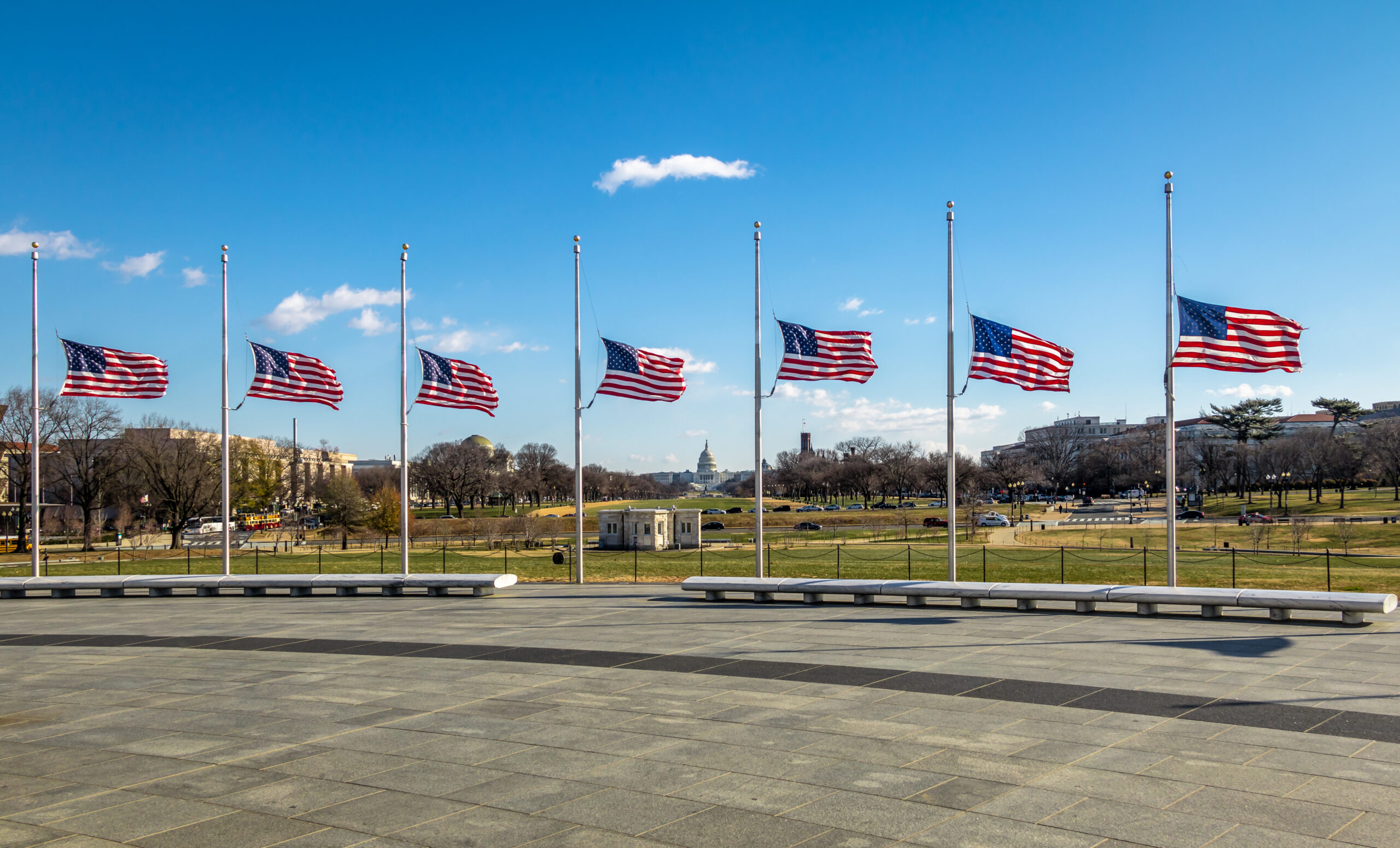
One of the most frequent points of confusion for Virginia residents and business owners is when and why a flag should be flown at half-staff. This practice is a sign of mourning and is strictly regulated for government buildings.
Who Has the Authority?
Under the U.S. Flag Code and Virginia executive policy, only two figures have the authority to order the flags to half-staff in Virginia:
- The President of the United States: For national figures or national tragedies.
- The Governor of Virginia: For state figures, local members of the armed forces killed in action, or local tragedies.
Local mayors or police chiefs do not have the legal authority to order flags to half-staff on their own accord, though they may request the Governor to issue such a proclamation.
Proper Procedure for Hoisting
When the flag is to be flown at half-staff, it should first be hoisted to the peak for an instant and then lowered to the half-staff position. Before lowering the flag for the day, it should again be raised to the peak. In Virginia, when the U.S. flag is at half-staff, the Virginia state flag must also be flown at half-staff.
2026 Notification Systems
As of 2026, the Commonwealth of Virginia provides a digital alert system through the Governor's official website and the Department of General Services. Citizens can subscribe to email or SMS notifications to receive immediate updates on half-staff proclamations, ensuring they remain in compliance with current mourning periods.
Homeowners Association (HOA) Regulations and Rights
The intersection of private property rights and community standards is a frequent source of conflict regarding flags. Virginia has specific statutes that limit how much control an HOA can exert over a resident's flag display.
The Virginia Property Owners' Association Act
Under Code of Virginia § 55.1-1809, an association cannot prohibit a lot owner from displaying the U.S. flag unless the association's disclosure packet specifically outlines such restrictions. Even then, federal law—specifically the Freedom to Display the American Flag Act of 2005—generally prevents HOAs from banning the U.S. flag entirely.
Reasonable Restrictions
While an HOA cannot ban the U.S. flag, they are permitted to establish "reasonable restrictions" concerning:
- Size: They may limit the dimensions of the flag (e.g., no larger than 3x5 feet).
- Placement: They can regulate where a flagpole is installed (e.g., forbidding a 20-foot pole in a small front yard).
- Time and Manner: They may require that flags be kept in good condition and not tattered.
Other Flags (First Responders and Military)
Virginia law is more nuanced regarding non-national flags. While the U.S. flag has federal protection, flags such as the "Thin Blue Line," "Thin Red Line," or specific military branch flags are generally subject to the HOA’s specific bylaws. However, Virginia lawmakers have historically been protective of military service flags, and many community associations in the Commonwealth now include these in their "protected" categories to avoid litigation.
Comparison of Flag Display Standards
The following table outlines the key differences in requirements between the national ensign and the Commonwealth's flag according to current 2026 standards.
| Feature | U.S. Flag Requirement | Virginia State Flag Requirement |
|---|---|---|
| Position of Honor | Always highest or to the observer's left. | Below U.S. flag or to the observer's right. |
| Illumination | Must be lit if flown at night. | Recommended to be lit if flown at night. |
| Inclement Weather | Use all-weather material if flown in rain/snow. | Follows same standard as U.S. flag. |
| Half-Staff Source | President or Governor. | Governor (or President's national order). |
| Disposal | Ceremonial burning (preferred). | Respectful destruction/recycling. |
| HOA Protection | High (Protected by Federal & State Law). | Moderate (Protected primarily by State Law). |
Lighting and Nighttime Display
According to both federal and Virginia guidelines, the universal custom is to display the flag only from sunrise to sunset on buildings and stationary flagstaffs in the open. However, when a patriotic effect is desired, the flag may be displayed 24 hours a day if it is properly illuminated during the hours of darkness.
Proper illumination in 2026 typically involves dedicated LED uplighting that ensures the entire flag is visible, not just a portion of the pole. For homeowners, solar-powered flagpole lights have become an acceptable and common way to meet this requirement without the need for complex electrical wiring.
Maintenance and Retirement of Flags
A flag should never be displayed in a condition that is torn, faded, or tattered. In Virginia, the high humidity and coastal winds can accelerate the wear on nylon and cotton flags.
Cleaning and Repair
It is acceptable to wash a flag with mild detergent or to mend small tears, provided the repairs are not conspicuous. Once a flag becomes too worn for display, it should be retired.
Proper Retirement Procedures
The Code of Virginia supports the federal guideline that the flag, when it is no longer a fitting emblem for display, should be destroyed in a dignified way, preferably by burning. Many Virginia residents find this difficult to do personally. Local chapters of the American Legion, VFW (Veterans of Foreign Wars), and the Boy Scouts of America frequently host flag retirement ceremonies and provide drop-off boxes for the public.
Common Mistakes to Avoid in Virginia
- Flying the State Flag Alone on a Public Building: On state-owned property, the Virginia flag should ideally be accompanied by the U.S. flag.
- Incorrect Half-Staff Height: "Half-staff" does not mean the middle of the pole. It refers to the flag being approximately halfway between the top and bottom of the staff.
- Ignoring Local Ordinances: While HOAs are limited by state law, some local Virginia municipalities have zoning ordinances regarding the height of permanent flagpoles in residential areas (often capped at 20 or 25 feet).
- Advertising Use: The Virginia state flag should not be used for advertising purposes in a way that demeans the symbol. The seal should not be printed on napkins, boxes, or anything intended for temporary use and discard.
Frequently Asked Questions
Can my Virginia HOA fine me for flying a flag?
Only if you are violating a "reasonable" restriction that was clearly outlined in the association's governing documents. For example, if your HOA limits flagpole height to 15 feet and you install a 30-foot pole, you could be subject to a fine. However, they cannot fine you simply for the act of flying a properly maintained U.S. flag.
What should I do if I see a flag flying at half-staff and don't know why?
In Virginia, you can check the Commonwealth’s official Newsroom or the Department of General Services. These sites list all active executive orders regarding flag status. If it is not a state-ordered event, it may be a federal order issued by the White House.
Is it illegal to fly the Virginia flag at night without a light?
It is not a criminal offense for a private citizen, but it is considered a breach of flag etiquette. For government buildings in Virginia, proper illumination is a requirement under administrative guidelines.
Do I need a permit to install a flagpole in Virginia?
In most Virginia counties (such as Fairfax, Loudoun, or Chesterfield), a permit is not required for a standard residential flagpole under a certain height (usually 20-25 feet). However, if you are installing a large commercial pole or one with a concrete foundation, you should check with your local building department regarding wind load requirements and setback lines.
Can I fly the Virginia flag above the U.S. flag if I live in Virginia?
No. Under the U.S. Flag Code, which Virginia recognizes, no other flag may be placed above the flag of the United States or to the observer's left of the U.S. flag when they are at the same level.
Recommendation for Residents and Businesses
For anyone flying a flag in Virginia, the best course of action is to prioritize maintenance and stay informed. If you are a member of an HOA, request a copy of the specific flag architectural guidelines to ensure your pole height and placement are compliant. For businesses and public entities, assign a specific individual to monitor the Governor's half-staff alerts to ensure timely compliance with state mourning periods. Always source your flags from reputable manufacturers that follow the official design specifications for the Seal of the Commonwealth to ensure the artwork is accurate and respectful.
Image Gallery