Understanding the Work of Alex Trebek: A Complete Guide to His Career, Technique, and Cultural Legacy
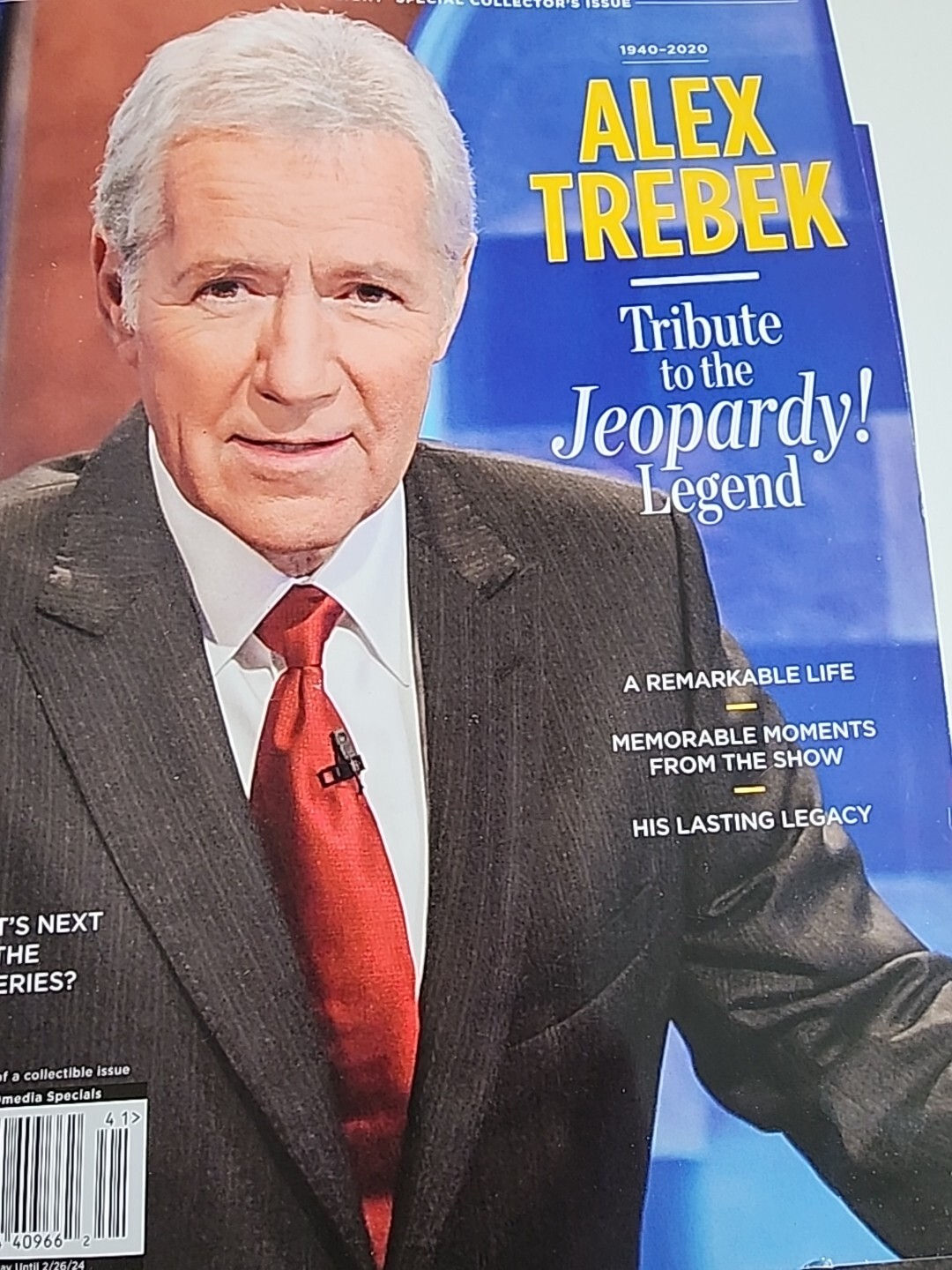
Understanding the work of Alex Trebek (frequently searched as "Alex Trabeck") requires examining a 50-year broadcasting career defined by journalistic precision, minimalist hosting, and intellectual curiosity. Best known for hosting th...
Understanding the work of Alex Trebek (frequently searched as "Alex Trabeck") requires examining a 50-year broadcasting career defined by journalistic precision, minimalist hosting, and intellectual curiosity. Best known for hosting the syndicated quiz show Jeopardy! across nearly four decades, Trebek redefined North American television hosting by positioning the game, facts, and contestants above the host's persona.
Contents
Though casual viewers often view him simply as the face of America’s favorite trivia game, Trebek was a trained news journalist, television producer, and master of pacing. His approach transformed a mid-century daytime diversion into a respected intellectual institution. Analyzing his professional output reveals how his disciplined delivery, rigorous standards for pronunciation, subtle comedic timing, and deep commitment to education established a blueprint for modern broadcast media.
Early Career: Canadian Foundations and Broadcaster Training
Born George Alexander Trebek in Sudbury, Ontario, in 1940, his early professional development took place within the rigorous broadcast environment of the Canadian Broadcasting Corporation (CBC). Trebek graduated from the University of Ottawa in 1961 with a degree in philosophy, but his broadcast career began during his student years to help cover tuition.
At the CBC, Trebek did not start as an entertainer; he was a serious staff announcer. He covered national news, classical music broadcasts, radio events, and curling matches, while also hosting specialized programs like Music Hop (Canada's first live teen music show) and the high school academic competition Reach for the Top.
This foundational period shaped his broadcasting identity in three fundamental ways:
- Linguistic neutrality: Trebek developed a measured, mid-Atlantic vocal tone and a relentless dedication to foreign language pronunciation, drawing on his bilingual French-Canadian background.
- Composure under live conditions: Early live television and radio demanded strict time management, unscripted adaptability, and zero dead air.
- Journalistic detachment: Unlike traditional daytime emcees who relied on slapstick humor or performative enthusiasm, Trebek approached game hosting with the balanced authority of a news anchor.
The Transition to American Television and Daytime Game Shows
In 1973, television producer Alan Thicke encouraged Trebek to move to the United States to host a new NBC game show, The Wizard of Odds. This marked the start of an intense decade during which Trebek established himself as one of the hardest-working hosts in daytime television.
Throughout the 1970s and early 1980s, Trebek hosted a diverse portfolio of programs across major networks:
- The Wizard of Odds (1973–1974): Trebek's American debut, focusing on statistical probabilities and audience participation.
- High Rollers (1974–1976, 1978–1980): A dice-based game where Trebek honed his ability to track complex mathematics, rapid rule contingencies, and live prize boards on air.
- Double Dare (1976–1977): A strategy-heavy quiz show that prefigured the intellectual pacing of his later work.
- Battlestars (1981–1982): A celebrity-driven panel format showcasing his ability to banter with Hollywood figures without losing narrative momentum.
- The New Battlestars and Pitfall (1981–1982): A period illustrating the volatile economics of television syndication, including episodes shot in Canada during production disputes.
These programs served as a laboratory where Trebek refined his signature hosting mechanic: managing dense, fast-moving game mechanics while maintaining absolute calm on set.
The Jeopardy! Era: Redefining the Intellectual Quiz Show
In 1984, television mogul Merv Griffin tapped Alex Trebek to host a modernized, syndicated revival of Jeopardy!, which had originally been hosted by Art Fleming from 1964 to 1975. Trebek also served as the show's producer for its first three revival seasons (1984–1987), giving him direct influence over the show's pacing, board mechanics, tone, and editorial standards.
Under Trebek’s stewardship, Jeopardy! became an extraordinary television phenomenon, broadcasting more than 8,000 episodes with him at the lectern until his death in November 2020.
- Merv Griffin Concept: Answers & Questions
- 1984 Relaunch: Trebek as Producer & Host
- Pacing: 61 clues in 22 minutes
- Strict Fact-Checking & Clue Standardization
- Neutral adjudication & linguistic accuracy
- Modern Syndication Powerhouse
- Host as facilitator, elevating contestant knowledge
The Anatomy of the 22-Minute Broadcast
Trebek understood that the true star of Jeopardy! was the material. An average half-hour broadcast contains roughly 22 minutes of program content surrounding commercial breaks. Within that window, Trebek regularly cleared two complete boards totaling 61 individual clues across 12 categories, along with contestant introductions, Daily Doubles, and Final Jeopardy.
To sustain this speed without confusing viewers, Trebek maintained a calibrated reading cadence of approximately 150 to 160 words per minute. He monitored the game board, the contestant signaling devices, and the off-stage judges simultaneously, adjusting his speed based on how quickly contestants were buzzing in.
Technical Elements of Trebek's Hosting Philosophy
Trebek's work is widely studied by broadcasters and communications scholars because it diverged sharply from the standard conventions of American light entertainment. His methodology relied on four technical pillars.
1. Minimalist Mediation and Anti-Ego Hosting
Traditional game show hosts often insert themselves into gameplay with exaggerated reactions, physical comedy, or mock sympathy. Trebek operated as an impartial referee. If a contestant gave an incorrect response, he provided an immediate, clean correction without moralizing: "No, sorry. Sarah, select again." By keeping corrections concise, he preserved valuable airtime, maximizing the clues revealed per round.
2. Lexical and Orthographic Precision
Because Jeopardy! covered literature, global geography, classical arts, and sciences, Trebek spent several hours before each tape day annotating clue sheets. Working with the editorial staff and researchers, he marked phonetic stresses and foreign pronunciations. If a clue referenced a French philosopher, a Russian composer, or an indigenous South American river, Trebek pronounced it with authentic regional phonology. This precision gave the broadcast an uncompromising academic authority.
3. Structural Pacing and Game Management
Television production operates on strict time cues. Trebek maintained internal clocks that enabled him to speed up the selection process if a game lagged, or create suspense around high-stakes Daily Doubles and Final Jeopardy wagers. He used subtle vocal cues—such as a sharp upward inflection or a brisk category read—to prompt players to select faster when time warnings sounded from the control booth.
4. Controlled Warmth in Contestant Interviews
The mid-show interview segment was structurally the most challenging portion of the program. Contestants were private citizens often inexperienced with live cameras. Rather than mining them for exaggerated television moments, Trebek asked targeted questions, allowed them to share their brief anecdotes, offered a polite observation, and moved cleanly back to the game board.
Key Productions Hosted by Alex Trebek
The following table summarizes the primary programs across Trebek’s professional broadcast career, highlighting his operational roles and network affiliations.
| Program Name | Active Years | Network / Syndication | Trebek’s Primary Role | Distinguishing Format Element |
|---|---|---|---|---|
| Reach for the Top | 1966–1973 | CBC (Canada) | Host | High school academic quiz bowl; early testing ground for rapid-fire factual delivery. |
| The Wizard of Odds | 1973–1974 | NBC | Host | Statistical audience game show; his first national U.S. network program. |
| High Rollers | 1974–1976; 1978–1980 | NBC | Host | Combined general knowledge with the roll of oversized dice; high-stress probability management. |
| Double Dare | 1976–1977 | CBS | Host | Complex intellectual strategy and clue isolation, produced by Mark Goodson and Bill Todman. |
| Jeopardy! | 1984–2020 | First-Run Syndication | Host & Producer (1984–1987) | Signature reverse-format quiz competition; set the standard for intellectual broadcast television. |
| Classic Concentration | 1987–1991 | NBC | Host | Daytime puzzle-solving game requiring memory, rebus-reading, and quick associative logic. |
| To Tell the Truth | 1991 | First-Run Syndication | Host | Classic panel deception show; demonstrated his skill moderating celebrity panels. |
| National Geographic Bee | 1989–2013 | PBS / National Geographic | Host / Moderator | Academic geography competition for youth; Trebek hosted the national finals for 25 consecutive years. |
Parallel Projects: Classic Concentration and Educational Advocacy
While hosting Jeopardy!, Trebek simultaneously hosted NBC’s Classic Concentration from 1987 to 1991. The show paired a memory match board with visual rebus puzzles. Running two major daily network and syndicated shows simultaneously required taping up to ten half-hour episodes in a single day, alternating between contrasting hosting styles: casual puzzle-solving in the morning and strict, high-speed intellectual competition in the afternoon.
Beyond commercial television, Trebek dedicated substantial energy to educational competitions. For a quarter of a century (1989–2013), he hosted the national finals of the National Geographic Bee. His work with the National Geographic Society reinforced his public role as an ambassador for global literacy and geographic education among American students.
His institutional contributions extended to non-profit leadership and philanthropy:
- USO Tours: Trebek participated in more than a dozen United Service Organizations (USO) tours across the world, visiting active-duty military personnel in Iraq, Afghanistan, the Persian Gulf, and remote outposts.
- World Vision: As an active ambassador and patron, he traveled widely to draw attention to global poverty, clean water initiatives, and childhood education in developing nations.
- Environmental Conservation: Trebek donated 62 acres of land in the Hollywood Hills to the Santa Monica Mountains Conservancy in 1998, creating the Trebek Open Space to protect native flora and provide public trail access.
Late Career, Illness, and Cultural Reverence
In March 2019, Trebek announced that he had been diagnosed with Stage IV pancreatic cancer. Rather than stepping down immediately, he chose to address his diagnosis publicly and continue hosting Jeopardy! through aggressive chemotherapy and immunotherapy treatments.
His handling of his final nineteen months on air provided a rare, unvarnished look at resilience in public life:
- Public transparency: Trebek regularly provided video updates from the Jeopardy! stage, discussing the physical and emotional realities of cancer treatment without romanticizing his pain.
- Commitment to craftsmanship: Despite severe gastrointestinal pain and fatigue, he taped episodes through late October 2020—just ten days before his death on November 8, 2020.
- Memoir and reflection: In July 2020, he published his autobiography, The Answer Is...: Reflections on My Life, which documented his Canadian upbringing, thoughts on religion, philanthropy, and the mechanics of his television career.
His consistent presence on television screens across multiple generations transformed him into an uncommon cultural touchstone: an arbiter of objective truth in an increasingly fragmented, polarized media landscape.
How to Study and Apply Trebek's Broadcasting Principles
Modern content creators, educators, public speakers, and broadcast journalists can derive practical lessons from Trebek's five-decade career.
Step 1: Prioritize the Material Over Personal Performance
Trebek succeeded by resisting the impulse to become the center of attention. When moderating panels, delivering technical training, or presenting complex data, keep focus entirely on the subject matter and the participants. Cut personal anecdotes unless they directly clarify the topic.
Step 2: Master Phonetics and Specialized Terminology
Credibility deteriorates when a presenter mispronounces foundational terms, proper nouns, or foreign phrases. Always pre-read presentation decks or scripts aloud. Mark syllables phonetically and consult primary linguistic references rather than guessing pronunciations.
Step 3: Implement Ruthless Time Economy
Avoid padding transitions with empty filler phrases like "Moving along now" or "The next thing I want to talk about is." Transition using logical continuity and concise operational cues, maximizing information density while respecting audience attention spans.
Frequently Asked Questions
Why is Alex Trebek's name sometimes spelled "Alex Trabeck"?
"Alex Trabeck" is a common phonetic misspelling. Because his last name ends with a hard "k" sound and uses a short "e" sound, many casual viewers spell it phonetically as "Trabeck" rather than its correct legal spelling, George Alexander Trebek.
How many episodes of Jeopardy! did Alex Trebek host?
Trebek hosted 8,216 episodes of Jeopardy! over 37 seasons from 1984 through 2020. In 2014, Guinness World Records officially recognized him for the most game show episodes hosted by the same presenter on the same program, surpassing previous record holder Bob Barker.
Did Alex Trebek write the clues on Jeopardy!?
Trebek did not write the clues himself; Jeopardy! employed a full-time staff of professional researchers and writers responsible for drafting, verifying, and fact-checking every clue. However, as producer and later host, Trebek reviewed every clue prior to taping, suggested edits, and flagged potential ambiguities or factual disputes.
Did Alex Trebek know all the answers to the questions he asked?
While Trebek possessed broad personal knowledge, a deep interest in current events, and a degree in philosophy, his lectern was equipped with a master clue binder containing the correct responses, acceptable phonetic variations, and contextual notes provided by the research team.
What awards and honors did Alex Trebek receive during his career?
Trebek won eight Daytime Emmy Awards for Outstanding Game Show Host, a Lifetime Achievement Emmy Award (2011), and a Peabody Award (2011) for his role on Jeopardy!. He was awarded stars on both the Hollywood Walk of Fame and Canada's Walk of Fame, and in 2017, he was invested as an Officer of the Order of Canada.
Practical Takeaway and Next Actions
To truly appreciate Trebek’s contribution to modern media, examine his hosting mechanics directly rather than relying on highlights.
A valuable practical exercise for public speakers and media professionals is to watch three specific Jeopardy! episodes: one from his inaugural 1984 season, one from the height of the 2004 Ken Jennings streak, and one from his final month of broadcasts in October 2020.
Observe how his vocal modulation, hand gestures, posture, and time management remained consistent throughout these eras. Taking note of how he managed momentum, handled player errors with quiet dignity, and maintained steady pacing offers master-level training in the art of communicative clarity.
Image Gallery