YUNGBLUD and the Religion Theme: Iconography, Subversion, and the Secular Sanctuary
YUNGBLUD (Dominic Harrison) frequently embeds religious imagery, liturgical motifs, and theological questions throughout his discography and visual aesthetics. Rather than expressing traditional piety or pure iconoclasm, Harrison subve...
YUNGBLUD (Dominic Harrison) frequently embeds religious imagery, liturgical motifs, and theological questions throughout his discography and visual aesthetics. Rather than expressing traditional piety or pure iconoclasm, Harrison subverts sacred symbols to critique institutional hypocrisy, confront mental health struggles, and construct an inclusive, secular sanctuary for marginalized youth.
Contents
Deconstructing the Sacred: How YUNGBLUD Uses Religious Iconography
Since his debut, YUNGBLUD has integrated traditional religious symbols into punk, alt-rock, and pop-sensibility visuals. Crosses, rosaries, confessionals, and funeral processions are recurring elements in his wardrobe, cover art, and music videos. However, these symbols rarely serve a traditional devotional purpose. Instead, Harrison uses sacred imagery as a visual language to examine existential tension, identity, and social alienation.
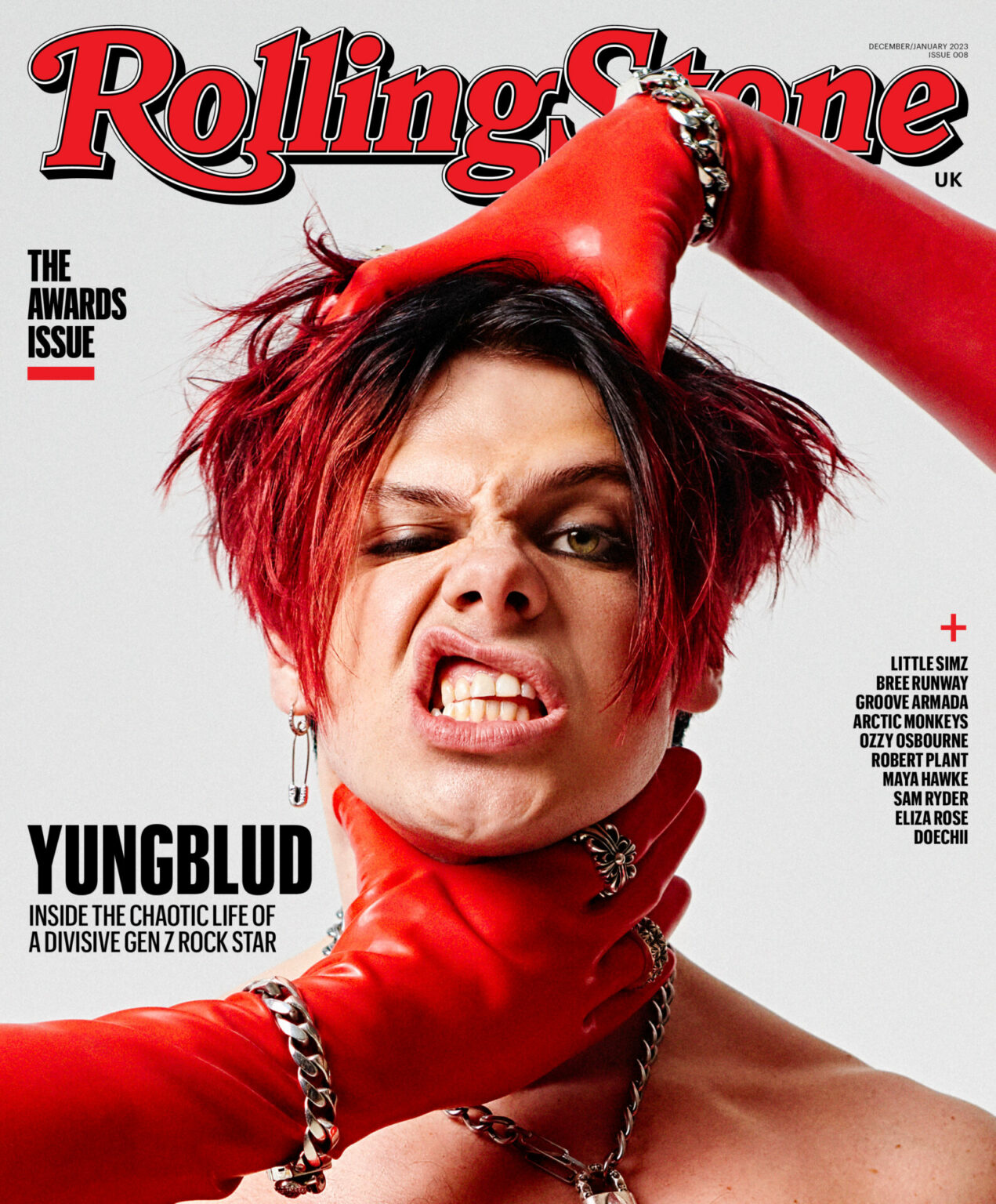
In fashion, YUNGBLUD frequently pairs classic Catholic items—such as heavy rosary beads, crucifix chains, and stained-glass motifs—with subversive punk staples, including safety pins, distressed leather, kilted skirts, and trademark neon-pink accents. By placing holy artifacts alongside signifiers of rebellion, he strips the religious symbols of their dogmatic authority, transforming them into tools for self-expression.
Traditional Sacred Symbol + Punk/Alternative Aesthetics = Subverted Secular Emblem (e.g., Catholic Rosary) + (e.g., Safety Pins & Skirts) = (e.g., Identity & Liberation)
This contrast is central to YUNGBLUD's visual narrative. In music videos such as "God Save Me, but Don't Drown Me Out" and "The Funeral," sacred architecture—such as chapels, altars, and burial sites—is repurposed as a stage for emotional vulnerability rather than institutional judgment. The chapel becomes a space not for seeking divine forgiveness, but for confronting personal trauma and societal rejection.
Lyrical Motifs: Faith, Mental Health, and Institutional Hypocrisy
Lyrically, YUNGBLUD approaches religion from multiple perspectives: as a desperate plea for help during emotional distress, as a critique of rigid social moralizing, and as a framework for building community outside traditional structures.
Direct Address to the Divine and the Struggle for Mental Health
In several tracks, Harrison addresses God directly, framing prayer not as a formal act of worship, but as an urgent conversation about coping with anxiety, depression, and self-doubt. In "God Save Me, but Don't Drown Me Out" (from the album weird!), the title acts as a paradoxical prayer. The lyric asks for salvation while simultaneously pleading for autonomy, expressing fear that traditional intervention might crush the individual's identity.
"Wasted youth, tell me the truth Will we be alright? God save me, but don't drown me out..." — YUNGBLUD, "God Save Me, but Don't Drown Me Out"
The song highlights a central theme in Harrison's work: the friction between seeking help and preserving self-determination. Religion is presented as a traditional system that promises comfort, yet often demands conformity in return.
Challenging Institutional Guilt and Moral Dogma
Another major theme is the rejection of religious guilt, particularly around sexuality, gender expression, and mental illness. Tracks like "Fleabag" and "Lowlife" explore feelings of unworthiness and social rejection—emotions historically amplified by conservative religious teachings.
Instead of trying to meet traditional standards of purity or righteousness, YUNGBLUD leans into being labelled a "sinner" or an outcast. By claiming terms like "weirdo," "fleabag," or "liability," he neutralizes the moral judgment associated with dogmatic religious standards. The narrative shifts from seeking divine absolution to accepting oneself without condition.
Evolution of Religious Themes Across YUNGBLUD's Discography
Throughout his career, YUNGBLUD's engagement with spiritual imagery has evolved from raw political angst to systemic personal and collective reclamation. The table below details how religious themes, visual markers, and underlying concepts have shifted across his major eras.
| Era / Album | Primary Religious & Spiritual Motifs | Key Track Examples | Visual & Aesthetic Markers | Core Symbolism & Intent |
|---|---|---|---|---|
| 21st Century Liability | Anti-establishment rage, institutional hypocrisy, moral panic | "King Charles", "Psychotic Kids", "Machine Gun" | Damaged sacred art, inverted crosses, school uniform subversion | Rejection of societal and religious authority; exposing adult hypocrisy. |
| The Underrated Youth (EP) | Collective martyrdom, sanctuary, secular congregation | "Parents", "Hope For the Underrated Youth" | Pink flares, communal gatherings, baptismal water motifs | Redefining salvation through youth unity and peer-to-peer solidarity. |
| weird! | Prayer as cry for help, personal redemption, existential mortality | "God Save Me, but Don't Drown Me Out", "Teresa", "Mars" | Stained-glass windows, funeral altars, angel wings paired with platform boots | Wrestling with mental health, mortality, and identity under the eye of the divine. |
| YUNGBLUD | Death, resurrection, ritualistic self-acceptance | "The Funeral", "Memories", "Fleabag" | Open caskets, gothic chapels, funeral processions, crown motifs | Mocking death and moral judgment; celebrating life by staging one's own funeral. |
| Mid-2020s Releases & Singles | Secular spirituality, mythologizing the outcast, communal rituals | "Lowlife", festival-scale live rituals | Monastic robes mixed with glam-punk, ceremonial light shows | Establishing the live show as a non-dogmatic, transcendent sanctuary. |
The "Black Hearts Club" as a Secular Sanctuary
Organized religion historically served as the primary gathering place for community, moral validation, and shared identity. As formal religious participation has declined among Gen Z and younger millennials, alternative cultural spaces have frequently taken over those social functions. YUNGBLUD explicitly designs his fanbase, known as the Black Hearts Club, to act as a secular alternative to traditional congregations.
The Live Show as a Modern Liturgy
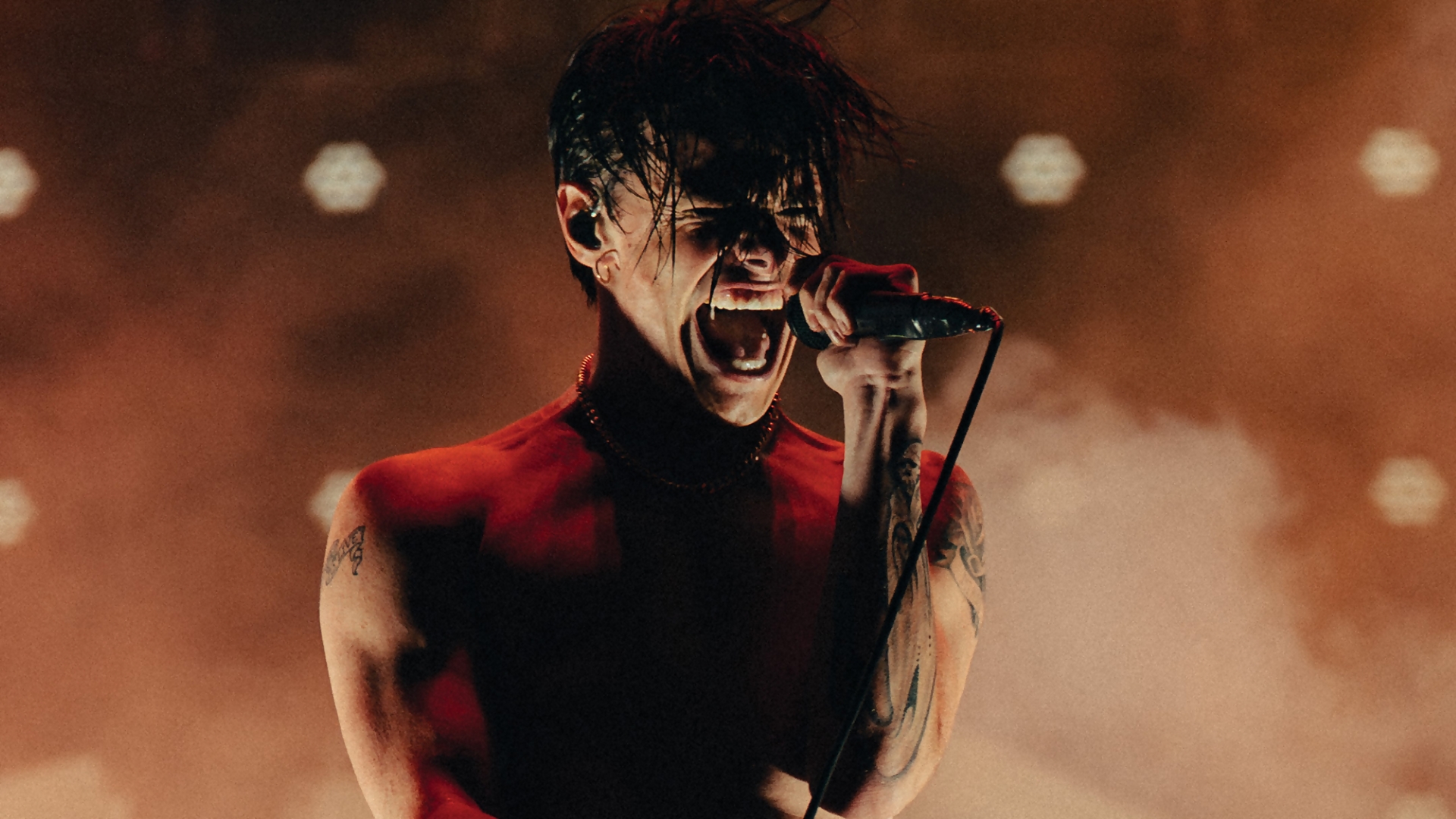
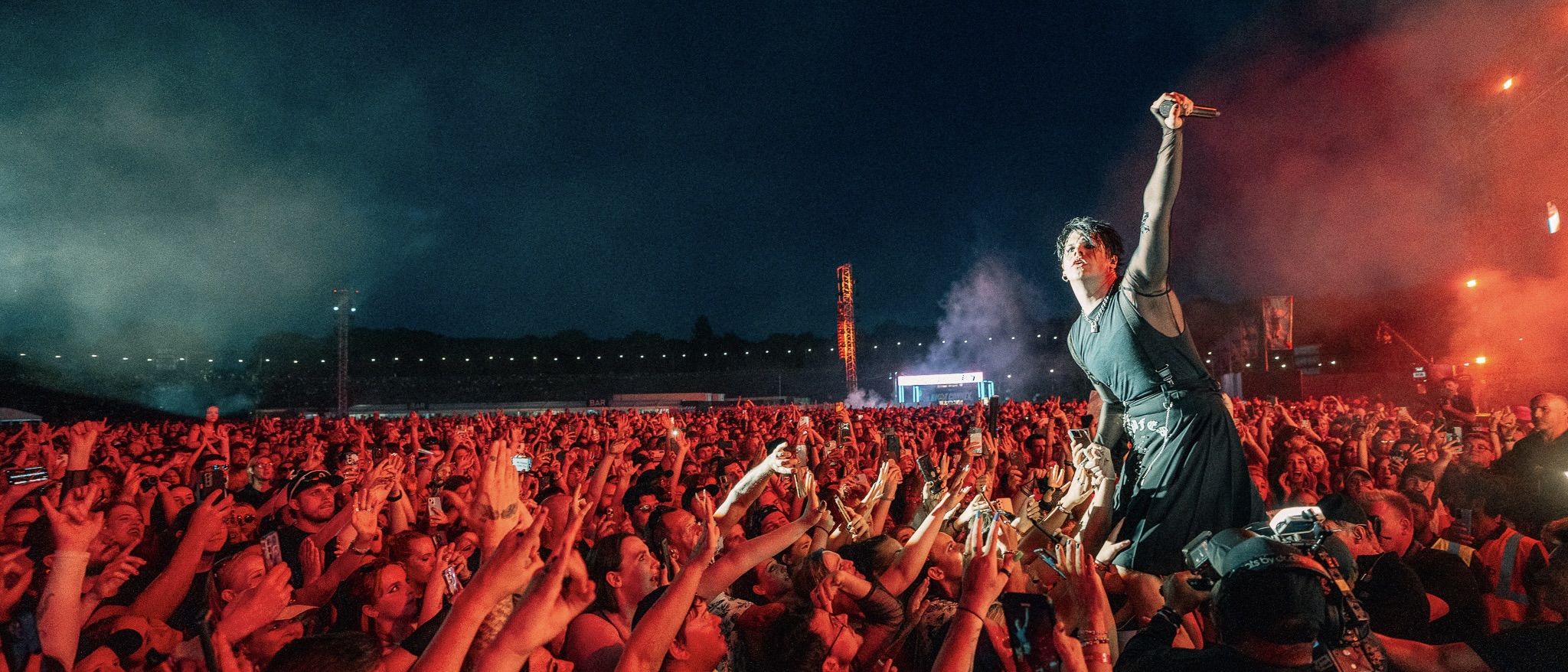
YUNGBLUD often describes his concerts as a form of church—not one devoted to a deity, but one dedicated to shared human experience and mutual acceptance. The structure of his live performances shares several features with communal worship:
- Call-and-Response Rituals: Songs like "Protest" and "Hope For the Underrated Youth" feature chants that function like modern hymns, building collective energy and purpose.
- Safe Space Protocols: Before and during shows, Harrison frequently reminds audiences that the venue is a sanctuary free from judgment based on sexual orientation, gender identity, race, or mental health status.
- Symbolic Identity Markers: The "Black Hearts Club" logo (two crossed fingers with black hearts) acts as a visual badge of membership, much like sacred symbols function for traditional religious groups.
By incorporating these liturgical elements into rock concerts, Harrison fills a spiritual void for fans who feel excluded by traditional churches, providing belonging without requiring adherence to religious dogma.
Artistic Antecedents and Sociocultural Context
YUNGBLUD's subversion of religious imagery follows a long history of rock, punk, and pop artists using sacred symbols to challenge social norms. Understanding these artistic predecessors provides important context for his approach.
Historical Lineage of Religious Subversion in Alternative Music: [1980s Pop Provocation] (Madonna) ➔ [1990s Industrial/Gothic Shock] (Marilyn Manson) ➔ [2000s Emo Theatricality] (My Chemical Romance) ➔ [Modern Alt-Pop Secularism] (YUNGBLUD)
From Madonna to My Chemical Romance
- Madonna: In the late 1980s, Madonna’s "Like a Prayer" fused sacred Catholic imagery with eroticism and racial justice, establishing a precedent for using religious symbols to provoke debate on social issues.
- Punk and Post-Punk: Bands like Sex Pistols and The Clash routinely subverted religious and royal iconography to express anti-establishment views, challenging the authority of the Church of England and the state.
- My Chemical Romance: In the 2000s, My Chemical Romance introduced gothic Catholicism, funeral aesthetics, and theatrical concepts of sin and redemption into emo rock, directly influencing YUNGBLUD's visual style.
The Contemporary Context: Belonging in a Post-Religious Era
YUNGBLUD’s work lands at a time when young people increasingly identify as spiritual but not religious, or as non-religious entirely. According to demographic studies by organizations like the Pew Research Center, youth in North America and Western Europe report historic levels of disaffiliation from organized religion.
However, the desire for meaning, ritual, and community remains strong. YUNGBLUD responds to this cultural shift by adopting the visual and emotional language of faith while replacing its restrictive moral frameworks with a message of unconditional self-acceptance.
How to Analyze Religious Imagery in YUNGBLUD’s Work
For listeners, music theorists, and pop-culture analysts studying YUNGBLUD’s catalog, evaluating his use of spiritual motifs involves looking beyond surface provocation. The following step-by-step approach helps break down how these themes function across his songs and visuals:
- Identify the Visual or Lyrical Symbol: Look for specific iconography (e.g., rosaries, altars, caskets, prayers, references to God or heaven/hell).
- Examine the Contextual Contrast: Compare the sacred symbol with the surrounding elements. Is the religious item paired with punk clothing, heavy distortion, or lyrics about self-sabotage?
- Determine the Target of Critique: Ask what the song or video is challenging. Is it targeting institutional religion, societal judgment, personal shame, or mental health stigma?
- Evaluate the Community Aspect: Consider how the song functions in a live setting. Does it invite audience participation, create a shared chant, or offer reassurance to marginalized listeners?
- Assess the Resolution: Look at how the spiritual tension resolves. Does the narrator find peace through divine intervention, or through self-acceptance and community connection?
Frequently Asked Questions
Is YUNGBLUD anti-religious or anti-Christian?
No. YUNGBLUD's work is generally not anti-religious or anti-Christian in a purely hostile sense. Instead, he critiques institutional dogma, hypocrisy, and the judgment or guilt often imposed by conservative religious organizations. His lyrics frequently engage with God and prayer directly, using these concepts to explore mental health, personal redemption, and self-acceptance.
Why does YUNGBLUD wear rosaries and cross necklaces?
YUNGBLUD wears rosaries and cross necklaces as part of an alternative fashion tradition that pairs sacred items with punk and glam elements. The style challenges the idea that holy symbols belong exclusively to traditional institutions. By mixing rosaries with safety pins and bright colors, he transforms them into personal symbols of identity and resilience.
What is the meaning behind the song "God Save Me, but Don't Drown Me Out"?
The song explores the tension between seeking help for mental health issues and protecting one's personal identity. The title acts as a paradoxical prayer: asking for salvation ("God save me") while asserting the right to remain oneself without being suppressed or controlled ("don't drown me out").
How does YUNGBLUD create a "secular church" for his fans?
YUNGBLUD treats his concerts and fan base (the Black Hearts Club) as a non-religious sanctuary. He uses community rituals, call-and-response chants, and explicit promises of safety for LGBTQ+ and marginalized youth to offer the sense of belonging and support traditionally provided by religious congregations—without requiring dogmatic beliefs.
What does "The Funeral" video represent in terms of religious themes?
"The Funeral" uses the visual setting of a funeral to subvert fears around death, societal judgment, and public disapproval. By dancing in and around an open casket, YUNGBLUD turns a solemn religious ceremony into a celebration of living authentically, showing that he is unaffected by the expectations or criticism of others.
Next Steps for Exploration
To gain a deeper understanding of how religion, subversion, and community intersect in YUNGBLUD's work, consider the following approach:
- Listen Chronologically: Trace his thematic evolution by listening to 21st Century Liability (anti-authority focus), weird! (existential and prayer-focused themes), and his self-titled album YUNGBLUD (themes of death and celebration).
- Analyze the Visuals: Watch the official music videos for "God Save Me, but Don't Drown Me Out", "The Funeral", and "Hope For the Underrated Youth" back-to-back to examine how church architecture and liturgical staging are used.
- Compare Related Artists: Explore how artists like My Chemical Romance, Lady Gaga, and Yungblud's collaborators (such as Bring Me The Horizon) use religious imagery to highlight similarities and differences in modern alternative music.
Image Gallery