The Grace Period Exception in Group Life Insurance Policies: A Technical Guide
In a standard group life insurance contract, the grace period provision applies to every premium payment except the first premium payment. While subsequent premiums are granted a window of leniency (typically 31 days) to prevent the po...
In a standard group life insurance contract, the grace period provision applies to every premium payment except the first premium payment. While subsequent premiums are granted a window of leniency (typically 31 days) to prevent the policy from lapsing, the initial premium must be paid in full to activate the coverage and establish the legal contract between the insurer and the policyholder.
Contents
Understanding the Grace Period in Group Life Insurance
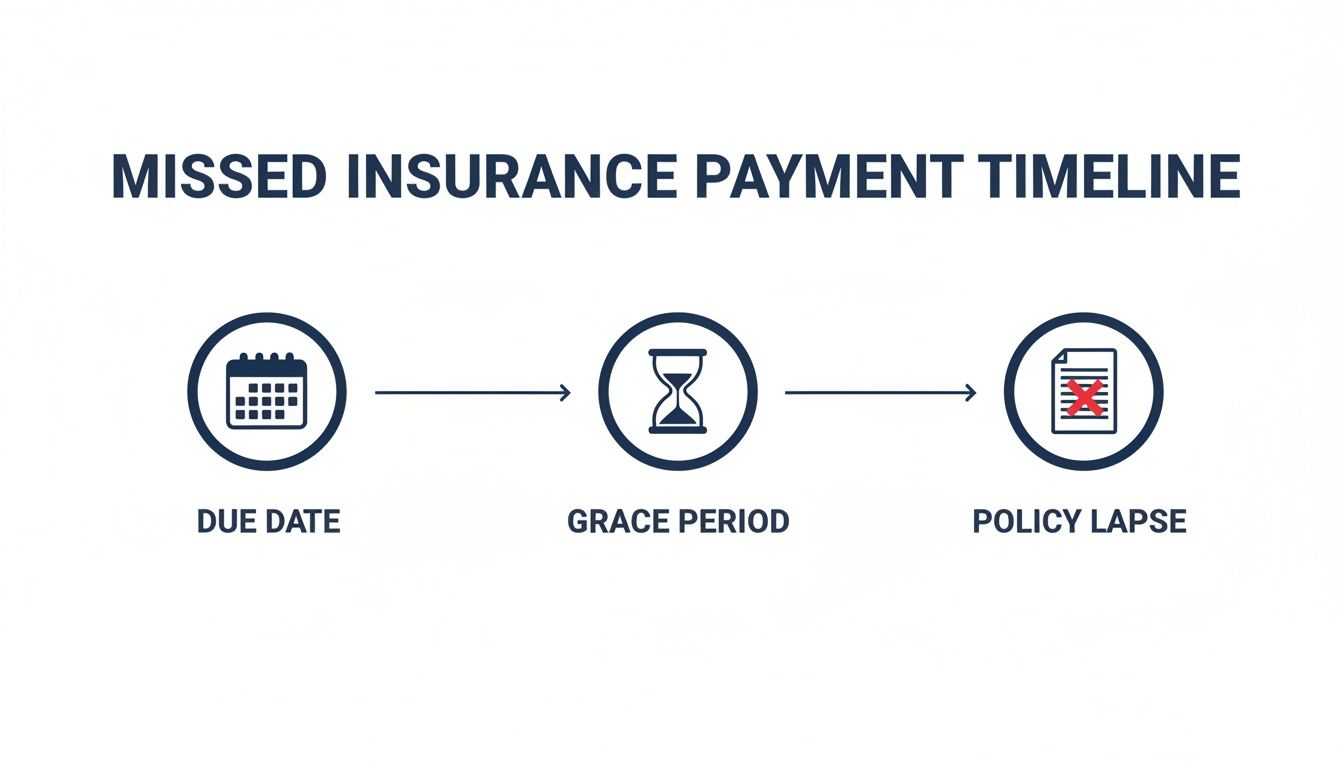
In the insurance industry of 2026, the grace period remains one of the most critical consumer protection features within a life insurance contract. By definition, a grace period is a set timeframe after the premium due date during which the policy remains in force, even if the premium has not yet been paid. This provision is designed to prevent the accidental lapse of coverage due to administrative delays, clerical errors, or temporary financial fluctuations.
In a group life insurance setting—where the policyholder is usually an employer, labor union, or professional association—the grace period typically lasts for 31 days. This period is standardized across most jurisdictions and is often mandated by state insurance departments or based on the National Association of Insurance Commissioners (NAIC) model acts. During these 31 days, the insurance company continues to provide full coverage for all certificate holders (the employees or members) under the master policy.
However, the application of this grace period is not universal across the entire lifespan of the policy. There is one specific instance where the insurer is under no obligation to provide a window of leniency: the very first premium payment required to start the policy.
The First Premium Exception: Why It Exists
The legal reason why the grace period applies to every premium payment except the first is rooted in the fundamental principles of contract law, specifically the concepts of consideration and conditions precedent.
1. The Concept of Consideration
For any contract to be legally binding, there must be an exchange of value, known as consideration. In a group life insurance contract, the insurer promises to pay a death benefit (the consideration from the insurer), while the policyholder promises to pay premiums (the consideration from the employer or group). If the first premium is never paid, the policyholder has not provided their side of the consideration. Consequently, the contract never technically becomes "active."
2. Condition Precedent
The payment of the first premium is often structured as a "condition precedent." This means that the insurance company’s obligation to provide coverage does not begin until the first payment is received and the policy is delivered. Since the policy is not yet "in force" until that first payment is made, there is no existing coverage to "grace." You cannot have a grace period for a contract that has not yet been established.
3. Administrative Risk and Adverse Selection
From an underwriting perspective, allowing a grace period on the first premium would create significant "adverse selection" risks. An organization could apply for group coverage, wait for the grace period to expire without paying, and only pay if a significant loss (a death in the group) occurred during that initial window. To prevent this, insurers require the first premium to be paid upfront or upon delivery of the master policy to ensure the risk is properly funded from day one.
The Legal Framework: NAIC and State Regulations
As of 2026, most group life insurance policies are governed by state-specific versions of the NAIC Group Life Insurance Model Act. This act outlines the mandatory provisions that must be included in a master policy. The grace period provision is one such mandate.
Standard regulatory language usually states: "The policyholder is entitled to a grace period of thirty-one days for the payment of any premium due except the first, during which grace period the death benefit coverage shall continue in force."
This legal distinction serves several purposes:
- Protection for Employees: It ensures that if an employer misses a monthly payment due to an accounting error, the employees’ families are not suddenly left without protection.
- Clarity for Insurers: It provides a clear cutoff point. If the 31 days pass and no payment is received, the insurer can terminate the policy retroactively to the beginning of the grace period or as specified by state law.
- Accountability for Policyholders: It places the primary burden of "starting" the contract on the group sponsor (the employer).
What Happens During the Grace Period?
When a group policy enters the grace period (following the non-payment of a subsequent premium), the coverage remains fully operational. This has significant implications for claims processing and premium reconciliation.
Claims Handling
If a covered individual dies during the 31-day grace period, the insurer is legally obligated to pay the claim. However, the insurer is entitled to deduct the overdue premium from the death benefit proceeds. For example, if an employee has a $100,000 life insurance benefit and the employer has missed the group premium payment for that month, the insurer will pay the $100,000 minus the portion of the premium attributed to that specific individual (or the total overdue group premium, depending on the contract language).
The Role of the Master Policyholder
In group insurance, the "policyholder" is the entity (the employer), while the "insureds" are the employees. The grace period is technically granted to the employer. If the employer fails to pay the premium within the 31 days, the policy will lapse. Unlike individual life insurance, where the insurer often communicates directly with the insured, in group insurance, the insurer communicates with the employer. This can lead to situations where employees are unaware that their coverage is in jeopardy until the grace period has already expired.
Comparing Premium Payment Scenarios
To better understand how the grace period functions across different stages of a policy's lifecycle, consider the following table:
| Premium Type | Grace Period Applied? | Coverage Status | Legal Implication |
|---|---|---|---|
| First Premium | No | Not yet active | The contract is not legally "in force" until payment is received. |
| Renewal Premium | Yes (31 Days) | Active | Coverage continues; claims are paid minus the overdue premium. |
| Monthly/Quarterly Installment | Yes (31 Days) | Active | Standard protection against accidental lapse due to administrative delay. |
| Post-Grace Period Payment | No | Lapsed | Coverage is terminated; reinstatement requirements (e.g., evidence of insurability) may apply. |
Termination and the "Notice" Requirement
While the grace period protects against immediate lapse, it does not last indefinitely. In 2026, many jurisdictions have strengthened "Notice of Termination" laws. These regulations often require the insurance carrier to provide a specific number of days' notice to the master policyholder (and sometimes to the employees) before officially terminating the policy for non-payment at the end of the grace period.
If the employer (policyholder) decides they want to cancel the policy, they must usually provide written notice to the insurer. If they simply stop paying without notice, the policy will still remain in force through the grace period, and the employer will technically be liable for the premium owed for those 31 days of "free" coverage.
Conversion Privileges and the Grace Period
One of the most complex areas of group life insurance involves the Conversion Privilege. This allows an employee to convert their group coverage into an individual policy if they leave the company or if the group policy is terminated.
If a group policy lapses because the employer failed to pay the premium (beyond the grace period), the employees usually have a window of time (often 31 days) to exercise their conversion rights. This ensures that even if an employer's negligence or financial distress causes the group policy to fail, the individuals within the group have a mechanism to maintain their insurability without undergoing a new medical exam.
Common Misconceptions Regarding the Grace Period
- "The grace period is free insurance." It is not. If the premium is paid during the grace period, the policy continues as normal. If a claim occurs, the premium is deducted. If the policy lapses, the insurer may still seek the premium owed for the 31 days the coverage was active.
- "The grace period applies if I haven't signed the paperwork." The grace period only applies to the payment of premiums for a contract that has already been executed. If the master policy hasn't been signed and the first premium hasn't been paid, no grace period exists.
- "Employee contributions count as the first premium." In contributory plans (where employees pay part of the cost), the employer is still responsible for remitting the full premium to the insurer. The insurer views the employer's payment as the "first premium," regardless of when the employee's payroll deduction occurred.
Practical Recommendations for Policy Administrators
For HR professionals and plan administrators in 2026, managing the grace period requires diligent oversight of the "First Premium" and subsequent payment cycles:
- Ensure Timely Initial Funding: Always ensure the first premium is wired or sent via ACH concurrently with the signing of the master application to avoid delays in the effective date of coverage.
- Monitor Automated Remittances: Most group lapses occur due to failures in automated payment systems. Set internal alerts for the 15th day of any missed payment to resolve issues before the 31-day grace period expires.
- Understand State Variations: While 31 days is the standard, some states have specific requirements for group policies involving labor unions or "debtor-creditor" groups that may offer different protections.
- ERISA Compliance: For private-sector employers, group life insurance is often subject to the Employee Retirement Income Security Act (ERISA). Fiduciary duties require administrators to ensure premiums are paid on time to protect the interests of the plan participants. Information on ERISA compliance can be found through the U.S. Department of Labor.
Frequently Asked Questions
Does the grace period apply if the employer cancels the policy?
No. If the employer provides a formal written notice of termination effective on a specific date, the policy ends on that date. The grace period is intended for unintentional non-payment, not for active cancellations.
Can an insurer change the length of the grace period?
An insurer can provide a grace period longer than the state-mandated minimum (e.g., 45 days instead of 31), but they cannot provide one that is shorter. Most carriers stick to the 31-day standard for administrative consistency across different states.
What happens if the first premium is paid but is less than the amount due?
In most cases, the policy will not be considered "in force" until the full initial premium is received. Partial payments of the first premium generally do not trigger the grace period provision.
If a policy lapses after the grace period, can it be reinstated?
Yes, but reinstatement is not guaranteed. The insurer may require "Evidence of Insurability" (medical questionnaires or exams) for the members and may require the policyholder to pay all back premiums with interest.
Does the grace period apply to "voluntary" or "supplemental" group life insurance?
Yes. If the coverage is part of a group master policy, the same grace period rules generally apply, even if the employees are paying 100% of the premiums through payroll deduction.
Final Summary
The grace period is a vital safeguard in the insurance industry, ensuring that life-changing coverage doesn't vanish due to a simple oversight. However, its protection is conditional upon the successful initiation of the contract. By understanding that the first premium payment is the sole exception to this rule, employers and administrators can ensure that coverage is properly established and maintained for their members.
Image Gallery