How the CIA is Defined: Legal Mandates, Missions, and Structural Roles
The Central Intelligence Agency (CIA) is defined as the premier foreign intelligence service of the United States, tasked with gathering, analyzing, and disseminating intelligence to senior policymakers. Legally established by the Nati...
The Central Intelligence Agency (CIA) is defined as the premier foreign intelligence service of the United States, tasked with gathering, analyzing, and disseminating intelligence to senior policymakers. Legally established by the National Security Act of 1947, it operates as an independent agency under the purview of the Director of National Intelligence.
Contents
The definition of "the CIA" can vary depending on whether one is discussing global geopolitics or information technology. While the acronym most commonly refers to the U.S. government agency, it also defines a foundational model in cybersecurity known as the CIA Triad. This article primarily explores the statutory, functional, and organizational definitions of the agency, while providing the necessary technical context for its namesake in the digital security realm.
The Statutory Definition: The National Security Act of 1947
To understand how the CIA is defined, one must first look at its foundational legal architecture. The Agency was not created by executive whim but by an Act of Congress. The National Security Act of 1947, signed by President Harry S. Truman, provided the first formal definition of the Agency's existence.
Under this Act, the CIA was defined as an entity to coordinate the nation's intelligence activities and correlate, evaluate, and disseminate intelligence affecting national security. For decades, the Director of Central Intelligence (DCI) held a dual role: heading the CIA and leading the entire U.S. Intelligence Community (IC).
However, the definition underwent a significant shift with the Intelligence Reform and Terrorism Prevention Act of 2004 (IRTPA). This legislation redefined the CIA’s leadership structure. The role of the DCI was abolished and replaced by the Director of the Central Intelligence Agency (D/CIA), who reports to the newly created Director of National Intelligence (DNI). Consequently, in 2026, the CIA is defined legally as an independent agency within the Executive Office of the President, but one that functions as a component of the broader 18-member Intelligence Community.
Functional Definition: The Intelligence Cycle and Mission
Functionally, the CIA is defined by what it does—and specifically, how it gathers information. Unlike the National Security Agency (NSA), which focuses on signals intelligence (SIGINT), or the National Geospatial-Intelligence Agency (NGA), which focuses on imagery, the CIA is the nation’s primary authority for Human Intelligence (HUMINT).
The Agency's mission is defined by the Intelligence Cycle, a five-step process:
- Planning and Direction: Receiving requirements from the President and National Security Council.
- Collection: Gathering raw data through clandestine and overt means, primarily via human sources.
- Processing and Exploitation: Converting raw data (e.g., foreign language documents or coded transmissions) into a usable format.
- Analysis and Production: Integrating data into finished "intelligence products" that provide context and projections.
- Dissemination: Delivering these insights to the President and other authorized policymakers.
Beyond intelligence gathering, the CIA is the only U.S. agency legally authorized to carry out Covert Action at the direction of the President. This is defined by Title 50 of the U.S. Code as an activity conducted by the U.S. Government to influence political, economic, or military conditions abroad, where it is intended that the role of the U.S. Government will not be apparent or acknowledged publicly.
Organizational Definition: The Five Directorates
The CIA is structured into five distinct directorates, each defining a specific aspect of its operational capability. Understanding these divisions is essential for a comprehensive definition of the organization as it stands in 2026.
1. Directorate of Operations (DO)
The DO is the clandestine arm of the CIA. It is defined by its responsibility for the undercover collection of foreign intelligence and the conduct of covert actions. Officers in the DO, often called Case Officers, operate worldwide to recruit and manage foreign sources (assets).
2. Directorate of Analysis (DA)
The DA is the "intellectual heart" of the Agency. It is defined by its ability to take disparate, often contradictory information and turn it into objective, actionable reports. Analysts in this directorate provide the "President’s Daily Brief" (PDB), ensuring the commander-in-chief is aware of emerging global threats.
3. Directorate of Science & Technology (DS&T)
This directorate defines the Agency’s technical edge. The DS&T creates, adapts, and operates technical collection systems and platforms. This includes everything from advanced surveillance equipment to forensic tools used to verify the authenticity of documents.
4. Directorate of Support (DS)
The DS is defined by its logistical and protective functions. It handles everything from security and facilities to human resources and financial management. Without the DS, the Agency’s global footprint would be unsustainable.
5. Directorate of Digital Innovation (DDI)
The newest directorate, established in 2015, defines the CIA’s modernization in the cyber era. The DDI is responsible for accelerating the integration of digital and cyber capabilities across all mission areas, focusing on cyber-intelligence, open-source intelligence (OSINT), and protecting the Agency's own digital infrastructure.
Defining the CIA vs. Other Agencies
A common point of confusion is how the CIA is defined in relation to other government bodies like the FBI or the NSA. The distinction is primarily found in jurisdiction and methodology.
| Feature | Central Intelligence Agency (CIA) | Federal Bureau of Investigation (FBI) | National Security Agency (NSA) |
|---|---|---|---|
| Primary Focus | Foreign Intelligence | Domestic Law Enforcement & Counterintelligence | Signals Intelligence (SIGINT) |
| Legal Authority | Title 50 (National Defense) | Title 18 (Crimes) & Title 50 | Title 50 |
| Operational Area | Primarily International | Primarily Domestic (United States) | Global (Electronic/Cyber) |
| Primary Method | Human Intelligence (HUMINT) | Investigative/Forensic/HUMINT | Electronic Interception |
| Law Enforcement | No Arrest Authority | Full Arrest Authority | No Arrest Authority |
The Legal Boundaries: What the CIA is Not
A critical part of the definition of the CIA is the prohibition of domestic activity. The 1947 Act explicitly stated that the Agency "shall have no police, subpoena, or law enforcement powers or internal security functions."
This means the CIA is defined by its outward-facing posture. While it can collect intelligence on foreign powers and their agents within the U.S. in specific coordination with the FBI, it cannot legally spy on American citizens or domestic organizations. These boundaries are reinforced by Executive Order 12333, which serves as the foundational document for intelligence oversight, defining exactly how and when intelligence agencies can interact with "U.S. Persons."
Disambiguation: The "CIA Triad" in Cybersecurity
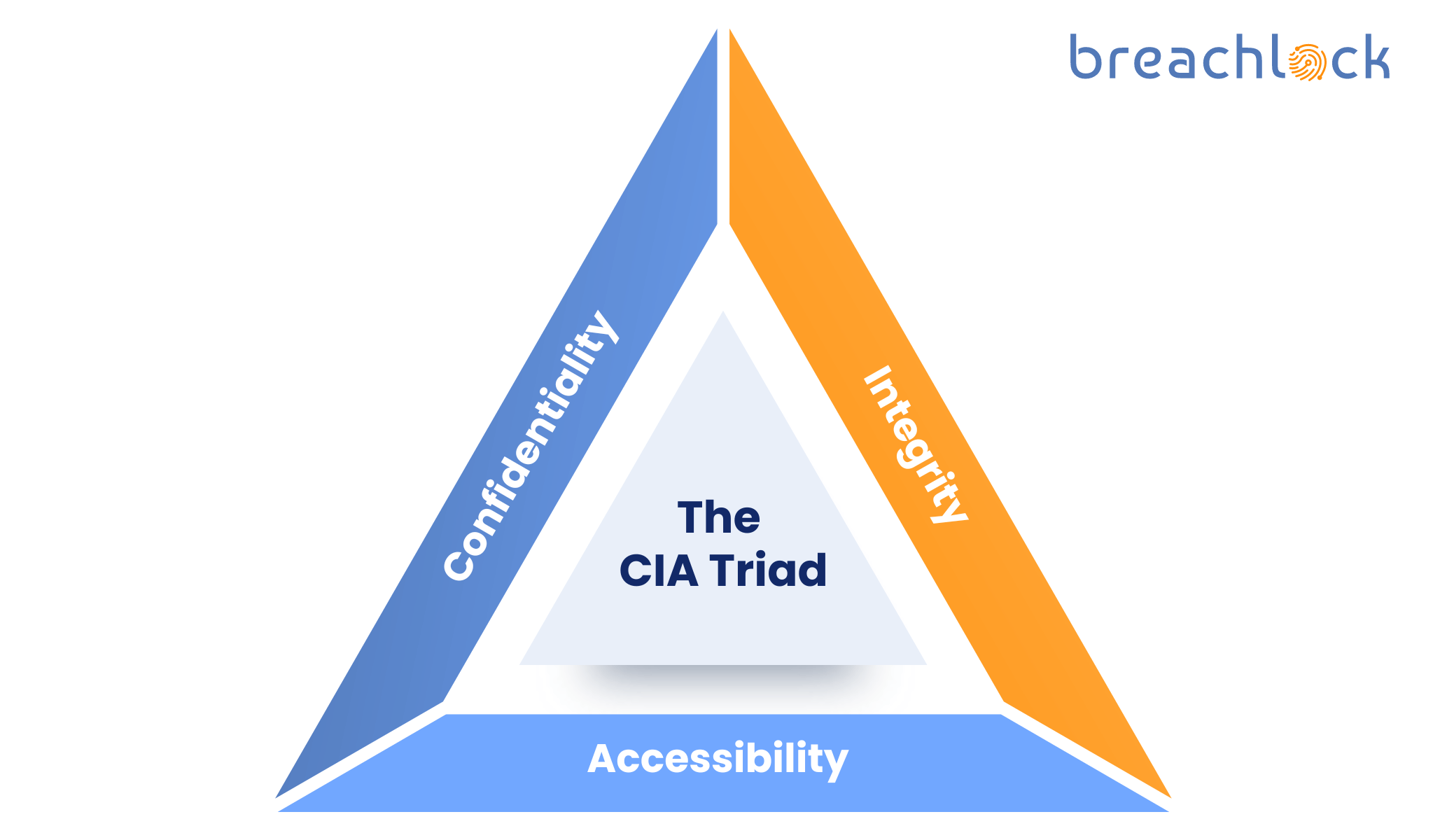
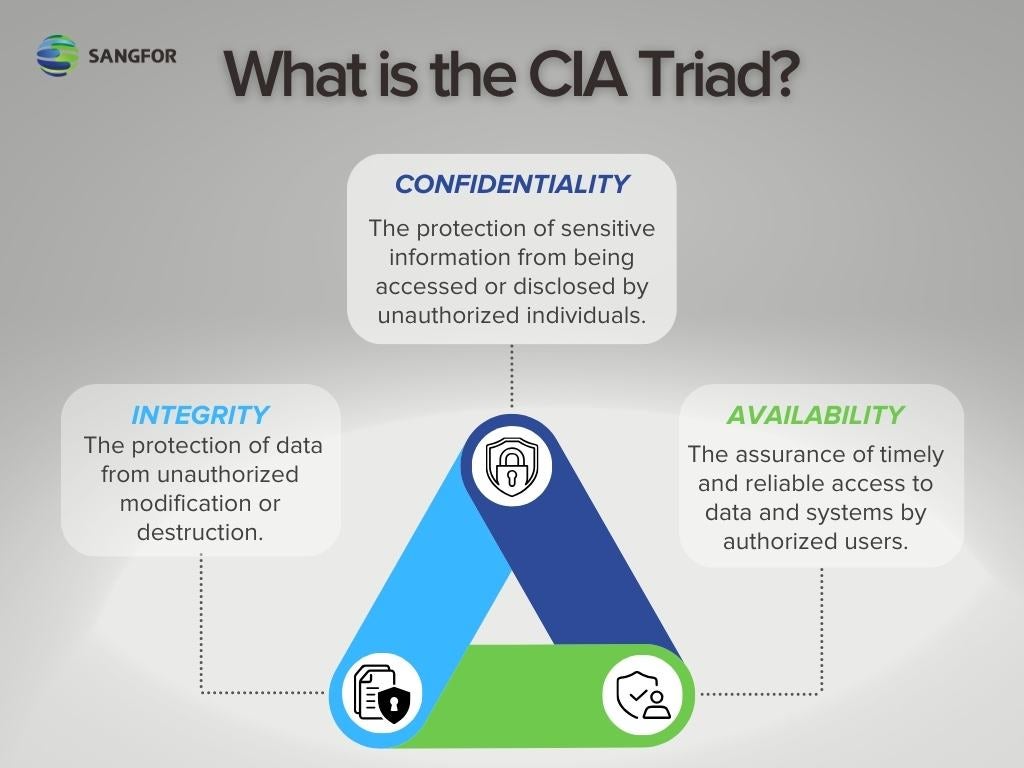
In technical and academic contexts, "CIA" is defined as a model designed to guide policies for information security within an organization. This is known as the CIA Triad, and it is unrelated to the government agency.
- Confidentiality: Ensuring that sensitive information is accessed only by authorized parties. This is achieved through encryption, access controls, and multi-factor authentication.
- Integrity: Maintaining the consistency, accuracy, and trustworthiness of data over its entire life cycle. This ensures that data is not altered in transit by unauthorized people.
- Availability: Ensuring that information and resources are available to those who need them when they need them. This involves hardware maintenance, software updates, and robust disaster recovery plans.
When a professional asks how "CIA" is defined in a network security audit, they are referring to this balance of data protection, not the clandestine activities of the U.S. government.
Evolutionary Definition: The 2026 Landscape
As of 2026, the CIA is increasingly defined by its adaptation to "Great Power Competition." While the previous two decades were defined by counterterrorism operations in the Middle East, the current definition emphasizes strategic competition with nation-state actors.
This shift has redefined the Agency's technological requirements. Artificial Intelligence (AI) and machine learning are now core components of the "Analysis" definition, allowing the Agency to process petabytes of data that would be impossible for human analysts to review manually. Furthermore, the definition of "foreign intelligence" has expanded to include global health security, climate-related migration, and supply chain vulnerabilities, reflecting the interconnected threats of the mid-2020s.
Frequently Asked Questions
Does the CIA have the authority to arrest people?
No, the CIA does not have law enforcement or arrest authority. This is a defining characteristic that separates it from the FBI. The CIA is an intelligence service, not a police force. If a CIA operation leads to a situation requiring an arrest on U.S. soil, the Agency must coordinate with the FBI or local law enforcement.
Who oversees the CIA to ensure it stays within its definition?
The CIA is subject to rigorous oversight from all three branches of government. In the Executive branch, it is overseen by the DNI and the President. In the Legislative branch, the Senate Select Committee on Intelligence (SSCI) and the House Permanent Select Committee on Intelligence (HPSCI) monitor its budget and activities. In the Judicial branch, the Foreign Intelligence Surveillance Court (FISC) reviews requests for certain types of collection.
Is the CIA part of the Department of Defense?
No, the CIA is an independent agency. While it works closely with the Department of Defense (DoD) and military intelligence components like the DIA (Defense Intelligence Agency), it is not a military organization. The Director of the CIA reports to the DNI, who in turn reports to the President.
How is the "CIA Triad" related to the Agency?
They are entirely separate. The CIA Triad (Confidentiality, Integrity, Availability) is a conceptual framework in cybersecurity. The Central Intelligence Agency is a government organization. The shared acronym is coincidental, though both emphasize the protection and strategic use of information.
Can the CIA operate inside the United States?
The CIA’s mission is primarily foreign-focused. While it has offices in the U.S. (such as its headquarters in Langley, Virginia), its operational mandate is to collect intelligence regarding foreign powers. Any activities conducted within the U.S. must be done in coordination with the FBI and must comply with Executive Order 12333 and other legal restrictions regarding "U.S. Persons."
Practical Recommendation
If you are researching the CIA for academic or legal purposes, always verify whether you are discussing the statutory agency (governed by Title 50) or the cybersecurity triad. For those interested in the agency's current focus, the most authoritative public documents are the Annual Threat Assessment of the U.S. Intelligence Community and the public version of the National Intelligence Strategy. These documents provide the most current functional definition of the Agency's priorities in 2026 and beyond.
Image Gallery