Why Buicks Are Not Luxury Cars: Defining the Premium-Mass Market Segment
Buick occupies a unique "near-luxury" or "premium-mass" space in the automotive industry, failing to meet the traditional definition of a luxury marque because it lacks the engineering pedigree, performance benchmarks, and high-end mar...
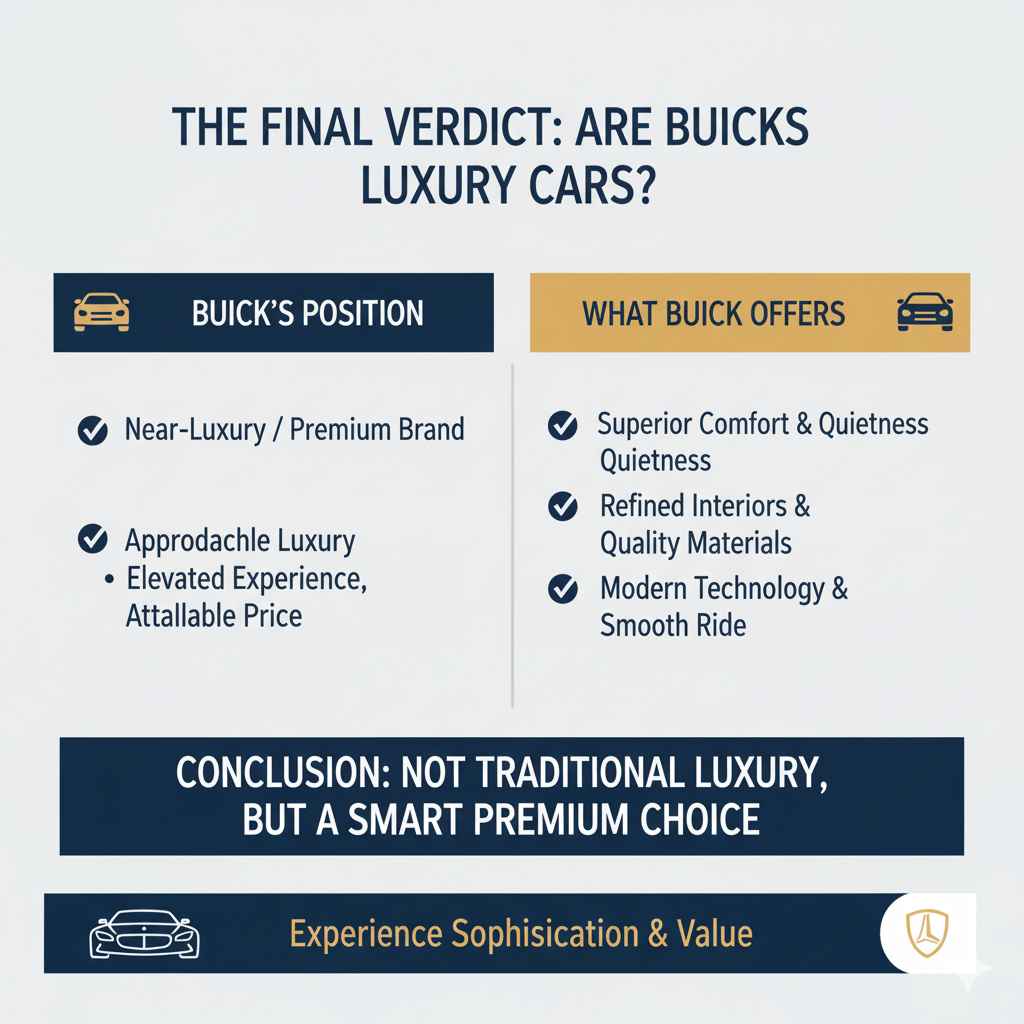
Buick occupies a unique "near-luxury" or "premium-mass" space in the automotive industry, failing to meet the traditional definition of a luxury marque because it lacks the engineering pedigree, performance benchmarks, and high-end market exclusivity found in premium competitors like Audi, BMW, or Mercedes-Benz. While modern Buicks offer refined interiors and advanced tech, they are positioned as an accessible, upscale alternative to mainstream brands rather than a direct competitor to high-end luxury vehicles.
Contents
The Evolution of the "Premium" Positioning
To understand why Buick is not categorized as a luxury car manufacturer, one must look at its corporate strategy within General Motors (GM). Buick sits above Chevrolet and GMC but below Cadillac. This middle-ground strategy, often termed "near-luxury" or "premium-mass," is designed to appeal to buyers who want features like leather seating, noise cancellation, and advanced infotainment systems without paying the premium price tags associated with true luxury badges.
Historically, Buick was a prestigious brand, but in the 21st century, its mission shifted. The brand’s current lineup—composed entirely of SUVs like the Envision, Encore GX, and Enclave—prioritizes comfort, quietness (Buick’s "QuietTuning" technology), and high-value equipment packages. Luxury, in the automotive sense, typically requires a combination of performance capability, proprietary platform engineering, and prestigious branding. Buick primarily shares platforms and powertrains with non-luxury counterparts, which is a hallmark of mass-market production rather than luxury-tier development.
The Engineering and Performance Divide
The most significant factor separating Buick from luxury competitors is its engineering philosophy. Luxury brands frequently utilize rear-wheel-drive (RWD) architectures or sophisticated all-wheel-drive (AWD) systems designed for performance dynamics. Buick, conversely, relies heavily on front-wheel-drive (FWD) transverse architectures shared with other General Motors products.
For example, many Buick components are functionally identical to those found in various Chevrolet or GMC models. While a luxury car often features unique transmission tuning, bespoke suspension geometry, and proprietary engine technology designed to optimize power delivery and handling, Buick vehicles are tuned for a "soft" ride. This focus on compliance and comfort is a brand choice rather than a performance standard. While "luxury" implies a blend of comfort and spirited driving, Buick has opted to lean almost exclusively into a comfortable, compliant, and predictable driving experience.
Interior Materials and Perceived Quality
While Buick’s interiors have improved significantly in recent years, they generally fail to match the craftsmanship of true luxury marques. Luxury brands typically invest heavily in genuine materials—authentic wood veneers, hand-stitched leather, brushed aluminum, and carbon fiber. Buick, however, utilizes high-quality synthetics, faux leathers (often marketed as "Leatherette" or high-end cloth), and plastic components that emulate luxury textures.
This distinction is crucial for the target audience. A buyer opting for an Audi or a Lexus expects a tactile experience that justifies a $60,000-plus price tag. A Buick buyer is looking for a premium experience at a price point—typically $30,000 to $50,000—where the inclusion of genuine carbon fiber or hand-stitched hides would be financially unfeasible. By prioritizing high-value synthetic materials, Buick maintains its status as an accessible premium choice rather than an elite luxury vehicle.
Market Positioning and Brand Exclusivity
Luxury is, by definition, exclusive. It is marked by a brand's ability to command a price premium due to its pedigree, its racing history, or its reputation for cutting-edge innovation. Buick does not carry the same "status" cachet as brands like Porsche or Jaguar. In the automotive hierarchy, luxury is often verified by the presence of a "halo" vehicle—a high-performance, high-cost flagship that showcases the brand's absolute best technology.
Buick does not currently produce a high-performance sports car or an executive-level sedan that serves as a technology demonstrator. Instead, the brand focuses on the crossover market, catering to families and suburban commuters who value reliability and comfort over brand prestige or driving excitement. The absence of a performance division (like BMW’s M or Audi’s RS) further solidifies Buick’s position as a premium mainstream brand.
Comparison of Market Segments
The following table distinguishes Buick’s market position from entry-level luxury and true luxury brands based on standard industry attributes.
| Feature | Buick (Premium-Mass) | Entry-Level Luxury | Full-Scale Luxury |
|---|---|---|---|
| Primary Focus | Comfort & Value | Performance & Tech | Prestige & Craftsmanship |
| Platform Source | Shared Mass-Market | Bespoke or Hybrid | Bespoke |
| Material Quality | High-Grade Synthetic | Mixed Synthetic/Leather | Genuine Exotic Materials |
| Market Exclusivity | Moderate | High | Very High |
| Driving Dynamics | Soft/Compliant | Balanced | Performance-Oriented |
Frequently Asked Questions
Is Buick considered a luxury brand?
No, industry analysts classify Buick as a premium or "near-luxury" brand. It offers more standard features and better interior finishes than entry-level mainstream brands but does not reach the engineering, performance, or prestige levels of top-tier luxury manufacturers.
Why do some people call Buick a luxury car?
The confusion stems from Buick’s marketing focus on "QuietTuning" and upscale interior appointments, which mimic luxury features. Historically, Buick held a much higher status in the mid-20th century, and the brand continues to market itself as an upscale choice, which leads some consumers to label it as luxury.
Does Buick compete with Lexus or Mercedes-Benz?
Generally, no. While a top-trim Buick may overlap in price with the base models of some entry-level luxury vehicles, the engineering, performance, and material quality are distinct. Buick competes primarily with top-trim models from brands like Mazda, Volkswagen, or mid-level offerings from Acura.
Will Buick ever produce true luxury vehicles again?
While the automotive landscape in 2026 is shifting toward electrification, there has been no indication from General Motors that Buick will pivot back to high-end, performance-luxury production. Buick's corporate role is to provide a premium, comfortable, and reliable vehicle for a specific market segment that values value-for-money over status.
What is the main drawback of the Buick "premium" status?
The primary drawback is the lack of performance prestige. For enthusiasts or buyers who associate luxury with advanced handling, high-output powertrains, and exclusive brand heritage, Buick’s focus on comfort-first, mass-market-derived engineering often leaves these expectations unmet.
Conclusion and Recommendations
If you are shopping for a new vehicle, it is important to define what "luxury" means to you personally. If you prioritize a quiet, comfortable, and well-equipped daily driver that offers excellent value and lower maintenance costs compared to German luxury brands, Buick is a highly competitive and rational choice. However, if your definition of luxury involves high-performance handling, unique engineering, and the status associated with heritage marques, you will likely find the Buick experience underwhelming.
For buyers, the next logical step is to compare a top-tier trim level of a Buick Enclave against an entry-level luxury crossover. Pay close attention to the powertrain responsiveness, the tactile quality of the cabin materials, and the manufacturer’s warranty and maintenance programs. This hands-on comparison will quickly clarify whether the "premium-mass" value proposition aligns with your personal definition of luxury.
Image Gallery