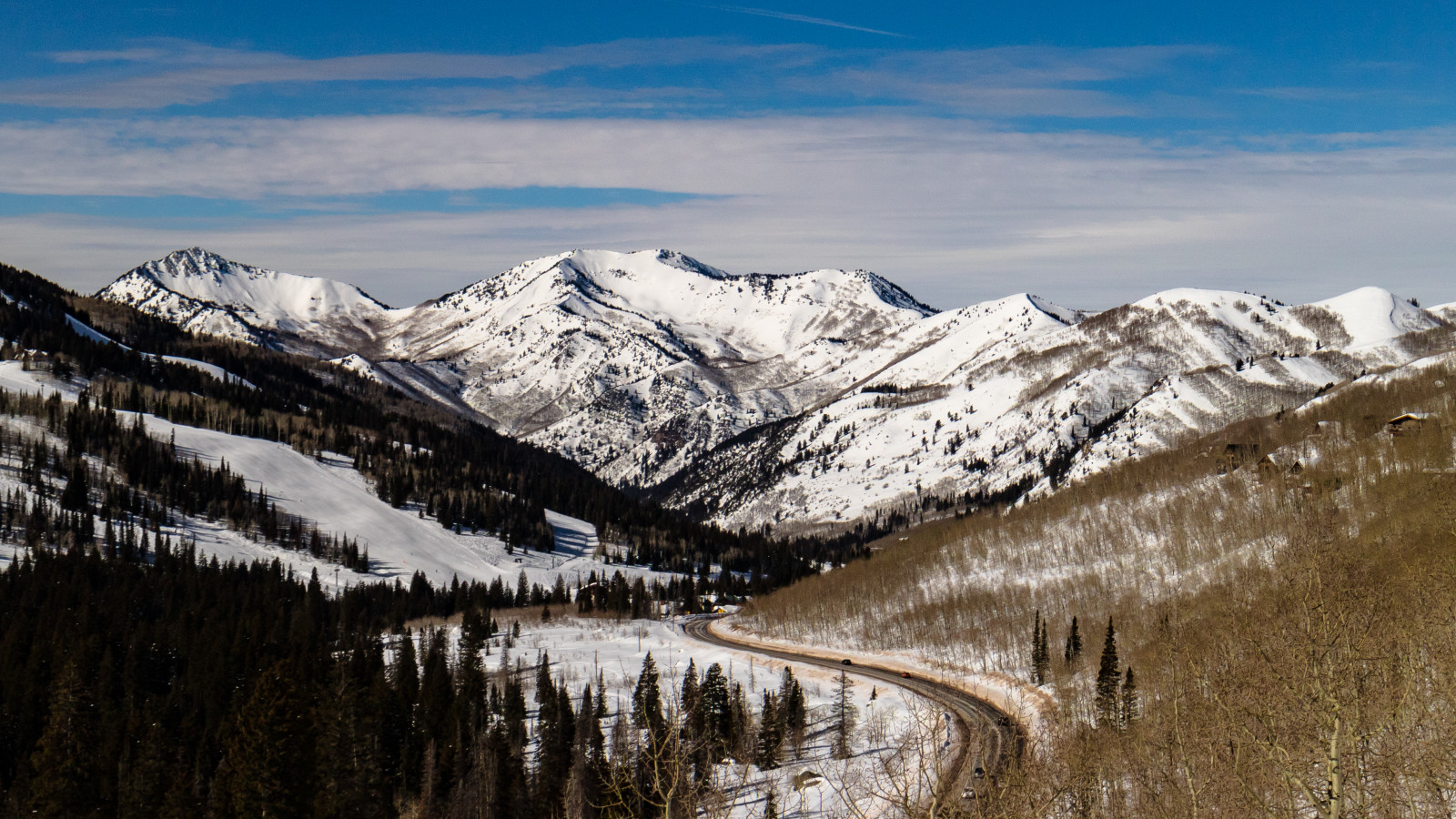
Big Cottonwood Canyon Ski Resorts Overview: Solitude and Brighton Compared
Big Cottonwood Canyon houses two of Utah’s premier ski destinations: Solitude Mountain Resort and Brighton Resort. Located along State Route 190 just 30 minutes southeast of Salt Lake City, the canyon delivers over 500 inches of dry Wa...
Big Cottonwood Canyon houses two of Utah’s premier ski destinations: Solitude Mountain Resort and Brighton Resort. Located along State Route 190 just 30 minutes southeast of Salt Lake City, the canyon delivers over 500 inches of dry Wasatch powder annually, distinct terrain profiles, and unique mountain cultures suited for different skier demographics.
Contents
Understanding Big Cottonwood Canyon
Big Cottonwood Canyon (BCC) is a 15-mile glacier-carved canyon running eastward into the Central Wasatch Range. Accessible via Utah State Route 190 (SR-190), the canyon rises from the Salt Lake Valley floor at approximately 4,800 feet to alpine elevations surpassing 10,000 feet.
Unlike neighboring Little Cottonwood Canyon (home to Alta and Snowbird), which is characterized by steep, sheer granite walls and frequent artillery-based avalanche closures, Big Cottonwood Canyon features broader, more winding topography. It is flanked by sedimentary and metamorphic rock, offering dense evergreen glades, hidden cirques, and protected bowls that hold soft snow long after storms pass.
A critical operational factor for both visitors and operators is the canyon's status as a protected culinary watershed. Salt Lake City extracts a substantial portion of its drinking water from Big Cottonwood Creek. Consequently, the Salt Lake City Department of Public Utilities enforces strict watershed regulations: domestic animals (dogs, cats, and pets) are strictly prohibited anywhere within the canyon, including in vehicles, parking areas, and private rentals, with legal penalties for violations.
Solitude Mountain Resort: Terrain, Culture, and Operations
Solitude Mountain Resort sits roughly 12 miles up SR-190. Historically known as a quiet retreat for local powder hounds, the resort has modernized its infrastructure while preserving its unhurried, European-inspired pedestrian village.
Elevation Summit: 10,488 ft | Base: 7,994 ft | Vertical Drop: 2,494 ft Skiable Terrain: 1,200 acres | Named Runs: 82 | Lifts: 8 chairlifts, 1 surface tow
Terrain Layout and Progression
Solitude is organized across two distinct access portals: the Village Base and the Moonbeam Base.
- Moonbeam Base: Serves as the primary operational hub for day visitors, beginner programming, and parking. The Moonbeam Express and Link chairlifts access gentle, wide cruisers such as Schoolmarm and Main Street, offering a protected environment for novices and families.
- Apex and Sunrise Zones: Mid-mountain lifts transition intermediates to rolling blue runs through scattered pine stands.
- Powderhorn II and Summit Express: These upper-mountain lifts transform Solitude into an advanced and expert proving ground. Summit Express crests the ridge to provide immediate access to steep, sustained chutes off the Headwall and the entrances to Honeycomb Canyon.
The Crown Jewel: Honeycomb Canyon
Honeycomb Canyon represents Solitude’s definitive freeride experience. Accessible from the summit of the Summit Express or via the Honeycomb Return lift, this deep, backcountry-style basin is entirely within avalanche-controlled resort boundaries. Skiers drop into 50-degree chutes, technical rock bands, and open cliff zones along the Honeycomb Ridge (such as Fantasy Ridge and Black Forest) before funneling into a long, natural halfpipe cruiser at the canyon floor. Navigating the upper ridge requires technical competence, confident boot-packing skills, and comfort with high-exposure traversing.
Village Atmosphere and Amenities
Solitude features the canyon’s only self-contained European-style pedestrian village. The architecture includes ski-in/ski-out condominiums, full-service dining at St. Bernard’s, casual pub food at the Thirsty Squirrel, and slope-side accommodations at The Inn at Solitude. In the evening, the village remains quiet, prioritizing restorative rest over vibrant nightlife.
Brighton Resort: Terrain, Culture, and Operations
Positioned at the very top of Big Cottonwood Canyon—15 miles from the base of SR-190—Brighton Resort is Utah’s oldest ski area, established in 1936. Brighton commands a deeply loyal following among local riders, snowboarders, and freestyle athletes. It operates with an energetic, community-first ethos where the focus remains almost exclusively on the athletic experience rather than luxury hospitality.
Elevation Summit: 10,500 ft | Base: 8,755 ft | Vertical Drop: 1,745 ft Skiable Terrain: 1,050 acres | Named Runs: 66 | Lifts: 6 quads, 1 triple, 1 surface
Lift Distribution and Terrain Profile
Brighton is laid out along a semi-circular ridgeline served by a network of high-speed quads that branch out from a centralized, single base area.
- Milly Express: Serving Mount Millicent, this pod features wide-open bowl skiing, natural wind-scoured drops, steep rock pillows, and sustained advanced lines like Lone Star. It is a focal point for high-energy freeriders and terrain-park crossovers.
- Crest 6 and Majestic: These mid-mountain lifts provide extensive beginner and intermediate progression, alongside Brighton’s world-renowned terrain parks. Brighton’s park crew constructs creative, multi-line rail and jump features that draw top-tier freestyle snowboarders throughout North America.
- Great Western Express: Climbing the resort’s boundary to 10,500 feet, Great Western accesses expansive gladed tree runs, technical fall-line cruisers like Golden Needle, and backcountry gate access toward Snake Creek and Pioneer Peak.
- Snake Creek Express: The primary portal for intermediate cruisers and accessible tree skiing, Snake Creek keeps skiers protected under low-visibility storm cycles thanks to its dense canopy of mature spruce and fir.
Night Skiing and Snowboard Culture
Brighton operates the most extensive night skiing operation in Utah. Covering over 200 acres across the Crest 6, Majestic, and Snake Creek lifts, night skiing runs Monday through Saturday from December through March. The twilight scene transforms Brighton into an active community hub where Salt Lake commuters, university students, and local families gather under the lights after standard workday hours.
Resort Base Vibe
Brighton’s base area centers on historic lodges like the Brighton Center and the legendary Molly Green’s, a rustic, A-frame cabin featuring a central fireplace and wood-paneled pub. Unlike Solitude, Brighton does not feature a luxury village footprint; dining options are centered on hearty, cafeteria-style service, food trucks, and laid-back tavern hospitality.
Direct Comparison: Solitude vs. Brighton
Evaluating these two Big Cottonwood destinations requires contrasting their operational models, physical properties, and customer experience profiles:
| Feature / Metric | Solitude Mountain Resort | Brighton Resort |
|---|---|---|
| Total Skiable Acres | 1,200 acres | 1,050 acres |
| Vertical Drop | 2,494 feet | 1,745 feet |
| Base Elevation | 7,994 feet | 8,755 feet |
| Summit Elevation | 10,488 feet | 10,500 feet |
| Terrain Split (Beg/Int/Adv) | 10% / 40% / 50% | 21% / 40% / 39% |
| Primary Mega Pass | Ikon Pass (Unlimited / Select Days) | Ikon Pass (Select Days) |
| Night Skiing | No | Yes (200+ acres, Mon–Sat) |
| Terrain Parks | Limited / Small progression parks | Extensive, world-renowned terrain parks |
| Base Amenities | Pedestrian village, condos, spas, fine dining | Rustic day lodges, A-frame pub, food trucks |
| Signature Zone | Honeycomb Canyon | Mount Millicent & Great Western Glades |
| Child Ticket Policy | Traditional age brackets | Kids 10 and under ski free (select products) |
| Snowboarding History | Welcomed early, but historical ski focus | Pioneer in snowboard acceptance; heavy rider culture |
Access, Parking, and Transportation Logistics
Navigating Big Cottonwood Canyon demands rigorous preparation. Winter driving conditions along SR-190 can turn extreme within minutes, and high vehicle volumes create heavy canyon congestion on peak powder mornings.
The Utah Traction Law
The Utah Department of Transportation (UDOT) enforces the Traction Law on SR-190 throughout winter storm cycles. When the traction law is activated, all vehicles traveling through Big Cottonwood Canyon must meet one of the following criteria:
- Four-wheel drive (4WD) or All-wheel drive (AWD) with all-season or winter tires marked with the 3-Peak Mountain Snowflake (3PMSF) or M+S designation on all four wheels. Minimum tread depth must be at least 5/32 of an inch.
- Two-wheel drive (2WD) equipped with approved traction devices (tire chains, snow socks) installed on the drive wheels.
UDOT checkpoints are established at the mouth of the canyon near the intersection of Wasatch Boulevard and Fort Union Boulevard during active storm cycles. Non-compliant vehicles are turned away by law enforcement.
Parking Reservation Protocols
Both resorts manage traffic congestion and lot capacities through seasonal parking reservation programs:
- Solitude Parking Management: Solitude utilizes a tiered, paid parking system with reservation requirements on Fridays, Saturdays, Sundays, and holiday periods. Carpooling is incentivized: vehicles carrying four or more occupants park free or at deeply discounted rates, while single-occupancy vehicles pay the highest premium.
- Brighton Parking Management: Brighton requires mandatory parking reservations for all vehicles arriving before 1:00 PM on peak winter weekends and holiday periods. Pass holders and day-ticket buyers must secure a parking spot in advance via the resort’s online reservation portal. After 1:00 PM, reservations transition to open access for afternoon and night skiing sessions.
Public Transit: The UTA Ski Bus
The Utah Transit Authority (UTA) operates the Route 972 Ski Bus service during the winter season. The bus picks up passengers at valley transit hubs—including the Fort Union Station and the Midvale Fort Union TRAX light rail stop—and drops off passengers directly at both the Moonbeam/Village bases of Solitude and the main base loop of Brighton. Taking the UTA bus eliminates parking fees and reservation requirements while bypassing parking lot capacity closures.
Snow Profile and the "Cottonwood Effect"
Big Cottonwood Canyon benefits from an optimal intersection of atmospheric conditions that produces world-class snow quality:
- Orographics: Incoming winter storms tracking eastward across the Great Basin are forced upward as they encounter the steep Wasatch barrier. This orographic lift cools the air mass, triggering rapid condensation and heavy, sustained snowfall.
- Great Salt Lake Influence: Passing weather systems often extract sensible heat and moisture from the open waters of the Great Salt Lake—a phenomenon known as the Lake Effect. This process supercharges passing fronts, amplifying storm totals along the Cottonwood ridgelines.
- Snow Density: Snow falling in Big Cottonwood Canyon typically averages between 6% and 8.5% water content. This low-density, crystalline structure creates the floatation dynamics that define Utah’s signature "champagne powder."
Brighton’s base sits roughly 760 feet higher than Solitude’s Moonbeam base, giving Brighton a slight advantage in baseline snow retention and colder early-season snow preservation. Solitude’s Honeycomb Canyon, however, acts as a natural wind catch, capturing deposition drifts that frequently double the skiable snowpack depth compared to measured base figures.
Pass Affiliations and Ticketing Strategy
Lift access in Big Cottonwood Canyon is structured primarily around modern multi-resort passes:
- The Ikon Pass: Both Solitude and Brighton are Ikon Pass destinations. The full Ikon Pass traditionally features unlimited direct access to Solitude, while the Ikon Base Pass provides five or unlimited restricted days depending on pass tier. Brighton typically offers up to seven days on the full pass and five days on the Base Plus tiers.
- Solitude-Specific Passes: Solitude sells standalone season passes, mid-week passes, and regional collective products that serve local Salt Lake City commuters.
- Brighton Passes & Twilight Products: Brighton markets independent unlimited passes, mid-week passes, and dedicated Night Skiing Season Passes. Brighton’s variable-length daytime tickets (such as 4-hour, 6-hour, or twilight options) offer greater flexibility for visitors who do not intend to ski a full eight-hour day.
Common Mistakes to Avoid in Big Cottonwood Canyon
- Arriving Late on Powder Days: On storm days or bluebird weekend mornings, the canyon road can back up to a dead stop by 7:15 AM. Arriving at the mouth of SR-190 after 7:30 AM often results in long delays or being turned away due to filled lots.
- Ignoring the Watershed Ban on Pets: Bringing a dog in a vehicle with the intention of leaving it inside while skiing can result in steep municipal citations issued by Salt Lake County law enforcement or watershed marshals.
- Underestimating Honeycomb Canyon: Intermediate skiers occasionally follow advanced tracks into Honeycomb Canyon from the Summit chairlift. The exit requires technical competency and stamina; once dropped into the basin, there is no green or easy blue escape route back to the base.
- Overlooking Afternoon Canyon Traffic ("The Red Snake"): Traffic descending SR-190 between 3:30 PM and 5:30 PM can take up to two hours to reach the valley floor during slick road conditions. Leaving before 3:00 PM or staying for dinner or night skiing at Brighton avoids peak gridlock.
Frequently Asked Questions
Can you ski between Solitude and Brighton on a single ticket?
There is no longer an active joint-resort day pass that allows free-flowing transit between Solitude and Brighton on standard lift tickets. While the resorts share a boundary line along the SolBright Trail near Solitude’s Summit chair and Brighton’s Milly Express, passing through the boundary gates requires valid lift access products for both resorts or an applicable multi-resort pass like the Ikon Pass.
Which resort is better for beginners?
Both resorts offer dedicated learning terrain, but Brighton is generally considered superior for pure beginners. Brighton’s surface carpets and the Explorer triple chair sit on isolated, gentle slopes separated from fast-moving downhill traffic. Furthermore, Brighton’s terrain progression allows novices to advance from the Explorer lift to the Majestic lift without encountering steep pitches.
Which resort is better for advanced and expert freeriders?
Solitude offers higher technical vertical and steeper inbound lines, anchored by Honeycomb Canyon, the steep chutes of the Headwall, and the tight lines off the Powderhorn lift. While Brighton possesses excellent cliff drops and freeride terrain around Mount Millicent, Solitude delivers longer, continuous expert pitches.
Are chains required if I rent an SUV at Salt Lake City International Airport?
Rental all-wheel-drive (AWD) or four-wheel-drive (4WD) SUVs generally comply with the Utah Traction Law only if the tires have adequate tread depth (5/32 inch minimum) and display the appropriate M+S or 3PMSF ratings. Rental vehicles with standard highway summer tires will fail UDOT inspections during active traction law alerts. Drivers of 2WD rentals must carry approved chains or tire socks.
Is night skiing included on the Ikon Pass at Brighton?
Night skiing access for Ikon Pass holders depends on the pass type and current season rules. Generally, if an Ikon Pass holder scans at Brighton during the day, that scan covers the entire operational day, including night skiing until closing on that same calendar date. Dedicated night-only scans typically consume a day of the user’s overall pass allocation.
Next Steps for Planning Your Trip
- Select Your Base Camp: Choose Solitude if you want an all-in-one pedestrian village with ski-in/ski-out lodging, quiet evenings, and steep, technical chutes. Choose Brighton if your focus is freestyle terrain parks, active night skiing, local rider culture, and lower ticket prices for younger families.
- Verify Transportation: Secure an AWD/4WD rental vehicle equipped with verified winter-rated tires, or download the UTA transit app to coordinate your rides on the Route 972 Ski Bus from valley park-and-ride lots.
- Book Parking Early: If driving personal or rental transport, visit the parking reservation portals for Solitude and Brighton immediately after finalizing your ski dates to lock in required peak-period parking slots.
- Monitor Canyon Status: Bookmark the UDOT Cottonwood Canyons channel on social media or their road conditions tracker to review avalanche mitigation schedules, traction law updates, and morning road openings in real time.
Image Gallery