Understanding What Money Does Singapore Use: The Official Currency Guide
Singapore uses the Singapore dollar, officially abbreviated as SGD and represented by the dollar sign ($) or S$ to distinguish it from other dollar-based currencies. Issued and regulated by the Monetary Authority of Singapore, the curr...
Singapore uses the Singapore dollar, officially abbreviated as SGD and represented by the dollar sign ($) or S$ to distinguish it from other dollar-based currencies. Issued and regulated by the Monetary Authority of Singapore, the currency is divided into 100 cents and is widely recognized for its robust polymer composition, advanced security features, and stable global economic standing.
Contents
When navigating financial transactions, international trade, or travel planning in Southeast Asia, understanding the monetary system of this global financial hub is essential. The Singapore dollar is not only the exclusive legal tender within the island nation but also functions as a heavily traded currency across foreign exchange markets. Whether you are exchanging cash, opening a corporate bank account, or analyzing macroeconomic monetary policy, knowing how the currency is structured, issued, and managed provides a solid foundation for your financial activities.
Overview of the Singapore Dollar (SGD)
The official currency of the Republic of Singapore is the Singapore dollar. Its international currency code is SGD, and it is frequently paired with the symbol S$ in commercial settings to prevent confusion with United States dollars, Australian dollars, or other similarly named currencies.
The management of the currency differs significantly from traditional central banking models. Rather than utilizing standard interest rate adjustments as its primary monetary policy instrument, the Monetary Authority of Singapore manages the exchange rate of the Singapore dollar against an undisclosed basket of currencies of its major trading partners. This framework, known as the S$NEER (Singapore dollar nominal effective exchange rate), allows the central authority to steer domestic inflation and maintain economic stability by letting the currency float within an unannounced policy band.
Historical Context and Evolution
The history of currency in Singapore reflects its geopolitical evolution. Prior to independence, Singapore utilized various forms of currency, including the Straits dollar and Malayan currency. Following its separation from Malaysia in 1965, Singapore continued to issue the Malayan and British Borneo dollar temporarily through the Commissioners of Currency, Malaya and British Borneo.
On June 12, 1967, the Board of Commissioners of Currency, Singapore, was established, and the nation issued its very first independent notes and coins. Initially, the Singapore dollar was pegged to the British pound at a fixed rate. Over subsequent decades, the currency transitioned through a peg to the United States dollar and eventually to the current basket-peg system, which was adopted in the 1980s to better manage imported inflation and support export competitiveness. In 2002, the Board of Commissioners of Currency merged with the Monetary Authority of Singapore, consolidating currency issuance and monetary policy under a single statutory board.
Denominations and Physical Characteristics
The Singapore dollar is available in a wide array of coin and banknote denominations designed to facilitate both micro-transactions and high-value commerce. All currency notes and coins are legal tender for the payment of any amount up to their face value, though merchants retain the legal right to establish their own policies regarding the acceptance of large denomination notes for small purchases.
Banknotes in Circulation
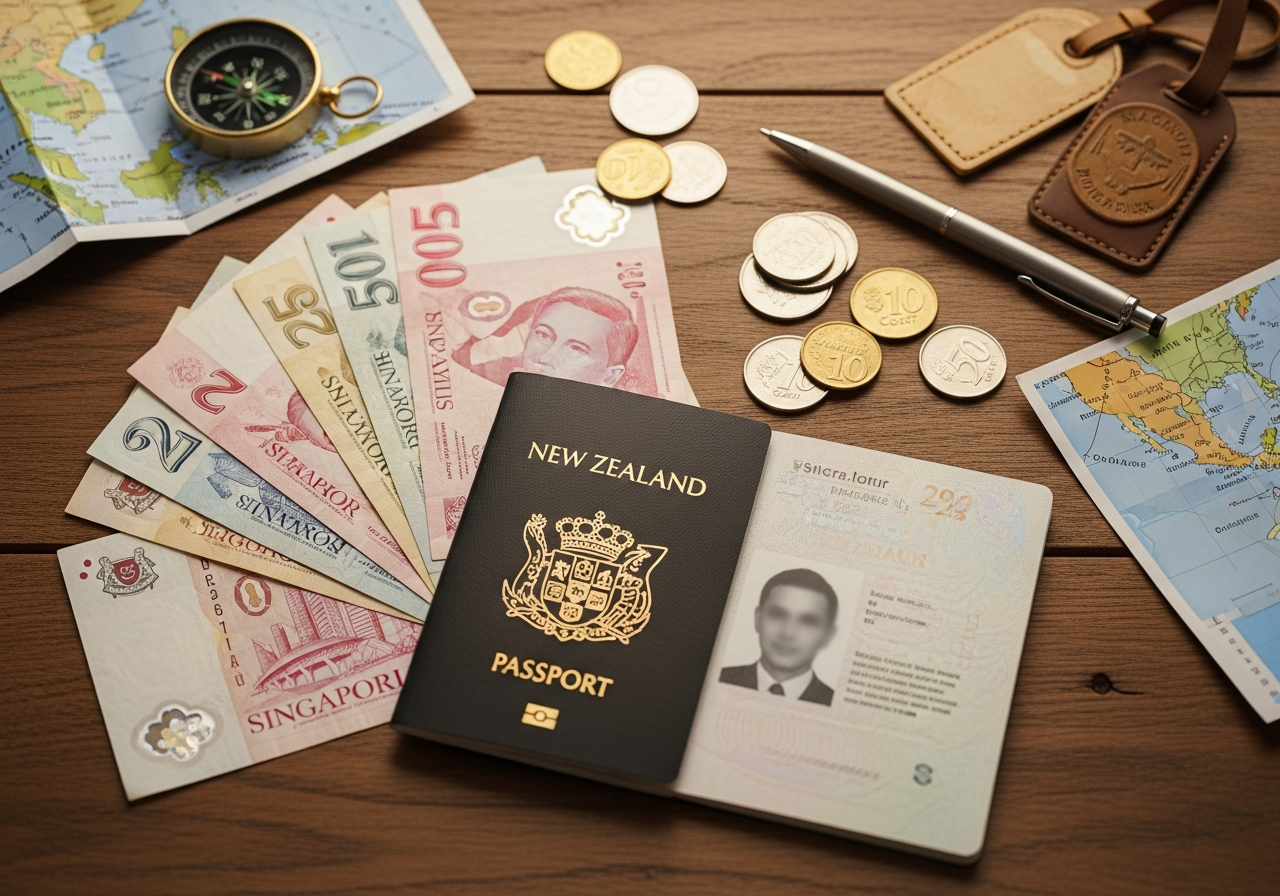
Singaporean banknotes are celebrated worldwide for their durability, aesthetic design, and state-of-the-art security features. The country has transitioned almost entirely to polymer banknotes, which offer superior resistance to moisture, tearing, and counterfeiting compared to traditional paper currency.
- S$2: Typically colored purple, featuring educational and civic themes on the reverse.
- S$5: Colored green, highlighting themes of urban expansion and garden city initiatives.
- S$10: Colored red, showcasing themes of sports and community.
- S$50: Colored blue, featuring themes of arts, culture, and local heritage.
- S$100: Colored orange, emphasizing youth, leadership, and public service.
- S$1,000: Colored gold, designed for high-value corporate and institutional settlements.
- S$10,000: Historically issued, but production was discontinued in 2014 to mitigate money laundering risks, though existing notes remain legal tender.
Coins in Circulation
The current circulating coin series, introduced in 2013, features iconic Singaporean landmarks and national symbols on the reverse, while the obverse displays the national coat of arms alongside the year of minting.
- 1-cent coin: Bronze-plated steel (production ceased, but existing coins remain legal tender; prices are typically rounded to the nearest 5 cents).
- 5-cent coin: Gold-colored brass-plated steel.
- 10-cent coin: Silver-colored cupronickel.
- 20-cent coin: Silver-colored cupronickel.
- 50-cent coin: Silver-colored nickel-brass.
- S$1 coin: Bimetallic with a gold-colored outer ring and a silver-colored inner core, featuring a distinctive interactive laser-marked image.
| Denomination | Type | Primary Color / Material | Prominent Feature |
|---|---|---|---|
| S$2 | Banknote | Purple | Education and youth |
| S$5 | Banknote | Green | Garden city and urban greenery |
| S$10 | Banknote | Red | Sports and active living |
| S$50 | Banknote | Blue | Arts and cultural heritage |
| S$100 | Banknote | Orange | Youth, leadership, and community |
| S$1,000 | Banknote | Gold | Economy and corporate wealth |
| S$1 coin | Coin | Bimetallic (Gold/Silver) | Singapore Lion symbol / Holographic crest |
Security Features of Singaporean Banknotes
Counterfeit deterrence is a top priority for the Monetary Authority of Singapore. Polymer banknotes incorporate advanced technological features that allow both automated sorting machines and everyday consumers to verify authenticity quickly without specialized equipment.
When inspecting a genuine Singaporean polymer banknote, look for the following characteristics:
- Transparent Windows: Clear polymer panels integrated directly into the substrate, often featuring portraits or intricate foil elements.
- Raised Print: Intaglio printing creates a tactile feel across major portraits, text, and numerical denominations, which can be felt easily by running a finger across the surface.
- Multi-Effigy Hologram: Shiny foil patches that display shifting colors, latent images, and changing numbers when tilted under a light source.
- Fluorescent Elements: Under ultraviolet light, specific serial numbers, hidden graphics, and background patterns glow in distinct fluorescent colors.
Using Money in Singapore: Cash vs. Digital Payments
While the Singapore dollar exists in physical cash, Singapore is one of the world's most advanced cashless economies. Understanding payment infrastructure ensures seamless navigation of retail, dining, and transportation sectors.
Digital and Electronic Payment Methods
Most merchants, hawker centers, taxis, and public transit networks accept digital payments. Tourists and residents alike frequently utilize several core systems:
- NETS (Network for Electronic Transfers): A domestic debit system widely accepted across retail outlets and ATM networks.
- PayNow: An instantaneous peer-to-peer and corporate fund transfer service linked to mobile numbers or corporate UEN (Unique Entity Number).
- Contactless Cards: Visa, Mastercard, and American Express with tap-to-pay functionality are ubiquitous.
- Mobile Wallets: Apple Pay, Google Pay, and Alipay are supported across the vast majority of commercial establishments.
- EZ-Link and SimplyGo: Specialized contactless cards or contactless bank cards utilized for public buses and Mass Rapid Transit (MRT) train systems.
Cash Usage and ATM Access
Despite the rapid adoption of digital finance, keeping a small amount of physical cash is advisable for older hawker stalls, wet markets, and remote vending machines. Automated Teller Machines (ATMs) operated by major local banks (such as DBS, OCBC, and UOB) as well as international institutions are available across every shopping mall and transit hub. International debit cards can be used to withdraw Singapore dollars, subject to home-bank foreign transaction fees and local ATM operator surcharges.
Currency Exchange and Accessibility
Acquiring Singapore dollars is a straightforward process due to the city-state's status as a global financial nexus. The SGD is fully convertible and traded actively on international foreign exchange markets.
Where to Exchange Currency
- Authorized Money Changers: Licensed money changers located in commercial hubs (such as Mustafa Centre in Little India or The Arcade at Raffles Place) often offer competitive exchange rates with zero commission fees.
- Commercial Banks: Traditional banking institutions provide reliable exchange services, though exchange spreads may be higher than specialized exchange booths.
- Airport Terminals: Changi Airport features multiple 24-hour currency exchange kiosks for immediate liquidity upon arrival, though rates may be less favorable than downtown options.
Frequently Asked Questions
Is the Singapore dollar interchangeable with the Brunei dollar?
Yes. Under a Currency Interchangeability Agreement established in 1967 between Singapore and Brunei, the Singapore dollar and the Brunei dollar are accepted at par value in both countries. Retailers and banks in either nation are accustomed to accepting both currencies interchangeably, though they are technically separate legal tenders.
Can I use foreign currencies like USD or EUR directly in Singapore?
No. Standard commercial establishments, restaurants, and public transportation systems do not accept foreign cash directly. All transactions must be conducted in Singapore dollars or via digital payment rails that automatically convert foreign currencies at the point of sale.
How does the Monetary Authority of Singapore control inflation without interest rates?
Instead of setting benchmark interest rates, the Monetary Authority of Singapore manages the exchange rate of the SGD against an undisclosed trade-weighted basket of currencies (the S$NEER). By allowing the currency to appreciate or depreciate within a managed policy band, the central bank dampens imported inflation when global commodity prices rise or supports domestic export competitiveness during economic slowdowns.
Are older paper banknotes still valid for use?
Yes. Older series of paper banknotes issued by the Board of Commissioners of Currency, Singapore, and the Monetary Authority of Singapore remain legal tender. However, financial institutions gradually withdraw damaged or worn paper notes from circulation as polymer versions become standard.
What should I do if I receive a suspected counterfeit banknote?
If you suspect a banknote is counterfeit, do not accept it if you are in a transaction. If you already possess it, report the incident immediately to the Singapore Police Force or hand it over to a commercial bank or the Monetary Authority of Singapore for verification. Attempting to pass counterfeit currency knowingly is a serious criminal offense under local law.
Conclusion and Next Actions
Understanding what money does Singapore use—specifically the secure, polymer-based Singapore dollar managed through the country's unique exchange-rate monetary policy—ensures you are well-prepared for any financial engagement within the region. Whether you are budgeting for travel, structuring cross-border corporate payments, or examining foreign exchange exposures, always verify your transaction channels, utilize authorized exchange providers, and leverage Singapore's extensive digital payment infrastructure for optimal convenience and security.
Image Gallery