Understanding the Dynamics of the World Top 10 Rich Person List
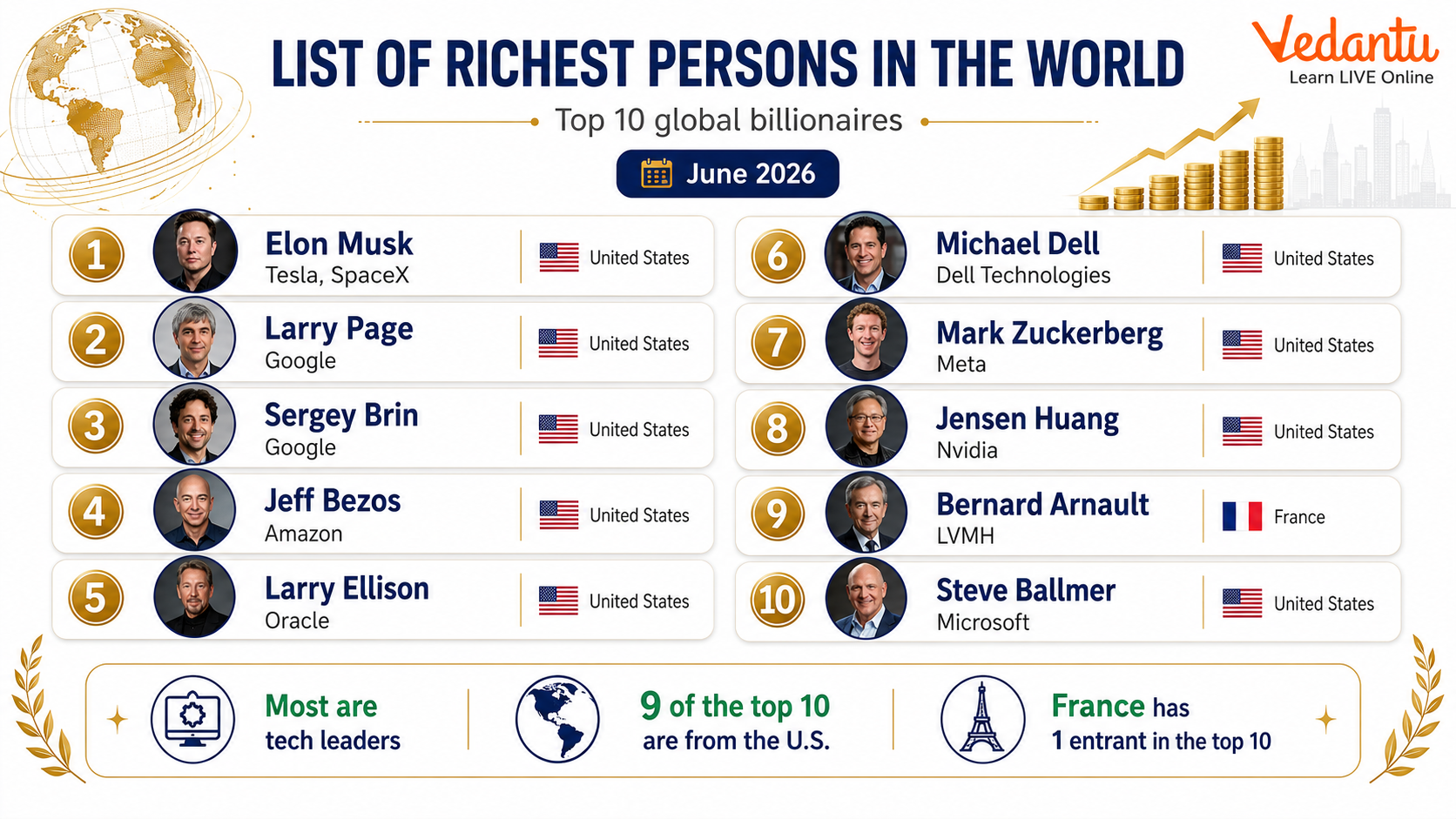
The world top 10 rich person list represents a snapshot of global wealth concentration, primarily driven by equity holdings in publicly traded corporations and private business ventures. As of 2026, these rankings fluctuate based on da...
The world top 10 rich person list represents a snapshot of global wealth concentration, primarily driven by equity holdings in publicly traded corporations and private business ventures. As of 2026, these rankings fluctuate based on daily stock market volatility, currency exchange rates, and the broader economic performance of technology, luxury goods, and industrial sectors.
Contents
How Global Wealth Rankings Are Calculated
Determining the world’s wealthiest individuals is an analytical exercise in tracking enterprise value. Unlike personal income, which is taxed and spent, net worth is largely theoretical—it is the sum of an individual’s assets minus their liabilities. For the ultra-wealthy, the vast majority of this value is tied to stock in the companies they founded or manage.
Financial data aggregators like Bloomberg and Forbes utilize sophisticated valuation models to estimate these figures. They monitor SEC filings, ownership disclosures, and market capitalization trends. When a company's stock price rises, the founder’s net worth increases proportionally. Conversely, if a company faces regulatory scrutiny or market corrections, the individual’s position on the list may drop overnight.
It is important to note that these lists do not track cash on hand. An individual might be worth $200 billion while having relatively little liquid capital. Their wealth is a measure of "potential purchasing power" rather than a bank balance.
Key Factors Influencing the 2026 Rankings
In 2026, the composition of the top 10 is heavily influenced by the sustained growth of artificial intelligence, cloud infrastructure, and the resurgence of consumer-facing technology platforms. The following variables are the primary drivers of wealth shifts:
- Equity Concentration: Most individuals in the top 10 own significant portions of their companies. The "multiplier effect" of holding 10% to 20% of a multi-trillion-dollar entity is the primary driver of extreme wealth.
- Market Sentiment: Investor confidence in tech sectors remains the primary engine for capital appreciation. If institutional investors pivot away from tech toward commodities or infrastructure, the hierarchy of the world’s richest often shifts toward industrial magnates.
- Currency Valuation: Since most global wealth rankings are denominated in U.S. Dollars (USD), the strength of the dollar relative to other currencies impacts the standing of international billionaires.
- Philanthropic Disposition: Large-scale charitable donations, while noble, reduce an individual's net worth. Many of the world’s richest have pledged significant portions of their wealth to foundations, which affects their long-term ranking despite their continued business success.
Comparative Overview of Wealth Sources
The following table illustrates the common sectors associated with individuals typically appearing in the top tier of global wealth rankings. While names change, the business models tend to remain focused on scalable, global-reach enterprises.
| Sector | Primary Value Driver | Typical Asset Structure |
|---|---|---|
| Technology | Software & AI Infrastructure | Majority-owned equity stakes |
| Luxury Goods | Brand Equity & Market Share | Family-held controlling interest |
| E-commerce | Logistics & Digital Services | Founder-led equity positions |
| Automotive | Innovation & Clean Energy | High-multiple market capitalization |
| Retail | Scale & Operational Efficiency | Publicly traded holdings |
The Role of Private vs. Public Assets
A critical distinction in understanding the world top 10 rich person list is the transparency gap between public and private assets. When an individual takes a company public, their net worth becomes a matter of public record due to mandatory filings. However, individuals with vast holdings in private companies, real estate, or art collections are often more difficult to value accurately.
Analysts rely on "comparable company analysis" (Comps) to estimate the value of private assets. They look at what similar public companies are worth and apply a discount to account for the lack of liquidity in private holdings. This methodology is why rankings can sometimes vary between different publications; they are using different assumptions about the "liquidity discount" for private wealth.
Ethical and Economic Implications
The extreme concentration of wealth in the hands of a few has sparked significant discourse regarding economic inequality and the influence of private capital on global policy. Critics argue that the "winner-take-all" nature of modern technology markets allows a small group to exert disproportionate influence over sectors like social media, aerospace, and energy.
Proponents, however, note that these individuals are largely responsible for the rapid deployment of capital into experimental sectors, such as private space flight, carbon capture technology, and mass-scale computing, which traditional public institutions are often slower to adopt. The wealth is not just capital; it is effectively an infrastructure fund for global industrial evolution.
Frequently Asked Questions
Why does the list of the world's top 10 richest people change so frequently? The list changes due to daily stock market fluctuations. Because most of these individuals have their wealth concentrated in one or two major companies, a 5% shift in that company's stock price can equate to billions of dollars in net worth movement, immediately altering their rank.
Does this list include government leaders or monarchs? Generally, no. Most wealth trackers explicitly exclude heads of state, monarchs, and political leaders who derive their wealth primarily from their office, state-owned assets, or hereditary control of national resources. These assets are often viewed as state property rather than personal wealth.
How is the "net worth" of an individual determined if they own private businesses? Analysts use a combination of private equity appraisal, comparable public stock valuations, and verified debt reporting. If a private company has not had a recent funding round, the valuation becomes an estimation based on revenue multiples within that specific industry.
Do these individuals actually have the amount of money listed in their bank accounts? No. A person's "net worth" is an estimation of the current market value of everything they own—including stocks, real estate, and businesses—minus their debts. It is a reflection of their total asset position, not liquid cash available for withdrawal.
What happens to the list when someone donates a large amount to charity? When a billionaire transfers assets to a private foundation or a donor-advised fund, those assets are removed from their personal net worth. While this lowers their position on the "rich list," it does not necessarily reduce the total amount of capital under their influence, as they often maintain control over how the foundation invests its endowment.
Next Steps for Financial Literacy
To better understand how global wealth functions, it is recommended to monitor quarterly financial reports (10-K and 10-Q filings) of the major companies associated with these individuals. These documents provide a more granular view of the business health, debt levels, and share structures that define their wealth. Understanding the difference between a high stock price and the actual revenue generation of a company is the first step toward moving beyond the headlines of wealth rankings and into the reality of how global capital markets function.
Image Gallery