Maxwell Caulfield and the Legacy of Grease 2: Exploring Sequel Rumors and Career Impact
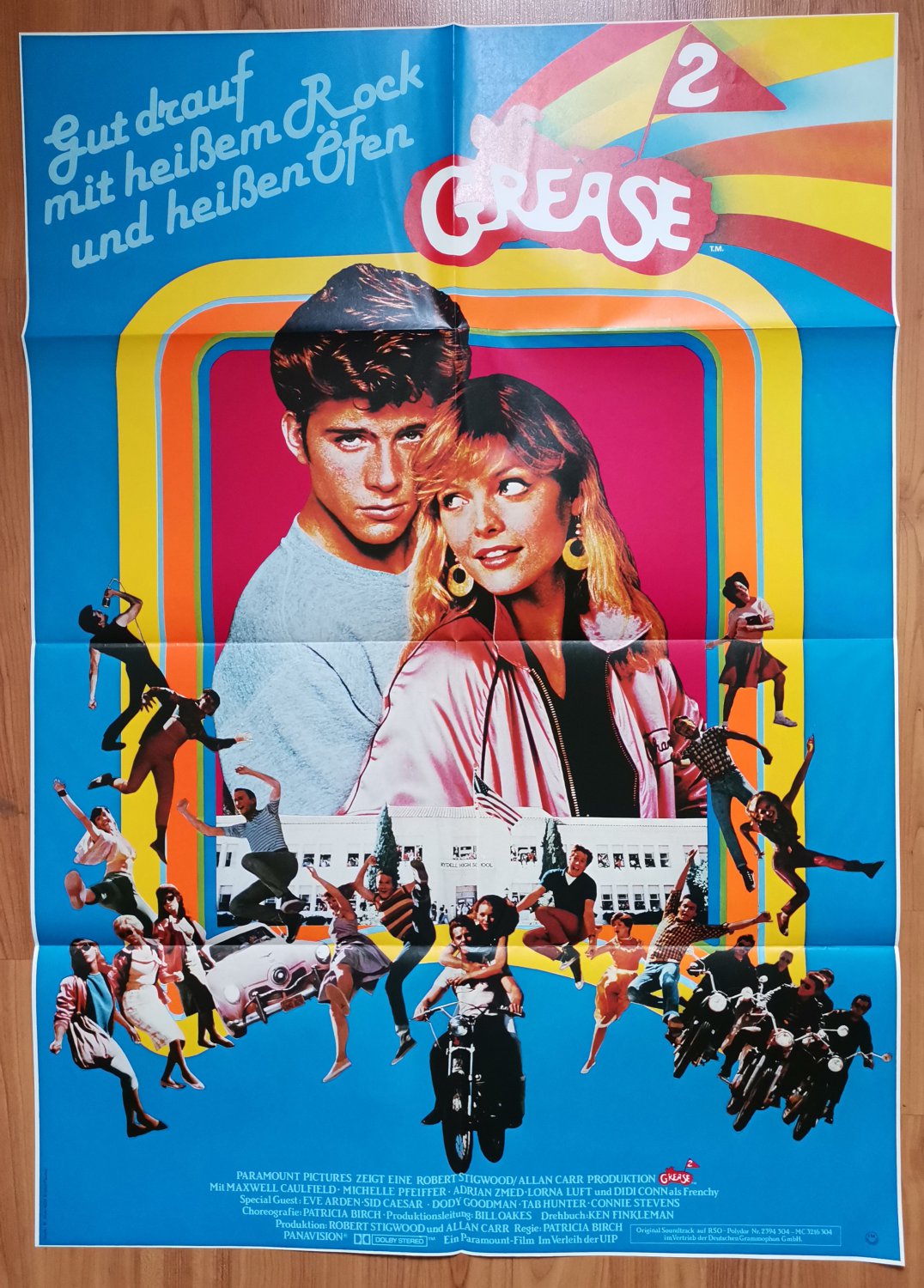
Maxwell Caulfield portrayed the protagonist Michael Carrington in the 1982 musical film Grease 2. Despite the film's enduring cult status and decades of fan speculation regarding a third installment, Maxwell Caulfield has not appeared...
Maxwell Caulfield portrayed the protagonist Michael Carrington in the 1982 musical film Grease 2. Despite the film's enduring cult status and decades of fan speculation regarding a third installment, Maxwell Caulfield has not appeared in a formal cinematic sequel to Grease 2. While the franchise expanded with the 2023 prequel series Grease: Rise of the Pink Ladies, Caulfield’s journey as the "Cool Rider" remains a standalone performance within the 1982 production.
Contents
The Role of Michael Carrington: Maxwell Caulfield’s Breakout
In 1982, Maxwell Caulfield was cast as Michael Carrington, the British cousin of Sandy Olsson (Olivia Newton-John’s character from the original film). As the lead in Grease 2, Caulfield faced the monumental task of following John Travolta’s Danny Zuko. The narrative flipped the original’s premise: instead of a "good girl" turning bad for a boy, Michael Carrington, a scholarly exchange student, adopts a "bad boy" persona—the mysterious motorcycle-riding "Cool Rider"—to win the heart of Stephanie Zinone, played by Michelle Pfeiffer.
Caulfield brought a distinct energy to the role, blending traditional leading-man charm with a vulnerable, intellectual quality that was rare in early 80s teen cinema. His performance involved significant musical numbers, including "Charades" and the climactic "Who’s That Guy?" and "(Love Will) Turn Back the Trees." Despite his vocal and physical commitment to the role, the film struggled to find its footing during its initial release.
The technical execution of the character required Caulfield to perform many of his own stunts, though the most dangerous motorcycle sequences were handled by professional riders. His chemistry with Pfeiffer is often cited by modern critics as one of the film's strengths, providing a romantic core that helped the movie transition from a box-office disappointment to a cherished cult classic.
Why a Direct Sequel to Grease 2 Never Materialized
The primary reason Maxwell Caulfield never headlined a "Grease 3" or a direct sequel to Grease 2 was the commercial performance of the 1982 film. Produced on an estimated budget of $11 million, Grease 2 grossed approximately $15 million domestically. While not a complete loss, it failed to replicate the massive $180 million success of its 1978 predecessor.
Following the lukewarm reception, Paramount Pictures pivoted away from the franchise for several decades. Several factors contributed to the lack of a sequel:
- Critical Reception: At the time of release, critics were harsh, often comparing the sequel unfavorably to the original. This prevented the studio from feeling confident in a third outing with the same cast.
- Cast Divergence: Michelle Pfeiffer’s career skyrocketed shortly after Grease 2, leading her to roles in Scarface (1983) and beyond. Securing both leads for a sequel became logistically and financially difficult.
- Shift in Musical Trends: The mid-1980s saw a shift in teen cinema toward "Brat Pack" dramas and John Hughes comedies, which moved away from the choreographed musical format of the late 70s.
By the time Grease 2 gained its cult following in the 1990s and 2000s through home video and television broadcasts, the window for a traditional sequel featuring Caulfield as a young Michael Carrington had closed.
Maxwell Caulfield’s Perspective on the Franchise
Over the years, Maxwell Caulfield has been remarkably candid about his experience with Grease 2. In various retrospectives and interviews, he has discussed the "overnight sensation" expectations that didn't immediately pan out. For many years, the actor felt the film’s initial failure hindered his momentum in Hollywood.
However, as the "Grease 2" fandom grew, Caulfield embraced the legacy. He frequently appears at fan conventions and anniversary screenings, often expressing pride in the work and the joy the film brings to fans. In a 2021 interview with The Hollywood Reporter, Caulfield noted that while a sequel never happened, the film gave him a permanent place in pop culture history.
His relationship with the film has evolved from one of professional frustration to genuine appreciation. He has often joked about a "Grease 3" where Michael and Stephanie are now the parents of a new generation of T-Birds and Pink Ladies, though these discussions have never moved past the conceptual stage.
The State of the Grease Universe in 2026
As of 2026, the Grease franchise has seen a resurgence, though not in the form of a Caulfield-led sequel. The most significant development was the release of Grease: Rise of the Pink Ladies on Paramount+. This series served as a prequel, set four years before the events of the original Grease, effectively bypassing the timeline where Michael Carrington would appear.
There have been industry rumors regarding a "legacy sequel" similar to the Top Gun: Maverick model, which would bring back original cast members from both the 1978 and 1982 films. However, no official production has been greenlit. The franchise remains focused on its origins and the "summer lovin'" mythology rather than expanding the specific story of the 1982 characters.
Comparison of the Grease Cinematic Entries
| Feature | Grease (1978) | Grease 2 (1982) | Grease: Rise of the Pink Ladies (2023) |
|---|---|---|---|
| Lead Actor | John Travolta | Maxwell Caulfield | Marisa Davila |
| Lead Actress | Olivia Newton-John | Michelle Pfeiffer | Cheyenne Isabel Wells |
| Director | Randal Kleiser | Patricia Birch | Various (Annabel Oakes, Creator) |
| Primary Theme | Transformation for Love | Dual Identity/The Cool Rider | Female Empowerment/Origin Story |
| Box Office/Status | $396M (Lifetime) | $15.2M (Initial) | Streaming Original |
| Cult Following | Global Phenomenon | Significant Late-Onset Cult Status | Niche/Modern Reimagining |
Maxwell Caulfield’s Career Beyond Rydell High
While a Grease 2 sequel did not occur, Maxwell Caulfield maintained a prolific career in film, television, and theater. He successfully transitioned away from the teen heartthrob mold, proving his range in various genres.
Television Dominance
In the mid-1980s, Caulfield landed the role of Miles Colby in the Dynasty spin-off, The Colbys. This role solidified his status as a television icon, allowing him to work alongside legends like Charlton Heston and Barbara Stanwyck. He later appeared in long-running series such as Casualty and Emmerdale in the UK, showcasing his international appeal.
Cult Cinema and Theater
Caulfield earned a second wave of cult fame in the 1995 film Empire Records, where he played the aging pop star Rex Manning. This role showcased his ability to satirize his own "teen idol" past and remains one of his most beloved performances. On stage, he has performed in Broadway and West End productions, including Chicago, An Inspector Calls, and The Rocky Horror Show.
Technical Analysis of the "Cool Rider" Persona
The character of Michael Carrington required a sophisticated technical approach to performance. Unlike Danny Zuko, who was "cool" by default, Michael had to perform "coolness" as a disguise. This required Caulfield to modulate his voice, posture, and even his singing style between the two identities.
The musicality of Grease 2 was technically demanding. The choreography, led by Patricia Birch (who also directed), was more acrobatic than the first film. Caulfield’s performance in the song "Reproduction" and the "Cool Rider" sequences required high levels of physical coordination and timing, particularly when interacting with the custom motorcycle props used on set.
Production Constraints
- Filming Schedule: The production was famously rushed, with scripts being written and revised during filming. This lack of a concrete narrative foundation is often cited by film historians as a reason for the movie's disjointed feel, though it contributed to its unique, campy charm.
- Soundtrack Production: The music was produced by Louis St. Louis. While it didn't achieve the radio play of the original, tracks like "Cool Rider" have become staples of musical theater karaoke and drag performances, further cementing Caulfield's place in the genre.
Frequently Asked Questions
Did Maxwell Caulfield and Michelle Pfeiffer get along?
Yes. Maxwell Caulfield has consistently spoken highly of Michelle Pfeiffer, describing her as a dedicated professional. While they did not work together again on a major project, their on-screen chemistry is considered the highlight of the film.
Is there a Grease 3 in development?
As of 2026, there is no official Grease 3 in active production that includes the original or Grease 2 casts. The franchise has focused on prequels and live television specials rather than a direct chronological continuation.
Why was Grease 2 criticized at release?
Most critics felt the film was a carbon copy of the original with less charismatic music. However, retrospective reviews have been much kinder, praising the film's subversion of gender roles and its catchy, albeit campy, soundtrack.
Did Maxwell Caulfield do his own singing in Grease 2?
Yes, Maxwell Caulfield performed his own vocals for the soundtrack. His background in theater provided him with the necessary training for the film’s demanding musical numbers.
Where can I watch Maxwell Caulfield's Grease 2 today?
The film is widely available on major streaming platforms including Paramount+ and Amazon Prime Video. It also remains a popular title for physical media collectors, often packaged in "Grease" double-feature sets.
Practical Recommendation for Fans
For fans seeking a "sequel" experience to Maxwell Caulfield’s work in Grease 2, the best course of action is to explore his performance in Empire Records (1995). While it is not narratively related to Grease, his portrayal of Rex Manning serves as a spiritual meta-sequel to his days as a teen idol. Additionally, attending fan conventions where Caulfield appears offers the most direct connection to the legacy of Michael Carrington, as he often shares behind-the-scenes stories that have never been officially published.
Image Gallery