Who Did Dorothy Kill in The Wizard of Oz? The Complete Character Analysis
In both the 1939 MGM film and L. Frank Baum’s 1900 novel, Dorothy Gale is responsible for the deaths of two primary antagonists: the Wicked Witch of the East and the Wicked Witch of the West. Both fatalities are characterized as accide...
In both the 1939 MGM film and L. Frank Baum’s 1900 novel, Dorothy Gale is responsible for the deaths of two primary antagonists: the Wicked Witch of the East and the Wicked Witch of the West. Both fatalities are characterized as accidental or defensive acts rather than premeditated murders, serving as pivotal plot points in Dorothy's journey through the Land of Oz.
Contents
While Dorothy Gale is often remembered as the quintessential innocent protagonist, she is one of the few "heroes" in children’s literature to have a confirmed body count of major villains. Her actions, though unintentional, fundamentally alter the political landscape of Oz. To understand who Dorothy killed, one must look at the circumstances surrounding each event, the differences between the literary source material and the cinematic adaptation, and the moral implications of her "accidental" lethality.
The Death of the Wicked Witch of the East
The first death occurs almost immediately upon Dorothy's arrival in Oz. The Wicked Witch of the East, who ruled over the Munchkins with an iron fist, is crushed by Dorothy’s house. This event is the catalyst for the entire story, as it provides Dorothy with the magical footwear—silver shoes in the book, ruby slippers in the movie—that eventually leads her home.
The Role of the Cyclone
In the 1939 film, the death of the Wicked Witch of the East is a spectacle of fate. A massive cyclone transports the Gale farmhouse from Kansas to the Land of Oz. When the house finally settles in Munchkin Country, it lands directly on top of the Witch. The only evidence of her presence is her striped stockings and feet protruding from beneath the structure.
In L. Frank Baum’s original text, The Wonderful Wizard of Oz, the death is even more starkly described as an act of nature. The Munchkins are overjoyed because the "Wicked Witch" had enslaved them for years. They view Dorothy as a powerful sorceress, despite her protests that she is just a little girl. From a narrative perspective, this "kill" establishes the "unwitting hero" trope. Dorothy does not choose to kill the Witch of the East; the house serves as a proxy for fate, or perhaps the sentient magic of Oz itself.
The Disappearing Body and the Footwear
A key detail in both versions is what happens to the body. In the film, the Witch’s feet shrivel up and retract under the house after Glinda transfers the ruby slippers to Dorothy’s feet. In the book, the body of the Witch of the East simply disappears because she was "so old that she dried up quickly in the sun."
This death is legally and morally significant because it absolves Dorothy of agency. She was inside the house, unconscious or terrified, and had no control over where the wind deposited her home. However, it earns her the immediate and lasting enmity of the Wicked Witch of the West, who views the incident as a personal attack and a theft of property.
The Death of the Wicked Witch of the West
The second death—the Wicked Witch of the West—is more complex because Dorothy is physically present and active during the event. However, even this "kill" is presented as a defensive reaction rather than a calculated assassination.
The Bucket of Water
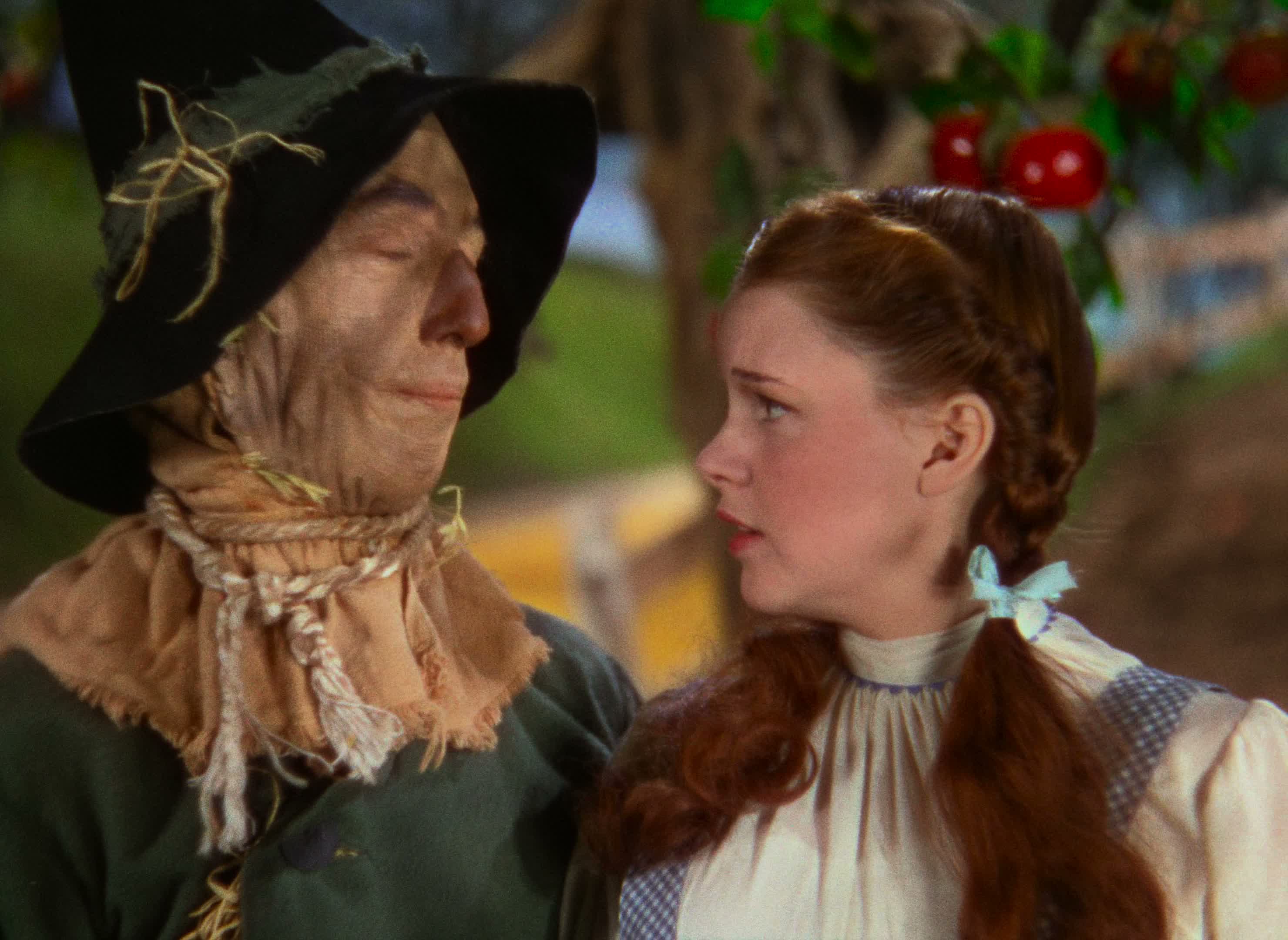
The method of death for the Wicked Witch of the West is one of the most famous scenes in cinematic history: melting by water. In the 1939 film, Dorothy and her friends are captured and held in the Witch’s castle. The Witch sets the Scarecrow’s arm on fire with her broomstick. In a desperate attempt to save her friend, Dorothy grabs a nearby bucket of water and throws it at the flames. Some of the water splashes onto the Witch, who immediately begins to dissolve.
In the 1900 novel, the motivation is slightly different. The Witch has already enslaved Dorothy and is forcing her to do housework. The Witch notices that Dorothy is protected by the "Mark of the Good Witch’s Kiss" and cannot be harmed physically. To get the silver shoes, the Witch trips Dorothy with an invisible iron bar. Angered by this pettiness and the loss of her shoe, Dorothy throws a bucket of water on the Witch. She does not know that water is lethal to the Witch; she simply wants to express her frustration.
"I’m Melting!": The Final Words
The Witch’s reaction to her death is iconic. Her shock stems from the fact that a "simple girl" managed to discover her one fatal weakness. This weakness—a vulnerability to water—is often interpreted as a metaphor for the Witch's lack of "purity" or her elemental nature as a creature of fire and drought.
Unlike the first death, which was a complete accident, the second death involves Dorothy intentionally throwing an object at the victim. However, because Dorothy lacked "malice aforethought" (she didn't know water would kill the Witch), the narrative continues to treat her as an innocent. The death is framed as a liberation for the Winkies, the people the Witch had enslaved, much like the Munchkins were liberated by the first Witch's death.
Comparative Analysis: The Two Witches
The two deaths serve different structural purposes in the narrative. The first death initiates the journey, while the second death concludes the conflict. The following table compares the two incidents as they appear in the primary 1939 film version.
| Feature | Wicked Witch of the East | Wicked Witch of the West |
|---|---|---|
| Method of Death | Crushed by a farmhouse | Melted by water |
| Dorothy's Intent | None (Accident) | Defensive (To save the Scarecrow) |
| Location | Munchkin Country | The Witch's Castle |
| Primary Witness | Glinda the Good Witch | The Tin Man, Lion, and Winkie Guards |
| Resulting Item | Ruby Slippers (Silver in the book) | The Golden Cap (Book) / The Broomstick (Film) |
| Cultural Impact | Celebration (Ding Dong! The Witch is Dead) | Liberation of the Winkie people |
Analyzing Dorothy’s Agency: Is She a Killer?
In the context of 2026 literary analysis, scholars often debate Dorothy’s role as an "accidental assassin." While the text goes to great lengths to preserve her innocence, the body count remains a fact.
The "Unwitting Assassin" Trope
Dorothy represents the archetype of the "Innocent at Large." In Oz, she is a disruptive force. By killing the two Wicked Witches, she removes the existing power structure of the land. It is important to note that the Wizard of Oz himself explicitly tasks Dorothy with killing the Wicked Witch of the West in exchange for his help. In the film, he says, "Bring me the broomstick of the Wicked Witch of the West." He knows that to get the broom, Dorothy will likely have to eliminate the Witch.
This places Dorothy in a "proxy" role. She is doing the dirty work for the Wizard, who is too cowardly to face the Witch himself. Despite this, Dorothy only succeeds through a series of fortunate accidents. This reinforces the theme that "good" triumphs over "evil" not through superior firepower, but through simple, humble actions—like throwing water or merely being in the right place at the right time.
The Moral Landscape of Oz
In L. Frank Baum’s world, death is handled with a strange combination of matter-of-factness and whimsicality. For instance, in the original book, the Tin Woodman is much more violent than his movie counterpart. He decapitates a wildcat and kills forty wolves with his axe to protect Dorothy. Compared to the Tin Woodman's deliberate violence, Dorothy's "kills" are remarkably sanitized. The narrative framing suggests that because she did not intend to take a life, her soul remains unblemished.
Differences Between the 1900 Book and 1939 Movie
While the victims are the same, the nuances of their deaths highlight the differing goals of the book and the movie.
- The Nature of the Witch of the West: In the book, the Witch has only one eye, which is as powerful as a telescope. She is less of a "theatrical" villain and more of a paranoid tyrant. Her death in the book is a result of Dorothy's temper, whereas in the movie, it is an act of loyalty to save the Scarecrow.
- The Silver vs. Ruby Slippers: The movie changed the shoes to ruby to take advantage of the new Technicolor technology of the era. The death of the East Witch is essentially the "delivery mechanism" for these shoes.
- The Role of Glinda: In the movie, Glinda is present for the first death and essentially "frames" Dorothy for it in the eyes of the West Witch. In the book, the Good Witch of the North (a separate character from Glinda) is much more helpful and gives Dorothy a protective kiss on the forehead, which actually prevents the West Witch from hurting her.
Secondary "Deaths" and Indirect Consequences
Beyond the two Witches, Dorothy’s journey results in the "death" of several other entities, albeit metaphorically or indirectly.
- The Wizard’s Persona: While the Wizard doesn't die, Dorothy "kills" his reputation as a great and powerful sorcerer. By uncovering the man behind the curtain, she effectively ends his reign of deception in Oz.
- The Flying Monkeys' Bondage: By killing the Wicked Witch of the West, Dorothy ends the Witch's control over the Winged Monkeys. In the book, Dorothy briefly becomes the master of the Golden Cap, which allows her to command the monkeys herself before eventually setting them free.
- The Scarecrow’s Ignorance: In a metaphorical sense, the journey "kills" the flaws the characters believe they have. The Scarecrow "kills" his perceived stupidity, the Tin Man his perceived heartlessness, and the Lion his perceived cowardice.
Frequently Asked Questions
Did Dorothy kill the Wicked Witch of the West on purpose?
No, not in the sense of premeditated murder. In the movie, Dorothy throws water to save the Scarecrow from fire. In the book, she throws water out of anger because the Witch stole her shoe, but she had no idea that water would be fatal to the Witch. In both cases, the death is a surprised reaction to a defensive act.
How many people did Dorothy kill in Oz?
Dorothy is responsible for the deaths of two people: the Wicked Witch of the East and the Wicked Witch of the West. While other characters (like the Tin Woodman) kill animals or monsters in the original book, Dorothy’s only human-like victims are the two sisters.
Why does water kill the Wicked Witch of the West?
L. Frank Baum never provides a scientific explanation, but it is a common fairy-tale motif. Water often represents purity, life, and truth. Since the Witch is a creature of "wickedness" and "darkness," the touch of life-giving water is corrosive to her existence. In the book, it is also noted that the Witch was so "wicked" that her blood had dried up long ago.
Did Glinda kill the Wicked Witch of the East?
Technically, no. The cyclone and the house were the instruments of death. However, Glinda (or the Good Witch of the North in the book) arrives after the fact to validate the death and ensure that Dorothy receives the magical slippers. Some modern interpretations suggest Glinda manipulated events, but within the primary text, it is considered an "act of God" or fate.
What happened to the Wicked Witch of the East's body?
In the 1939 film, the body disappears as the feet shrivel up under the house. In the 1900 book, the body simply "dried up" and blew away in the sun because she was so old and evil. There was no funeral or remains left behind.
Final Summary and Recommendation
The question of who Dorothy killed in The Wizard of Oz serves as more than just a trivia point; it defines the moral framework of the story. Dorothy Gale remains a beloved figure because her "kills" are framed as the triumph of accidental innocence over calculated malice. She does not seek out violence; rather, violence is thrust upon her, and her survival results in the accidental demise of her oppressors.
For those interested in the deeper lore of Oz, it is highly recommended to read L. Frank Baum’s original fourteen-book series. The deaths in the later books become more frequent and the magic more complex, providing a broader context for the strange, often lethal world that Dorothy Gale accidentally conquered.
Image Gallery