How Victor Robles Shapes Campus Green Spaces
Victor Robles shapes campus green spaces by integrating sustainable landscape architecture, native plant species ecology, and student-centered environmental design into modern higher education infrastructure. His work focuses on transf...
Victor Robles shapes campus green spaces by integrating sustainable landscape architecture, native plant species ecology, and student-centered environmental design into modern higher education infrastructure. His work focuses on transforming traditional university grounds into functional ecological zones that support stormwater management, biodiversity, and community engagement.
Contents
The Evolution of Higher Education Landscape Architecture
Modern university campuses require more than just aesthetic lawns and decorative shrubbery. As institutions face mounting pressure to lower their carbon footprints and manage stormwater runoff effectively, landscape architects like Victor Robles have redefined the purpose of campus open spaces. Grounded in ecological principles, contemporary campus design treats grounds as working infrastructure.
Transforming these environments begins with a rigorous site analysis. Designers evaluate existing topography, soil compaction, hydrological patterns, and microclimates. Rather than imposing a standardized design template onto a unique geographic location, site-specific strategies are developed to honor local ecosystems. This approach reduces long-term maintenance requirements while enhancing the natural resilience of the university grounds.
Furthermore, academic landscapes must accommodate shifting campus populations and evolving pedagogical models. Outdoor areas increasingly function as extension spaces for classrooms, research laboratories, and informal collaborative zones. By intentionally structuring these spatial transitions, landscape planning bridges the gap between academic facilities and the natural world, fostering an atmosphere conducive to both study and ecological stewardship.
Core Principles of Sustainable Campus Design
Sustainable campus design relies on several foundational pillars that prioritize ecological health, resource conservation, and human well-being. Victor Robles's approach exemplifies how these principles are translated into physical construction and planting strategies across modern institutional grounds.
| Pillar | Implementation Focus |
|---|---|
| Ecological Health | Native plantings, soil regeneration |
| Hydrological Mgmt | Bioswales, rain gardens, permeable paving |
| Energy Efficiency | Canopy shading, microclimate control |
| Community Access | ADA pathways, outdoor study spaces |
Native Plant Integration and Biodiversity
A cornerstone of this design philosophy is the replacement of resource-intensive turfgrass with native plant communities. Monoculture lawns demand heavy irrigation, synthetic fertilizers, and frequent mowing. Incorporating native perennials, deep-rooted grasses, and regional trees supports local pollinators, improves soil microbiology, and drastically cuts down municipal water consumption.
Hydrological Systems and Stormwater Management
Urbanized campuses often feature vast expanses of impermeable surfaces, such as concrete walkways, parking lots, and building roofs. This layout exacerbates runoff issues and burdens municipal stormwater systems. Sustainable green space design utilizes nature-based solutions to manage water on-site:
- Bioswales: Vegetated channels designed to concentrate and convey stormwater runoff while removing silt and pollution.
- Rain Gardens: Depressed landscape areas planted with heavy-root native vegetation that capture and infiltrate water from roof downspouts and pavement.
- Permeable Pavers: Porous paving materials that allow precipitation to filter directly into the underlying soil table, mitigating erosion and surface pooling.
Integrating Outdoor Learning and Wellness Infrastructure
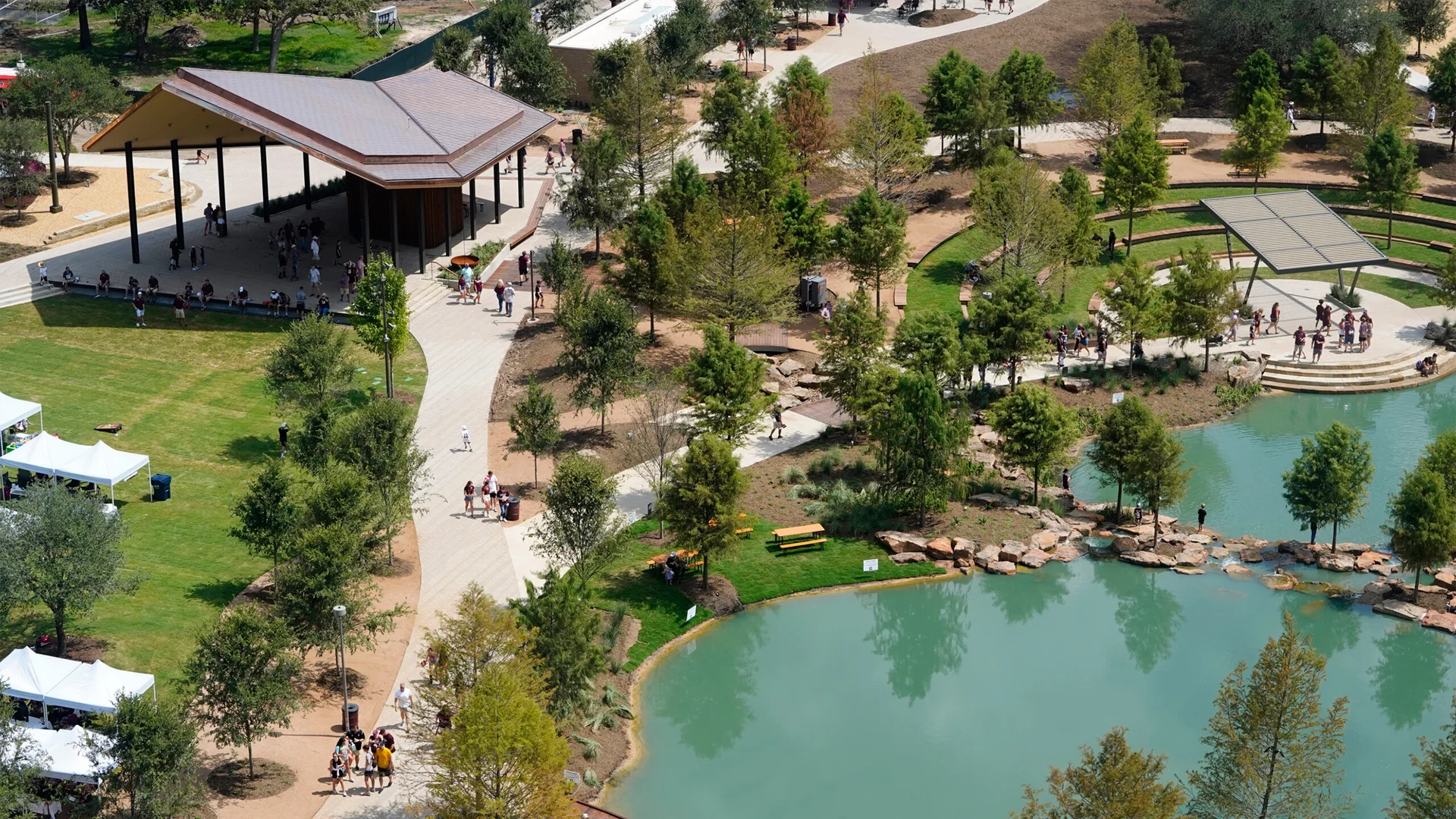
Green spaces on a university campus function as vital community assets that directly impact student mental health and academic performance. Research consistently demonstrates that exposure to natural environments reduces cortisol levels, alleviates stress, and enhances cognitive function. Therefore, spatial planning incorporates active and passive wellness zones.
Outdoor classrooms equipped with weather-resistant seating and reliable shading structures allow faculty to conduct lectures outside conventional four-wall environments. These spaces are strategically positioned near academic buildings to encourage seamless transitions between indoor and outdoor learning. Additionally, contemplative gardens featuring quiet walking paths, sensory plantings, and localized sound dampening offer students a psychological refuge from the pressures of rigorous academic life.
Accessibility remains a critical design metric. All primary pedestrian corridors, ramps, and gathering areas strictly adhere to or exceed baseline accessibility standards, ensuring that individuals with mobility impairments can navigate and enjoy every corner of the campus ecosystem.
Comparative Analysis of Traditional vs. Sustainable Campus Grounds
Understanding the shift toward ecologically resilient campus design requires contrasting traditional maintenance-heavy methodologies with contemporary sustainable practices.
| Metric | Traditional Campus Design | Sustainable Campus Design (Robles Approach) |
|---|---|---|
| Water Consumption | High; relies on continuous municipal irrigation for expansive turf. | Low to Moderate; utilizes drip irrigation and drought-tolerant native plants. |
| Stormwater Management | Relies on grey infrastructure (pipes, storm sewers, concrete catch basins). | Utilizes green infrastructure (bioswales, rain gardens, permeable surfaces). |
| Maintenance Labor | Frequent chemical applications, weekly mowing, and high fertilizer input. | Lower long-term input; focused on ecological management and weeding. |
| Biodiversity Impact | Minimal; uniform monocultures offer limited support for local fauna. | High; creates multi-tiered habitats for pollinators, birds, and insects. |
| Pedestrian Engagement | Purely aesthetic; thoroughfares for moving between buildings. | Functional; integrated outdoor study hubs, wellness zones, and labs. |
Operational Challenges and Implementation Strategies
Executing large-scale landscape transformations on an active university campus involves complex operational hurdles. Construction timelines must be carefully synchronized with academic calendars to minimize disruption to classes, student housing, and campus transit. Furthermore, budgetary constraints require phased implementation models where projects are broken down into manageable, high-impact intervals.
Stakeholder engagement is another critical component. Successful projects require close collaboration between university facilities management, student government associations, sustainability officers, and municipal planning boards. Transparent communication ensures that the campus community understands the temporary inconveniences of construction in exchange for long-term ecological and aesthetic benefits.
Long-term maintenance planning must be established before the first spade breaks ground. Even native landscapes require active stewardship during their establishment phase, which typically spans the first two to three growing seasons. Facilities teams receive specialized training in ecological maintenance protocols, shifting their daily tasks from conventional mowing and chemical spraying to adaptive management, selective pruning, and invasive species removal.
Frequently Asked Questions
What are the primary benefits of incorporating native plants into campus green spaces?
Native plants are adapted to local climatic and soil conditions, requiring significantly less water, fertilizer, and pesticide intervention than non-native species. They also provide essential habitats and food sources for local pollinators and wildlife, thereby strengthening local biodiversity.
How do sustainable campus landscapes manage heavy stormwater runoff?
Sustainable landscapes utilize green infrastructure techniques such as bioswales, rain gardens, and permeable paving. These features slow down, filter, and naturally infiltrate stormwater runoff on-site, preventing soil erosion and reducing the burden on municipal drainage networks.
In what ways do outdoor green spaces support student academic performance?
Access to natural environments has been shown to reduce psychological stress, lower blood pressure, and improve concentration. Outdoor study areas and natural quiet zones provide students with alternative learning environments that foster relaxation and cognitive restoration.
What maintenance changes are required when shifting from turf lawns to ecological landscapes?
Maintenance shifts away from frequent mowing, synthetic fertilization, and broad-spectrum pesticide application toward ecological management. This includes monitoring plant establishment, managing invasive species, hand-pulling weeds during the early phases, and periodic pruning of native shrubs and trees.
How are accessibility standards integrated into natural campus landscape designs?
All primary pathways, gathering areas, and outdoor seating zones are designed to comply with comprehensive accessibility guidelines. Smooth, firm, and slip-resistant materials are used for main corridors, and gentle slopes are engineered to ensure universal access for all students and visitors.
Next Actions for Institutional Planning
Universities and organizations looking to emulate these landscape architecture practices should begin by conducting a comprehensive site audit of their current grounds. Evaluate existing turf coverage, high-runoff zones, and underutilized open areas to identify immediate opportunities for green infrastructure retrofits. Collaborate with experienced landscape professionals who specialize in regional ecology and sustainable design to build a phased master plan that aligns with institutional sustainability targets and budgetary frameworks.
Image Gallery