What You Need to Know About the Water Heater Code in Colorado
In Colorado, water heater installations and replacements are governed by the Colorado State Plumbing Board within DORA, which adopts the International Plumbing Code (IPC) with municipal amendments. Compliance requires local permits, th...
In Colorado, water heater installations and replacements are governed by the Colorado State Plumbing Board within DORA, which adopts the International Plumbing Code (IPC) with municipal amendments. Compliance requires local permits, thermal expansion tanks on closed systems, proper Temperature and Pressure Relief (TPR) valve discharge piping, leak-containment drain pans, and high-altitude gas venting.
Contents
State vs. Local Building Codes in Colorado
Navigating plumbing regulations in Colorado requires understanding the relationship between state-level oversight and municipal enforcement. The Colorado State Plumbing Board, operating under the Department of Regulatory Agencies (DORA) Division of Professions and Occupations, establishes the baseline standards for all plumbing installations across the state. Colorado routinely adopts updated iterations of the International Plumbing Code (IPC), the International Residential Code (IRC), and the International Fuel Gas Code (IFGC).
While the state establishes minimum safety standards, local jurisdictions maintain the authority to adopt amendments that are more stringent than state baselines. For example, the City and County of Denver enforces the Denver Building and Fire Code, which contains specialized amendments for high-density housing and urban energy standards. Similarly, regional authorities like the Pikes Peak Regional Building Department (serving El Paso County) or municipal departments in Boulder, Fort Collins, and Aurora enforce distinct local administrative procedures, permitting schedules, and green building requirements.
Property owners and plumbing contractors must verify whether a project falls under state jurisdiction (typically in unincorporated areas without a local plumbing department) or a specific city/county building authority. In all cases, installations must comply with the most restrictive rule active in that jurisdiction.
Disclaimer: Building codes are subject to local amendments and periodic updates. The technical details provided here serve as educational guidance. Always consult your local building department or a licensed Colorado master plumber prior to starting work.
Core Technical Code Requirements for Colorado Water Heaters
Installing or replacing a water heater in Colorado involves strict adherence to mechanical, plumbing, and fuel gas safety rules. These standards prevent catastrophic tank ruptures, carbon monoxide poisoning, severe scalding, and major structural water damage.
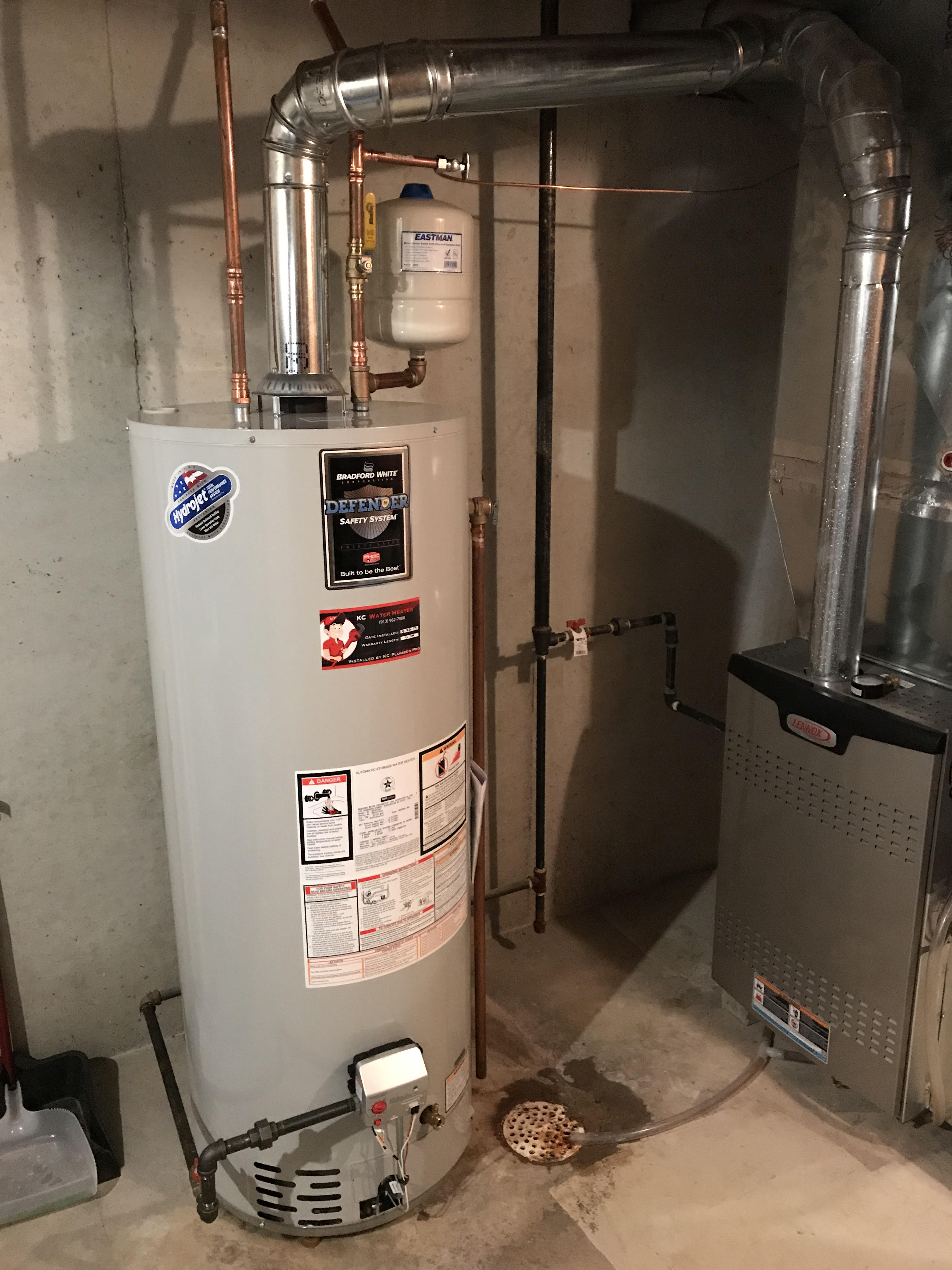
Typical Colorado Code Arrangement
- Vent Pipe / Flue: Vented to Outside Air
- Water Heater Tank:
- Thermal Expansion Tank: Required on closed system
- TPR Valve: Discharge pipe terminates within 6" of floor/waste receptor
- Gas/Electric: Sediment trap / dedicated breaker
- Drain Pan & Line: Discharges to approved receptor
Permits and Inspection Mandates
Under Colorado law, replacing an existing water heater—whether fuel-gas fired, electric, or tankless—is not considered a simple repair; it is a mechanical and plumbing system modification that requires a permit.
- Permit Issuance: Permits must be pulled through the local building department (or DORA for areas under state control) before work begins.
- Licensing Requirements: Professional installations must be performed by a licensed Colorado Plumbing Contractor employing licensed journey or master plumbers. While some municipalities permit homeowners to perform work on their primary single-family residence, the work is held to identical technical code standards and must pass mandatory municipal inspection.
- Final Inspection: Once installed, an official code inspector evaluates the unit's venting, electrical connections, gas piping, pressure relief mechanisms, and structural placement.
Thermal Expansion Tanks
Modern public water systems in Colorado utilize backflow preventers, check valves, or pressure-reducing valves (PRVs) at the water meter to protect the municipal supply. This creates a "closed-loop" plumbing system. When water inside a tank heater is heated, it expands. Because the expanded water cannot flow backward into the main supply line, internal system pressure spikes rapidly—a phenomenon known as thermal expansion.
- Mandatory Protection: The IPC mandates that closed-loop systems incorporate a thermal expansion control device, typically an expansion tank installed on the cold water inlet supply line.
- Pre-Charge Calibration: The air bladder inside the expansion tank must be pre-charged with air to match the home’s static incoming water pressure before connection. Installing an uncharged or improperly sized expansion tank voids code compliance and accelerates tank failure.
Temperature and Pressure Relief (TPR) Valve Discharge Piping
The TPR valve is a primary safety mechanism designed to open and relieve excess pressure or temperature if the water heater thermostat fails, preventing catastrophic tank explosions. Code requirements for the discharge pipe attached to this valve are exceptionally precise:
- Gravity Flow: The pipe must run downward from the valve to allow gravity drainage. It cannot slope upward at any point or contain traps.
- Termination Height: The discharge pipe must terminate within 6 inches of the floor or an approved indirect waste receptor (such as a floor drain). It cannot be connected directly to a drainage pipe system without an air gap.
- No Threaded Ends: The discharge end of the pipe cannot be threaded. Threaded ends could allow someone to cap the pipe, rendering the safety valve useless.
- Approved Materials: Allowable materials include copper, CPVC, galvanized steel, or PEX pipe specifically rated for hot water distribution and pressure relief. Standard schedule 40 PVC is generally prohibited for TPR discharge lines because it cannot handle high thermal discharge limits without softening.
Drain Pans and Discharge Piping
Water leak damage is a leading source of property loss in residential structures. Code rules strictly regulate leak management based on water heater location:
- Location Criteria: An approved safety drain pan (constructed of plastic, aluminum, or galvanized steel) is required under any water heater installed in locations where a leak would cause structural or ceiling damage. This includes attics, upper floors, living area closets, and finished basements.
- Pan Sizing: The pan must be at least 1.5 inches deep and offer adequate clearance around the base of the water heater.
- Pan Drain Lines: The pan must feature a dedicated drain line (minimum 3/4-inch nominal diameter) that slopes downward to an indirect waste receptor or extends to the exterior of the building, terminating between 6 and 24 inches above finished grade.
High-Altitude Venting and Fuel Gas Codes
Colorado’s high elevation—ranging from roughly 3,500 feet in the eastern plains to over 10,000 feet in mountain communities—significantly impacts gas combustion. Air density decreases as elevation increases, reducing oxygen available for burning fuel.
- Burner Derating: The IFGC requires atmospheric gas water heaters installed at elevations above 2,000 feet to be derated. Typically, input ratings must be reduced by 4% for every 1,000 feet above sea level, unless manufacturer guidelines specify high-altitude orifice kits or auto-adjusting electronic controls.
- Combustion Air: Gas units must have adequate oxygen supplied to the room or closet. If installed in a confined space (defined as less than 50 cubic feet of room volume per 1,000 BTU/hr of combined appliance input), dedicated combustion air ducts must be installed from the attic, crawl space, or exterior.
- Venting Categories: Standard Category I natural-draft atmospheric water heaters require metal flue pipes (such as B-vent) maintaining proper clearances to combustibles (typically 1 inch for double-wall B-vent, 6 inches for single-wall vent connectors). Direct-vent or power-vent Category IV units utilize sealed PVC/CPVC/ABS piping directly to the exterior, following specific distance clearances from operable windows and building openings.
Electrical Bonding and Energy Efficiency Regulations
Recent updates to Colorado state law (such as House Bill 22-1362) push local municipalities toward adopting updated energy codes (e.g., the International Energy Conservation Code - IECC).
- Electrical Bonding: Metal water pipes connected to the water heater must be electrically bonded to maintain grounding continuity across the hot and cold lines, especially when dielectric unions or non-metallic piping are used.
- Electric-Ready Provisions: In many Colorado jurisdictions adopting modern energy codes, new construction or major renovations replacing gas heaters must include an "electric-ready" panel capacity and dedicated conduit to facilitate future transition to electric heat pump water heaters (HPWH).
Technical Specifications & Code Comparison Matrix
The following reference table outlines the standard code metrics required under the adopted plumbing codes across Colorado municipalities:
| Regulatory Feature | Code Standard (IPC / IFGC Baseline) | Standard Specification / Measurement | Primary Risk Prevented |
|---|---|---|---|
| TPR Discharge Termination | IPC Section 504.6 | 2 to 6 inches above floor/drain; unthreaded terminus | Thermal scalds, pipe failure, over-pressurization explosion |
| Thermal Expansion Tank | IPC Section 607.3 | Sized to system volume; matching static water pressure | Closed-loop hydraulic shock, pressure spikes, tank rupture |
| Drain Pan Depth & Outlet | IPC Section 504.2 | Minimum 1.5" depth; 3/4" minimum drain line | Structural water damage, mold growth, ceiling collapse |
| Gas Appliance Drip Leg | IFGC Section 408.4 | Minimum 3" sediment trap at gas line tee connection | Debris entering gas valve, burner malfunction |
| Gas Vent Clearance | IFGC Section 503 | 1" minimum for Type B-vent; 6" for single-wall metal | Combustible wall ignition, fire hazard |
| High-Altitude Derating | IFGC Section 602 | 4% reduction in BTU input per 1,000 ft elevation | Incomplete combustion, carbon monoxide buildup |
| Combustion Air Volume | IFGC Section 304 | 50 cu. ft. room volume per 1,000 BTU/hr total appliance rating | Flue gas spillage, oxygen depletion |
Common Water Heater Code Inspection Failures in Colorado
Understanding frequent installation mistakes helps property owners ensure their installation passes municipal building inspections on the first attempt.
Common Colorado Inspection Failures
- Unapproved TPR Piping Material (e.g., standard PVC or flexible hose)
- Missing Thermal Expansion Tank on Closed Loop Systems
- Improper Gas Sediment Trap / Drip Leg Placement
- Elevation Venting Errors & Inadequate Combustion Air Clearance
- TPR Discharge Pipe Sloping Upward or Threaded at Outlet
1. Incorrect Material Used for TPR Discharge Piping
Inspectors frequently fail installations where installers used standard Schedule 40 PVC or non-heat-rated flexible tubing for the TPR discharge line. PVC is rated for cold water or low-temperature drain lines; high-temperature steam or water discharge can cause standard PVC to deform or collapse under pressure. Only approved materials rated for hot water distribution (such as CPVC, copper, or rated PEX) may be used.
2. Missing Sediment Trap (Drip Leg) on Gas Lines
The IFGC requires a drip leg (sediment trap) on the gas supply line immediately upstream of the gas control valve. The drip leg acts as a pocket to catch debris, pipe scale, and moisture before it enters the gas valve mechanism. Omitting this 3-inch cap-nipple assembly at the gas inlet is one of the most common reasons for a failed mechanical inspection.
3. Missing Thermal Expansion Tank
When a contractor replaces a water heater, they often overlook whether a pressure-reducing valve or backflow preventer is present at the water meter. If the system is closed and no expansion tank is installed on the cold water line, the system fails IPC Section 607.3.
4. Flue Venting Clearance and Pitch Errors
Atmospheric gas vents must slope continuously upward toward the chimney or roof terminal at a minimum pitch of 1/4-inch rise per foot of horizontal run. Improperly supported draft hoods, negative slope on horizontal vent connectors, or installing B-vent too close to wooden framing studs trigger immediate inspection rejections due to structural fire risk and carbon monoxide hazards.
Electric vs. Gas Water Heater Code Requirements
While both water heater types share common plumbing rules regarding thermal expansion and discharge piping, their energy supplies introduce distinct code requirements.
Fuel-Gas & Propane Units
- Gas Shut-off Valve: An approved, accessible gas shut-off valve must be installed within 6 feet of the water heater in the same room.
- Flexible Gas Connectors: Flexible gas tubing must be CSA-listed and typically cannot exceed 3 to 6 feet in length (depending on local amendments), nor can it pass through walls, floors, or appliance housings.
- Propane (LPG) Clearance: Because propane is heavier than air, propane water heaters installed in garages must be elevated so the pilot light or ignition source is at least 18 inches above the floor, reducing the risk of igniting spilled gasoline vapors (unless marked as Flammable Vapor Ignition Resistant - FVIR).
Electric & Heat Pump Units
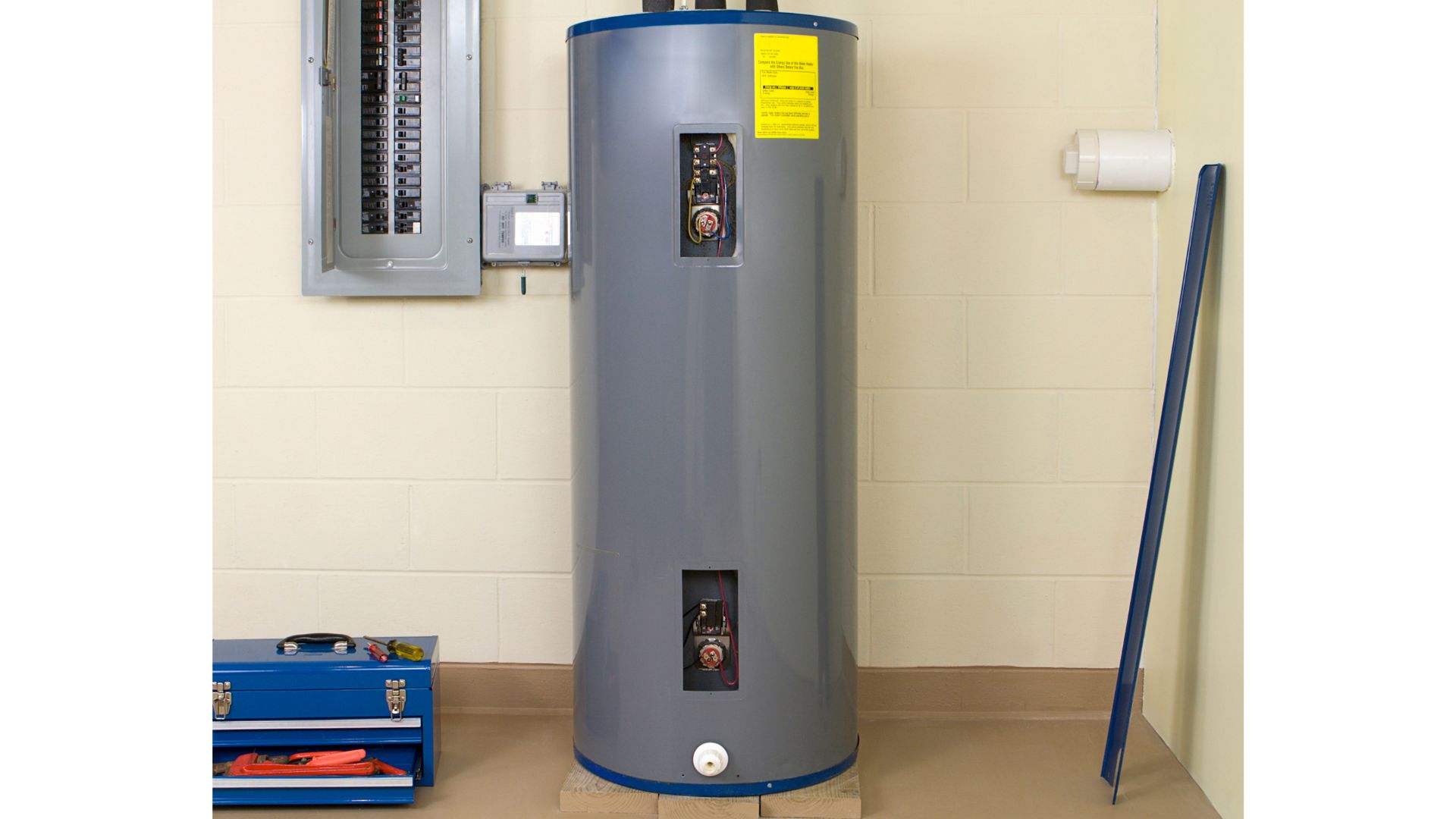
- Electrical Disconnect: An electrical disconnect switch or dedicated circuit breaker lock out must be visible and accessible within sight of the electric water heater.
- Wire Sizing and Breakers: Standard 40 to 50-gallon electric water heaters typically require a dedicated 30-amp, 240-volt double-pole circuit with 10-gauge copper wire.
- Heat Pump Water Heater (HPWH) Air Volume: Heat pump units extract heat from surrounding air to heat water. Codes and manufacturer specifications mandate a minimum room volume (often 700 to 1,000 cubic feet of unconfined space) or dedicated louvered doors/ducting to allow adequate airflow for operation.
Step-by-Step Compliance Checklist for Replacement
Use this step-by-step checklist to confirm your installation aligns with standard Colorado plumbing codes before requesting a building department inspection:
- Obtain the Permit: Secure an active permit from your city, county, or state building authority.
- Verify Tank Location: Ensure the water heater is placed in a space with appropriate floor support, adequate clearance from combustible materials, and access for future service.
- Install Drain Pan: Place an approved metal or plastic drain pan under the unit if it is located in or above a finished area. Route the 3/4-inch pan line to an indirect drain.
- Install Thermal Expansion Tank: Mount the expansion tank on the cold water supply line. Check that the air pre-charge matches the static house pressure.
- Connect TPR Discharge Pipe: Run rigid, heat-approved pipe down from the TPR valve. Ensure it terminates 2 to 6 inches above the floor, slopes downward, and has an unthreaded end.
- Set Up Fuel System Safeguards:
- Gas: Install a dedicated shut-off valve, a 3-inch sediment trap, and an approved gas flex line. Verify flue vent pitch (1/4" per foot) and clearance to combustibles.
- Electric: Ensure correct wire gauge (e.g., 10 AWG for 30A circuit), proper grounding, and an accessible electrical disconnect switch.
- Verify High-Altitude Derating: For gas units above 2,000 feet, confirm the burner orifices meet local elevation specifications.
- Complete Water Line Bonding: Electrically bond the hot and cold water pipes using copper ground wire and code-approved clamps.
- Schedule Inspection: Call your local municipal building department to inspect the installation before closing up walls or covering utility connections.
Frequently Asked Questions
Do I need a permit to replace a water heater in Colorado?
Yes. Almost every municipality in Colorado, as well as the State Plumbing Board, considers a water heater replacement a regulated plumbing and mechanical modification. A permit must be pulled, and the final installation must pass inspection by a qualified code official.
Are thermal expansion tanks mandatory on all Colorado water heaters?
Thermal expansion tanks are required whenever a water system is "closed." A system becomes closed when a backflow preventer, check valve, or pressure-reducing valve is present on the main incoming water line. Because most municipal water connections in Colorado incorporate these devices, expansion tanks are required in the vast majority of residential installations.
How does elevation affect gas water heater installation in Colorado?
Because air density decreases at high elevations, natural gas and propane water heaters receive less oxygen for combustion. Standard atmospheric units installed above 2,000 feet must be derated by reducing gas input (usually 4% per 1,000 feet of elevation) using high-altitude orifice kits or specialized controls to prevent incomplete combustion and dangerous carbon monoxide production.
Can a homeowner install their own water heater in Colorado?
In many Colorado jurisdictions, a homeowner who owns and occupies a single-family primary residence may pull a permit and perform the installation themselves. However, the installation must meet identical IPC, IFGC, and electrical codes as a professional installation and must pass official municipal inspection. Some local jurisdictions require homeowners to pass a basic code-knowledge test before issuing a permit.
What material is allowed for TPR discharge lines in Colorado?
Approved materials include hard-drawn copper, CPVC, galvanized steel, or PEX pipe rated for hot water distribution and pressure relief. Standard PVC (Schedule 40) is generally prohibited for TPR discharge lines because it cannot withstand the high temperatures of discharging steam and hot water without deforming.
What is the clearance requirement for gas water heater vents?
Clearance requirements depend on the type of vent pipe used. Standard Type B double-wall gas vent pipes generally require a minimum 1-inch clearance to combustible materials like wood studs and drywall. Single-wall metal vent connectors require at least 6 inches of clearance. Always verify clearances listed on the appliance data plate and vent pipe labeling.
Practical Recommendations for Property Owners
When replacing or upgrading a water heater in Colorado, proactive planning ensures legal compliance and structural safety:
- Check Local Municipal Amendments First: Before purchasing hardware, contact your city or county building department (e.g., Denver Community Planning and Development, Pikes Peak Regional Building Department) to verify specific local requirements, such as green building mandates or pan discharge rules.
- Verify System Pressure: Use a simple water pressure gauge on an outdoor hose bib to check your home's static water pressure. If pressure exceeds 80 PSI, a pressure-reducing valve (PRV) must be installed alongside your thermal expansion tank.
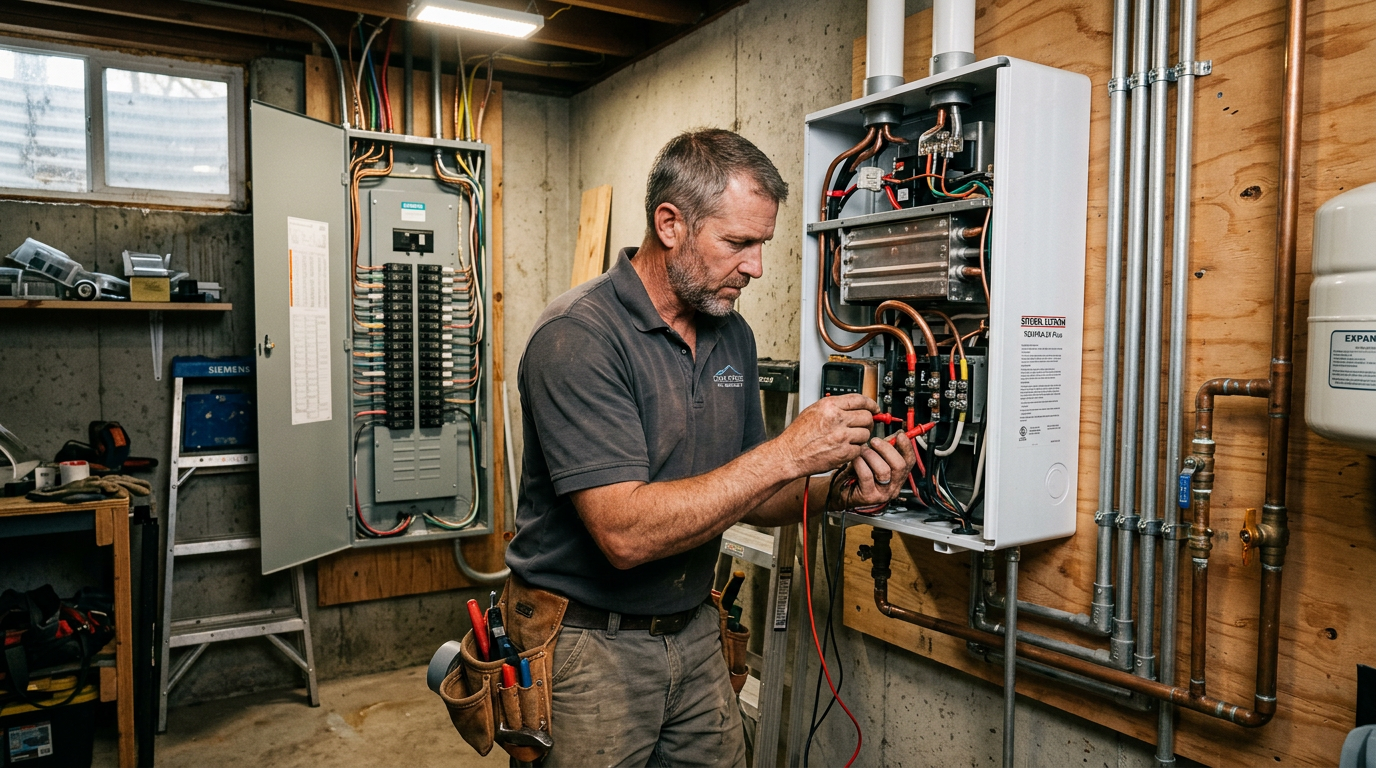
- Hire Licensed Professionals: If you are not completely confident handling high-voltage wiring, gas line sizing, and combustion vent calculations, hire a licensed Colorado Plumbing Contractor. Verify their credentials through the Colorado DORA License Lookup portal.
- Keep Documentation: Retain your permit, inspection sign-off sheet, and owner manual. Proof of permitted work is frequently requested by buyers and home inspectors during property sales.
Image Gallery