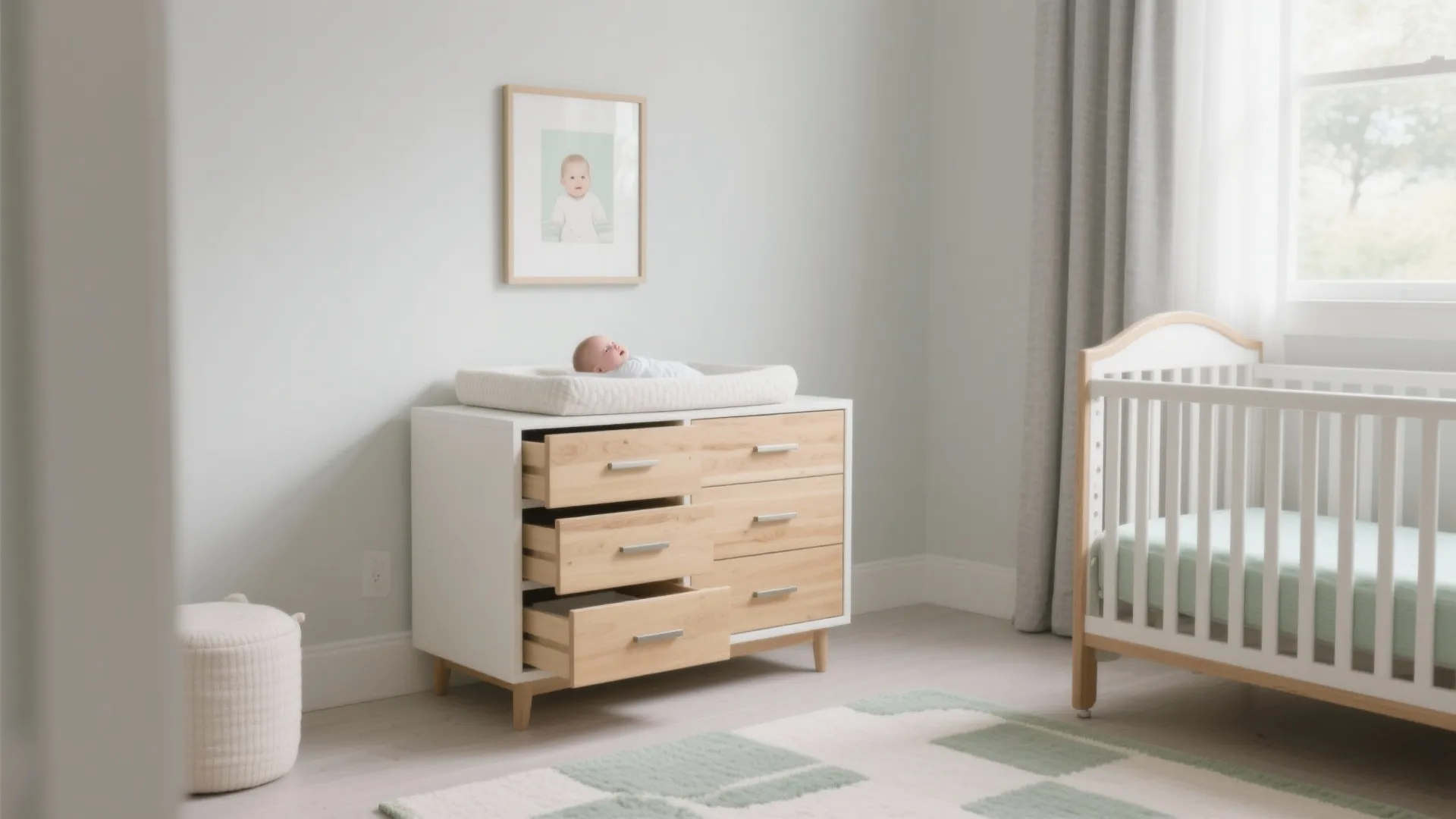
The Best Dresser Changing Table Combos for Small Nurseries
The best dresser changing table combo for a small nursery combines a compact footprint—typically under 36 inches in width—with a removable changing topper, sturdy safety anchoring, and low-VOC construction. By pairing three deep drawer...
The best dresser changing table combo for a small nursery combines a compact footprint—typically under 36 inches in width—with a removable changing topper, sturdy safety anchoring, and low-VOC construction. By pairing three deep drawers with a detachable changing frame, parents maximize storage without sacrificing floor space, ensuring long-term usability beyond the diapering years.
Contents
The Role of Multi-Functional Furniture in Compact Nursery Design
Designing a nursery in a compact space—such as an urban apartment, a room under 100 square feet, or a shared master bedroom—requires strict spatial planning. Standard nursery setups often call for a standalone changing table, a clothing dresser, a crib, and a glider. In a small room, placing separate changing and storage units quickly consumes critical floor space, creates awkward traffic bottlenecks, and makes the room feel cluttered.
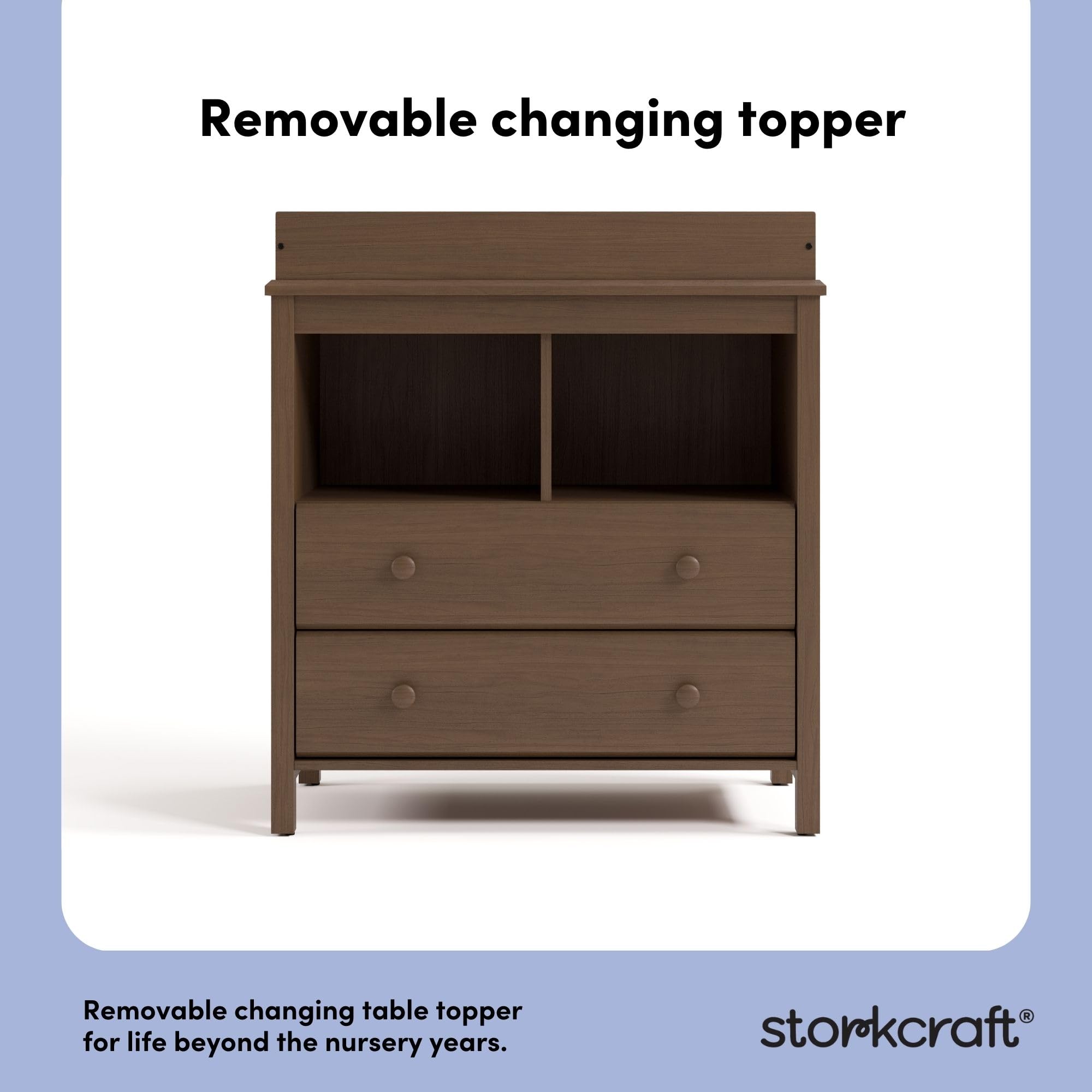
A dresser changing table combo solves this layout challenge by stacking two essential functions into a single vertical footprint. Integrating a changing station atop a three- or four-drawer dresser saves approximately 6 to 10 square feet of floor space compared to operating two separate units. Furthermore, opting for a model with a removable top tray ensures that once diapering years are over, the piece transitions into a standard bedroom dresser without leaving visible screw holes or damaged surface finishes.
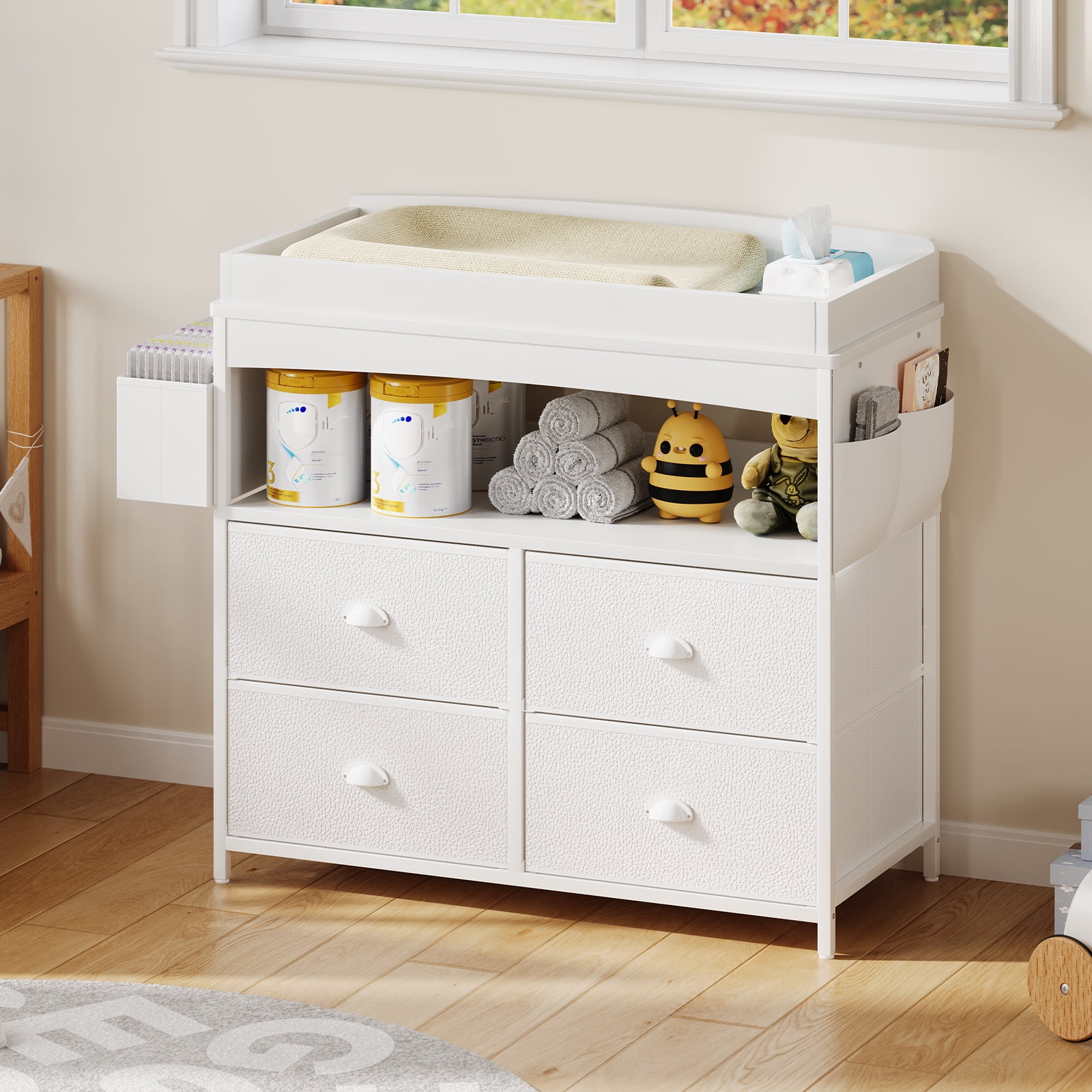
Beyond simple space savings, multi-functional nursery furniture optimizes daily diapering ergonomics. Having diapers, wipes, burp cloths, and fresh onesies organized directly beneath the changing pad reduces the need to step away from the baby, supporting both safety and operational convenience during late-night changes.
Safety Standards and Materials Testing
Safety is the single most critical factor when selecting nursery furniture. Because changing combos serve as both elevated surface platforms and heavy storage units, they must comply with federal safety regulations regarding stability, structural integrity, and indoor air quality.
Structural Stability and the STURDY Act
In the United States, all clothing storage units—including nursery dressers—must comply with the Consumer Product Safety Commission (CPSC) rules enforcing the STURDY Act (Stop Tip-overs of Unstable, Risky Dressers on Youth) and the ASTM F2057 standard. This standard mandates rigorous tip-over testing simulating real-world use, such as a child climbing open drawers or multiple drawers being extended simultaneously.
When shopping for a small nursery combo, verify that the manufacturer includes an anti-tip kit and provides explicit instructions for anchoring the dresser directly to wall studs. Furniture must remain stable even when weight is placed in open drawers or on top surfaces.
Key Safety Certifications
| Certification / Standard | Scope & Protection |
|---|---|
| CPSC / ASTM F2057 | Mandatory tip-over stability testing and wall-anchoring requirements for dressers. |
| ASTM F2388 | Safety specification for baby changing products, including side barrier heights. |
| GREENGUARD Gold | Rigorous chemical testing for over 10,000 VOCs, ensuring clean indoor air quality. |
Changing Station Standards (ASTM F2388)
The changing module itself must adhere to ASTM F2388, the standard safety specification for baby changing products for domestic use. Key safety requirements under this standard include:
- Enclosed Barriers: Side rails must rise at least 2 inches above the padded changing surface on all four sides to prevent rolling.
- Secure Attachment: The changing topper must bolt securely to the back or top of the dresser frame so it cannot slide or flip off under lateral pressure.
- Safety Straps: Built-in containment straps with side-release buckles are required to keep infants restrained during diaper changes.
Air Quality and Chemical Emissions
Because small nurseries have reduced air circulation volume compared to large rooms, off-gassing from furniture paints, glues, and composite woods poses a higher concentration risk. Look for products certified under GREENGUARD Gold. This voluntary certification verifies that the item has been screened for over 10,000 volatile organic compounds (VOCs) and chemicals, meeting stringent emission limits designed to protect sensitive infant respiratory systems.
Types of Small-Space Changing Table Dressers
Nursery dressers designed for small footprints vary by frame structure, drawer count, and tray conversion methods. Selecting the right type depends on room geometry, door clearance, and storage requirements.
- Compact 3-Drawer
- Changing Top
- Drawer 1
- Drawer 2
- Drawer 3
- Width: 33"-36"
- Depth: 18"-19"
- Best for overall utility.
- Open-Shelf Hybrid
- Changing Top
- Open Shelf
- Drawer 1
- Drawer 2
- Width: 30"-34"
- Depth: 18"-19"
- Best for quick-access gear.
- Narrow Vertical Unit
- Changing Top
- Drawer 1
- Drawer 2
- Drawer 3
- Drawer 4
- Width: 30"-32"
- Depth: 17"-18"
- Best for narrow rooms.
1. 3-Drawer Compact Dressers with Removable Toppers
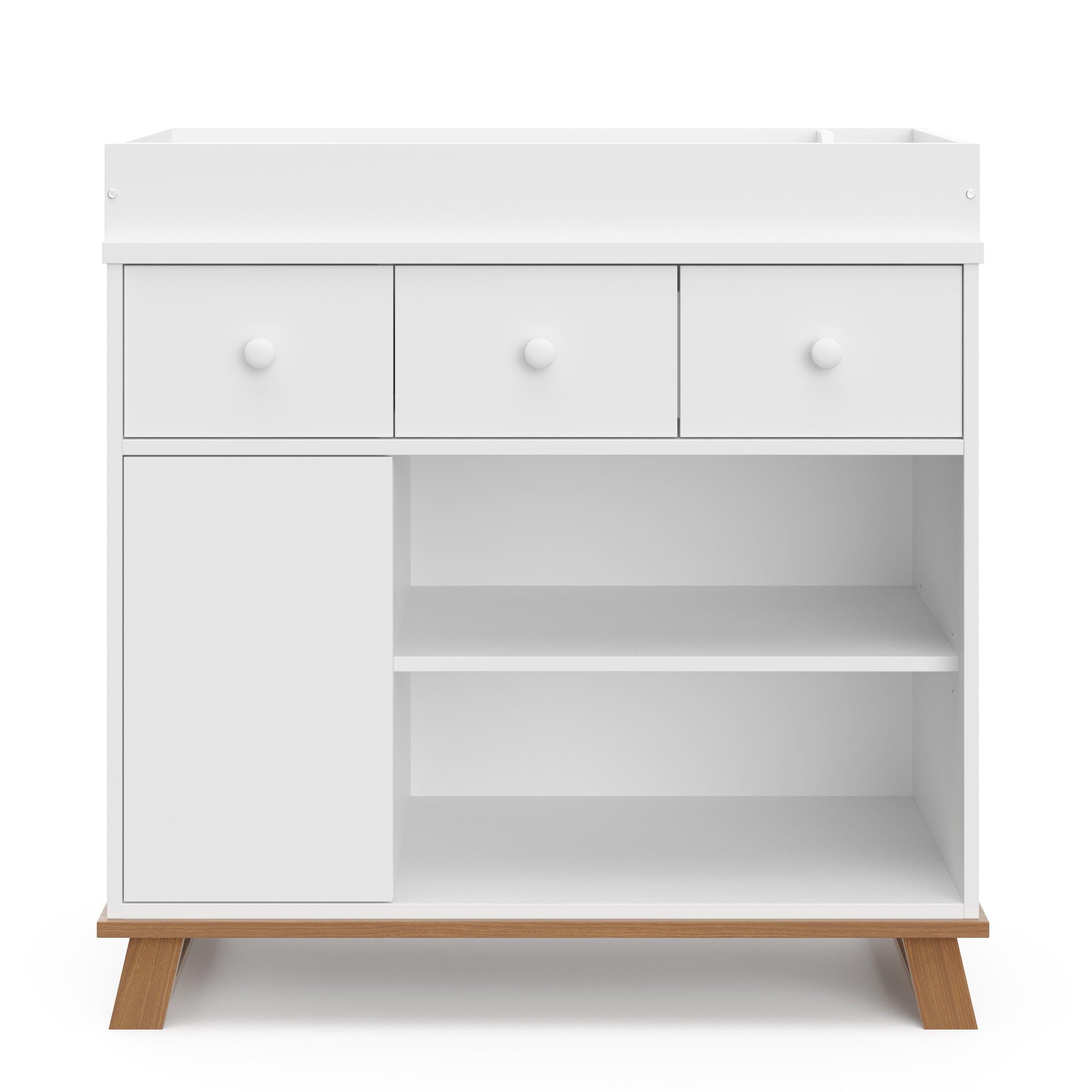
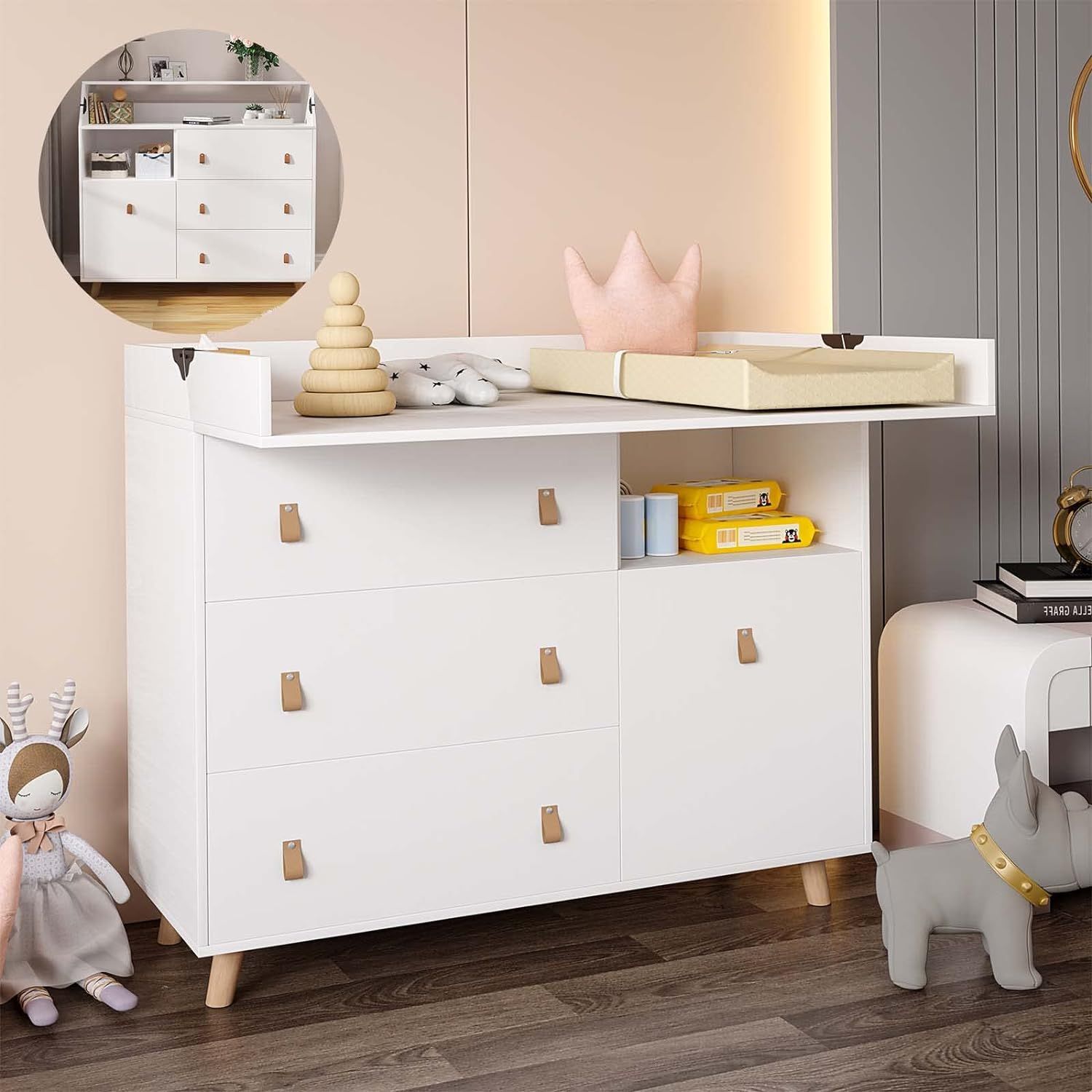
The 3-drawer compact dresser is the standard choice for small nurseries. Measuring between 33 and 36 inches in width and 18 to 19 inches in depth, these units provide proportional height (34 to 36 inches tall) for ergonomic changing while offering substantial internal storage.
- Pros: High versatility, full-coverage closed storage that hides clutter, smooth aesthetic transition into later childhood.
- Cons: Requires clearance for full drawer extension; top drawer must be organized carefully for easy reach during changes.
2. Hybrid Open-Shelf and Drawer Units
Hybrid dressers combine one or two top open cubbies with two full-width lower drawers. The open cubbies provide rapid, one-handed access to daily supplies such as diapers, wipes, and creams without needing to pull open drawers while maintaining physical contact with the infant.
- Pros: Immediate accessibility to high-frequency items, reduces wear on drawer glides.
- Cons: Open shelves expose items to dust and create visual business if not organized with fabric bins.
3. Narrow Vertical Dressers
For nurseries with limited wall length, narrow vertical dressers prioritize height over width. Measuring 30 to 32 inches wide and standing 37 to 39 inches tall, these 4-drawer configurations utilize vertical space effectively.
- Pros: Fits into tight alcoves and narrow wall segments alongside cribs.
- Cons: Higher center of gravity requires strict wall anchoring; taller height may be uncomfortable for shorter parents.
Technical Comparison of Small-Nursery Changing Combos
The following table compares common configuration styles to help you determine which build matches your nursery layout and functional preferences.
| Configuration Style | Typical Dimensions (W x D x H) | Storage Capacity | Primary Safety Requirement | Usability Beyond Diapering | Ideal Room Placement |
|---|---|---|---|---|---|
| Standard 3-Drawer Compact | 33"–36" x 18"–19" x 35" | High (3 large drawers) | STURDY Act wall anchor, ASTM F2388 topper | Excellent (removable topper reveals clean top surface) | Main wall opposite crib or adjacent to glider |
| Open-Shelf Hybrid | 30"–34" x 18"–19" x 34" | Moderate (1 shelf + 2 drawers) | Wall anchor, basket security stops | Good (open shelf serves as book display or toy bin) | Small alcoves or side-wall placements |
| Narrow 4-Drawer Vertical | 30"–32" x 17"–18" x 38" | High (4 stacked drawers) | mandatory heavy-duty wall anchor (high center of gravity) | Very Good (fits standard bedroom layouts) | Tight wall segments between doors or windows |
| 2-Door / 1-Drawer Storage Credenza | 32"–35" x 18"–20" x 35" | Moderate (adjustable internal shelf) | Wall anchor, door soft-close hinges | Excellent (transitions to dining or general storage) | Multi-use guest room / nursery spaces |
Sizing and Ergonomic Considerations
Selecting furniture for a compact room requires balancing human body mechanics with precise room measurements.
- Wall Surface
- Removable Changing Topper (ASTM F2388)
- Changing Pad: Fits standard 16" x 32" pad
- Dresser Topper
- Height: 34" to 37" (Ergonomic waist level)
- Depth: 18" to 20" (Leaves at least 30" walkway clearance)
- Drawer 1: Diapers (Top drawer: High-frequency supplies)
- Drawer 2: Clothes (Middle drawer: Onesies, swaddles)
- Drawer 3: Linens (Bottom drawer: Heavy blankets, extra stock)
Depth and Walkway Clearance
Standard adult dressers often measure 20 to 22 inches deep. In a small nursery, this depth can encroach heavily on central floor space. Compact nursery combos maintain a shallow depth between 18 and 19.5 inches. Ensure that after positioning the dresser, you retain at least 30 inches of clear walkway space in front of the unit when drawers are fully closed, and at least 12 inches when drawers are fully extended.
Changing Height Ergonomics
The ideal changing surface height rests between 34 and 37 inches off the ground, roughly level with the waist of an average adult (5'4" to 5'10"). Changing an infant on a surface that is too low forces repetitive bending that strains the lower back. Conversely, surfaces higher than 38 inches can cause shoulder strain during long changing sessions.
Changing Pad Fit Requirements
Standard contoured changing pads measure 16 inches wide by 32 inches long. Ensure the interior dimensions of the dresser’s top changing tray match these dimensions precisely. A tray that is too large creates gaps where small limbs or loose fabric can lodge, while a tray that is too small will cause the changing pad to buckle, compromising stability.
Organizing Small Nursery Dresser Drawers for Diapering Efficiency
In a small nursery, drawer layout directly influences daily efficiency and safety. Keeping essential items organized within arm’s reach allows parents to keep one hand securely on the infant at all times.
- Top Drawer Organization Layout:
- Diapers (Size)
- Wipes & Refills
- Creams & Lotion
- Burp Cloths/Rags
- Pacifiers/Extra
- Swaddles/Sacks
Top Drawer: Diapering Command Center
The topmost drawer should be reserved strictly for high-frequency changing supplies. Utilize clear, modular honeycomb or fabric drawer dividers to keep items separated:
- Left Section: Stacked diapers (size-sorted) lined vertically for easy single-hand retrieval.
- Center Section: Unopened and open wipe packs, diaper rash ointment, and hand sanitizer.
- Right Section: Burp cloths, extra changing pad covers, and pacifiers.
Middle Drawer: Daily Apparel
Use the second drawer for immediate daily clothing. Rolling onesies, pajamas, and swaddles vertically (the "file folding" method) rather than stacking them allows you to see every item at a glance without disturbing surrounding clothes, making optimal use of shallow drawer depth.
Bottom Drawer: Oversized Stock and Seasonal Items
Reserve the deepest bottom drawer for bulk diaper boxes, extra wipe cases, sleep sacks, heavy blankets, and out-of-season clothing. Store infrequently accessed backup items here to keep upper drawers clutter-free.
Installation, Wall Anchoring, and Maintenance
Proper installation is critical to safety and longevity, particularly in small rooms where furniture is heavily used.
Wall Anchoring Procedure
- Locate Wall Studs: Use a stud finder to locate solid wooden studs behind the drywall. Do not rely solely on hollow-wall drywall anchors for heavy furniture.
- Attach Metal Brackets: Secure the primary steel bracket into the solid wood frame of the dresser according to manufacturer guidelines.
- Drive Anchor Screws: Fasten the corresponding bracket directly into the center of the wall stud using heavy-duty wood screws.
- Cinch Safety Straps: Connect the furniture and wall brackets using steel cables or heavy-duty polypropylene straps, tightening until all slack is eliminated.
Topper Mounting
Ensure the changing topper tray is screwed into the back casing of the dresser using the manufacturer’s supplied brackets. Check hardware connection points monthly to confirm screws have not loosened due to repeated drawer usage or room vibration.
Frequently Asked Questions
Can you convert a standard non-nursery dresser into a changing table?
Yes, provided the dresser meets strict stability and height requirements. The unit must measure between 34 and 37 inches high, have a depth of at least 18 inches, pass STURDY Act tip-over standards, and be anchored securely to a wall stud. You must attach a dedicated changing tray or securing harness designed to hold a standard contoured pad firmly in place.
What size changing pad fits a compact dresser top?
Most compact nursery dressers accommodate standard changing pads measuring 16 inches wide by 32 inches long. Always measure the internal perimeter of the dresser’s top tray before buying a changing pad to ensure a snug fit without gaps.
When should you remove the changing tray topper?
You should stop using the elevated changing tray when your infant reaches the maximum weight limit specified by the manufacturer (typically 30 pounds) or when the child begins rolling over, pushing up on hands and knees, or attempting to stand—whichever comes first. At that point, unbolt the topper to use the unit purely as a standard chest of drawers.
How do wall anchors work with STURDY Act-compliant nursery dressers?
STURDY Act-compliant dressers undergo physical weight and dynamic push testing to minimize tip-over risks. However, manufacturers are still required to supply anchor kits. Wall anchors physically lock the upper back frame of the dresser to a wall stud using steel brackets and cables, preventing the furniture from tipping forward if a child pulls on open drawers or attempts to climb.
Is GREENGUARD Gold certification necessary for small nurseries?
While not legally mandated, GREENGUARD Gold certification is strongly recommended for small spaces. Smaller rooms have a lower total volume of air, meaning off-gassed chemicals from paints, varnishes, and particleboard reach higher concentrations. Products with this certification are independently verified to emit negligible levels of volatile organic compounds (VOCs) and formaldehyde.
Practical Recommendation and Next Steps
When purchasing a dresser changing table combo for a small nursery, begin by measuring your room's available wall space and doorway entry clearances. Choose a 3-drawer compact unit measuring 33 to 36 inches in width with an 18- to 19-inch depth to optimize storage while keeping walkway paths open.
Prioritize models that explicitly document ASTM F2057 compliance (STURDY Act), offer ASTM F2388 changing tray attachments, and hold GREENGUARD Gold certification. Once delivered, locate your wall studs immediately and complete the anti-tip anchor installation before placing any items inside the drawers or laying your baby on the changing pad.
Image Gallery