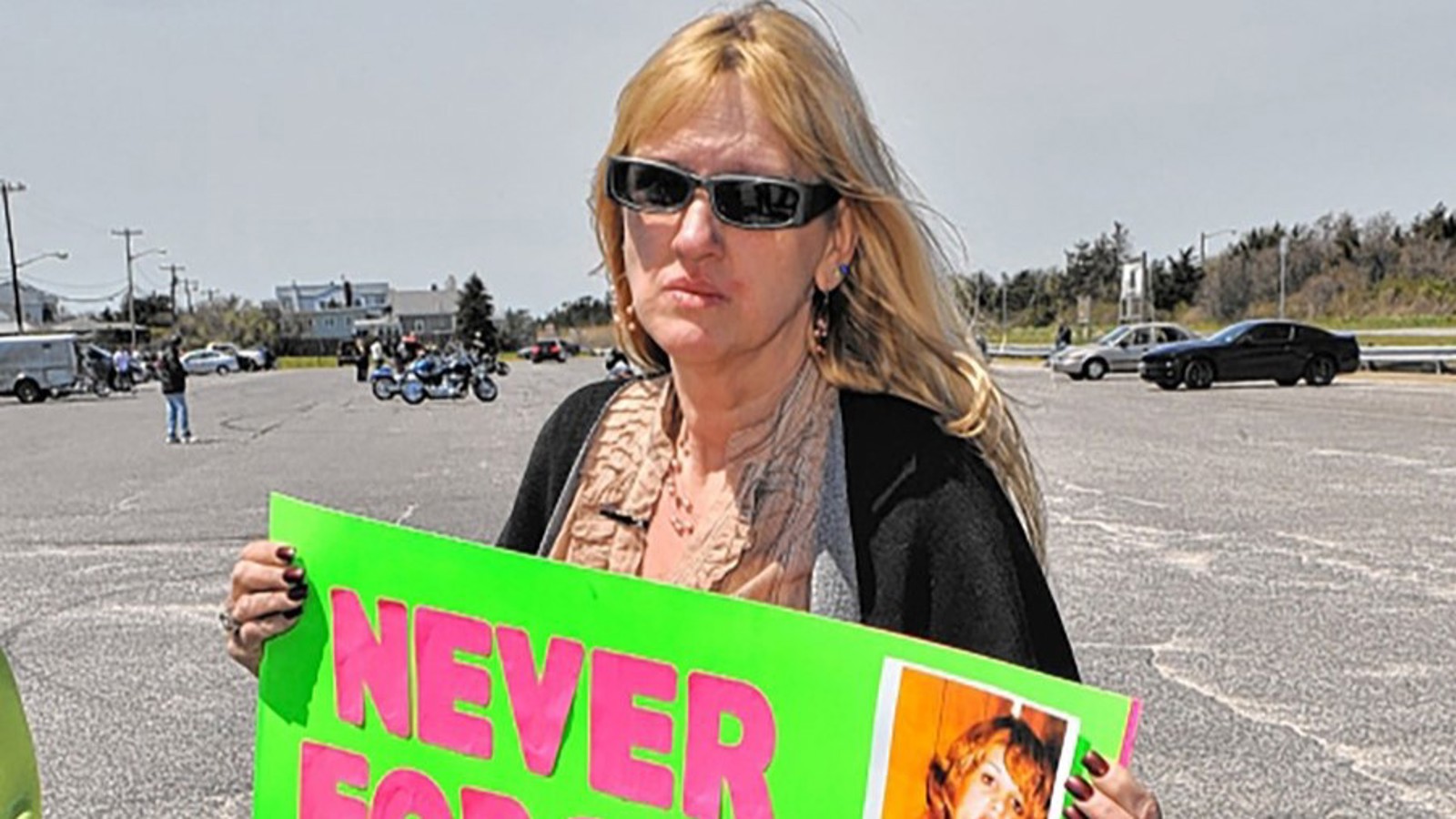
How Mari Gilbert Died: The Tragic Story, Trial, and Legacy of a True Crime Advocate
Mari Gilbert died on July 23, 2016, after being fatally stabbed by her youngest daughter, Sarra Gilbert, during a severe psychotic episode at an apartment in Ellenville, New York. Mari was a prominent victims' advocate whose relentless...
Mari Gilbert died on July 23, 2016, after being fatally stabbed by her youngest daughter, Sarra Gilbert, during a severe psychotic episode at an apartment in Ellenville, New York. Mari was a prominent victims' advocate whose relentless pressure on law enforcement following the 2010 disappearance of her eldest daughter, Shannan Gilbert, led to the discovery of the Gilgo Beach serial killer victims.
Contents
Who Was Mari Gilbert?
Mari Gilbert became a nationally recognized figure following the mysterious disappearance of her 24-year-old daughter, Shannan Gilbert, in May 2010. Shannan had traveled to Oak Beach, Long Island, working as an independent sex worker, when she called 911 in distress before vanishing into the night.
Frustrated by what she perceived as initial indifference from local authorities, Mari refused to let the case go cold. She organized rallies, spoke publicly to national media outlets, and persistently pressured the Suffolk County Police Department to search the barrier island where Shannan was last seen.
Mari’s relentless pushing forced a broader search of the brush along Ocean Parkway in late 2010. While searching for Shannan, law enforcement unexpectedly discovered the remains of four women wrapped in burlap—subsequently known as the "Gilgo Four." Continued searches over the following months uncovered additional human remains, bringing the total to at least ten victims connected to the Long Island serial killer (LISK) investigation.
Although police later found Shannan’s remains in a nearby marsh in December 2011 and officially posited her death as an accidental drowning in a marsh—a finding the Gilbert family and independent pathologists strongly contested—Mari’s insistence was universally credited as the catalyst that uncovered one of the most significant serial murder investigations in American history.
The Circumstances of Mari Gilbert's Death in July 2016
On the afternoon of Saturday, July 23, 2016, police responded to a emergency call at an apartment complex on Warren Street in Ellenville, Ulster County, New York. Upon arrival, police officers discovered 52-year-old Mari Gilbert deceased inside the residence.
Mari had sustained severe, multiple trauma. Investigators determined that her 27-year-old daughter, Sarra Gilbert, had launched a violent attack against her mother. According to court records and police reports, Sarra stabbed Mari over 200 times with a kitchen knife and struck her with a heavy fire extinguisher.
Sarra Gilbert was arrested at the scene without incident and taken into custody by the Ellenville Police Department. Authorities confirmed that no one else was present in the apartment at the time of the homicide.
Background on Sarra Gilbert’s Mental Illness
The tragedy highlighted a profound and escalating mental health crisis within the Gilbert family. In the years following Shannan’s disappearance and death, Sarra experienced severe psychiatric deterioration. Court records and family statements revealed that Sarra had been diagnosed with schizophrenia and had experienced multiple psychotic episodes requiring psychiatric hospitalizations.
In the months leading up to the homicide, Sarra’s mental condition had degraded significantly:
- Discontinuation of Treatment: Sarra had repeatedly stopped taking her prescribed antipsychotic medications.
- Prior Violent Incidents: Months prior to the fatal attack, Sarra had been arrested after drowning a puppy in a bathtub in front of her young son.
- Threatening Behavior: Sarra had previously threatened family members, including her sister Stevie Gilbert, during delusional states.
Mari Gilbert had frequently attempted to intervene, driving Sarra to psychiatric facilities and attempting to manage her care while seeking legal custody of Sarra’s son to protect the child. It was during one of Mari’s check-in visits to assist her daughter that the fatal attack occurred.
The Investigation and Criminal Trial of Sarra Gilbert
Following her arrest on July 23, 2016, Sarra Gilbert was arraigned in Ulster County Court and charged with second-degree murder and criminal possession of a weapon in the fourth degree.
| Feature | LEGAL CASE PROFILE: PEOPLE V. GILBERT |
|---|---|
| Jurisdiction | Ulster County Supreme Court, New York |
| Defendant | Sarra Gilbert (Age 27 at arrest) |
| Victim | Mari Gilbert (Age 52) |
| Charges | Murder in the Second Degree; Criminal Possession of a Weapon in the Fourth Degree |
| Defense Strategy | Not Guilty by Reason of Mental Disease or Defect |
| Trial Outcome | Convicted on all counts (August 2017) |
| Sentence | 25 Years to Life in New York State Prison |
The Defense: Insanity Defense under New York Law
The criminal trial began in May 2017 in Ulster County Court, presided over by Judge Donald A. Williams. The primary focus of the proceedings was not whether Sarra had committed the physical act, but rather her legal sanity at the exact moment of the offense under New York State law.
Under New York Penal Law § 40.15, an affirmative defense of lack of criminal responsibility by reason of mental disease or defect requires the defense to prove that at the time of the conduct, the defendant lacked substantial capacity to know or appreciate either:
- The nature and consequences of such conduct; or
- That such conduct was wrong.
Defense attorney John Ray argued that Sarra was suffering from severe visual and auditory hallucinations, believing her mother was "evil" or a demon, and therefore lacked the legal capacity to understand the wrongfulness of her actions. Psychiatric experts called by the defense testified that Sarra suffered from undifferentiated schizophrenia and was experiencing an acute psychotic episode during the attack.
The Prosecution's Argument and Jury Verdict
The Ulster County District Attorney’s Office argued that while Sarra undoubtedly suffered from mental illness, her actions before, during, and immediately after the crime demonstrated functional awareness and legal sanity.
Prosecutors pointed to key evidence:
- Premeditation and Intent: Statements made by Sarra prior to the event indicating hostility toward Mari.
- Concealment and Behavioral Awareness: Evidence indicating that Sarra took steps to carry out the attack deliberately and recognized police presence immediately afterward.
- Psychiatric Rebuttal: Prosecution experts argued that voluntary cessation of medication did not automatically absolve a defendant of legal culpability if the defendant understood the immediate nature of stabbing someone.
On July 13, 2017, after deliberating for less than two days, the jury rejected the legal insanity defense and found Sarra Gilbert guilty of murder in the second degree. In August 2017, Judge Williams sentenced Sarra to the maximum allowed by law: 25 years to life in state prison.
Subsequent legal appeals attempting to overturn the verdict based on psychiatric testimony were denied by New York appellate courts, confirming her sentence.
Timeline of Key Events: The Gilbert Family and the LISK Investigation
The story of Mari Gilbert is intertwined with both personal family tragedy and one of the largest homicide investigations in the United States.
| Date | Event | Significance / Impact |
|---|---|---|
| May 1, 2010 | Shannan Gilbert disappears in Oak Beach, NY | Triggers initial missing persons search by Mari Gilbert. |
| December 2010 | Discovery of the "Gilgo Four" remains | Police find four bodies on Ocean Parkway while searching for Shannan. |
| December 2011 | Shannan Gilbert's remains found in Oak Beach marsh | Police rule death accidental; Mari Gilbert hires private pathologist to challenge ruling. |
| July 23, 2016 | Death of Mari Gilbert in Ellenville, NY | Mari is killed by daughter Sarra during a psychotic episode. |
| August 2017 | Sarra Gilbert sentenced to 25 years to life | Ulster County Court convicts Sarra of second-degree murder. |
| March 2020 | Release of the film Lost Girls on Netflix | Adapts Robert Kolker’s book, highlighting Mari’s advocacy work. |
| July 13, 2023 | Arrest of Rex Heuermann in LISK case | Task force arrests mass murder suspect tied to the Gilgo Beach homicides. |
Mari Gilbert's Lasting Legacy in True Crime and Public Advocacy
Mari Gilbert’s life was marked by heartbreak, but her legacy endures through her contribution to law enforcement accountability and victims' rights advocacy.
Exposing the Gilgo Beach Murders
Without Mari’s refusal to accept passive responses from police in 2010, the remains of the Gilgo Beach murder victims might have gone undiscovered for years. Her constant appearances on news networks and public protests kept press focus on Suffolk County law enforcement.
Her advocacy ultimately exposed severe institutional flaws within the local police department at the time—flaws that were later addressed when new leadership and an inter-agency task force took over the investigation. This renewed effort directly enabled the July 2023 arrest of suspect Rex Heuermann, who was charged in connection with multiple Long Island homicides.
Independent Pathology and Victims' Dignity
Mari was a pioneer in challenging official medical examiner findings regarding missing and marginalized individuals. When Suffolk County authorities ruled Shannan’s death an accidental drowning, Mari funded an independent autopsy performed by renowned forensic pathologist Dr. Michael Baden. The independent report suggested potential asphyxiation by strangulation, giving voice to the family's fight to keep Shannan's death classified as a homicide investigation.
Representation in Popular Culture
Mari Gilbert's struggle was chronicled in Robert Kolker's best-selling 2013 non-fiction book, Lost Girls: An Unsolved American Mystery. The book was later adapted into the 2020 feature film Lost Girls, starring Academy Award-nominated actress Amy Ryan as Mari Gilbert. The movie brought global awareness to how law enforcement historically treated cases involving sex workers, helping spark broader cultural conversations surrounding victim advocacy.
Frequently Asked Questions
When did Mari Gilbert die?
Mari Gilbert died on July 23, 2016, at the age of 52.
Who killed Mari Gilbert?
Mari Gilbert was killed by her youngest daughter, Sarra Gilbert, who stabbed her inside Sarra's Ellenville, New York home during a severe psychotic breakdown.
Was Sarra Gilbert found guilty or insane?
Sarra Gilbert's legal defense raised an affirmative insanity defense under New York law. However, the jury rejected the defense and convicted her of second-degree murder in July 2017. She was sentenced to 25 years to life in prison.
Did Mari Gilbert live to see an arrest in the Gilgo Beach murders?
No. Mari Gilbert passed away in 2016. The primary suspect in the Gilgo Beach murders, Rex Heuermann, was not arrested until July 13, 2023, nearly seven years after Mari's death.
How was Shannan Gilbert's death related to Mari Gilbert's activism?
Shannan Gilbert was Mari's eldest daughter who vanished in May 2010. Mari's persistent demands for police action led to the discovery of multiple sets of human remains along Ocean Parkway. Mari maintained until her death that Shannan was murdered, contesting official police statements of an accidental marsh drowning.
Conclusion and Further Resources
The life of Mari Gilbert stands as a testament to the power of maternal persistence against systemic neglect. While her death was a tragic consequence of severe, untreated mental illness within her family, her activism reshaped how law enforcement handles missing persons cases involving vulnerable populations.
For those interested in exploring the legal frameworks, mental health defenses, and crime investigations surrounding this case:
- Consult the New York State Unified Court System for public records regarding criminal procedure and affirmative sanity defenses under New York Penal Law § 40.15.
- Review details on victim advocacy resources through the National Center for Victims of Crime.
- Learn more about resources for families managing severe mental health crises through the National Alliance on Mental Illness (NAMI).
Image Gallery