How to List Self-Insured Association Workers' Compensation in Kentucky
Navigating the requirements for self-insured association workers' compensation in Kentucky requires strict adherence to the regulations set forth by the Kentucky Department of Workers' Claims (DWC). To list or qualify as a self-insured...
Navigating the requirements for self-insured association workers' compensation in Kentucky requires strict adherence to the regulations set forth by the Kentucky Department of Workers' Claims (DWC). To list or qualify as a self-insured group, an association must prove collective financial solvency, establish an indemnity agreement among members, and submit comprehensive actuarial and administrative documentation to the Commissioner for formal approval.
Contents
Understanding Self-Insurance Associations in Kentucky
In the context of Kentucky workers' compensation, a self-insured group—often organized as an association—is a collective of employers in the same or similar industries who pool their resources to provide workers' compensation coverage for their employees. Unlike purchasing a traditional commercial insurance policy, these groups function as a private insurance mechanism, sharing the risk of work-related injury claims.
Under Kentucky Revised Statute (KRS) Chapter 342 and associated administrative regulations, these groups must be structured as nonprofit associations. The primary intent of these associations is to provide a stable, cost-effective alternative to the commercial insurance market. However, because the group is effectively assuming the liability for its members' claims, the state imposes rigorous oversight to ensure that the association remains solvent and capable of paying benefits to injured workers.
Prerequisites for Formation and Registration
Before an association can be "listed" or authorized to operate as a self-insured group in Kentucky, it must meet several threshold requirements. These are not merely administrative steps but legal obligations designed to protect the integrity of the workers' compensation system.
- Homogeneity: The members of the association must be engaged in similar industries. This ensures that the risk profile of the association is predictable and that underwriting can be performed accurately.
- Collective Financial Strength: The group must demonstrate, through audited financial statements of its members, that the collective entity possesses sufficient net worth to support the risks it intends to assume.
- Indemnity Agreements: Every member of the association must sign an agreement that explicitly states they are jointly and severally liable for all workers' compensation obligations incurred by the group during their period of membership. This is a critical legal protection for the state and the employees.
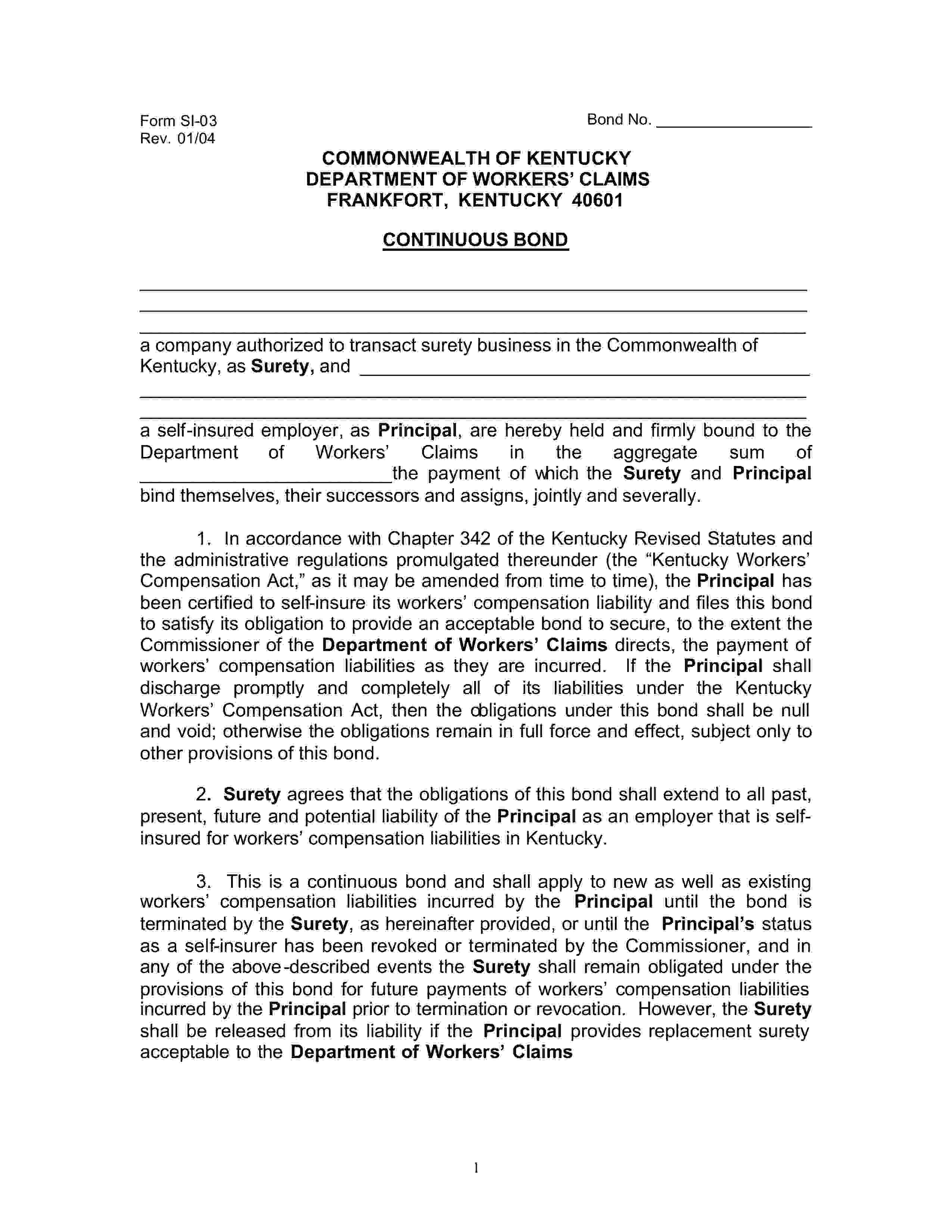
- Security/Collateral: The association must provide security—typically in the form of a surety bond, letter of credit, or cash deposit—to the Commissioner of the Department of Workers' Claims. This serves as a secondary guarantee should the association fail to meet its obligations.
The Application Process for Authorization
The process of "listing" the association begins with a formal application to the Kentucky Commissioner of the Department of Workers' Claims. This application is a detailed technical submission that must include the following components:
- Governing Documents: Articles of Incorporation, bylaws, and the association’s trust agreement. These documents must clearly define the management structure, the process for admitting new members, and the procedures for handling claims.
- Actuarial Analysis: A feasibility study conducted by a qualified actuary. This study must project the expected losses of the group and demonstrate that the proposed premium contributions are sufficient to cover those losses plus administrative expenses and a contingency margin.
- Administrative Services Plan: Detailed contracts with a Third-Party Administrator (TPA) that is licensed to handle workers' compensation claims in Kentucky. The TPA is responsible for the day-to-day processing of claims, medical management, and regulatory reporting.
- Financial Disclosures: A comprehensive financial statement that includes a pro-forma balance sheet for the association and evidence of the financial health of the initial members.
Once submitted, the Department of Workers' Claims conducts a review. This process involves verifying the actuarial assumptions and ensuring that the association’s management has the experience necessary to handle complex insurance operations.
Ongoing Operational Requirements
Once authorized, the association is not finished with its regulatory responsibilities. To remain in "good standing" or effectively listed as an authorized self-insured group, the association must adhere to several ongoing requirements:
- Annual Financial Reporting: The association must submit annual audited financial statements to the DWC. These statements must be prepared in accordance with Generally Accepted Accounting Principles (GAAP) and, in some cases, statutory accounting principles required by the state.
- Premium Audits: The association must perform payroll audits of its members periodically. Since workers' compensation premiums are tied to payroll, ensuring the accuracy of payroll reporting is vital for maintaining the solvency of the fund.
- Actuarial Certification: On an annual basis, a qualified actuary must certify the adequacy of the association’s loss reserves. This ensures that the association has set aside enough money to pay for claims that have been reported but not yet fully settled, as well as claims that have been incurred but not yet reported (IBNR).
- Regulatory Assessments: Self-insured groups in Kentucky are subject to various administrative assessments that fund the state’s workers' compensation system. These must be paid in a timely manner.
Comparison of Traditional Insurance vs. Self-Insured Associations
Choosing to form or join a self-insured association involves weighing the control gained against the liability assumed.
| Feature | Traditional Commercial Insurance | Self-Insured Association |
|---|---|---|
| Risk Exposure | Transferred to the insurer | Shared among association members |
| Costs | Premium-based with profit margins | Cost-based (claims + expenses) |
| Liability | Limited to premium payment | Joint and several liability |
| Management | Managed by the carrier | Managed by the board/TPA |
| Regulatory Burden | Minimal for the employer | High (reporting, audits, reserves) |
Troubleshooting Common Compliance Issues
Associations often run into difficulties during the renewal or reporting phase. Common issues include:
- Inadequate Reserves: If an association discovers that its actuarial projections were too optimistic, it must immediately take steps to collect additional assessments from members to address the deficit. Failing to do so can lead to the revocation of the self-insurance privilege.
- Membership Turnover: Rapid loss of members can destabilize the association’s funding. Governing documents should include clear exit clauses that require outgoing members to remain liable for claims incurred during their tenure.
- TPA Performance: If the Third-Party Administrator fails to report claims to the state in a timely manner or mismanages medical payments, the association remains legally liable. Regular performance audits of the TPA are essential.
Professional Legal and Actuarial Guidance
Because the formation and listing of a self-insured association involve complex insurance law and financial regulation, it is standard practice to engage specialized legal counsel and professional actuaries. Attorneys specializing in Kentucky workers' compensation law can ensure that the trust agreements and bylaws meet all current statutory requirements, while actuaries provide the mathematical foundation required to satisfy the state's solvency standards.
While this guide provides an overview of the regulatory path, please note that laws, administrative regulations, and Department of Workers' Claims procedures are subject to change. Readers should consult the official Kentucky Department of Workers' Claims website or qualified legal counsel to obtain the most current application forms and guidance relevant to their specific business association.
Frequently Asked Questions
What is the minimum number of employers needed to form an association? Kentucky does not mandate a rigid minimum number, but the group must be large enough to demonstrate actuarial credibility and risk diversification. Most associations require a sufficient number of members to ensure that the loss exposure is spread adequately.
Can an association change its Third-Party Administrator? Yes, but the change must be vetted and approved by the Department of Workers' Claims. The association must demonstrate that the new TPA is fully qualified and that the transition of claims data will be seamless to ensure no disruption in benefit payments.
What happens if an association becomes insolvent? If an association cannot meet its obligations, the DWC will trigger the security posted by the association. Additionally, because members are jointly and severally liable, the individual members may be held responsible for the remaining debts of the association.
How often must an association submit financial reports? In addition to annual audited financial reports, the DWC may require interim reports if there are signs of financial instability or if the department deems it necessary to monitor the group’s performance closely.
Are there specific industries that cannot form self-insured associations? Certain high-risk industries may face stricter scrutiny. While the law allows for associations of similar employers, the DWC retains the discretion to deny an application if the risk profile is deemed unmanageable or contrary to the public interest.
Recommendation for Next Steps
To begin the process of establishing a self-insured association in Kentucky, the organizing committee should first conduct a preliminary feasibility study to determine if the collective payroll and claim history support a self-insured model. Following a positive feasibility result, contact the Kentucky Department of Workers' Claims to request the current application packet and arrange a preliminary consultation with a regulatory compliance officer.
Image Gallery