The Complete 2026 Guide on How to Get to Nashville: Air, Road, Rail, and Transit Strategies
Navigating your journey to Music City requires understanding the distinct transit corridors, airport modernizations, and regional highway updates active in 2026. Whether you are arriving for a corporate convention downtown, a weekend e...
Navigating your journey to Music City requires understanding the distinct transit corridors, airport modernizations, and regional highway updates active in 2026. Whether you are arriving for a corporate convention downtown, a weekend exploring Lower Broadway, or relocating to Middle Tennessee, selecting the right mode of transportation depends on your departure point, budget, and timeline.
Contents
Flying into Nashville International Airport (BNA)
Nashville International Airport (BNA) serves as the primary aviation gateway for the region. As of 2026, BNA continues to operate under ongoing terminal expansions to accommodate record-breaking passenger volumes, featuring expanded security checkpoints and modernized baggage handling systems.
Direct Flight Availability and Major Carriers
BNA is a focus city for several major domestic carriers and maintains extensive international routes. Direct flights connect Nashville to over 95 destinations across North America and Europe.
- Major Domestic Hubs: Frequent, multi-daily direct flights operate from Atlanta (ATL), Chicago (ORD/MDW), New York (JFK/LGA/EWR), Dallas (DFW/DAL), and Los Angeles (LAX).
- Low-Cost Carriers: Southwest Airlines maintains its heavy operational presence with a dedicated concourse, alongside robust schedules from Spirit, Frontier, and Allegiant.
- International Service: Transatlantic routes include direct seasonal and year-round flights to major European hubs such as London (LHR) and Frankfurt (FRA), alongside regular service to Canadian and Mexican destinations.
Navigating Ground Transportation from BNA
Once you land at BNA, moving from the terminal to your final destination involves several established options:
- Rideshare Services: Designated pickup zones for Uber and Lyft are located on the ground floor of the Terminal Garage 2, accessible via clearly marked overhead signage from the arrivals level.
- Taxis and Limousines: Flat-rate taxi services to downtown Nashville operate out of the ground transportation center with standard metered or zone-based fares.
- Rental Cars: The Consolidated Rental Car Facility houses major national brands and is accessible via a short, continuous shuttle bus loop from the lower-level curb.
- Public Transit Access: WeGo Public Transit Route 18 (Express) provides direct bus service connecting BNA to downtown Nashville stations, offering an economical alternative during peak weekday hours.
Driving and Road Travel Strategies to Middle Tennessee
Driving to Nashville offers flexibility and scenic routes through the rolling hills of Tennessee and surrounding states. The city sits at the convergence of three major interstate highways, making road travel a primary choice for regional visitors.
Navigating the Major Interstate Corridors
Understanding the layout of Nashville's ring roads and radial interstates prevents significant delays during peak commuting hours:
- Interstate 40 (I-40): Runs east-west across the country, connecting Nashville directly to Memphis to the west and Knoxville and Asheville to the east.
- Interstate 65 (I-65): Runs north-south, linking Nashville to Louisville and Chicago in the north, and Birmingham and mobile in the south.
- Interstate 24 (I-24): Connects Nashville northwest to Clarksville and St. Louis, and southeast to Chattanooga and Atlanta via connecting routes.
- Interstate 440 (I-440): Serves as a crucial urban bypass looping around the southern perimeter of downtown, connecting I-40, I-65, and I-24.
Traffic Management and Peak Congestion Windows
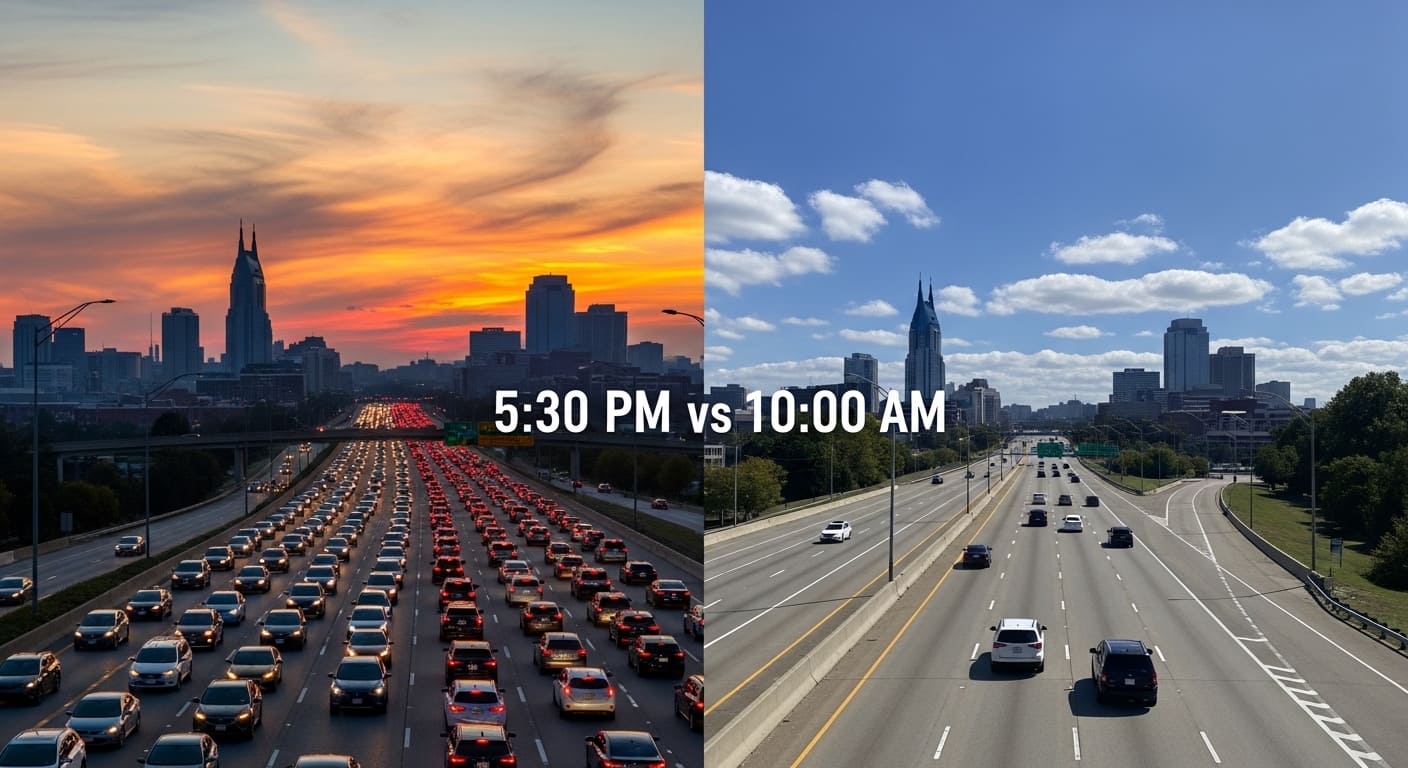
Metropolitan Nashville experiences predictable traffic surges. Planning your arrival outside these windows saves hours of transit time:
- Morning Rush Hour: 7:00 AM to 9:00 AM, heavily impacting inbound lanes on I-65 and I-24.
- Evening Rush Hour: 4:00 PM to 6:30 PM, characterized by heavy congestion on outbound corridors and the downtown loop around the Woodbridge and Silliman bridges.
- Event-Driven Delays: Major concerts at Nissan Stadium, Bridgestone Arena, or GEODIS Park generate severe localized traffic blocks. Checking real-time municipal traffic feeds before entering the downtown core is strongly recommended.
Alternative Transit: Buses, Regional Rail, and Intercity Travel
For travelers preferring ground-based public transit over personal vehicles or flights, several intercity options connect Nashville to regional hubs.
Intercity Bus Networks
Long-distance bus carriers operate out of centralized transit facilities, providing budget-friendly connections from surrounding cities.
- Greyhound and FlixBus: Provide frequent, scheduled service into downtown Nashville terminals from regional hubs like Louisville, Memphis, Chattanooga, and Atlanta.
- Tornado Bus Company: Offers specialized regional routes serving the local community with direct connections to southern markets.
Exploring Regional Rail and Commuter Options
While long-distance passenger rail service (such as Amtrak) does not currently operate a direct trunk line into Nashville, regional transit initiatives continue to evolve.
- The Music City Star: Operated by WeGo Public Transit, this commuter rail line connects the eastern suburb of Lebanon to downtown Nashville's Riverfront Station. It operates primarily during weekday morning and evening peak commuter hours, with occasional special event service for Titans games and downtown festivals.
Comparative Overview of Transit Options to Nashville
Choosing the best method to reach Nashville depends heavily on your origin distance, total travel budget, and preference for speed versus flexibility.
| Transit Mode | Average Travel Time (Regional) | Cost Range | Convenience Factor | Best Suited For |
|---|---|---|---|---|
| Commercial Air (BNA) | 1 - 5 hours (depending on origin) | Moderate to High | High (Speed) | Long-distance travelers, business professionals |
| Interstate Driving | 2 - 10 hours (within 500 miles) | Low to Moderate | High (Flexibility) | Regional travelers, families, road-trippers |
| Intercity Bus | 4 - 12 hours | Low | Moderate | Budget-conscious travelers, students |
| Commuter Rail (Music City Star) | 35-45 minutes (from Lebanon) | Very Low | Moderate (Limited Schedule) | Daily commuters, eastern suburban visitors |
Expert Travel Planning Note: When planning your arrival in 2026, always cross-reference major citywide convention schedules and stadium event calendars. Hotel rates and downtown traffic congestion fluctuate dramatically during peak tourism weekends and major festival dates.
Frequently Asked Questions About Traveling to Nashville
What is the closest airport to downtown Nashville?
Nashville International Airport (BNA) is the primary commercial airport, located just 8 miles southeast of downtown Nashville, typically a 15-to-20-minute drive depending on traffic. BNA is the only major commercial aviation facility serving the immediate metropolitan area.
Is there a direct train from major cities like Chicago or Atlanta to Nashville?
No direct long-distance Amtrak passenger rail lines currently connect to Nashville. Travelers coming from Chicago or Atlanta typically choose to fly into BNA or utilize interstate bus lines and personal vehicles for ground transit.
How do I get from Nashville International Airport to downtown without a car?
You can easily reach downtown Nashville from BNA by utilizing rideshare services (Uber and Lyft) located in Terminal Garage 2, taking a licensed airport taxi from the ground transportation curb, or riding the WeGo Public Transit Route 18 express bus.
What are the worst times to drive on Nashville interstates?
Weekday rush hours between 7:00 AM to 9:00 AM and 4:00 PM to 6:30 PM consistently see heavy congestion on I-65, I-24, and the I-440 loop. Additionally, major events at downtown venues generate significant traffic delays on weekends.
Can I get around Nashville without renting a car?
Yes, if you stay within the core downtown neighborhoods such as SoBro, The Gulch, MidTown, and East Nashville. These areas are heavily walkable and serviced by rideshares, electric scooters, and WeGo public bus routes, though a car is beneficial for exploring outer neighborhoods and regional parks.
Ready to plan your trip? Map out your specific route, check live traffic and airport parking availability, and book your accommodations in advance to secure the best rates for your journey to Nashville.
Image Gallery