Comprehensive 2022 Portugal World Cup Squad Overview: Analysis, Roster, and Performance
The Portugal 2022 FIFA World Cup squad was a highly talented 26-man roster characterized by a transition between the "Golden Generation" veterans and a surging wave of elite young talent. Led by manager Fernando Santos, the team reache...
The Portugal 2022 FIFA World Cup squad was a highly talented 26-man roster characterized by a transition between the "Golden Generation" veterans and a surging wave of elite young talent. Led by manager Fernando Santos, the team reached the quarter-finals in Qatar, ultimately exiting after a 1-0 defeat to Morocco following a campaign defined by both tactical brilliance and high-profile internal narratives.
Contents
The Final 26: Positional Breakdown and Roles
The selection for the 2022 World Cup reflected the immense depth of Portuguese football at the time. Unlike previous tournaments where the team was often criticized for being overly reliant on a few individuals, the 2022 iteration featured starters from many of Europe’s top-tier clubs, including Manchester City, Paris Saint-Germain, and Manchester United.
Goalkeepers: A Changing of the Guard
The goalkeeping department signaled a definitive shift in the hierarchy. While Rui Patrício had been the undisputed number one for over a decade, including the Euro 2016 triumph, the 2022 tournament saw Diogo Costa of FC Porto take the starting role. Costa’s ability to play out from the back and his shot-stopping reflexes made him the modern choice for Fernando Santos. The veteran José Sá provided further depth, ensuring that Portugal had three reliable options between the posts.
Defenders: Experience Meets Versatility
Portugal’s defensive unit was anchored by the legendary Pepe, who, despite being 39 at the time, remained a vital physical and emotional leader. He was paired primarily with Rúben Dias, one of the world's premier center-backs. The full-back positions were particularly strong, featuring João Cancelo and Diogo Dalot on the right, and the explosive Nuno Mendes and Raphaël Guerreiro on the left. However, injuries to Nuno Mendes early in the tournament forced tactical adjustments, highlighting the importance of the squad's versatility. Danilo Pereira, primarily a defensive midfielder, was also utilized as a center-back before suffering a rib injury in training.
Midfielders: The Engine Room
The midfield was arguably the most balanced sector of the pitch. William Carvalho and Rúben Neves provided defensive stability and passing range, while João Palhinha acted as the primary "destroyer" when Portugal needed to protect a lead. The creative burden fell on Bruno Fernandes and Bernardo Silva. Fernandes, in particular, emerged as the team’s most productive player during the group stages, dictating the tempo and providing crucial goals and assists. Vitinha and Otávio offered more industrious, high-pressing options that allowed Santos to tweak his tactics based on the opponent.
Forwards: The Evolution of the Front Line
The attacking selection was dominated by the presence of Cristiano Ronaldo, who was appearing in his fifth World Cup. However, the emergence of João Félix, Rafael Leão, and Gonçalo Ramos provided Portugal with multiple ways to attack. Leão offered blistering pace off the bench, while Félix operated in a "free role" that connected the midfield to the attack. Ricardo Horta and André Silva rounded out the attacking options, providing tactical flexibility for late-game scenarios.
| Position | Player | Club (at time of tournament) |
|---|---|---|
| GK | Diogo Costa | FC Porto |
| GK | Rui Patrício | AS Roma |
| GK | José Sá | Wolverhampton Wanderers |
| DF | Pepe | FC Porto |
| DF | Rúben Dias | Manchester City |
| DF | João Cancelo | Manchester City |
| DF | Nuno Mendes | Paris Saint-Germain |
| DF | Diogo Dalot | Manchester United |
| DF | Raphaël Guerreiro | Borussia Dortmund |
| DF | António Silva | SL Benfica |
| DF | Danilo Pereira | Paris Saint-Germain |
| MF | Bruno Fernandes | Manchester United |
| MF | Bernardo Silva | Manchester City |
| MF | Rúben Neves | Wolverhampton Wanderers |
| MF | William Carvalho | Real Betis |
| MF | João Palhinha | Fulham |
| MF | Vitinha | Paris Saint-Germain |
| MF | Otávio | FC Porto |
| MF | João Mário | SL Benfica |
| MF | Matheus Nunes | Wolverhampton Wanderers |
| FW | Cristiano Ronaldo | Unattached / Manchester United |
| FW | João Félix | Atlético Madrid |
| FW | Rafael Leão | AC Milan |
| FW | Gonçalo Ramos | SL Benfica |
| FW | André Silva | RB Leipzig |
| FW | Ricardo Horta | SC Braga |
Tactical Philosophy and the Fernando Santos Approach
In 2022, Fernando Santos attempted to evolve Portugal’s historically pragmatic style into something more expansive. With the technical quality of Bruno Fernandes and Bernardo Silva, Portugal transitioned from a "defend first" mentality to a system that prioritized ball retention and positional interchange.
The primary formation was a fluid 4-3-3 that often looked like a 4-2-3-1 or a 4-1-2-1-2 (Diamond) depending on the positioning of the midfielders. The tactical flexibility was most evident in the way the full-backs were utilized. Diogo Dalot and João Cancelo were encouraged to invert or overlap, providing width that allowed players like João Félix to drift into central "half-spaces" where they could be most dangerous.
A significant tactical debate throughout the tournament involved the role of the "number 6." Rúben Neves was often favored for his long-range passing and ability to switch play, but João Palhinha was frequently called upon when the team faced more physical or counter-attacking threats. This balance between creativity and defensive solidity was a hallmark of Santos's management, though it sometimes drew criticism for being too cautious in high-stakes moments.
The Cristiano Ronaldo Narrative and the Switzerland Shift
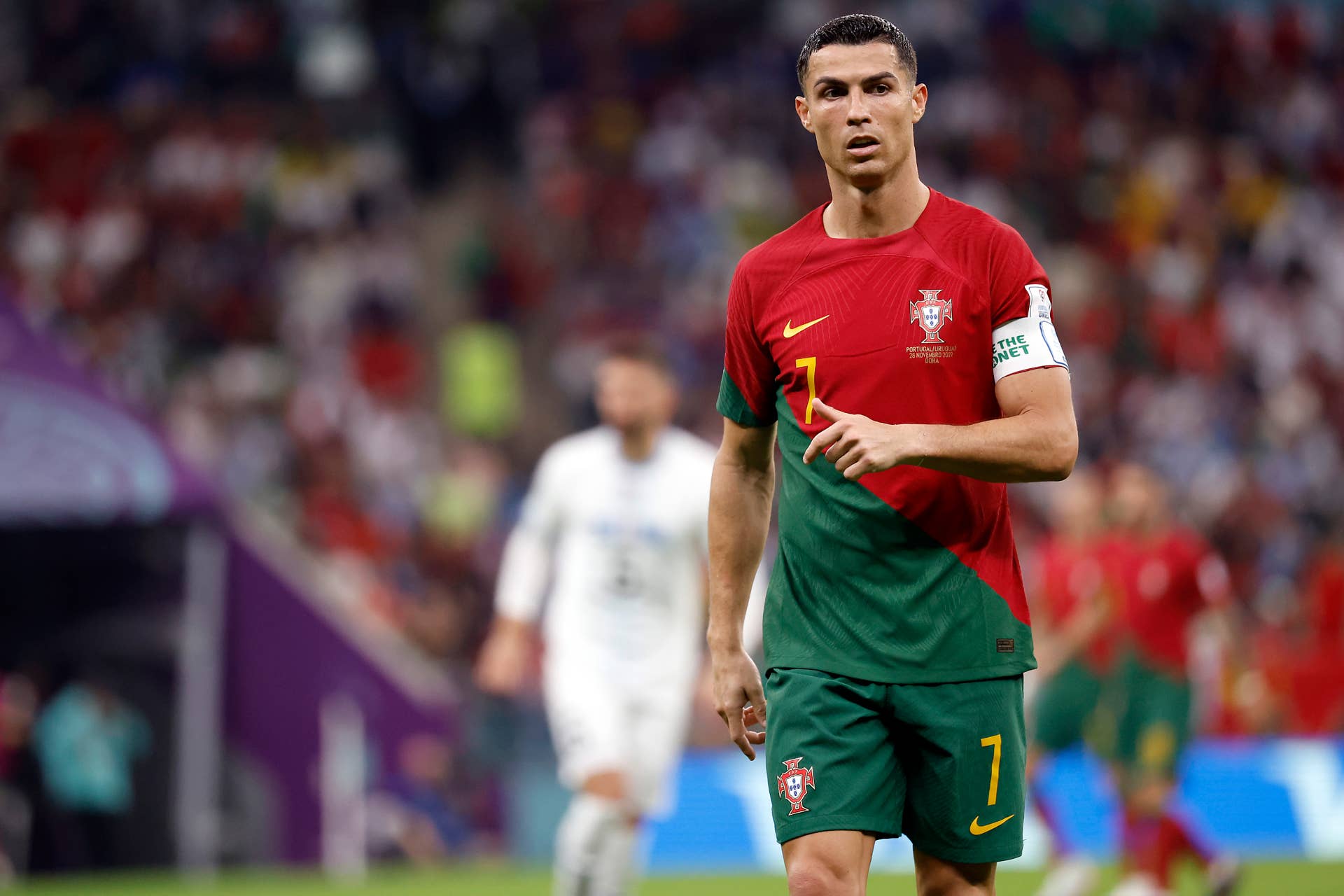
No overview of the 2022 Portugal squad is complete without discussing the role of Cristiano Ronaldo. Entering the tournament following a tumultuous exit from Manchester United, Ronaldo started all three group games. However, a moment of friction during the final group match against South Korea led Fernando Santos to make a bold tactical decision for the Round of 16 match against Switzerland.
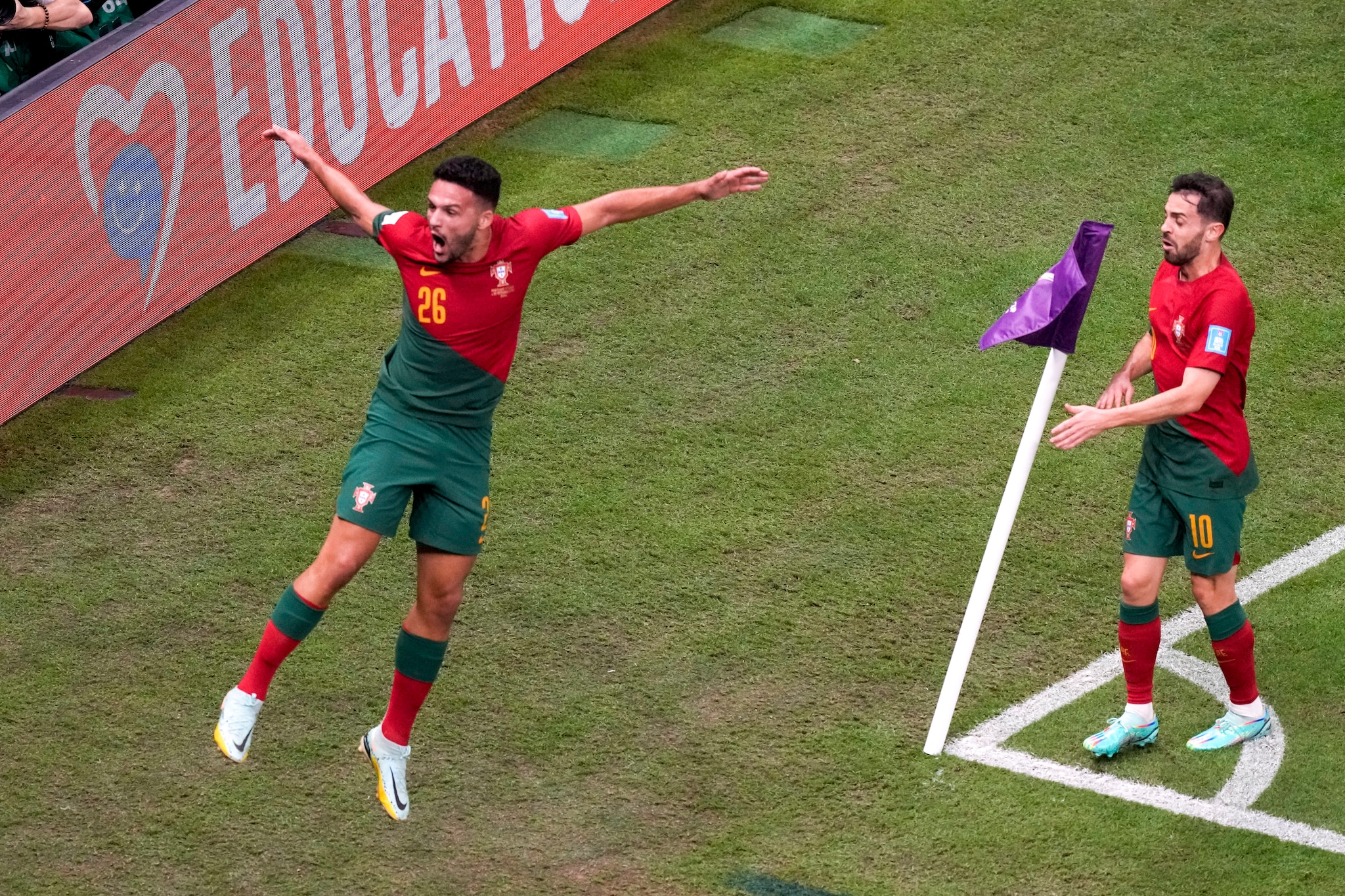
For the first time in a major tournament knockout game since 2004, Ronaldo was named as a substitute. His replacement, the 21-year-old Gonçalo Ramos, scored a historic hat-trick in a 6-1 demolition of Switzerland. This performance validated Santos's decision and suggested that the team functioned more fluidly with a mobile, pressing striker who could stretch the opposition defense. The "Ramos over Ronaldo" decision became the defining talking point of Portugal's campaign, signaling a transition toward a post-Ronaldo era that would eventually be fully realized under subsequent management.
Key Performance Drivers: Who Stood Out?
While the headlines often focused on the veteran stars, several players established themselves as the true technical leaders of the squad.
- Bruno Fernandes: Statistically and creatively, Fernandes was the heartbeat of the team. His brace against Uruguay ensured qualification for the knockout rounds, and his ability to find pockets of space between the lines made him the primary outlet for every transition.
- João Félix: The 2022 World Cup was arguably Félix's most consistent showing for the national team. Playing with a level of freedom not always afforded to him at the club level, his link-up play and vision were essential in breaking down low-block defenses.
- Pepe: Even in his late 30s, Pepe's physical dominance and reading of the game were peerless. His goal against Switzerland made him the oldest player to score in a World Cup knockout match, cementing his status as a legendary figure in Portuguese sports history.
- Diogo Dalot: After starting the tournament on the bench, Dalot's performances eventually earned him a starting spot over the more established João Cancelo. His defensive discipline combined with his offensive timing provided a better balance on the right flank during the latter stages of the tournament.
Tournament Progression: Group H to the Quarter-Finals
Portugal’s path through Qatar was a mixture of dominance and sudden vulnerability. They were placed in Group H alongside Ghana, Uruguay, and South Korea.
- Portugal 3-2 Ghana: A nervous opening match that saw Portugal nearly throw away a lead in the dying seconds. Ronaldo opened the scoring via a penalty, becoming the first player to score in five World Cups.
- Portugal 2-0 Uruguay: A tactical masterclass where Bruno Fernandes scored twice. This victory secured progression with a game to spare, allowing Santos to rotate the squad.
- South Korea 2-1 Portugal: A rotated side struggled to maintain rhythm, losing to a late South Korean goal. While the result didn't affect their top-spot finish, it created the internal tension that led to the benching of Ronaldo.
- Portugal 6-1 Switzerland: Widely considered the best performance of the Santos era. The team played with breathtaking speed and precision, with Gonçalo Ramos delivering one of the great individual World Cup debuts.
- Morocco 1-0 Portugal: The quarter-final exit. Despite dominating possession and creating several late chances, Portugal could not break down Morocco’s historic defensive organization. A solitary goal from Youssef En-Nesyri ended Portugal’s dreams of a first World Cup title.
Frequently Asked Questions
Why was Cristiano Ronaldo benched during the 2022 World Cup?
Manager Fernando Santos cited "tactical reasons" for benching Ronaldo in the Round of 16 against Switzerland. While there was an incident involving Ronaldo’s reaction to being substituted against South Korea, Santos maintained the decision was based on the need for a different type of mobility in the attacking line, which Gonçalo Ramos provided.
Who was the top scorer for Portugal in the 2022 World Cup?
Gonçalo Ramos was Portugal's top scorer with three goals, all of which came in the single match against Switzerland. Bruno Fernandes and Rafael Leão followed with two goals each.
Which players missed the 2022 World Cup due to injury?
The most notable absence was Diogo Jota, who suffered a calf injury while playing for Liverpool shortly before the tournament. Additionally, Pedro Neto and Ricardo Pereira were ruled out with long-term injuries, depriving the squad of further attacking and defensive depth.
How did Diogo Costa perform as the starting goalkeeper?
Diogo Costa had a generally strong tournament, but he was scrutinized for a late error against Ghana that almost cost Portugal the win and for being beaten in the air for Morocco's winning goal in the quarter-final. Despite these moments, he remained the first-choice keeper due to his superior distribution.
Was this Fernando Santos's last tournament as manager?
Yes. Following the quarter-final exit against Morocco, the Portuguese Football Federation (FPF) and Fernando Santos agreed to terminate his contract. His eight-year tenure, which included winning Euro 2016 and the 2019 Nations League, concluded after the 2022 campaign.
Final Perspective and Legacy
The 2022 Portugal World Cup squad represented a significant "what if" in the nation’s footballing history. On paper, it was perhaps the most complete squad Portugal had ever sent to a FIFA World Cup, possessing world-class talent in every position and a healthy mix of youth and experience. The 6-1 victory over Switzerland remains a testament to the heights this group could reach when clicking.
However, the campaign also highlighted the challenges of managing a generational transition in the spotlight of the world’s biggest stage. As we look back from 2026, the 2022 tournament is seen as the catalyst for the modern, high-pressing style that Portugal now employs. For fans and analysts, it serves as a reminder that while individual talent is necessary, tactical cohesion and the management of squad dynamics are what ultimately decide World Cup success.
Image Gallery