Understanding Auto Insurance Public Liability Coverage: Limits, Requirements, and Protection
Auto insurance public liability coverage pays for bodily injuries and property damage that you or authorized drivers cause to third parties in a motor vehicle accident. It covers medical bills, lost wages, legal defense costs, and phys...
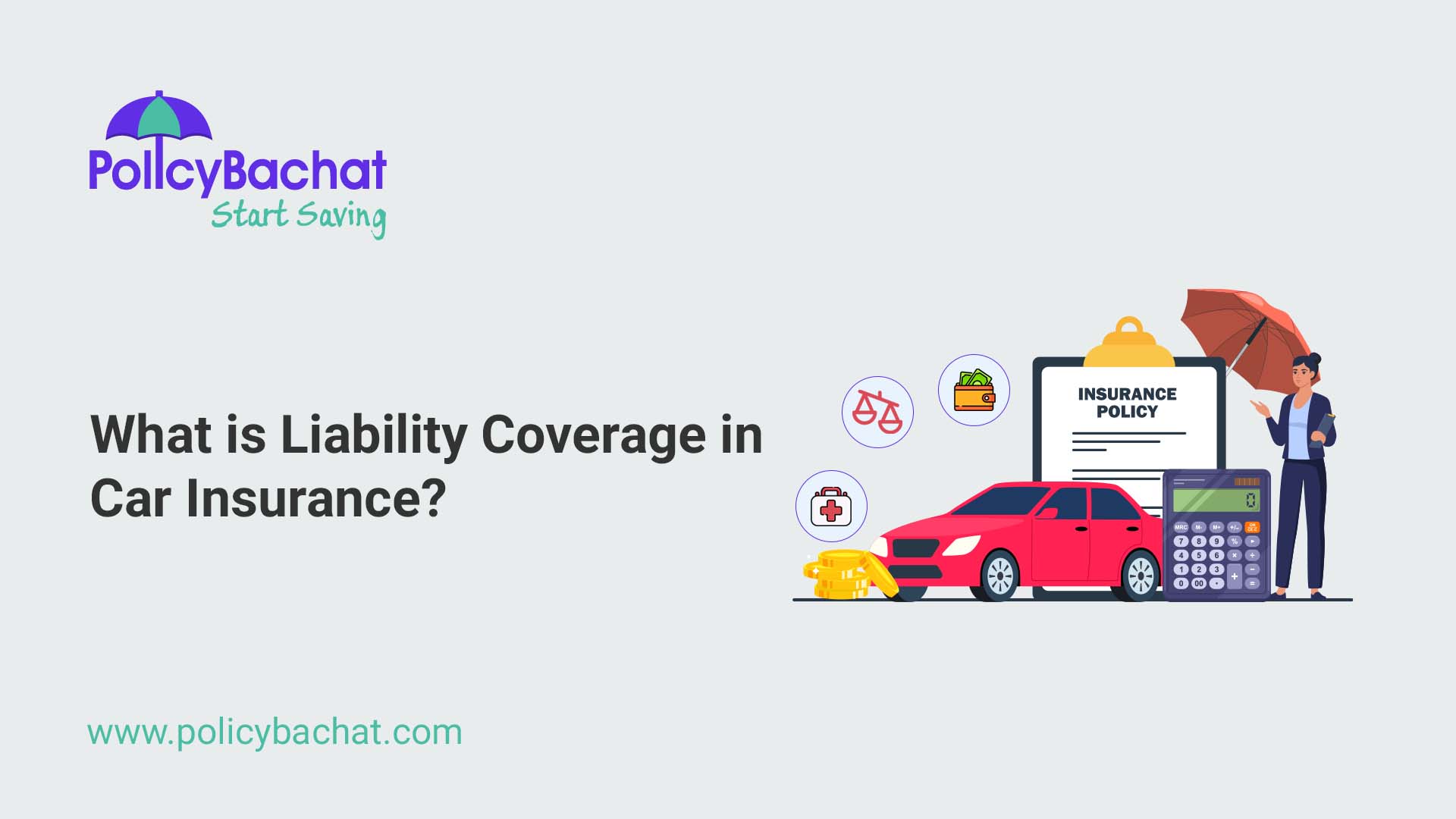
Auto insurance public liability coverage pays for bodily injuries and property damage that you or authorized drivers cause to third parties in a motor vehicle accident. It covers medical bills, lost wages, legal defense costs, and physical damage sustained by other people, shielding your personal or business assets from devastating lawsuits and financial claims.
Contents
What Is Auto Insurance Public Liability Coverage?
In motor insurance, public liability coverage—frequently referred to simply as liability insurance or third-party liability coverage—is the foundational layer of protection in almost every auto insurance policy. When an insured vehicle is involved in an accident and the driver is found at fault, public liability coverage steps in to indemnify third parties who suffer physical harm or property loss as a result.
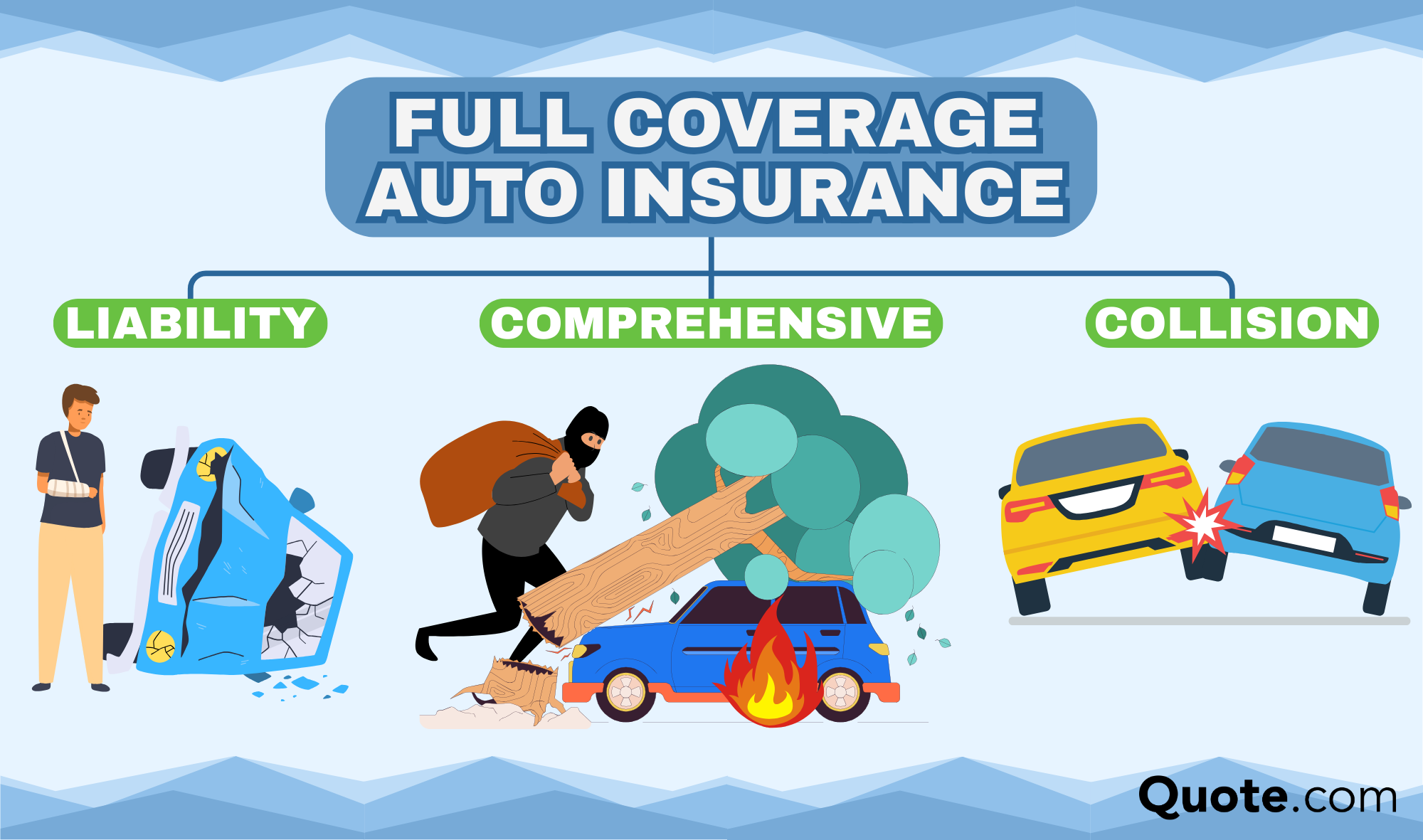
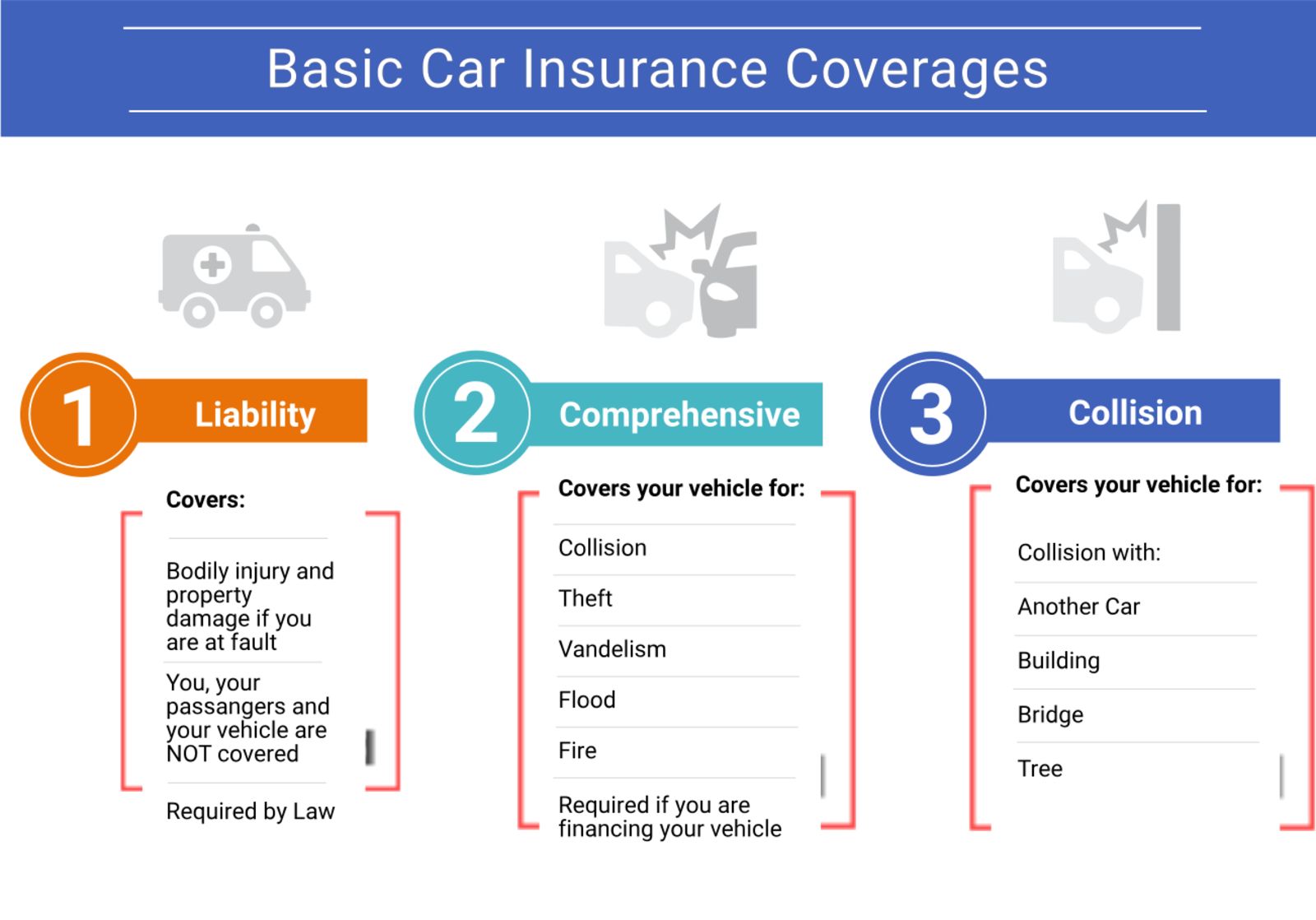
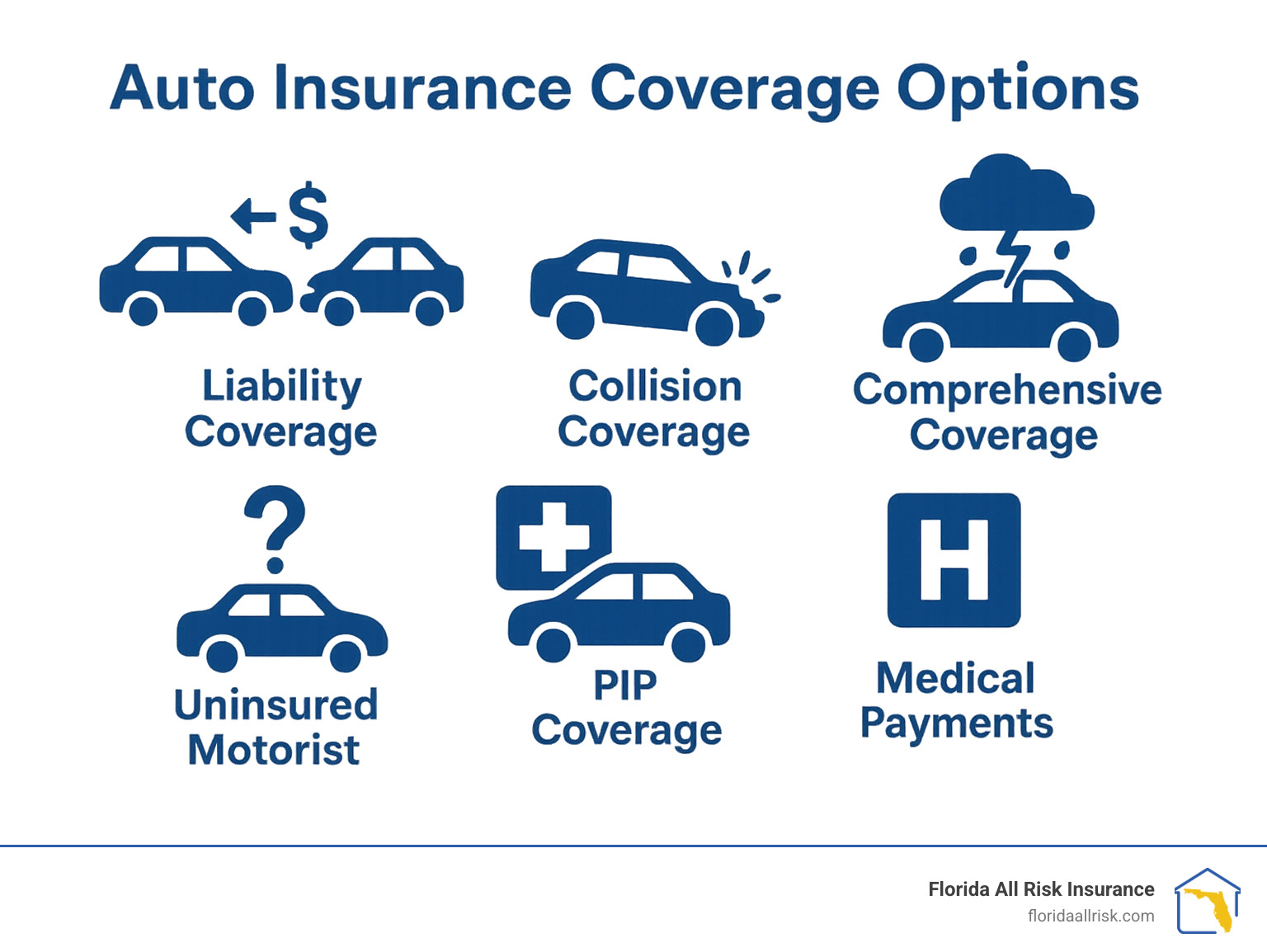
Unlike first-party insurance policies that cover damage to your own vehicle or personal medical bills (such as collision, comprehensive, or personal injury protection), public liability is exclusively third-party coverage. It exists to satisfy your legal obligation to members of the public—including pedestrians, passengers in other vehicles, cyclists, and property owners—who suffer losses due to your negligence behind the wheel.
For both individual vehicle owners and commercial fleet operators, maintaining adequate liability protection is not merely a legal requirement across most jurisdictions; it is a critical safeguard against personal bankruptcy or business insolvency following a serious auto accident.
Personal Auto Liability vs. Commercial Public Liability
It is essential to distinguish how liability risks are treated in personal driving contexts versus business operations, as insurers structure these policies differently.
- Auto Liability Insurance Types
- Personal Auto Policy (PAP)
- Standard individual drivers
- Fixed split liability limits
- Non-commercial driving
- Commercial Auto Policy (BAC)
- Business operations & fleets
- Combined Single Limits (CSL)
- Public liability endorsements
- Personal Auto Policy (PAP)
Personal Auto Policies (PAP)
On standard individual auto policies, public liability is divided into two distinct sub-coverages: Bodily Injury Liability (BI) and Property Damage Liability (PD). These policies protect you, family members living in your household, and individuals driving your car with your permission, provided the vehicle is being used for personal, non-commercial purposes.
Commercial Auto Policies & Public Liability Endorsements
When a vehicle is used for commercial enterprise—such as delivering goods, transporting passengers for hire, carrying heavy equipment, or running service calls—a standard personal auto policy will not cover resulting liabilities. Businesses require a Commercial Auto Policy (CAP) or Business Auto Coverage (BAC) form.
In commercial sectors, regulatory agencies such as the Federal Motor Carrier Safety Administration (FMCSA) strictly enforce mandatory public liability financial responsibility limits for interstate freight and passenger carriers. Commercial policies often integrate broader general public liability concepts to cover risks associated with loading and unloading cargo, specialized equipment operation, and expanded third-party injury risks on public roads.
Core Components of Public Liability Coverage
Understanding auto liability coverage requires examining its primary components and how insurers calculate payout thresholds during a claim.
- Components of Public Liability Coverage
- Bodily Injury Liability
- Medical expenses & surgery
- Rehabilitation & physical therapy
- Lost earnings & future wages
- Pain, suffering & distress
- Funeral & burial costs
- Property Damage Liability
- Vehicle repair / market value
- Structures (fences, buildings)
- Utility poles & municipality
- Stationary personal property
- Loss of use compensation
- Bodily Injury Liability
1. Bodily Injury Liability (BI)
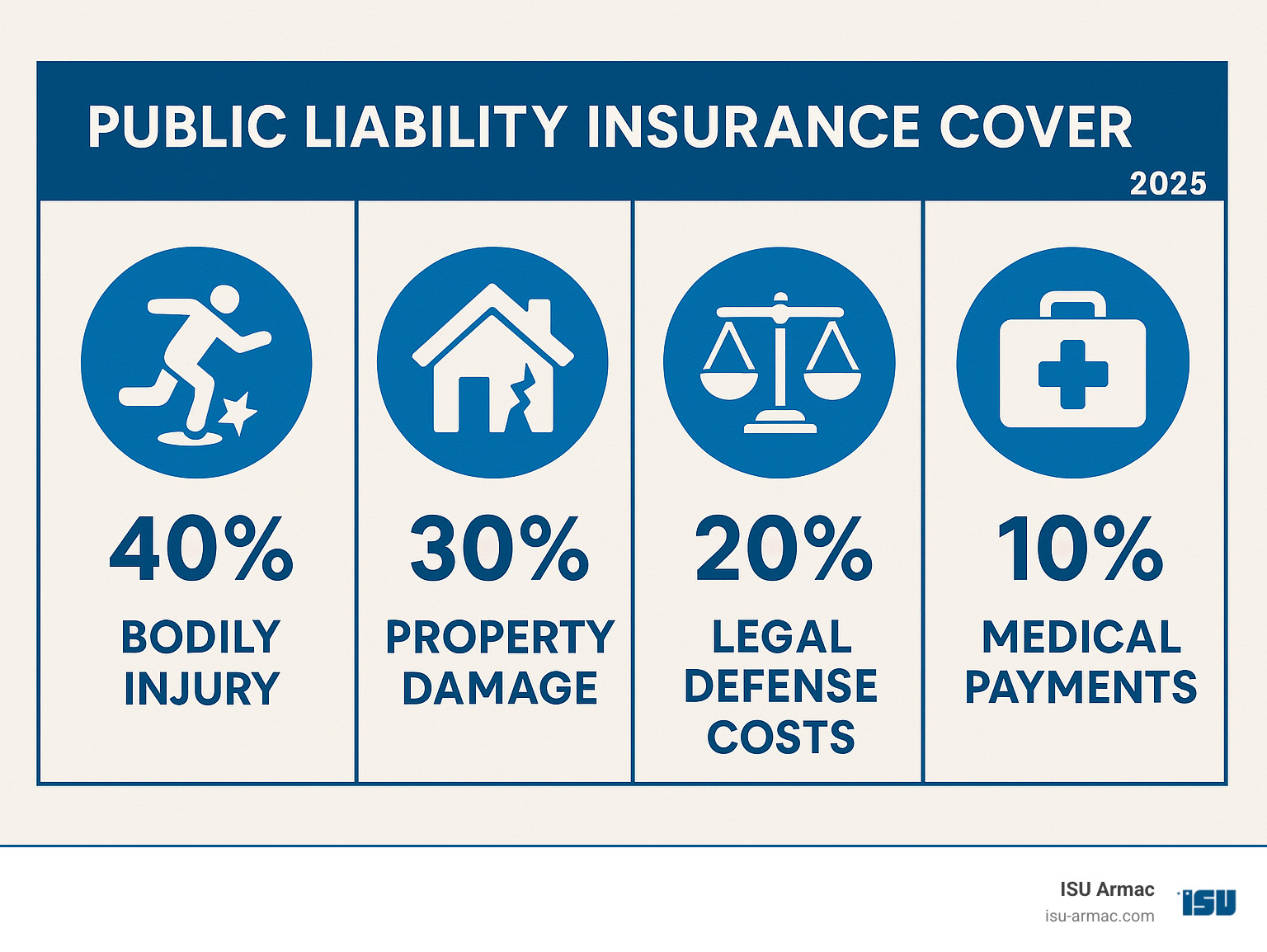
Bodily Injury Liability covers physical harm caused to third parties when you are at fault in a collision. Eligible claims under BI include:
- Medical and Surgical Expenses: Emergency room care, hospital stays, surgical procedures, doctor visits, and prescription medications.
- Rehabilitation and Long-Term Care: Physical therapy, specialized equipment, home care assistance, and vocational rehabilitation.
- Lost Earnings and Loss of Earning Capacity: Compensation for time missed from work during recovery, as well as reduced future earning capacity if the victim suffers permanent disability.
- Pain and Suffering: Non-economic damages awarded for physical pain, emotional distress, and reduced quality of life.
- Funeral and Burial Costs: Expenses resulting from fatal motor vehicle collisions.
2. Property Damage Liability (PD)
Property Damage Liability compensates third parties for destruction or damage inflicted upon their tangible property. Covered property items include:
- Other Motor Vehicles: Repair costs or fair market cash value if the victim's vehicle is declared a total loss.
- Real Estate and Fixed Structures: Buildings, storefronts, residential walls, fences, driveways, and landscaping.
- Public Utility Infrastructure: Traffic lights, guardrails, lamp posts, utility poles, and municipal signage.
- Personal Belongings: Items inside the victim's vehicle that were damaged in the crash, such as laptops, luggage, child safety seats, or cargo.
- Loss of Use: Rental vehicle expenses incurred by the victim while their primary automobile is undergoing repairs.
3. Legal Defense Coverage
A critical, often overlooked benefit of public liability insurance is the legal defense provision. If a third party files a civil lawsuit against you following an accident, your insurance carrier is contractually obligated to provide legal representation.
In most standard personal auto policies, legal defense costs—including legal fees, court filing expenses, and expert witness retainers—are paid in addition to your policy’s liability limits. This means defense spending does not reduce the pool of funds available to pay settlements or court judgments.
Structure of Liability Limits: Split Limits vs. Combined Single Limit
Insurance companies express liability policy thresholds using either a split limit format or a combined single limit (CSL) structure. Selecting the appropriate structure affects how financial protection is distributed after an incident.
- Policy Limit Structures
- Split Limits (e.g., 100/300/50)
- $100k Max per Injured Person
- $300k Max per Accident (BI)
- $50k Max Property Damage
- Rigid caps per category
- Combined Single Limit (CSL)
- Single total dollar cap (e.g., $500,000 total)
- Flexible allocation between injuries and property damage
- Split Limits (e.g., 100/300/50)
Split Limits
Split limits are standard in personal auto policies and are denoted by three figures separated by slashes (e.g., 100/300/50).
- First Figure ($100,000): The maximum dollar amount the insurer will pay for bodily injury per person in a single accident.
- Second Figure ($300,000): The maximum total dollar amount the insurer will pay for bodily injury per accident, regardless of how many people are injured.
- Third Figure ($50,000): The maximum total dollar amount the insurer will pay for property damage per accident.
Example: If an at-fault driver with a 50/100/25 policy injures two people in another vehicle—causing $60,000 in medical bills to Person A and $30,000 to Person B—the insurer will cap Person A’s payout at $50,000 (leaving the driver personally liable for the $10,000 balance). Person B’s $30,000 bill is fully covered because it falls under the per-person limit and the aggregate bodily injury cap of $100,000 is not exceeded.
Combined Single Limit (CSL)
A Combined Single Limit establishes one flat dollar amount (such as $300,000 or $500,000) that applies to all combined bodily injury and property damage claims arising from a single crash.
CSL policies offer greater flexibility because funds can be allocated wherever needed. If a crash results in $250,000 in medical bills and $40,000 in vehicle damage, a $300,000 CSL policy will cover the entire $290,000 claim without artificial sub-caps. CSL policies are common in commercial auto coverage and high-net-worth personal insurance portfolios.
Comparison Table: Auto Liability vs. Related Coverage Types
To understand public liability fully, it helps to review how it compares to other auto insurance coverages available on the market.
| Insurance Type | Primary Beneficiary | What It Covers | Mandatory by Law? | Standard Limit Structure |
|---|---|---|---|---|
| Bodily Injury Liability | Third Parties (Public) | Medical costs, lost wages, and pain/suffering of third parties | Yes (in almost all jurisdictions) | Split Limit or CSL |
| Property Damage Liability | Third Parties (Public) | Vehicle repairs, structure damage, public property damage | Yes (in almost all jurisdictions) | Split Limit or CSL |
| Collision Coverage | First Party (Insured) | Damage to your own vehicle resulting from an impact | No (Required by lenders if financed) | Actual Cash Value (less deductible) |
| Comprehensive Coverage | First Party (Insured) | Non-collision damage to your vehicle (theft, vandalism, weather) | No (Required by lenders if financed) | Actual Cash Value (less deductible) |
| Personal Injury Protection (PIP) | First Party & Passengers | Your own medical expenses and lost wages regardless of fault | Mandatory in no-fault states | Flat dollar cap per person |
| Uninsured/Underinsured Motorist | First Party & Passengers | Injuries/damage caused to you by an at-fault driver without adequate insurance | Mandatory in some states; optional in others | Split Limit or CSL |
How Much Public Liability Coverage Is Necessary?
State law sets minimum required liability limits across the United States, enforced by organizations like state departments of motor vehicles and tracked through regulatory bodies like the National Association of Insurance Commissioners (NAIC). However, legal minimums are rarely sufficient to protect assets in major accidents.
The Risk of Relying on State Minimums
State minimum liability requirements were established decades ago and have not kept pace with modern medical expenses and vehicle replacement costs. For instance, a state minimum limit of 25/50/25 requires only $25,000 of bodily injury coverage per person and $25,000 for property damage.
Consider a multi-vehicle accident on a highway:
- A modern luxury SUV or electric vehicle can easily cost over $50,000 to replace if total loss occurs.
- An emergency room visit, trauma surgery, and hospital stay can quickly exceed $100,000 per injured passenger.
If your policy limits are exhausted during a claim, injured third parties can pursue your personal assets—including savings accounts, investments, secondary real estate, and future wages—to collect outstanding judgments.
- Liability Exposure Beyond Policy Limits
- Total Claim Costs: $150,000 (Bodily Injury) + $60,000 (Property Damage)
- Total Damages: $210,000
- Low Policy (50/100/25): Insurer Pays $50,000 (BI) + $25,000 (PD) = $75,000
- Personal Exposure: Driver is Personally Liable for $135,000 Balance!
Recommended Liability Thresholds
Insurance consumer advocates and financial planners generally recommend that vehicle owners maintain limits of at least 100/300/100 for standard personal driving, and 250/500/100 for households with substantial personal assets.
For commercial fleets, businesses typically secure liability limits ranging from $1,000,000 to $5,000,000 per occurrence.
Umbrella Insurance Integration
Vehicle owners with high income, business ownership, or real estate holdings should consider an Commercial or Personal Umbrella Liability Policy. An umbrella policy sits on top of primary auto auto liability coverage, providing an additional $1,000,000 to $5,000,000 (or more) in public liability protection for relatively modest premium costs.
The Auto Liability Claims Process: Step-by-Step
When an accident occurs, navigating the public liability claim process systematically protects your legal and financial standing.
- Incident & Safety Check
- Evidence Collection & Police Report
- Policyholder Claim Reporting
- Carrier Investigation
- Settlement Negotiation
- Full Release of Liability Execution
Step 1: Incident & Safety Documentation
At the scene of an accident, prioritize medical attention for anyone injured. Call emergency services immediately. Collect evidence without admitting fault:
- Exchange names, contact details, driver's license numbers, and auto insurance information with all involved drivers.
- Take high-resolution photographs of vehicle positions, structural damage, skid marks, road conditions, and nearby traffic signals.
- Obtain contact details from independent witnesses.
Step 2: Law Enforcement Incident Report
Ensure a official police report is generated. Law enforcement officers document the scene, record driver statements, note citations issued, and construct an objective third-party summary of the accident. This report serves as key evidence during liability determinations.
Step 3: Prompt Insurer Notification
Report the incident to your insurance carrier as soon as possible. Most auto insurance contracts contain prompt reporting clauses; failing to report an incident within a reasonable timeframe can compromise your coverage.
Step 4: Liability Investigation
An insurance claims adjuster will be assigned to evaluate fault. The adjuster reviews police reports, inspects physical damage, interviews drivers and witnesses, and analyzes statutory traffic laws.
Step 5: Settlement Negotiations and Legal Defense
If fault is assigned to you, your insurer's legal claims team will negotiate directly with third-party claimants or their legal counsel. The carrier attempts to settle claims within your policy limits.
If a third party files a lawsuit, your insurer appoints defense counsel to represent you in court.
Step 6: Full Release of Liability
When your insurance company agrees to a financial settlement with a third party, the carrier requires the victim to sign a legally binding Release of All Claims. This document prevents the third party from pursuing any further legal actions or monetary claims against you or your insurer regarding the specified accident.
Common Exclusions in Public Liability Policies
Public liability insurance provides broad protection, but policies contain specific exclusions where coverage is voided. Understanding these exclusions prevents coverage gaps.
- Intentional Acts: Injury or property damage caused deliberately by the insured driver is excluded from coverage.
- Excluded Drivers: Individuals explicitly named as "Excluded Drivers" on your insurance endorsement form are not covered if they operate your car.
- Unapproved Business Usage: Using a personal vehicle for commercial purposes—such as rideshare driving (Uber/Lyft), commercial courier deliveries, or hauling commercial freight—without a business endorsement voids personal liability coverage.
- Owned Property: You cannot file a public liability claim against your own insurance policy for damage caused to your own vehicles, driveway, or house; property damage liability applies strictly to third parties.
- Vehicle Theft: If your vehicle is stolen and the thief causes an accident, public liability coverage does not apply to the thief's actions (though theft protection for your car falls under comprehensive insurance).
- Contractual Liability: Business auto policies usually exclude liability assumed under voluntary contracts unless covered by an insured contract endorsement.
Practical FAQs
What is the difference between public liability insurance and third-party liability auto insurance?
In general motor insurance terminology, "public liability coverage" and "third-party liability insurance" refer to the same fundamental concept: protection against financial claims made by members of the public (third parties) who suffer personal injury or property damage caused by your vehicle. In personal auto policies, this protection is split into Bodily Injury and Property Damage liability coverages.
Does public liability insurance pay to repair my own car after an accident?
No. Public liability insurance exclusively pays for damages and injuries caused to other people and their property. To cover damage to your own vehicle, you must purchase collision or comprehensive coverage.
What happens if damages exceed my public liability limits?
If claims exceed your policy limits, your insurer will pay up to the maximum policy threshold, and you become personally responsible for the remaining balance. Third parties can attempt to collect this balance by pursuing your personal bank accounts, investments, or garnishing future wages through court orders.
Are defense costs included within auto public liability limits?
In standard personal auto policies in the United States, defense costs are paid in addition to policy limits. This means legal fees will not deplete the dollar amount available to settle third-party claims. However, some commercial auto and specialized liability policies manage defense fees "inside" the policy limits, which reduces available coverage caps as legal expenses accumulate.
Does my auto public liability policy cover me when driving abroad?
Standard U.S. personal auto policies typically provide coverage within the United States, its territories, and Canada. They generally do not extend public liability coverage when driving in Mexico or other overseas destinations. Driving internationally usually requires purchasing dedicated local liability coverage or a specialized tourist auto policy.
Actionable Recommendations for Drivers and Business Owners
To safeguard your financial standing against vehicle liability risks, consider taking these practical steps:
- Review Current Coverage Limits: Inspect your insurance declarations page. If your policy shows minimum limits (e.g., 25/50/25), speak with an licensed agent to increase your limits to at least 100/300/100 or higher.
- Evaluate Asset Risk: Calculate your total net worth (including savings, investment portfolios, equity in secondary homes, and business assets). Ensure your combined auto liability and umbrella policy limits match or exceed your total net worth.
- Audit Vehicle Usage: If you use your personal vehicle for business errands, product delivery, or ridesharing, notify your insurer immediately to add an appropriate commercial or business use endorsement.
- Consolidate Policies with Umbrella Coverage: If you hold multiple vehicles or real estate properties, consider purchasing a $1 million or $2 million umbrella liability policy. Bundling auto and homeowners policies with the same carrier often yields discounts that offset the cost of umbrella coverage.
Disclaimer: This article provides educational information on auto liability insurance and is not legal or financial advice. Insurance policy structures, regulations, and mandatory minimums vary by jurisdiction and state law. Consult a licensed insurance broker or attorney for tailored guidance.
Image Gallery