Santa Barbara Shark Tours: Guide to Ocean Eco-Excursions and Coastal Wildlife
Santa Barbara shark tours offer visitors a unique window into the marine ecosystems of the Santa Barbara Channel and the Southern California coastline. Departing primarily from Santa Barbara Harbor, these surface-based boat charters, o...
Santa Barbara shark tours offer visitors a unique window into the marine ecosystems of the Santa Barbara Channel and the Southern California coastline. Departing primarily from Santa Barbara Harbor, these surface-based boat charters, ocean wildlife cruises, and guided coastal kayak excursions allow participants to observe wild sharks—including juvenile great whites, leopard sharks, and pelagic species—in their natural habitat while adhering to strict wildlife protection standards.
Contents
Overview of Shark Watching in Santa Barbara
The waters off Santa Barbara County represent one of North America's most dynamic marine environments. Situated along the Southern California Bight, where cold northern currents meet warmer southern waters, the Santa Barbara Channel provides critical habitat for diverse marine life. In recent years, local beach zones such as Padaro Beach near Carpinteria have gained scientific recognition as vital nursery grounds for juvenile great white sharks (Carcharodon carcharias).
Unlike coastal regions famous for underwater cage diving, shark encounters in Santa Barbara focus primarily on ecological viewing from above the surface. Guided tours, eco-charters, and coastal excursions center on respectful observation, education, and marine conservation.
Research conducted by institutions such as the California State University, Long Beach Shark Lab indicates that young white sharks utilize shallow nearshore waters because of abundant food sources, such as stingrays and flatfish, as well as warmer water temperatures that foster rapid growth.
Primary Shark Species Found in Local Waters
Excursions along the Santa Barbara coast and out into the Channel Islands National Marine Sanctuary encounter several distinct species, each occupying a unique ecological niche:
- Juvenile Great White Sharks (Carcharodon carcharias): Typically ranging from 4 to 9 feet in length, these young sharks frequent shallow coastal waters during warmer months. They pose minimal threat to humans as their primary prey consists of bottom-dwelling ocean life.
- Leopard Sharks (Triakis semifasciata): Recognizable by their distinctive saddle spots and dark markings, leopard sharks aggregate in calm bays, estuaries, and shallow sandy flats. They are completely harmless to humans and are frequently seen by kayakers and stand-up paddleboarders.
- Horn Sharks (Heterodontus francisci): Small, bottom-dwelling sharks with blunt heads and ridge-like spines on their dorsal fins. They inhabit rocky reefs and kelp forests around the Channel Islands.
- Pelagic Species (Shortfin Mako and Blue Sharks): Found further offshore in deeper waters of the Santa Barbara Channel, shortfin mako (Isurus oxyrinchus) and blue sharks (Prionace glauca) are occasionally spotted during deep-water wildlife charters and offshore pelagic birding trips.
Types of Shark Excursions and Tours Available
Visitors seeking a shark viewing experience in Santa Barbara can choose from several distinct excursion formats depending on their fitness level, budget, and desired proximity to the ocean.
- Santa Barbara Shark Sightseeing
- Boat Charters & Eco-Cruises
- SB Harbor departures
- Offshore channel focus
- Deep-water species
- Kayak / SUP Coastal Tours
- Shallow nursery beach trips
- Padaro & Carpinteria coastline
- Benthic & nursery species
- Coastal Eco Flight & Drones
- Aerial coastal views
- Scientific monitoring
- Zero ocean impact
- Boat Charters & Eco-Cruises
1. Motorized Boat Charters and Eco-Cruises
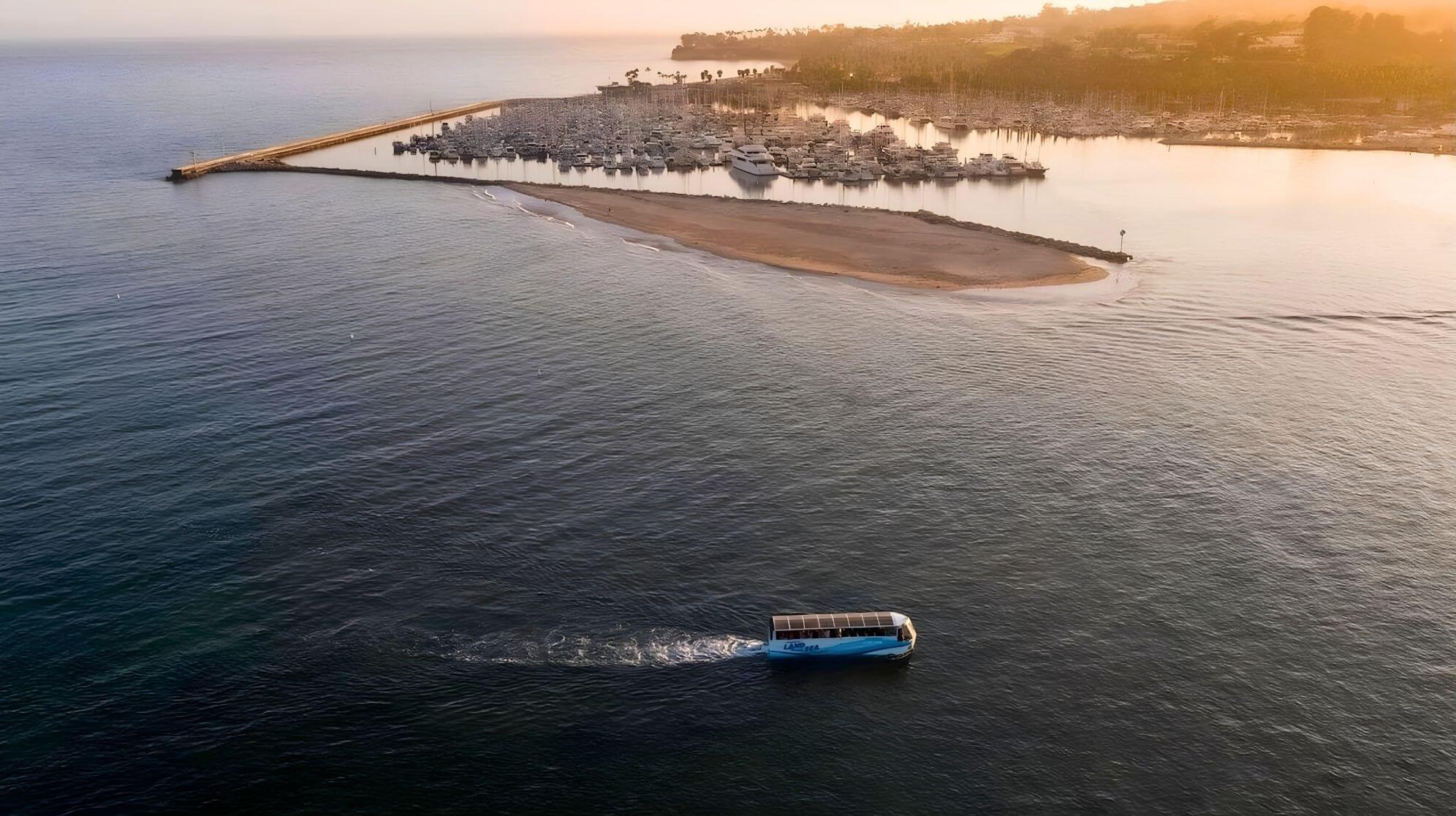
Departing directly from Santa Barbara Harbor, motorized boat charters travel into both coastal nursery stretches and deeper channel waters. Vessels range from rigid inflatable boats (RIBs) designed for high-speed ocean navigation to large commercial catamarans.
These trips often combine shark watching with broader marine mammal sightings, including blue whales, humpback whales, sea lions, and common dolphins. Captains and marine naturalists use visual spotters, depth finders, and local oceanographic updates to track shark activity.
2. Guided Kayak and Stand-Up Paddleboard (SUP) Coastal Excursions
For an intimate, low-impact encounter, guided kayak and paddleboard tours operate along shallow coastal shelf areas south of Santa Barbara proper, near Carpinteria and Summerland.
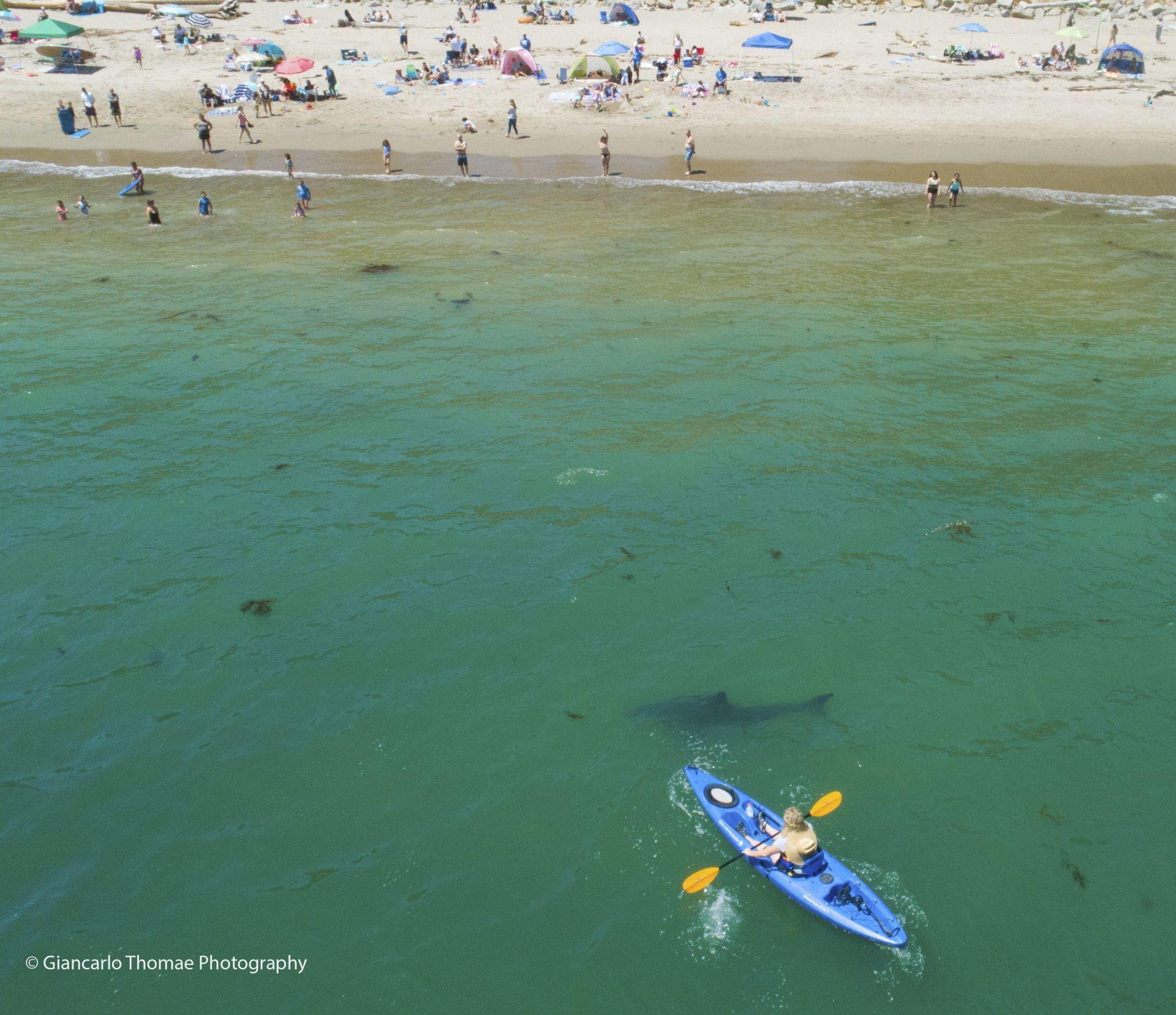
Led by local wilderness guides, paddlers glide quietly over shallow water nurseries where juvenile white sharks and leopard sharks swim along the sandy seabed beneath them. Because these non-motorized craft do not produce engine noise, wildlife behavior remains undisturbed.
3. Offshore Pelagic Wildlife Expeditions
Targeting deep-water marine species, specialized private charters travel toward the outer edges of the Channel Islands National Marine Sanctuary. These multi-hour expeditions focus on open-ocean life, where pelagic sharks such as makos and blues roam along temperature fronts and nutrient-rich upwellings.
Clarification on Cage Diving
A common misconception among travelers is that Santa Barbara offers underwater cage diving similar to Guadalupe Island or South Africa. Cage diving does not operate commercially out of Santa Barbara.
State environmental regulations governed by the California Department of Fish and Wildlife strictly prohibit the chumming, baiting, or harassment of protected white sharks within California state waters. As a result, all legitimate tour operators provide surface observation trips that prioritize natural wildlife interactions without artificial feeding or physical confinement.
Prime Locations and Seasonal Timing
Shark sightings in the Santa Barbara region follow seasonal oceanographic patterns and temperature shifts. Understanding when and where species congregate ensures realistic expectations for any tour.
| Location / Zone | Peak Season | Target Species | Tour Format | Typical Depth |
|---|---|---|---|---|
| Padaro Beach / Carpinteria Shelf | May – October | Juvenile Great White Sharks, Leopard Sharks | Kayak, SUP, Small Boat | 5 to 30 feet |
| Santa Barbara Harbor Outskirts | Year-round (Peak: Summer) | Leopard Sharks, Bat Rays, Pacific Angel Sharks | Small Motor Boat, Kayak | 10 to 50 feet |
| Channel Islands Outer Banks | Late Summer – Autumn | Shortfin Mako, Blue Shark, Adult White Shark (Transient) | Offshore Private Charter | 100 to 3,000+ feet |
| Goleta Kelp Beds | Spring – Late Summer | Horn Sharks, Leopard Sharks, Sevengill Sharks | Guided Dive/Kayak Tour | 15 to 60 feet |
Seasonal Breakdown
- Spring (April – June): Water temperatures begin to warm, attracting juvenile white sharks into shallow coastal bays. Leopard sharks gather in large numbers along warm sandbars to mate and give birth.
- Summer (July – September): Peak ocean viewing season. Calm seas and high water clarity make summer the optimal window for both boat charters and coastal kayak excursions. Juvenile white shark activity along the Carpinteria shelf reaches its annual peak.
- Autumn (October – November): Ocean conditions remain clear and calm early in the season. Larger pelagic sharks move closer to offshore islands as water temperatures reach their annual high.
- Winter (December – March): As ocean temperatures drop and winter swells increase, juvenile white sharks generally migrate south toward Baja California or move into deeper offshore waters. Winter tours pivot primarily to gray whale watching rather than dedicated shark viewing.
Detailed Comparison of Tour Options
Choosing the right ocean trip depends on comfort with open ocean conditions, mobility, and specific wildlife interests.
| Tour Type | Advantages | Considerations |
|---|---|---|
| Harbor Boat Charter | * High mobility* Expert naturalists* Covers wide area | * Subject to ocean swell* Higher cost per person* Surface viewing distance varies |
| Guided Coastal SUP / Kayak | * Quiet, zero emission* Intimate viewing* Low cost | * Requires physical stamina* Shallow waters only* Dependent on weather/surf |
| Deep-Ocean Pelagic Private Charter | * Rare offshore species* Uncrowded waters* Scientific depth | * Multi-hour commitment* Risk of seasickness* Requires custom booking |
Safety and Regulatory Protections
Commercial operators in Santa Barbara adhere to regulations enforced by state and federal natural resource agencies. Under the California Endangered Species Act (CESA) and California Fish and Game Code, white sharks are protected from take, pursuit, or harassment.
Tour boats maintain safe operational distances from marine life and never attempt to alter natural animal behavior. Experienced captains monitor weather forecasts, marine safety channels, and wind advisories via the National Weather Service Marine Forecast before departing Santa Barbara Harbor.
Practical Preparation and Gear Guidelines
A successful day on the Santa Barbara Channel requires proper preparation, as weather conditions near the coast can change rapidly.
Recommended Gear Checklist
- Polarized Sunglasses: Crucial for surface viewing. Polarized lenses cut through glare on the ocean surface, making submerged sharks and marine life visible from a boat or kayak.
- Layered Clothing: Santa Barbara coastal air can be cool, especially during morning departures. Pack a windproof jacket, fleece layer, and long pants regardless of onshore summer temperatures.
- Sun Protection: Ocean reflection intensifies UV exposure. Apply reef-safe broad-spectrum sunscreen, wear a wide-brimmed hat with a chin strap, and bring lip balm with SPF.
- Motion Sickness Mitigation: The Santa Barbara Channel frequently experiences ground swells. Take over-the-counter motion sickness medication (such as dimenhydrinate or meclizine) at least 60 minutes prior to boarding if prone to seasickness.
- Dry Bag & Camera Gear: Protect electronics from sea spray. Telephoto lenses (70-300mm) are recommended for capturing wildlife from boat decks without needing physical proximity.
Responsible Wildlife Viewing Practices
When participating in a coastal kayak tour or private boat charter, adherence to ethical marine guidelines ensures both human safety and wildlife preservation:
- Do Not Pursue or Block: Allow sharks and marine mammals to move freely. Boats must maintain a neutral drift when sharks approach.
- Avoid Physical Touch: Never attempt to reach into the water to touch a shark, ray, or sea turtle.
- Pack Out All Trash: Plastics and ocean marine debris pose severe risks to coastal food webs. Ensure all lightweight items are secured on deck.
- Respect Drone Regulations: Operating unmanned aerial vehicles (UAVs) near wildlife or within the Channel Islands National Marine Sanctuary requires specific federal permits. Avoid launching recreational drones directly over shark nursery zones.
Frequently Asked Questions
Are shark tours in Santa Barbara safe for families and children?
Yes. Commercial tours operating out of Santa Barbara Harbor utilize licensed captains, certified marine guides, and vessels equipped with mandatory U.S. Coast Guard safety equipment. Surface observation tours present minimal risk, as passengers remain aboard the vessel or inside stable ocean kayaks led by trained safety professionals.
Can I swim or dive in a cage with sharks in Santa Barbara?
No. Commercial cage diving does not operate off the Santa Barbara coast. State environmental law strictly prohibits attracting white sharks using bait or chumming in California waters. All public shark viewing in Santa Barbara is surface-based from boats, kayaks, or stand-up paddleboards.
What is the best time of day to take a shark tour?
Morning excursions generally offer the calmest ocean conditions in the Santa Barbara Channel. Coastal winds tend to increase in the afternoon, creating ocean chop that can reduce underwater surface visibility and make kayak navigation more challenging.
What happens if no sharks are spotted during a tour?
Wild animal sightings cannot be guaranteed. However, most boat charters in the Santa Barbara Channel double as comprehensive marine wildlife eco-tours. Passengers routinely observe California sea lions, harbor seals, sea otters, common dolphins, and sea birds even when shark sightings are limited.
How close do juvenile white sharks get to kayakers off Carpinteria?
Juvenile white sharks in nearshore nursery zones routinely swim in shallow water ranging from 5 to 20 feet deep. While sharks may swim within several yards of a stationary kayak out of natural curiosity, they show no predatory interest in humans and generally maintain a peaceful trajectory along the sandy ocean floor.
Next Steps for Planning Your Trip
To book a shark watching or marine wildlife excursion in Santa Barbara:
- Identify Your Preferred Tour Style: Determine whether a comfortable motorboat charter or an active coastal kayak excursion aligns best with your group's fitness and interests.
- Check Seasonal Availability: Schedule your trip between May and October for the highest likelihood of seeing juvenile white sharks and leopard sharks in coastal nursery grounds.
- Verify Operator Credentials: Ensure boat operators hold active U.S. Coast Guard commercial charter licenses and follow non-disruptive wildlife guidelines set by NOAA and the California Department of Fish and Wildlife.
- Monitor Local Marine Forecasts: Confirm sea conditions 24 to 48 hours before your scheduled departure to prepare appropriate ocean apparel and seasickness precautions.
Image Gallery