How Much Does an Egg Cost in the USA? Average Prices and Cost Drivers
In the United States, a standard Grade A large egg costs approximately $0.21 to $0.30, which translates to a average national retail price of $2.50 to $3.60 per dozen for conventional eggs. However, prices vary significantly depending...
In the United States, a standard Grade A large egg costs approximately $0.21 to $0.30, which translates to a average national retail price of $2.50 to $3.60 per dozen for conventional eggs. However, prices vary significantly depending on farming practices, regional location, and market conditions; premium organic or pasture-raised eggs routinely cost between $4.50 and $7.50 per dozen (roughly $0.38 to $0.63 per egg).
Contents
Standard Retail Egg Prices in the United States
Understanding the cost of eggs in the U.S. market requires looking at both individual unit prices and standardized packaging quantities. Retail grocery stores typically sell eggs in cartons of 12 (one dozen), 18, or bulk flats of 30 to 60 eggs. According to historical tracking from the U.S. Bureau of Labor Statistics, retail egg prices are among the most volatile items in the consumer food basket due to fluctuating agricultural inputs and biological supply constraints.
When consumers evaluate the base price of standard Grade A large conventional white eggs, the cost breaks down across standard consumer units:
- Single Egg: $0.21 – $0.30
- One Dozen (12 Eggs): $2.50 – $3.60
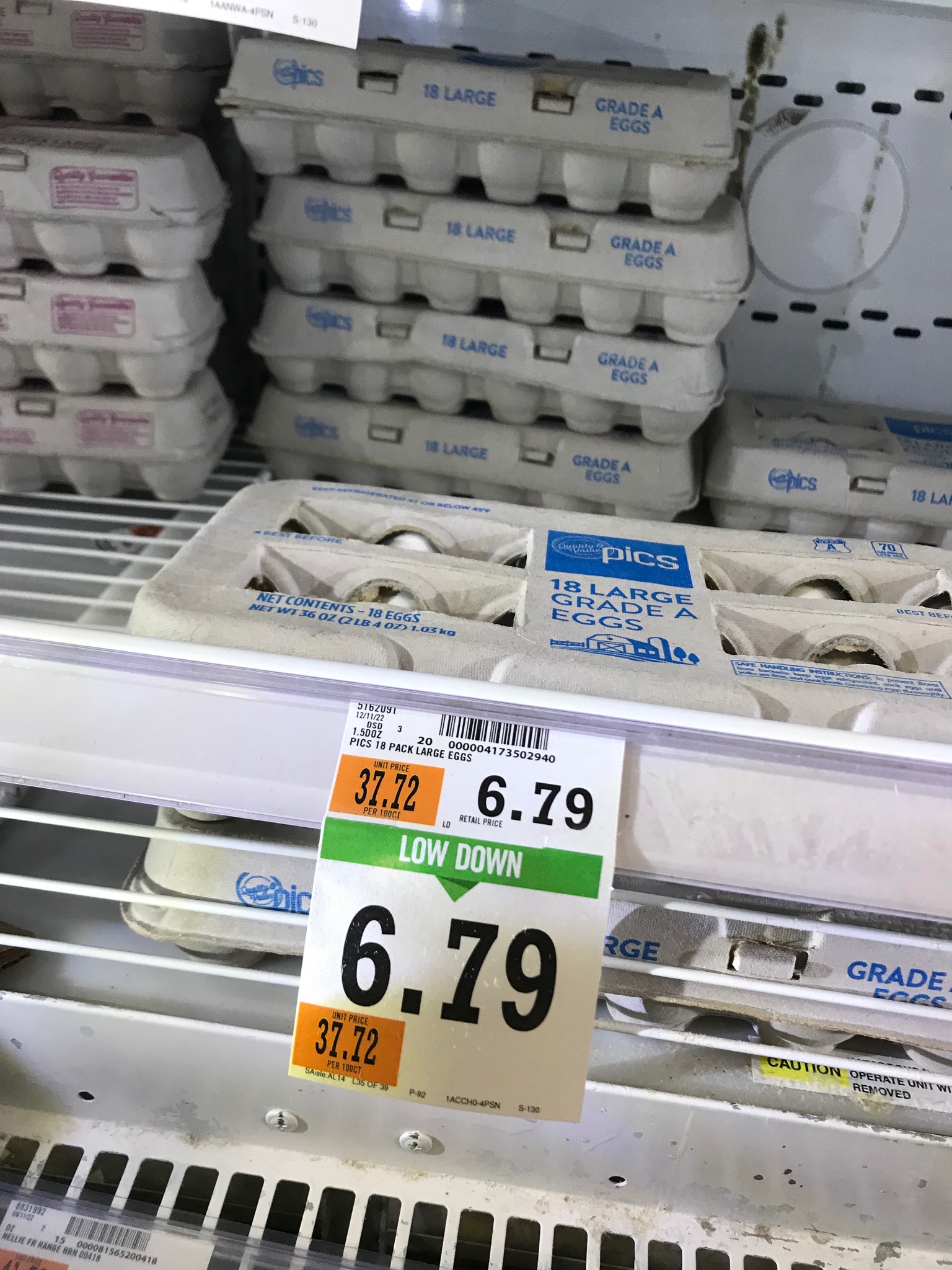
- 1.5 Dozen (18 Eggs): $3.75 – $5.40
- Bulk Pack (30 Eggs / 2.5 Dozen): $6.00 – $8.50
Price tracking conducted by the U.S. Department of Agriculture Economic Research Service shows that base conventional egg prices serve as the benchmark for the entire egg category. However, non-conventional specialty eggs—such as cage-free, organic, and pasture-raised—carry substantial price premiums over conventional battery-cage operations due to higher labor, feed, and housing overhead.
Price Breakdown by Egg Type and Farming Method
The price of an egg depends heavily on how the laying hen was raised, the type of feed provided, and whether third-party animal welfare certifications apply. Grocery retailers segment eggs into distinct categories, each with its own pricing structure and cost structure for producers.
U.S. Egg Price Spectrum:
- Conventional: $2.50 - $3.60 / doz ($0.21 - $0.30/egg)
- Cage-Free: $3.50 - $4.80 / doz ($0.29 - $0.40/egg)
- Organic: $4.50 - $6.20 / doz ($0.38 - $0.52/egg)
- Pasture-Raised: $6.00 - $7.50+ / doz ($0.50 - $0.63+/egg)
Conventional Eggs
Conventional eggs are produced by hens housed in automated battery cages with controlled lighting and nutrition. This method maximizes production density and efficiency, resulting in the lowest price point for consumers. A dozen conventional eggs generally sells for $2.50 to $3.60, making it the primary staple for budget-focused households and commercial food service providers.
Cage-Free Eggs
Cage-free eggs come from hens housed in open indoor facilities or barns where they can roam freely, perching and nesting, though they rarely have access to the outdoors. Because barn housing requires more space per bird and higher labor management per dozen, cage-free eggs carry a retail price of $3.50 to $4.80 per dozen ($0.29 to $0.40 per egg). Multiple U.S. states have passed legislation mandating cage-free housing standards, shifting national production baselines toward this category.
Organic Eggs
To carry the USDA Organic seal, eggs must come from hens fed certified organic, non-GMO feed grown without synthetic fertilizers or pesticides. In addition, organic standards require that hens be housed in cage-free environments with mandatory access to the outdoors. Due to the high cost of certified organic grain and specialized facility maintenance, organic eggs average $4.50 to $6.20 per dozen ($0.38 to $0.52 per egg).
Pasture-Raised Eggs
Pasture-raised eggs represent the top tier of commercial egg pricing. Standards maintained by organizations like Certified Humane require that each bird receives a minimum of 108 square feet of outdoor pasture with rotating fields. Pasture-raised hens forage naturally for insects and wild vegetation alongside their feed. This labor-intensive production model produces eggs priced between $6.00 and $7.50+ per dozen ($0.50 to $0.63+ per egg).
Specialty Enriched Eggs (Omega-3 & Pasture-Organic Hybrid)
Producers also market specialty eggs enriched with Omega-3 fatty acids, achieved by adding flaxseed or algae meal to chicken feed. These specialty products usually cost between $4.00 and $5.50 per dozen. Hybrid premium offerings, such as organic pasture-raised eggs, routinely command upwards of $7.50 to $8.50 per dozen in high-cost urban markets.
Retail Egg Price Comparison Matrix
The following table summarizes average national price ranges, per-egg breakdowns, and key regulatory standards for standard U.S. retail egg categories.
| Egg Category | Average Price per Dozen | Average Price per Individual Egg | Typical Housing & Feed Requirements | Primary Certification / Standards |
|---|---|---|---|---|
| Conventional Grade A | $2.50 – $3.60 | $0.21 – $0.30 | Enclosed battery cage system; standard grain feed | USDA Grade A / AA Inspection |
| Cage-Free | $3.50 – $4.80 | $0.29 – $0.40 | Open barn housing; indoor roaming; standard feed | State Compliance / United Egg Producers |
| Organic | $4.50 – $6.20 | $0.38 – $0.52 | Outdoor access required; 100% organic, non-GMO feed | USDA Certified Organic |
| Pasture-Raised | $6.00 – $7.50+ | $0.50 – $0.63+ | Outdoor pasture access (108+ sq ft/bird); forage diet | Certified Humane / Regenerative Organic |
| Omega-3 Enriched | $4.00 – $5.50 | $0.33 – $0.46 | Cage or cage-free housing; flaxseed-supplemented feed | USDA Grade A with nutrient claim |
Key Drivers of U.S. Egg Pricing
Egg prices in the United States do not stay static. They react quickly to supply chain shocks, disease outbreaks, agricultural input costs, and evolving state regulations.
1. Avian Influenza (HPAI) Outbreaks
Highly Pathogenic Avian Influenza (HPAI) remains the single biggest driver of sudden egg price spikes in the U.S. When avian flu enters a commercial egg-laying farm, federal protocols require depopulation of the entire affected flock to prevent widespread transmission. Because commercial egg operations often house hundreds of thousands or even millions of hens per site, a single outbreak can instantly remove a significant percentage of the national egg supply. Rebuilding laying flocks takes six to nine months, causing protracted periods of low supply and high prices.
2. Feed Costs (Corn and Soybeans)
Feed accounts for 60% to 70% of the total cost of producing an egg. Commercial hen diets consist primarily of field corn and soybean meal. Fluctuations in global grain markets, weather conditions in the Midwest agricultural belt, fertilizer costs, and fuel prices directly impact the price of layer feed. When grain prices rise, egg farmers must increase wholesale prices to maintain financial viability.
3. State Cage-Free Legislation and Mandates
State-level animal welfare legislation has fundamentally shifted the structure of the U.S. egg industry. Regulatory initiatives like California’s Proposition 12 and similar legislation in states such as Massachusetts, Colorado, Washington, and Oregon require all eggs sold within their borders to come from cage-free housing systems.
To comply with these laws, egg producers nationwide have had to make large capital investments to build new barn systems or retrofit existing cages. The transition costs of converting production systems from conventional to cage-free feed directly into elevated wholesale and retail baseline prices across all 50 states.
Egg Supply Chain & Price Drivers:
- Input Drivers:
- Grain & Energy Costs
- Avian Flu Outbreaks
- Cage-Free Mandates
- Producer Overhead
- Retail Price
4. Processing, Packaging, and Transportation Costs
Once eggs leave the farm, they must undergo grading, washing, inspection, cartoning, refrigeration, and refrigerated transport to distribution centers and grocery stores. Spikes in diesel fuel prices increase distribution expenses, while packaging materials—such as recycled pulp cartons or PET plastic containers—add to final retail costs.
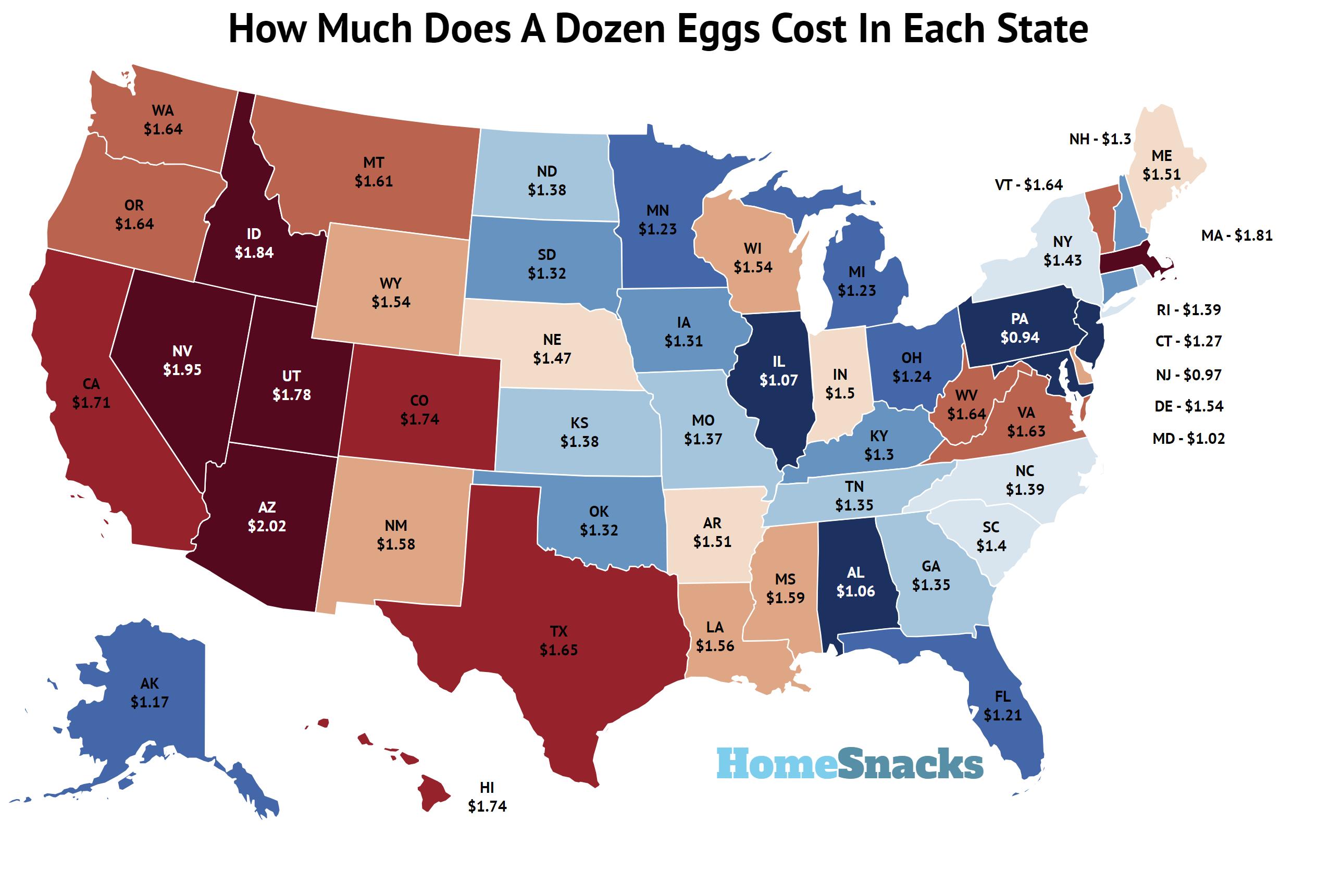
Regional Price Variations Across the U.S.
Egg prices are not uniform nationwide. Regional cost of living, transport distances, local state laws, and regional market competition lead to substantial price gaps between geographic zones.
- West Coast (California, Washington, Oregon): Consumers on the West Coast typically pay the highest average prices for eggs in the contiguous United States. Strong state cage-free mandates, strict environmental laws, and high commercial logistics expenses routinely push conventional and cage-free egg prices 20% to 40% above national averages.
- Northeast Urban Centers (New York, Boston, Philadelphia): High retail rent, expensive urban distribution networks, and dense consumer demand for organic and specialty foods drive higher egg prices in Northeastern cities.
- Midwest (Iowa, Indiana, Ohio): The Midwest serves as the heart of U.S. egg production. Because major egg farms and grain supplies are concentrated in this region, shipping distances are minimal. As a result, Midwestern grocery stores generally offer the lowest average egg prices in the nation.
- Southern Region (Texas, Georgia, North Carolina): The South generally maintains lower retail prices for conventional eggs due to lower regional distribution overhead and mixed agricultural supply lines, though prices spike during severe seasonal demand spikes like Easter.
Practical Ways to Save Money on Eggs
For households looking to manage food budgets without removing high-quality protein from their diets, several practical strategies can help reduce per-unit egg expenses:
- Buy Bulk Packaging: Purchasing 18-egg cartons or 30-egg flats at club stores or discount grocers significantly reduces the price per individual egg compared to buying standard 12-count cartons.
- Compare Store Brands to Name Brands: Store-brand eggs (private label) come from the exact same regional egg producers and meet identical USDA safety standards as national brand-name eggs, but they generally cost 15% to 30% less.
- Track Store Sales Cycles: Grocery chains frequently feature loss-leader sales on conventional eggs during major holiday cooking seasons (such as Thanksgiving, Christmas, and Easter). Buying during promotional cycles allows shoppers to lock in lower unit prices.
- Consider Local Farms or Farmers Markets: In rural and suburban areas, purchasing eggs directly from local backyard flock keepers or small farms can yield fresh, high-quality eggs at competitive prices, avoiding national distribution markup.
- Check Expiration Dates and Storage Conditions: Store eggs in their original carton on an interior refrigerator shelf rather than the refrigerator door, where temperature fluctuations are highest. Properly refrigerated eggs remain safe and high in quality for three to five weeks past the pack date.
Frequently Asked Questions
Why did egg prices spike dramatically in recent years?
Egg prices spike primarily due to major outbreaks of Highly Pathogenic Avian Influenza (HPAI), which reduce the national population of egg-laying hens. When millions of hens are depopulated to control disease spread, supply drops rapidly while consumer demand remains constant, triggering sharp price increases until new flocks mature.
What is the difference between Grade A and Grade AA eggs?
Grade AA eggs have firm, thick whites and high, round yolks virtually free from defects, making them ideal for poaching and frying. Grade A eggs—the most common retail grade—have slightly less firm whites but maintain excellent quality for all cooking and baking uses. The grade reflects fresh quality structural criteria, not differences in safety or nutritional value.
Are pasture-raised eggs worth the higher price?
Pasture-raised eggs cost more because farming them requires substantial acreage and high labor inputs. Visually, pasture-raised eggs often feature deeper orange yolks due to the hen's diet of pasture greens and insects. While some consumers prefer them for perceived flavor and animal welfare standards, standard conventional eggs provide comparable essential macronutrients and protein content.
How much protein is in a single egg relative to its cost?
A standard large egg contains approximately 6 grams of high-quality complete protein. At a cost of $0.25 per egg, consumers pay roughly $0.04 per gram of protein. This makes eggs one of the most cost-effective complete protein sources available in U.S. grocery stores, outperforming most cuts of fresh meat and poultry on a protein-per-dollar basis.
What does "Cage-Free" actually mean on an egg carton?
"Cage-Free" means the laying hens were raised outside of individual battery cages, allowing them to walk, spread their wings, perch, and lay eggs in nesting boxes within an enclosed barn or building. It does not mean the hens have access to the outdoors; outdoor access is a separate requirement reserved for "Free-Range", "Organic", and "Pasture-Raised" labels.
Final Recommendation: Navigating the U.S. Egg Market
When shopping for eggs in the U.S., the best value depends on balancing your family's budget against animal welfare preferences. If your primary goal is affordable complete protein, store-brand conventional or standard cage-free eggs in 18-count or bulk flats offer the lowest price per unit ($0.21 to $0.30 per egg). If animal welfare or organic dietary standards are a priority, budget for premium pasture-raised or USDA Organic eggs ($0.50 to $0.63+ per egg), purchasing from warehouse clubs to mitigate retail markup.
Image Gallery