How to Write a Third-Party Claim Demand Letter for Auto Repair Costs
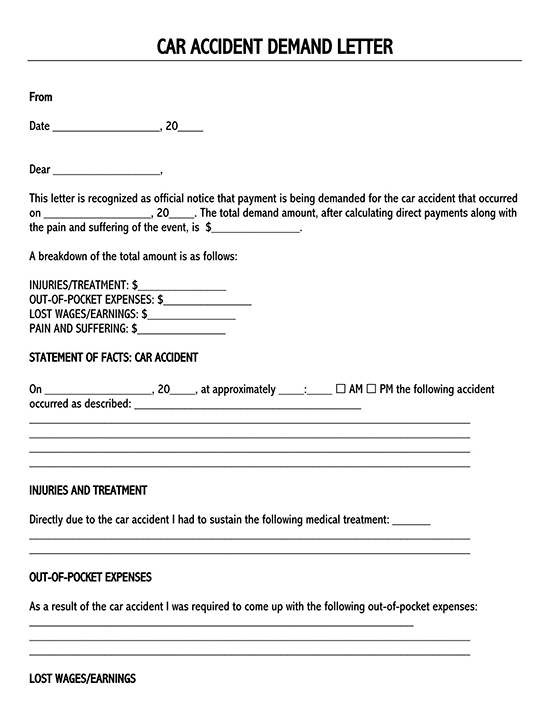
A third-party claim demand letter for auto repair costs is a formal document sent to an at-fault party's insurance provider to request reimbursement for vehicle damages. This letter serves as your primary evidence of the accident's imp...
A third-party claim demand letter for auto repair costs is a formal document sent to an at-fault party's insurance provider to request reimbursement for vehicle damages. This letter serves as your primary evidence of the accident's impact, outlining the scope of necessary repairs, the total financial liability, and your expectation for a prompt settlement based on verified repair estimates.
Contents
When you are involved in a motor vehicle accident where another driver is clearly at fault, the process of recovering repair costs often begins with a formal demand. Unlike a first-party claim, where you contact your own insurer, a third-party claim involves negotiating directly with the insurance company of the person who caused the damage. To succeed, your communication must be structured, professional, and supported by objective documentation.
The Purpose of the Demand Letter
The demand letter acts as the centerpiece of your claim file. It is the document that an insurance adjuster will review to evaluate the validity of your request. Its purpose is twofold: to establish the legal and factual basis for the other driver's liability and to provide a clear, itemized breakdown of the costs required to restore your vehicle to its pre-accident condition.
By providing a well-researched letter, you assist the insurance adjuster in processing your claim more efficiently. If the letter is disorganized or lacks supporting evidence, it may result in delays or a low-ball settlement offer. Your objective is to leave no room for doubt regarding who caused the accident and why the specific repair costs are necessary.
Prerequisites Before Drafting Your Letter
Before you begin writing, you must gather all essential documentation. Without a solid evidentiary foundation, even the most eloquent letter will fail to secure a payout. Ensure you have the following items:
- Police Report: A copy of the official accident report filed by responding law enforcement officers. This is the most reliable document for establishing liability.
- Itemized Repair Estimates: Secure at least two, preferably three, independent estimates from reputable, licensed auto body shops. These estimates should clearly itemize parts, labor hours, and paint costs.
- Photographic Evidence: High-resolution photos showing the damage to your vehicle from multiple angles, as well as photos of the accident scene, if available.
- Proof of Ownership: A copy of your vehicle registration or title to confirm your legal standing to make the claim.
- Correspondence Log: Keep a chronological record of everyone you have spoken to at the insurance company, including dates, times, and summaries of what was discussed.
Key Components of a Strong Demand Letter
A professional demand letter should follow a standard business format. It must be clear, concise, and focused on facts rather than emotional grievances. Use the following structure to ensure all necessary information is conveyed:
- Header: Include your full contact information, the date, and the adjuster’s information. If you have been provided with a claim number, prominently display it in the subject line.
- The Incident Summary: Provide a factual, chronological account of the accident. Mention the date, time, location, and the specific actions of the other driver that led to the collision.
- Liability Argument: Refer to the police report and any other evidence (such as traffic citations issued to the other driver) that proves their fault.
- Repair Documentation: Clearly state the amount you are requesting for repairs. Attach your itemized estimates as exhibits.
- The Demand: State a clear deadline by which you expect a response or payment.
- Signature: Ensure the letter is signed and sent via certified mail with a return receipt requested to maintain a trail of delivery.
Comparing Repair Estimates for Your Claim
When preparing your demand, it is often beneficial to present a table that summarizes the findings from the repair shops you visited. This demonstrates to the adjuster that you have done your due diligence and are not simply picking an arbitrary number.
| Shop Name | Estimated Labor Hours | Parts Cost | Total Estimate |
|---|---|---|---|
| City Auto Body | 12.5 | $1,450.00 | $2,125.00 |
| Downtown Collision | 13.0 | $1,520.00 | $2,240.00 |
| Precision Repairs | 12.0 | $1,400.00 | $2,050.00 |
Note: Use the average or the most credible shop’s estimate as your primary demand amount.
Addressing "Betterment" and Depreciation
One area where insurers often attempt to reduce payouts is through the concept of "betterment." If your vehicle required new parts to replace old, worn ones (e.g., tires or suspension components that were already nearing the end of their life), the insurer might argue that the repair increases the vehicle’s value, and they should only pay a portion of the cost.
Be prepared to counter this argument by stating that the parts were functional prior to the accident and that the accident necessitated the replacement. If the insurance adjuster brings up depreciation or betterment, ask them for the specific policy clause or state regulation they are citing to justify the deduction.
Handling Negotiations and Adjuster Responses
Once you send the letter, the insurance company will likely review it and respond with a settlement offer. Rarely is the first offer the final one. If the offer is lower than your repair estimates, you have the right to request a written explanation for the reduction.
Review the adjuster’s counter-offer against your own documentation. If they are disputing a specific line item, such as labor rates, provide the hourly labor rate documentation from the repair facility you selected. Maintain a professional tone throughout all follow-up communications. If you reach an impasse, consider whether your policy includes provisions for appraisal or if you need to consult with a consumer advocacy group or legal professional specializing in insurance disputes.
Frequently Asked Questions
How long should I give the insurance company to respond? Generally, 15 to 30 days is a standard timeframe to request a response in your demand letter. Ensure you state this clearly in your closing paragraph to manage expectations.
Do I need a lawyer for a property-damage-only claim? For minor property damage, most individuals handle the process themselves using the steps outlined above. If the claim involves significant bodily injury, or if the insurer is acting in bad faith, legal counsel may be necessary.
What if the insurance company denies my claim based on "comparative negligence"? Comparative negligence is a legal concept where fault is shared. If they claim you were partially at fault, ask for the specific evidence (such as witness statements or accident reconstruction reports) that supports this assessment.
Can I include the cost of a rental car in my demand? Yes, if your vehicle is undrivable or in the shop for repairs, you may include the cost of a rental car as a "loss of use" claim. Ensure you have receipts for the rental and documentation from the repair shop verifying how many days the car was out of commission.
Final Next Action
Compile all gathered estimates, the police report, and your finalized demand letter. Make copies of every document for your personal records. Send the original letter to the insurance company via certified mail—this provides you with a definitive record of when the clock started on your claim and ensures the adjuster cannot claim they never received your request.
Image Gallery