Roger Federer: Analyzing a Tennis Star’s Enduring Legacy
Roger Federer’s enduring legacy rests on a rare combination of athletic dominance, aesthetic elegance, and unprecedented commercial longevity. Winning 20 Grand Slam singles titles and holding the ATP No. 1 ranking for a record 237 cons...
Roger Federer’s enduring legacy rests on a rare combination of athletic dominance, aesthetic elegance, and unprecedented commercial longevity. Winning 20 Grand Slam singles titles and holding the ATP No. 1 ranking for a record 237 consecutive weeks, Federer redefined modern tennis while establishing a global blueprint for athlete branding, sports entrepreneurship, and international philanthropy.
Contents
The Technical and Aesthetic Architecture of Federer’s Play
What separated Roger Federer from his contemporaries was not merely the volume of his victories, but the manner in which he achieved them. His playing style combined classical technique with modern racquet technology, creating an approach that appeared effortless despite requiring extraordinary kinetic coordination and anticipatory intelligence.
- KINETIC EFFICIENCY & FOOTWORK
- Split-step timing & low impact
- SHOT VARIATION & DISGUISE
- Fluid forehand & slice backhand
- OFFENSIVE TACTICAL PACE
- Early ball-taking & court position
Biomechanical Efficiency and Footwork
Federer’s footwork is widely cited by biomechanics experts as the gold standard in court coverage. Unlike players who rely on aggressive sliding and recovery steps that place extreme rotational stress on joint structures, Federer utilized short, economical adjustment steps. By keeping his center of gravity consistent and establishing balanced contact points before hitting, he minimized wear and tear on his knees, hips, and back. This movement pattern directly enabled his competitive longevity, allowing him to contend for major titles into his late thirties.
The Single-Handed Backhand and Shot Variation
In an era dominated by high-topspin two-handed backhands designed to neutralize heavy baseline rallies, Federer preserved and modernized the single-handed backhand. His backhand allowed for exceptional shot variation, switching seamlessly from a topspin drive to a sharp backhand slice that kept the ball low to the ground, disrupting opponent rhythm. In the later stages of his career—most notably under the coaching of Stefan Edberg and Ivan Ljubičić—Federer shortened his backhand swing path, allowing him to take the ball earlier on the rise and defeat heavy topspin serves.
Serving Disguise and Tactical Offense
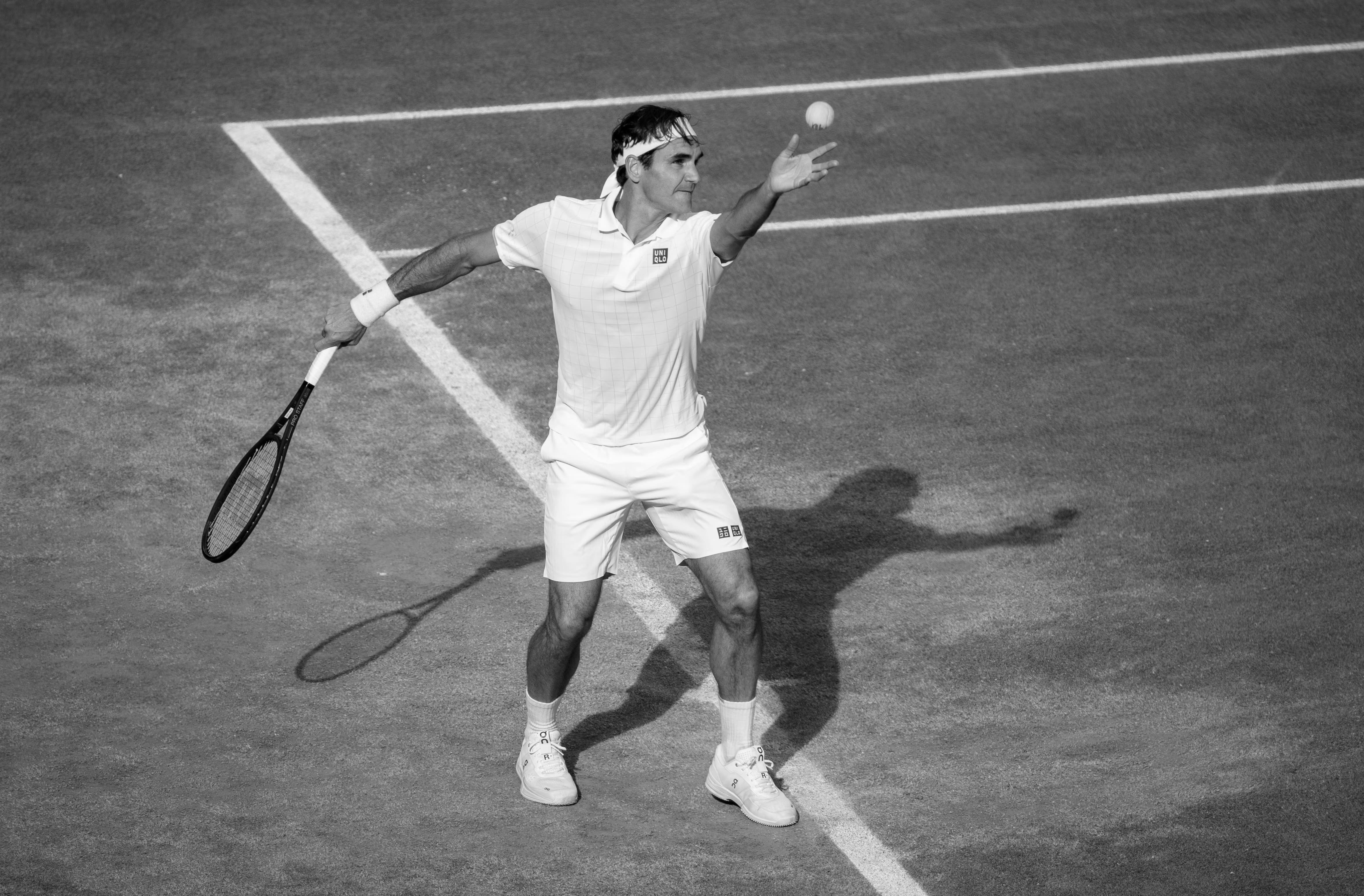
Federer did not possess the absolute fastest serve on the ATP Tour, but his service motion was among the hardest to read. He maintained an almost identical toss position for flat, slice, and kick serves, preventing returners from guessing his target prior to racquet contact. Paired with a lethal forehand—often called the "liquid whip"—Federer focused on dictating points within the first three shots. By maintaining aggressive baseline positioning, he forced opponents into defensive postures and shortened point durations.
Quantifying Greatness: Statistical Footprint and Major Milestones
Federer’s statistical record reflects two decades of sustained excellence across all court surfaces. From his first Grand Slam victory at Wimbledon in 2003 to his final major title at the Australian Open in 2018, his career numbers established benchmarks for consistency in professional sport.
| Metric / Milestone | Career Figure / Record | Historical Context & Significance |
|---|---|---|
| Grand Slam Singles Titles | 20 | First male player in history to reach 20 major singles titles |
| Wimbledon Singles Titles | 8 | All-time men's record for most titles won at the All England Club |
| Consecutive Weeks at No. 1 | 237 weeks | Record for the longest unbroken streak at the top of the ATP rankings (2004–2008) |
| Total Weeks at No. 1 | 310 weeks | Second-most weeks spent at World No. 1 in ATP men's history |
| Total ATP Singles Titles | 103 | Second-most tournament titles in the Open Era behind Jimmy Connors (109) |
| Career Match Wins | 1,251 | Over 1,200 professional singles victories across a 24-year career |
| Grand Slam Consecutive Semifinals | 23 | Reached 23 consecutive major semifinals from 2004 Wimbledon to 2010 Australian Open |
| Career Grand Slam | Completed in 2009 | Won all four major titles by capturing the 2009 French Open |
The Significance of the 237-Week Streak
Federer’s hold on the World No. 1 spot between February 2, 2004, and August 17, 2008, represents four consecutive years of complete dominance. During this window, Federer lost fewer than 25 matches total, winning 11 of his 20 Grand Slam titles. This unbroken stretch demonstrated an unprecedented level of physical durability, mental resilience, and adaptability across hard, grass, and clay court swings.
The 2017 Comeback and Late-Career Peak
After a knee injury forced him to miss the second half of the 2016 season, critics speculated Federer's career was drawing to a close. However, his return at the 2017 Australian Open proved to be one of the most remarkable chapters in modern sports history. Entering as the 17th seed, Federer defeated four top-10 players—including a five-set victory over Rafael Nadal in the final—to win his 18th Grand Slam title. He followed this with an undefeated run at Wimbledon in 2017 without dropping a set, illustrating how physical rehabilitation and tactical adaptation can extend an athlete's prime.
The Big Three Rivalries: Sharpening the Standard of Excellence
Federer’s career cannot be fully evaluated without examining his rivalries with Rafael Nadal and Novak Djokovic. Together, the "Big Three" elevated professional tennis to unprecedented levels of international media interest, athletic preparation, and financial valuation.
- FEDERER vs. NADAL
- (40 Matches: Contrasting Styles & Surface Mastery)
- THE BIG THREE ERA
- (199 Grand Slam Titles Combined)
- FEDERER vs. DJOKOVIC
- (50 Matches: Precision Baseline vs. Aggressive Offense)
Federer vs. Nadal: The Clash of Contrasting Styles
The rivalry between Federer and Nadal is widely considered one of the greatest in sports history due to its stark contrast in aesthetics and playing styles:
- Federer: Right-handed, fluid, offensive-minded, relies on timing and quick court position.
- Nadal: Left-handed, heavy topspin, extreme physical defense, relentless court coverage.
Nadal’s heavy topspin forehand targeted Federer’s high backhand wing, creating a tactical problem that forced Federer to continually evolve his equipment and backhand technique. Matches such as the 2008 Wimbledon final—often described as one of the greatest tennis matches ever played—transcended sports journalism, capturing global general audience attention and growing the international fan base for professional tennis.
Federer vs. Djokovic: The Battle of Baseline Precision
While the rivalry with Nadal featured contrasting styles, Federer’s matches against Novak Djokovic were studies in high-speed baseline execution and return tactics. Djokovic’s extraordinary return of serve and baseline defense presented a direct challenge to Federer’s quick-strike offense. Their 50 career meetings produced high-stakes battles in Grand Slam finals, including the 2014, 2015, and 2019 Wimbledon finals. This rivalry highlighted Federer's ability to maintain world-class tactical intensity well into his late thirties against a younger competitor in his physical prime.
Off-Court Business Architecture and Brand Evolution
Beyond his achievements on the court, Roger Federer reshaped how elite professional athletes build and manage personal commercial platforms. Rather than relying solely on traditional endorsement deals, Federer and his management team structured long-term business partnerships that emphasized equity, design influence, and brand alignment.
- FEDERER BRAND EMPIRE
- UNIQLO PARTNER
- Long-Term Deal
- ON RUNNING
- Equity & Shoe
- TEAM8 / LAVER
- Cup Enterprise
- UNIQLO PARTNER
The Uniqlo Partnership
In 2018, after a 24-year association with Nike, Federer made a high-profile shift by signing a 10-year global brand ambassador agreement with Japanese retailer Uniqlo, valued at an estimated $300 million. Crucially, the deal was structured without a retirement clause, ensuring full financial compensation regardless of his active playing status on the ATP Tour. The contract also allowed Federer to secure separate footwear partnerships, opening up unprecedented commercial flexibility.
Equity Ownership in On Running
Following his departure from Nike for apparel, Federer took an active business role by investing an undisclosed equity stake in the Swiss performance footwear company On (On Holding AG) in 2019. Rather than serving strictly as a celebrity spokesperson, Federer worked directly with product designers to develop technical court and lifestyle shoes, including THE ROGER product line. When On launched its initial public offering (IPO) on the New York Stock Exchange in 2021, Federer’s early equity investment yielded substantial enterprise value, offering a template for modern athletes seeking long-term wealth creation through private equity rather than simple licensing fees.
TEAM8 and the Creation of the Laver Cup
Recognizing the need for modern event formats in tennis, Federer and his long-time manager Tony Godsick co-founded the sports management agency TEAM8. Through TEAM8, Federer co-created the Laver Cup, an annual team tennis tournament launched in 2017 that pits Team Europe against Team World. Modeled conceptually after golf’s Ryder Cup, the Laver Cup brought top-ranked players together as teammates, creating a lucrative, broadcast-friendly event that quickly secured a permanent spot on the professional tennis calendar.
Philanthropy: The Roger Federer Foundation
Federer’s legacy is equally defined by his commitment to international philanthropy. Established in 2003 when he was just 22 years old, the Roger Federer Foundation was structured to improve early childhood education in Southern Africa and his home country of Switzerland.
Strategic Educational Initiatives
The foundation operates under the principle that access to high-quality early education is the single most effective intervention for breaking systemic poverty. Focusing its efforts on countries including South Africa, Malawi, Zambia, Zimbabwe, Namibia, Lesotho, and Switzerland, the foundation partners with local non-governmental organizations (NGOs) to:
- Enhance teacher training frameworks in underserved rural communities.
- Upgrade early learning facilities and infrastructure.
- Improve early literacy, numeracy, and nutritional support programs for pre-school children.
Measurable Educational Impact
By committing a significant portion of his personal wealth, exhibition revenue, and corporate sponsor matching funds, the Roger Federer Foundation has impacted more than 2.5 million children across Southern Africa and Switzerland. The organization's formal corporate governance, rigorous auditing standards, and measurable educational metrics have earned high ratings from international philanthropic monitoring agencies.
Why the Federer Legacy Persists Beyond Retirement
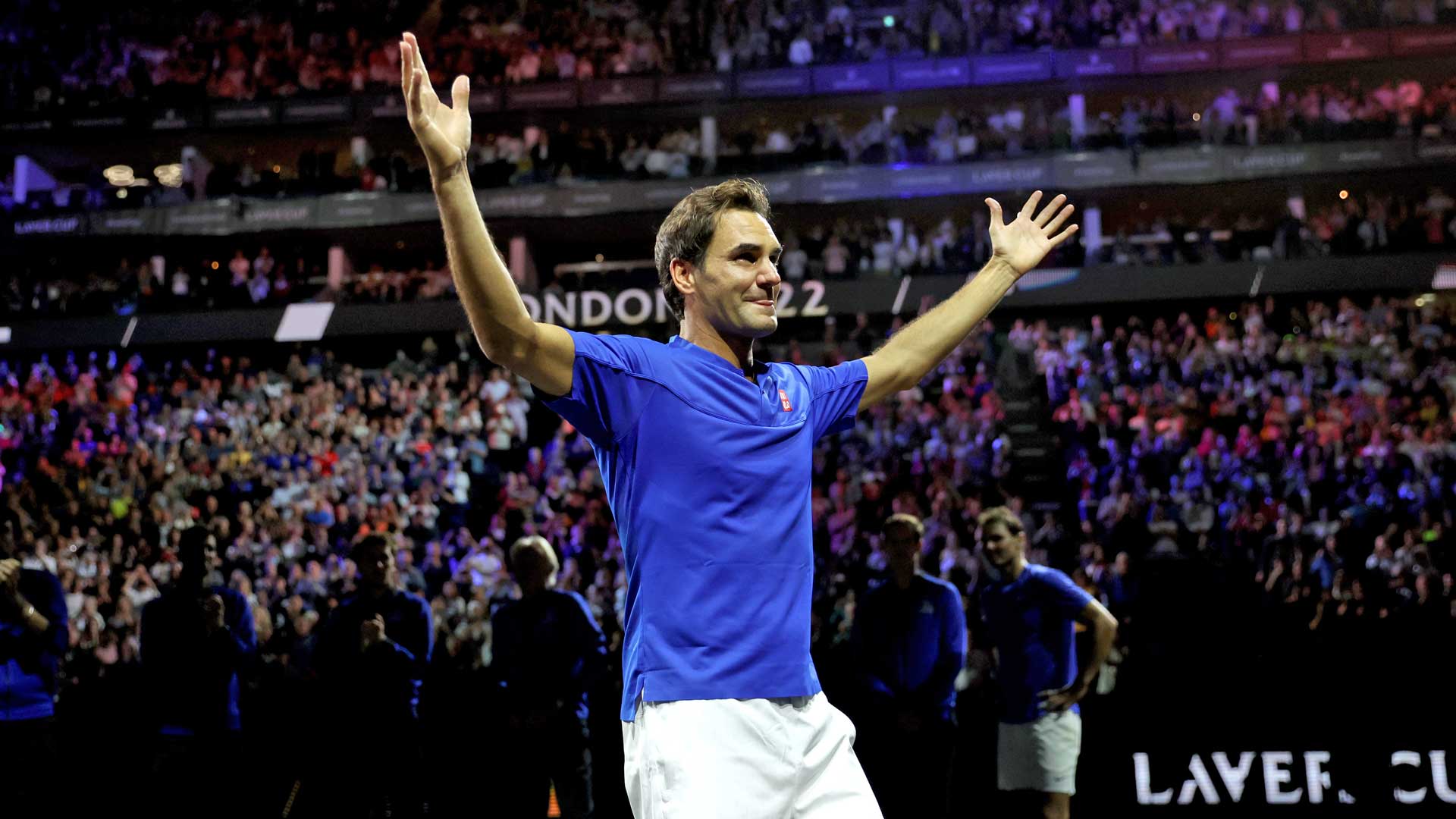
Roger Federer officially retired from professional competition at the 2022 Laver Cup in London, playing a memorable final doubles match alongside his long-time rival and close friend Rafael Nadal. Yet, his legacy continues to exert a profound influence on the modern sports landscape.
A Benchmark for Aesthetic Execution
In an era dominated by high-impact baseline grinding and extreme physical wear, Federer’s game remains the primary historical reference for biomechanical elegance and low-impact court movement. Young tennis players and academy coaches continue to study his footwork, serve toss neutrality, and net approach timing as ideal models of efficiency.
The Modern Athlete-Entrepreneur Model
Federer proved that elite athletes can build corporate partnerships that endure long after active competition ends. His transition from traditional sponsorship models to equity-based corporate ownership (such as On) and event ownership (such as the Laver Cup) has altered how sports agencies negotiate compensation for elite talents across football, basketball, golf, and tennis.
Cultural Diplomacy and Ambassadorship
Through his calm court demeanor, fluency in multiple languages (Swiss German, German, French, and English), and diplomatic engagement with global press, Federer expanded the cultural reach of tennis beyond its traditional geographic hubs. He demonstrated that elite competition and intense professional rivalry could coexist with respect, sportsmanship, and personal friendship.
Frequently Asked Questions
How many Grand Slam titles did Roger Federer win during his career?
Roger Federer won 20 Grand Slam singles titles during his professional career. His major titles include 8 Wimbledon championships, 6 Australian Opens, 5 US Opens, and 1 French Open. He was the first male tennis player in history to reach the 20 Grand Slam milestone.
When did Roger Federer officially retire from professional tennis?
Roger Federer officially retired from professional tennis in September 2022 at the Laver Cup held at The O2 Arena in London. His final match was an emotional doubles contest played alongside his rival and friend Rafael Nadal, representing Team Europe.
What is Roger Federer's involvement with the shoe brand On?
In 2019, Roger Federer acquired an equity stake in the Swiss performance footwear and apparel company On (On Holding AG). Beyond financial investment, Federer actively collaborated with product engineers to design performance tennis shoes and lifestyle footwear, including THE ROGER product line.
How long was Roger Federer ranked World No. 1 in the ATP rankings?
Federer spent a total of 310 weeks as the ATP World No. 1 player. Notably, he holds the all-time record for the most consecutive weeks at World No. 1, holding the top spot unbroken for 237 consecutive weeks from February 2, 2004, to August 17, 2008.
What is the Laver Cup, and how was Roger Federer involved in its creation?
The Laver Cup is an annual men's team tennis tournament that features Team Europe competing against Team World. Roger Federer co-created the event alongside his agent Tony Godsick and their management company, TEAM8. Launched in 2017, the tournament honors Australian tennis legend Rod Laver and has become an official part of the ATP calendar.
Summary and Key Takeaways for Sports Analysts and Fans
Roger Federer’s enduring legacy is grounded in three distinct pillars: unmatched athletic precision, pioneering business acumen, and lasting philanthropic impact.
For sports analysts, coaches, and tennis fans seeking to understand his ongoing footprint:
- Study Movement Over Power: Federer demonstrated that anticipatory court coverage and efficient footwork are more sustainable over a long career than brute physical exertion.
- Examine Modern Athlete Equity Models: Review Federer’s transition into On Holding AG and the creation of the Laver Cup as case studies in how modern sports icons build enterprise value beyond traditional endorsements.
- Appreciate the Culture of Rivalry: The respectful yet intense rivalries between Federer, Nadal, and Djokovic highlight how fierce athletic competition can elevate an entire sport's global appeal without sacrificing sportsmanship.
Federer's influence remains deeply woven into the fabric of international sport, serving as a permanent benchmark for athletic mastery, brand governance, and graceful global representation.
Image Gallery