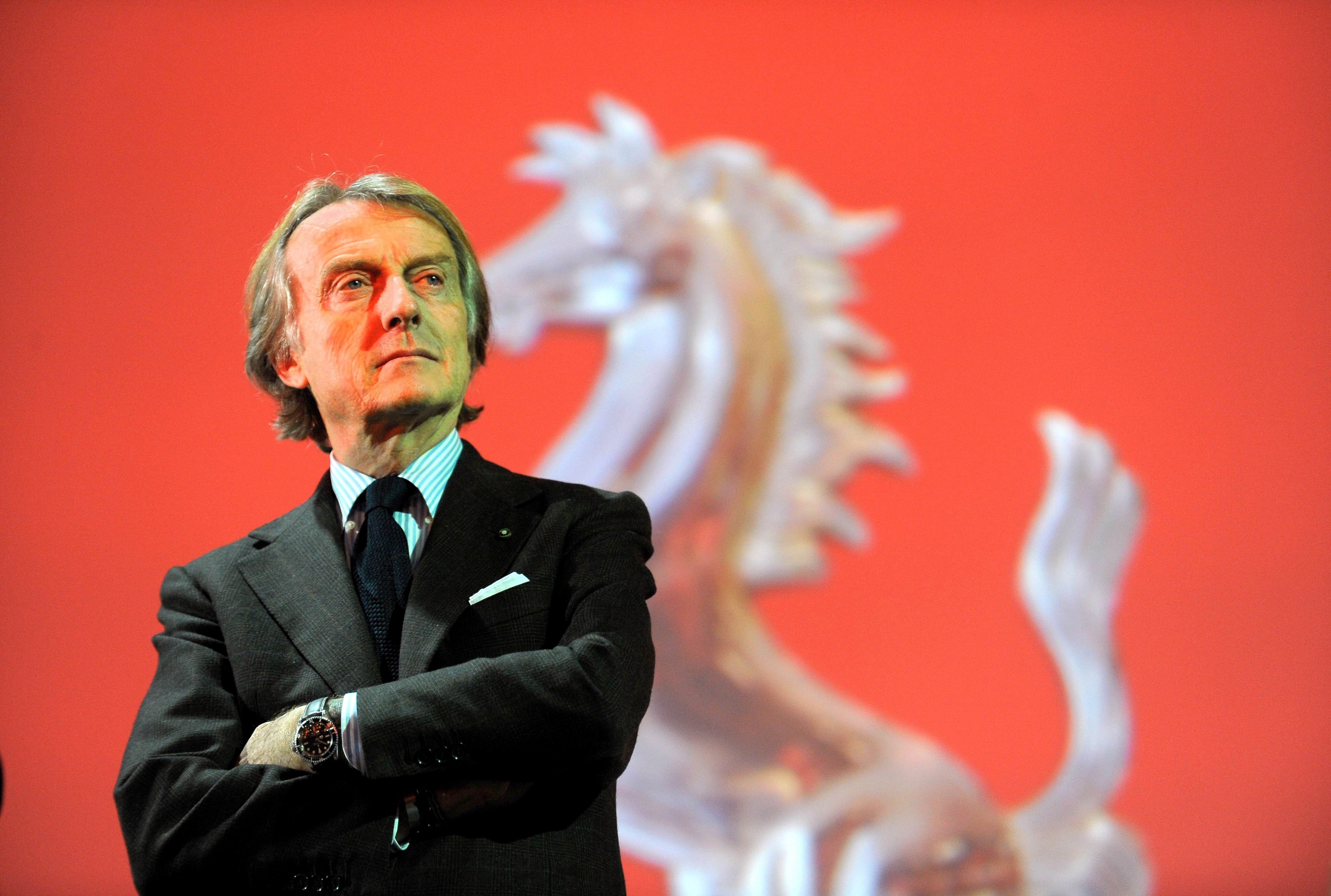
Luca Montezemolo and the Ferrari Era: A Masterclass in Brand Renaissance
Luca di Montezemolo’s leadership of Ferrari from 1991 to 2014 transformed a struggling, debt-ridden icon into a global luxury powerhouse and the most dominant force in Formula 1 history. By integrating race-winning technology into road...
Luca di Montezemolo’s leadership of Ferrari from 1991 to 2014 transformed a struggling, debt-ridden icon into a global luxury powerhouse and the most dominant force in Formula 1 history. By integrating race-winning technology into road cars and strictly controlling exclusivity, he saved the company from potential collapse and defined the modern identity of the Prancing Horse.
Contents
When Luca Cordero di Montezemolo arrived at Maranello as Chairman in late 1991, Ferrari was a company in crisis. Following the death of its founder, Enzo Ferrari, in 1988, the brand had lost its way. Formula 1 results were dismal, road car quality was falling behind competitors, and the financial health of the organization was precarious. Over the next 23 years, Montezemolo did more than just balance the books; he orchestrated a cultural and technical revolution that remains the gold standard for luxury brand management in 2026.
The State of Maranello in 1991: A Legacy in Peril
To understand the magnitude of the "Montezemolo Era," one must acknowledge the dire circumstances of the early 1990s. Ferrari’s road cars, specifically the 348, were being criticized for poor handling and build quality, famously losing out in comparisons to the Honda (Acura) NSX—a car that proved a supercar could be both reliable and usable.
On the racing front, the Scuderia was in a drought. They had not won a Drivers’ Championship since Jody Scheckter in 1979. The internal culture was fractured by "palace wars" and a revolving door of technical directors. Montezemolo, who had previously served as Enzo’s sporting assistant during the successful mid-70s Niki Lauda era, was brought back by Gianni Agnelli of Fiat to stabilize the ship. His mandate was clear: restore the prestige of the road cars and return the racing team to the top of the podium.
The Formula 1 Revival: Building the Dream Team
Montezemolo’s greatest talent was his ability to identify and recruit elite talent, even if it meant breaking Italian tradition. He realized that to win in the modern era of Formula 1, Ferrari needed a more international and structured approach.
The Jean Todt Appointment
In 1993, Montezemolo made the controversial decision to hire Jean Todt, a Frenchman who had led Peugeot to success in rallying and at Le Mans, as the Sporting Director. This was a radical move for a team that had historically favored Italian leadership. Todt brought a level of discipline and "insulation" from the Italian media that allowed the engineers to focus on performance rather than politics.
The Schumacher-Brawn-Byrne Trinity
The pinnacle of Montezemolo’s recruitment strategy was securing Michael Schumacher for the 1996 season. Schumacher was the reigning double World Champion with Benetton. To support him, Montezemolo and Todt eventually brought in technical director Ross Brawn and designer Rory Byrne. This "Dream Team" created an era of dominance that remains unparalleled:
- Constructors' Championships: Six consecutive titles from 1999 to 2004.
- Drivers' Championships: Five consecutive titles for Michael Schumacher (2000–2004).
- Cultural Shift: The team moved from a collection of brilliant individuals to a cohesive, data-driven machine.
Engineering the Road Car Revolution
While the F1 team was reclaiming its glory, Montezemolo was simultaneously overhauling the production side of the business. He famously stated that Ferrari would "always build at least one car less than the market demands," a philosophy that cemented the brand’s exclusivity.
From the 348 to the F355
The first major sign of the new era was the Ferrari F355, launched in 1994. It addressed every criticism of its predecessor, introducing a high-revving 5-valve-per-cylinder V8 and, eventually, the groundbreaking F1 paddle-shift gearbox. This technology, directly derived from the racing program, became a hallmark of the Montezemolo years: the seamless transfer of track performance to the street.
Expansion of the V12 Legacy
Montezemolo also oversaw the return of the front-engined V12 grand tourer with the 550 Maranello, replacing the mid-engined Testarossa lineage. He understood that Ferrari’s soul was tied to the V12 engine, and models like the 575M, 599 GTB, and eventually the F12 Berlinetta re-established Ferrari as the master of the "Gran Turismo."
The Birth of the Hypercar Category
Under his watch, Ferrari released three of the most significant performance cars ever made:
- The F50 (1995): A Formula 1 car for the road, celebrating the company's 50th anniversary.
- The Enzo (2002): Named after the founder, it utilized carbon fiber construction and advanced aerodynamics that set new benchmarks.
- LaFerrari (2013): The first hybrid Ferrari, proving that the company could embrace electrification without sacrificing its performance DNA.
Business Strategy: The Economics of Exclusivity
Montezemolo’s genius was not limited to engines and aerodynamics; he was a master of brand equity. He recognized that the Ferrari name was worth more than just the cars it was attached to.
He spearheaded the Ferrari Store retail concept and licensing deals, ensuring the brand was visible in luxury markets worldwide without diluting its core value. Perhaps the most ambitious project was Ferrari World Abu Dhabi, the world’s first Ferrari-themed park, which opened in 2010. This diversification allowed Ferrari to remain highly profitable even while strictly limiting the number of cars produced each year to roughly 7,000 units.
Key Milestones of the Montezemolo Era
| Year | Milestone | Impact on the Brand |
|---|---|---|
| 1991 | Luca Montezemolo appointed Chairman | Saved the company from post-Enzo stagnation. |
| 1993 | Jean Todt hired as Team Principal | Introduced professionalized management to Scuderia Ferrari. |
| 1996 | Michael Schumacher joins Ferrari | Shifted the focus to winning through driver-technical synergy. |
| 1997 | Acquisition of Maserati | Ferrari managed its rival, revitalizing its production capabilities. |
| 1999 | First Constructors' Title since 1983 | Validated the "Dream Team" organizational structure. |
| 2002 | Launch of the Ferrari Enzo | Solidified Ferrari as the leader in "Halo" hypercar technology. |
| 2010 | Opening of Ferrari World Abu Dhabi | Expanded the brand into global lifestyle and entertainment. |
| 2013 | Launch of LaFerrari | Demonstrated a future-proof path through hybridization. |
The Human Factor: "Formula Uomo"
One of Montezemolo's less-discussed but equally vital contributions was Formula Uomo (Formula Man). He believed that the people building the cars should work in the best possible environment to produce the best possible results. He invested millions into the Maranello factory, hiring world-renowned architects like Renzo Piano and Jean Nouvel to design "green" buildings with natural light, indoor gardens, and advanced climate control. This focus on employee well-being and craftsmanship ensured that Ferrari remained an aspirational workplace, attracting the best engineering talent in the world.
The Conflict and the 2014 Departure
The end of the Montezemolo era was marked by a fundamental disagreement over the future of the company. As Ferrari became a subsidiary of Fiat Chrysler Automobiles (FCA), the CEO of FCA, Sergio Marchionne, sought to increase production volumes and eventually take the company public.
Montezemolo staunchly defended the 7,000-unit annual production cap, fearing that higher volumes would destroy the brand’s exclusivity. Furthermore, the F1 team’s lack of success at the start of the V6 hybrid era (2014) added pressure. In October 2014, Montezemolo stepped down, marking the end of the longest and most successful chairmanship in Ferrari’s history.
Legacy and Impact in 2026
Standing in 2026, the Montezemolo legacy is visible in every aspect of Ferrari’s current operations. While the company has since gone public (IPO in 2015) and increased production, the foundation of technical excellence and brand prestige remains the one he built.
The transition to high-margin "Special Series" cars (like the Icona series) and the continued success of the Tailor Made program are direct evolutions of his strategy to maximize value per unit rather than just chasing volume. His era proved that a heritage brand could modernize its technology and business practices without losing its "soul."
Frequently Asked Questions
Why did Luca Montezemolo leave Ferrari in 2014?
Montezemolo left primarily due to a strategic clash with then-FCA CEO Sergio Marchionne. Marchionne wanted to increase production and integrate Ferrari more closely into the Fiat Chrysler group for a future IPO, while Montezemolo insisted on keeping production limited to maintain exclusivity. The team's poor performance in the 2014 F1 season also served as a catalyst for his departure.
How many F1 championships did Ferrari win under Montezemolo?
Under his chairmanship (1991–2014), Ferrari won a total of 14 world titles: 8 World Constructors' Championships (1999, 2000, 2001, 2002, 2003, 2004, 2007, 2008) and 6 World Drivers' Championships (2000, 2001, 2002, 2003, 2004, 2007).
What was Montezemolo's "Formula Uomo"?
"Formula Uomo" was an initiative to improve the working conditions of Ferrari employees. It involved redesigning the Maranello factory with eco-friendly architecture, more natural light, and better amenities. Montezemolo believed that a superior work environment was essential for creating superior products.
Which car is considered the most significant of the Montezemolo era?
While subjective, the F355 is often cited as the car that saved the brand by fixing quality issues, while the Enzo and LaFerrari represent the pinnacle of his technical achievements. The 550 Maranello is also critical for returning Ferrari to its V12 front-engine roots.
Did Montezemolo work with Enzo Ferrari?
Yes. In the mid-1970s, Montezemolo was Enzo Ferrari’s assistant and the manager of the racing team. During this time, he helped lead Niki Lauda to two World Championships (1975 and 1977) before moving on to other roles within the Fiat group.
Practical Recommendation: Studying the Montezemolo Model
For business leaders and automotive enthusiasts, the Montezemolo era offers a blueprint for turnaround management. If you are analyzing his tenure, focus on the "Three Pillars" he utilized:
- Talent Insulation: Hiring the best (Todt/Schumacher) and protecting them from external pressure.
- Technological Verticality: Ensuring that every racing innovation (paddle shifters, E-Diff) has a direct path to consumer products.
- Market Scarcity: Prioritizing brand desirability over short-term sales volume.
Even in 2026, these principles remain the primary reason why a Ferrari continues to be seen as more than just a car, but as a pinnacle of human engineering and luxury.
Image Gallery