Comprehensive Guidelines for Workers’ Compensation in Missouri
Workers’ compensation in Missouri is a mandatory no-fault insurance system designed to provide medical care, wage replacement, and death benefits to employees injured on the job. Regulated by the Division of Workers’ Compensation (DWC)...
Workers’ compensation in Missouri is a mandatory no-fault insurance system designed to provide medical care, wage replacement, and death benefits to employees injured on the job. Regulated by the Division of Workers’ Compensation (DWC), the guidelines ensure that injured workers receive necessary treatment while protecting employers from civil litigation regarding workplace accidents and occupational diseases.
Contents
Understanding the Scope of Missouri Workers’ Compensation
Missouri's workers' compensation system operates under the principle of "exclusive remedy." This means that in exchange for providing guaranteed benefits regardless of who was at fault for an accident, employers are generally shielded from personal injury lawsuits filed by their employees. The system is intended to be administrative rather than adversarial, though legal complexities often arise regarding the extent of disability and the necessity of specific treatments.
The Missouri Division of Workers' Compensation, a part of the Department of Labor and Industrial Relations (DOLIR), oversees the administration of these laws. As of 2026, the statutes governing these interactions remain primarily rooted in Chapter 287 of the Revised Statutes of Missouri (RSMo).
Mandatory Coverage Requirements
In Missouri, not every business is legally required to carry workers' compensation insurance, but the thresholds are relatively low. The guidelines specify two primary categories for mandatory coverage:
- General Employers: Any employer with five or more employees must carry workers' compensation insurance. This includes full-time, part-time, seasonal, and even some temporary workers.
- Construction Industry Employers: Due to the higher inherent risk of the field, any employer in the construction industry with one or more employees must carry coverage.
Failure to carry required insurance is a serious offense in Missouri. It can result in a Class A misdemeanor for first-time offenders, carrying a penalty of up to three times the annual premium the employer should have paid, or up to $50,000. Subsequent violations can be elevated to Class E felonies.
Employee Eligibility and Exclusions
While the system is broad, certain classes of workers are excluded from mandatory coverage under Missouri law. However, employers may choose to "elect" coverage for these individuals even if not required.
- Exempt Workers: Farm laborers, domestic servants in private homes, certain real estate agents, and direct sellers are generally exempt.
- Independent Contractors: True independent contractors are not covered. However, Missouri law utilizes a strict "right to control" test to determine if a worker is a legitimate contractor or a misclassified employee.
- Volunteers: Unpaid volunteers for tax-exempt organizations are typically not covered unless the organization chooses to purchase a policy for them.
It is important to note that specialized rules apply to Limited Liability Companies (LLCs) and Corporations. In Missouri, members of an LLC and corporate officers are counted as employees when determining if the business meets the five-employee threshold, though they may occasionally opt out of coverage for themselves specifically through formal filings with their insurer.
The Procedure for Reporting an Injury
Timelines are the most critical aspect of Missouri workers' compensation guidelines. Missing a deadline can result in the permanent loss of the right to claim benefits.
Step 1: Immediate Notification
An injured worker must provide written notice to their employer within 30 days of the date of the accident. This notice should include the time, place, and nature of the injury. While oral notice is common, the law specifically favors written documentation. If a worker fails to report the injury within this 30-day window, the claim may be barred unless the worker can prove the employer was not prejudiced by the delay.
Step 2: Employer’s Report of Injury
Once an employer receives notice of an injury that requires medical aid beyond first aid or causes lost time from work, they must report the injury to their insurance carrier. The insurer then files a First Report of Injury (FROI) with the Division of Workers' Compensation. This filing must occur within 30 days of the employer learning of the injury.
Step 3: Filing a Formal Claim
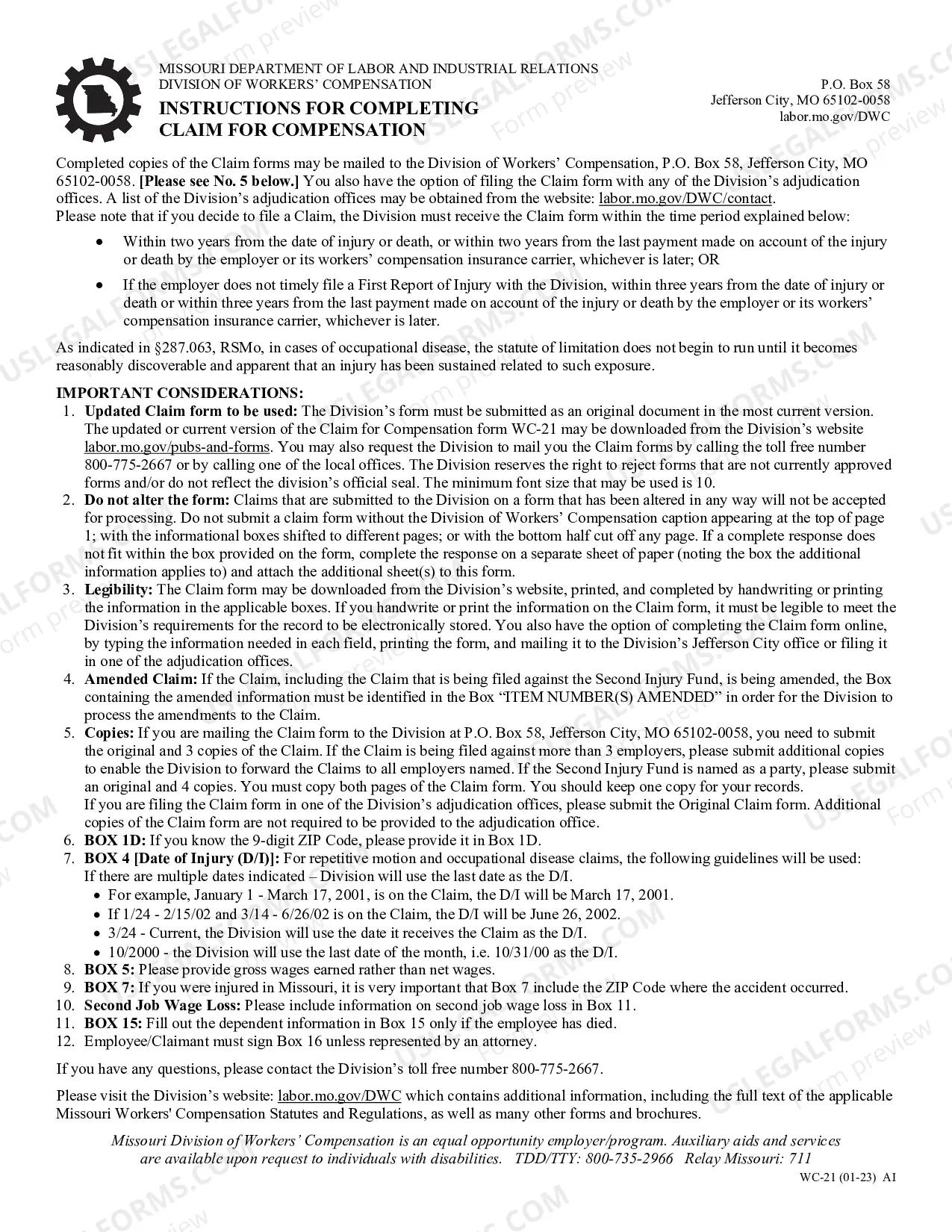
Reporting an injury to an employer is not the same as filing a legal claim with the state. If a dispute arises—such as a denial of benefits or a disagreement over disability ratings—the employee must file a formal Claim for Compensation with the Division of Workers' Compensation. Generally, the statute of limitations for filing this claim is two years from the date of the injury or the last payment made on account of the injury, whichever is later. In some specific circumstances, this can be extended to three years if the employer failed to file the FROI timely.
Medical Treatment Guidelines and Rights
One of the most significant aspects of Missouri law is the employer’s right to select the treating physician. Unlike some states where the employee can choose their doctor, Missouri gives the employer (or their insurance carrier) the absolute right to designate the medical provider.
Authorized Treating Physicians
If an employee seeks treatment from their own doctor without prior authorization from the employer, the employer is generally not responsible for those medical bills. To ensure coverage, workers must use the "authorized treating physician" provided by the insurance carrier.
The employer's obligations regarding medical care include:
- Providing all medical, surgical, and hospital treatment necessary to cure and relieve the effects of the injury.
- Paying for prescriptions, medical devices (like crutches or braces), and physical therapy.
- Providing mileage reimbursement for travel to and from medical appointments if the distance exceeds a certain threshold (usually if the treatment is outside the local metropolitan area).
Maximum Medical Improvement (MMI)
Medical benefits continue until the worker reaches Maximum Medical Improvement (MMI). MMI is the point at which a doctor determines that the worker's condition has stabilized and no further functional improvement is expected from additional treatment. Once MMI is reached, the focus of the claim shifts from medical recovery to determining the extent of permanent disability.
Types of Disability Benefits in Missouri
Missouri provides four primary types of disability benefits, calculated based on the employee's Average Weekly Wage (AWW). The AWW is typically determined by averaging the gross wages earned during the 13 weeks prior to the injury.
| Benefit Type | Description | Duration / Limit |
|---|---|---|
| Temporary Total Disability (TTD) | Paid if the employee is completely unable to work while recovering. | 66.6% of AWW; capped at state maximum. |
| Temporary Partial Disability (TPD) | Paid if the employee returns to light-duty work but earns less than their pre-injury wage. | 66.6% of the difference in wages. |
| Permanent Partial Disability (PPD) | Paid for permanent functional loss of a body part (e.g., loss of use of a hand). | Based on a statutory schedule of weeks/values. |
| Permanent Total Disability (PTD) | Paid if the worker is permanently unable to return to any form of gainful employment. | Lifetime weekly payments. |
Calculating TTD and PPD
For 2026, the maximum weekly rates are adjusted annually every July based on the state's average weekly wage. As a rule of thumb, TTD benefits are two-thirds of the worker's gross weekly pay, up to the cap.
Permanent Partial Disability (PPD) is more complex. Missouri uses a "level" system. Each body part is assigned a specific number of weeks (e.g., the arm at the shoulder is worth 232 weeks). A doctor assigns a disability percentage (e.g., 10% disability of the arm). The settlement is calculated by multiplying the percentage by the weeks by the PPD rate.
Occupational Diseases and Repetitive Stress
Missouri guidelines also cover "occupational diseases," which are conditions arising out of and in the course of employment that are not caused by a single accidental event. Common examples include carpal tunnel syndrome, respiratory issues from chemical exposure, and hearing loss.
The standard of proof for occupational diseases is "prevailing factor." The worker must demonstrate that work exposure was the primary cause of the condition or disability. Missouri law has specific, enhanced benefits for toxic exposures, such as mesothelioma resulting from asbestos exposure, which often involve much higher compensation rates and specialized funds.
Dispute Resolution and the Legal Process
When a claim is contested—whether the insurer denies the injury happened at work or disagrees with the disability rating—the case moves into the adjudication phase.
- Mediation: An Administrative Law Judge (ALJ) or a legal advisor may hold a mediation session to help the parties reach a voluntary settlement.
- Pre-Hearing Conference: A meeting to discuss the status of the case, exchange medical records, and narrow the issues in dispute.
- Evidentiary Hearing: This is essentially a trial before an ALJ. There is no jury. Both sides present medical evidence, testimony, and expert opinions.
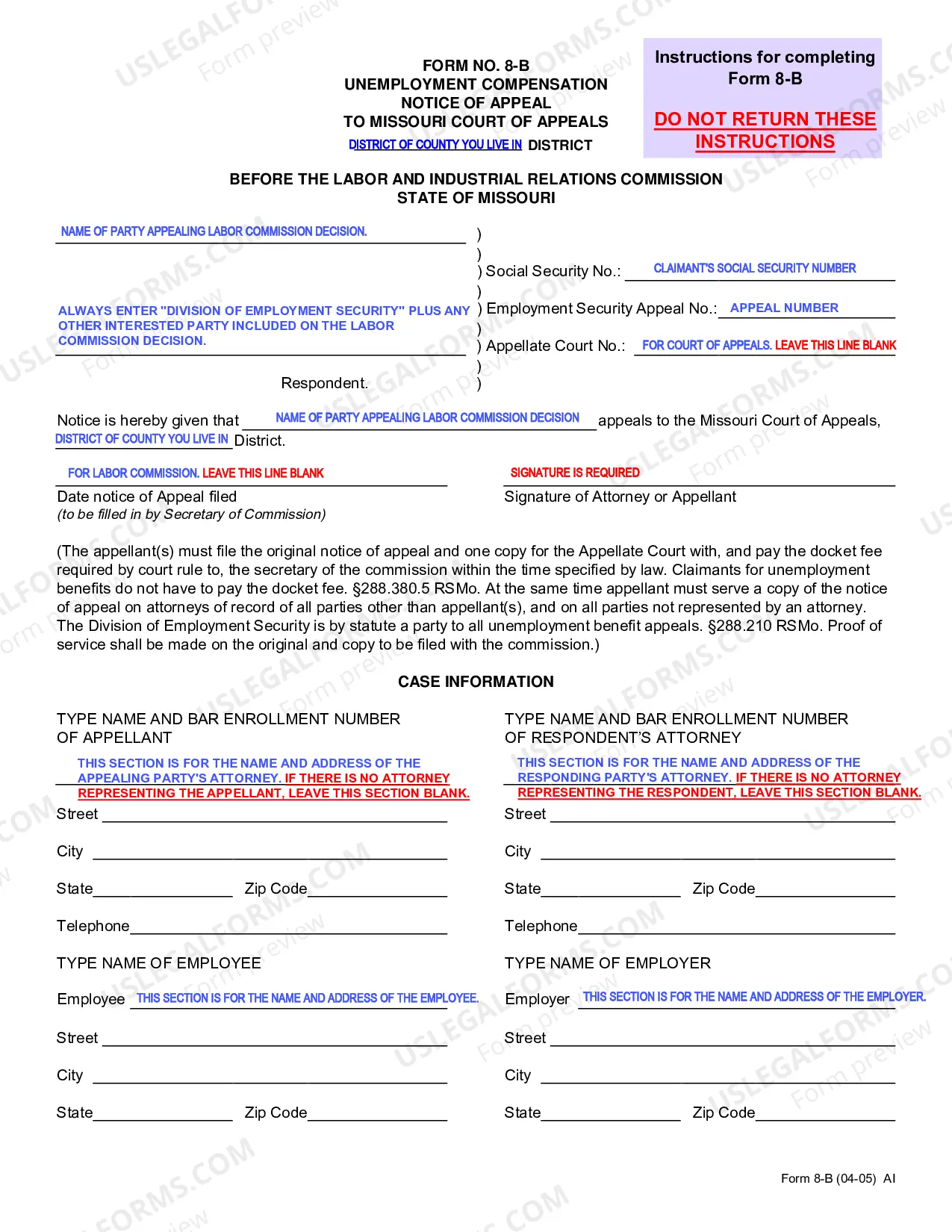
- Appeals: Decisions made by an ALJ can be appealed to the Labor and Industrial Relations Commission. Further appeals can be taken to the Missouri Court of Appeals and, in rare cases, the Missouri Supreme Court.
The Role of the Second Injury Fund (SIF)
The Missouri Second Injury Fund was designed to encourage employers to hire workers with pre-existing disabilities. If a worker with a pre-existing disability suffers a new work injury, and the combination of the two results in permanent total disability, the SIF may be responsible for a portion of the benefits. However, legislative reforms in recent years have strictly limited the SIF's liability for permanent partial disability claims.
Common Mistakes to Avoid
Navigating Missouri workers' compensation requires strict adherence to procedural rules. Common pitfalls include:
- Failing to Report to the Right Person: Telling a co-worker about an injury is not sufficient. Notice must be given to a supervisor, manager, or HR department.
- Exaggerating Symptoms: Insurance companies frequently use surveillance. Inconsistencies between a worker's physical actions and their reported pain can lead to a denial based on fraud or lack of credibility.
- Missing Doctor Appointments: In Missouri, non-compliance with authorized medical treatment can give the insurer grounds to suspend TTD benefits.
- Recording Statements Without Counsel: Insurers often ask for recorded statements immediately after an injury. These statements are often used to find contradictions later in the case.
Frequently Asked Questions
Can I be fired for filing a workers' compensation claim in Missouri?
No. Missouri law prohibits employers from discharging or discriminating against an employee for exercising their rights under the Workers’ Compensation Act. This is known as "workers' compensation retaliation." If an employee is fired specifically because they filed a claim, they may have grounds for a separate civil lawsuit for wrongful discharge.
Does Missouri workers' compensation cover mental health issues?
Mental health conditions, such as PTSD or depression, are only compensable if they result from a physical injury or if the worker was exposed to extraordinary stress that is not common to that occupation. For first responders, the guidelines for "mental-mental" claims (mental injury without physical impact) are slightly more accessible than for the general workforce, but the burden of proof remains high.
What if my injury was caused by my own mistake?
Because Missouri is a no-fault system, you are still eligible for benefits even if you caused the accident through your own negligence. However, there are exceptions: if the injury was caused by the employee's use of alcohol or non-prescribed controlled substances, benefits can be reduced by 50% or forfeited entirely. Additionally, if an employee fails to use safety devices provided by the employer, benefits can be reduced by 15% to 50%.
How are death benefits handled in Missouri?
If a workplace injury results in death, the employer/insurer is responsible for funeral expenses (up to a statutory limit, currently $5,000) and weekly death benefits for the surviving spouse and dependent children. The total weekly benefit is two-thirds of the deceased worker’s average weekly wage.
Summary and Next Steps
The Missouri workers' compensation system provides a critical safety net, but its "employer-choice" medical model and strict reporting timelines require workers to be proactive. If you are injured on the job in 2026, your immediate priority should be notifying your supervisor in writing and requesting a list of authorized medical providers.
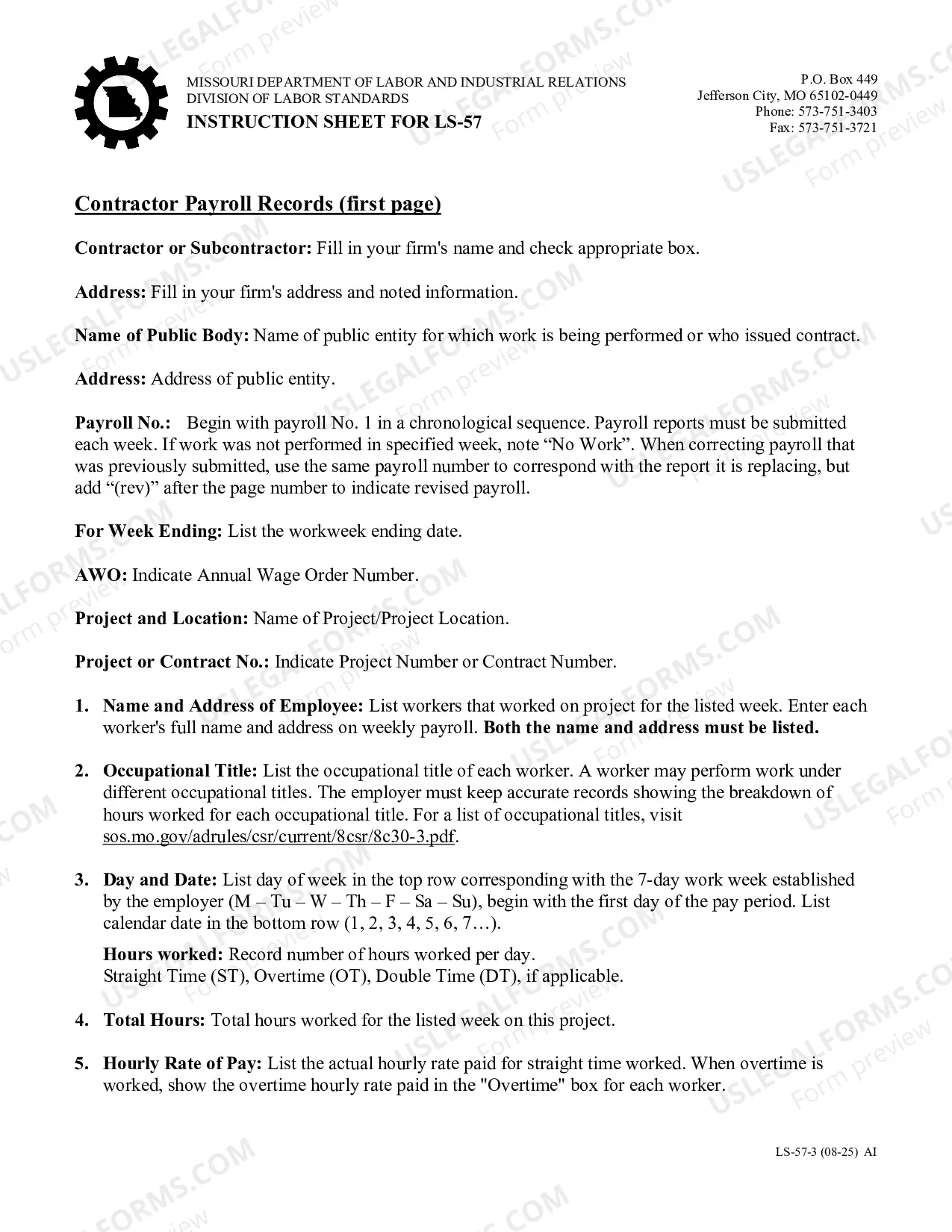
For employers, maintaining accurate payroll records and ensuring every incident is documented—even if it seems minor—is the best defense against future litigation. Because the laws surrounding disability ratings and the Second Injury Fund are subject to nuanced legal interpretations, consulting with a qualified Missouri workers' compensation attorney or the Division's Information and Assistance unit is often necessary to ensure all guidelines are followed and benefits are fully realized.
Image Gallery