How Much Taxes Do I Owe from Life Insurance Death Benefits?
In most cases, beneficiaries owe zero federal income taxes on life insurance death benefits because payouts are generally considered tax-free under Internal Revenue Code Section 101(a). However, exceptions exist involving interest earn...
In most cases, beneficiaries owe zero federal income taxes on life insurance death benefits because payouts are generally considered tax-free under Internal Revenue Code Section 101(a). However, exceptions exist involving interest earned on delayed payouts, policy transfers for valuable consideration, estate taxes for high-value estates, and specific state-level inheritance or estate tax laws.
Contents
Navigating the financial aftermath of losing a loved one involves numerous administrative and legal responsibilities, with tax questions often ranking among the most pressing concerns for grieving families. When beneficiaries learn that a life insurance policy has been left in their name, a primary source of anxiety centers on whether the government will claim a portion of those funds. Understanding how the tax code treats these proceeds helps beneficiaries plan their financial futures accurately, avoid unnecessary compliance errors, and distinguish between general income tax rules and less common taxable scenarios.
General Tax Treatment of Life Insurance Death Benefits
Under federal tax law enforced by the Internal Revenue Service (IRS), life insurance death benefits received as a lump-sum payment are generally income-tax-free. This fundamental rule applies whether the policyholder was a parent, spouse, business partner, or other individual who named a private individual, trust, or corporation as the beneficiary.
The rationale behind this tax exemption is rooted in the public policy purpose of insurance: to provide financial security and stability to dependents after the loss of a breadwinner or provider. Because the premiums paid into the policy were funded with after-tax dollars (in standard personal arrangements), the resulting payout functions as a replacement of human economic value rather than an investment gain or earned income. Consequently, beneficiaries are not required to report a standard lump-sum death benefit on their federal income tax returns as gross income.
Furthermore, this tax-free status extends to various payout structures, provided the terms are established correctly within the contract. Whether the benefit is distributed immediately in a single check or structured across a designated timeline, the principal amount remains exempt from standard income taxation.
Exceptions Where Death Benefits May Be Taxed
While the baseline rule exempts life insurance proceeds from income tax, several important exceptions can trigger tax liabilities. Beneficiaries, estate executors, and policyholders must evaluate these specific structural and financial variables to determine if a portion of the payout is subject to taxation.
1. Interest Earned on Delayed Payouts
If the insurance company does not pay out the death benefit immediately upon the insured's passing and instead holds the funds while verifying claims or processing paperwork, the insurance company typically pays interest on the balance.
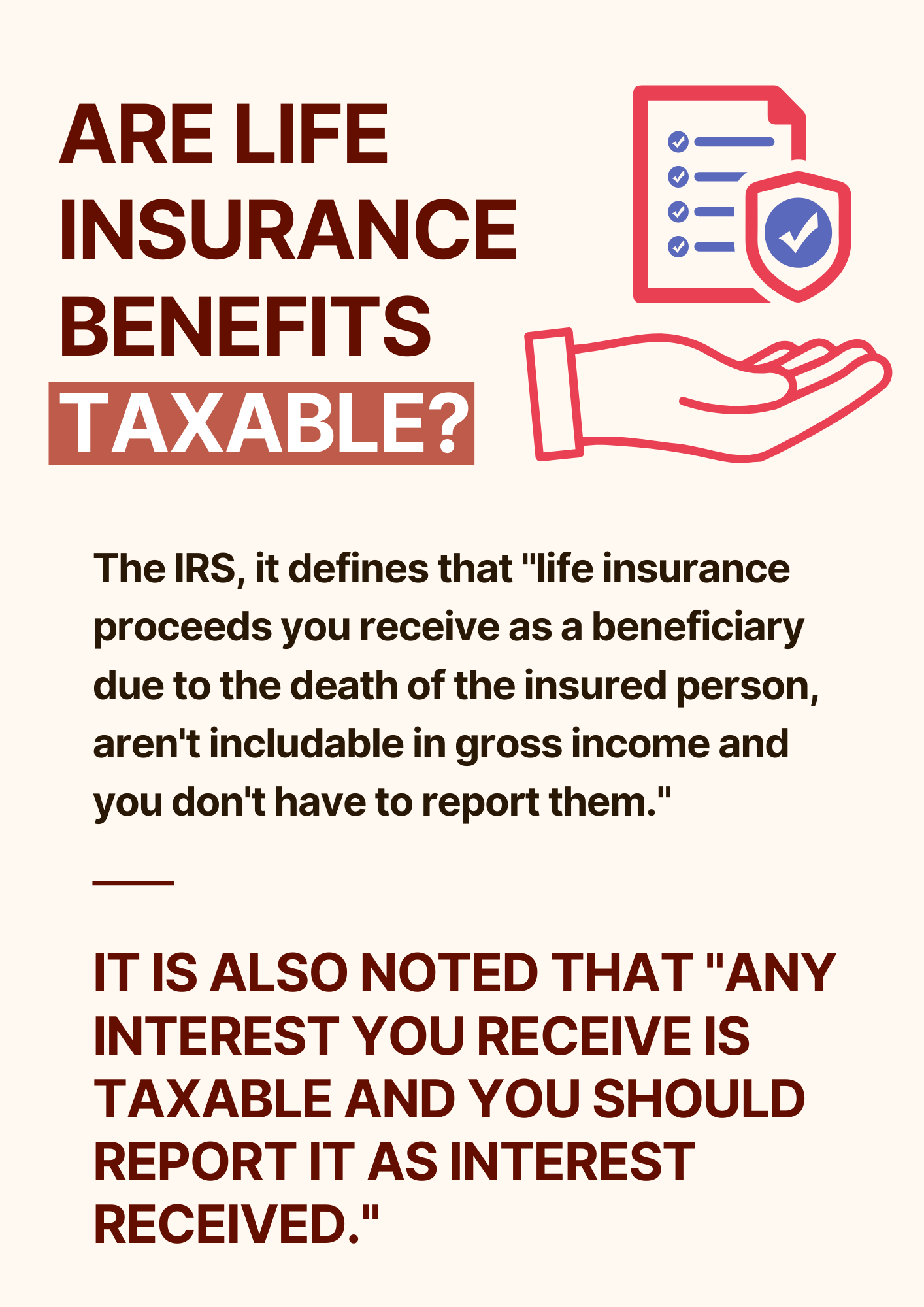
While the principal death benefit remains tax-free, any interest accumulated between the date of death and the date of distribution is considered taxable income. The insurance company will issue a Form 1099-INT to the beneficiary for the interest portion, which must be reported on their annual federal income tax return.
2. The Transfer-for-Value Rule
A complex exception occurs when a life insurance policy is sold or transferred to another party for valuable consideration (such as cash, property, or debt relief) before the insured individual dies.
Under the transfer-for-value rule, if a policy is transferred for valuable consideration, a portion of the death benefit may lose its tax-free status. When the insured passes away, the new owner of the policy may have to pay ordinary income tax on the portion of the death benefit that exceeds the consideration they paid for the policy, plus any subsequent premiums they paid out of pocket.
However, statutory exceptions to this rule exist. For instance, if the policy is transferred to the insured person themselves, to a business partner of the insured, to a partnership in which the insured is a partner, or to a corporation in which the insured is a shareholder or officer, the tax-free status is typically preserved.
3. Accelerated Death Benefits and Viatical Settlements
Some permanent life insurance policies include riders that allow the policyholder to access a portion of the death benefit while they are still alive if they are diagnosed with a terminal or chronic illness. These are known as accelerated death benefits.
Under specific statutory guidelines, these living benefits are generally received income-tax-free if used to pay for medical care or living expenses associated with the illness. Conversely, if a policyholder sells their policy to a third party through a viatical settlement company, a portion of the proceeds may be taxable depending on the policy’s cash value and the taxpayer's health status.
Federal Estate Taxes vs. Income Taxes
A common point of confusion for families is the distinction between income tax and estate tax. While a life insurance death benefit is almost always exempt from income tax, it is not automatically exempt from federal estate taxes.
The inclusion of life insurance proceeds in a deceased person's gross estate depends entirely on who owned the policy at the time of death.
| Policy Ownership Scenario | Included in Gross Estate? | Potential Tax Impact |
|---|---|---|
| Insured Owned the Policy | Yes | Payout adds to total estate value, potentially triggering estate taxes if the estate exceeds federal or state exemption thresholds. |
| Beneficiary Owned the Policy | No | Payout bypasses the gross estate entirely, avoiding estate taxation. |
| Irrevocable Life Insurance Trust (ILIT) | No | Payout is owned by the trust, keeping it outside the taxable estate while providing liquidity to beneficiaries. |
For high-net-worth estates exceeding the federal estate tax exemption limits, poor structuring can result in significant estate tax liabilities. To mitigate this, estate planners frequently utilize an Irrevocable Life Insurance Trust (ILIT) to purchase and hold the policy, ensuring the proceeds bypass the taxable estate entirely.
State-Level Inheritance and Estate Taxes
In addition to federal regulations, beneficiaries must examine state-level tax laws where the deceased resided or where the estate is administered. While most states mirror the federal government by exempting life insurance from income tax, a handful of states impose their own estate or inheritance taxes.
- State Estate Taxes: Levied on the overall estate of the deceased before distribution. If life insurance proceeds are legally considered part of the gross estate due to policy ownership rules, they can increase the total estate value and push it over lower state-level exemption thresholds.
- State Inheritance Taxes: Levied directly on the beneficiary receiving the assets based on their relationship to the deceased. A few states impose inheritance taxes, though exemptions often apply to close relatives such as children, spouses, and parents.
Consulting with a local estate planning attorney or certified public accountant ensures compliance with jurisdiction-specific tax statutes.
Summary Comparison of Tax Liabilities
| Tax Type | Standard Treatment | Potential Tax Trigger |
|---|---|---|
| Federal Income Tax | 100% Tax-Free | Interest earned on delayed payouts; policies subject to the transfer-for-value rule. |
| Federal Estate Tax | Exempt if structured properly | Ownership of the policy by the insured at death, pushing total estate value over federal limits. |
| State Income Tax | 100% Tax-Free | Rare, but dependent on specific state revenue statutes regarding delayed settlement interest. |
| State Estate/Inheritance Tax | Varies by state | State-specific asset thresholds and beneficiary relationship classifications. |
Frequently Asked Questions
Do I need to report a life insurance payout on my tax return?
Generally, no. If you received a standard lump-sum death benefit as a named beneficiary, you do not need to report it as gross income on your federal tax return. However, if you received a Form 1099-INT reporting interest earned on delayed payments, you must report that specific interest income.
Are employer-provided life insurance payouts taxed?
Group-term life insurance provided by an employer up to $50,000 is tax-free to the employee and generally tax-free to the beneficiary as a death benefit. However, if the employer-provided policy exceeds $50,000, the cost of the coverage above that threshold may be included in the employee's taxable income as a fringe benefit while they are alive, though the ultimate death benefit typically remains income-tax-free to the beneficiary.
What happens if I receive the death benefit in installments instead of a lump sum?
Choosing a structured payout option where the insurance company holds the principal and distributes it over time means the principal portion remains income-tax-free. However, any portion of the installment payments that represents interest earned on the balance while held by the insurance company is subject to ordinary income tax.
Can life insurance proceeds be seized to pay off the deceased's debts?
In most standard arrangements, life insurance death benefits pass directly to the named beneficiaries and are protected from the deceased person's creditors and debts. However, exceptions occur if the estate is named as the beneficiary, or if the policy was pledged as collateral for a loan during the policyholder's lifetime.
How does an Irrevocable Life Insurance Trust (ILIT) eliminate estate taxes?
An ILIT is a legal entity created specifically to own a life insurance policy. Because the trust owns the policy—not the insured individual—the death benefit is legally excluded from the insured's gross estate upon death, protecting the entire payout from federal and state estate taxes.
Next Actions and Professional Guidance
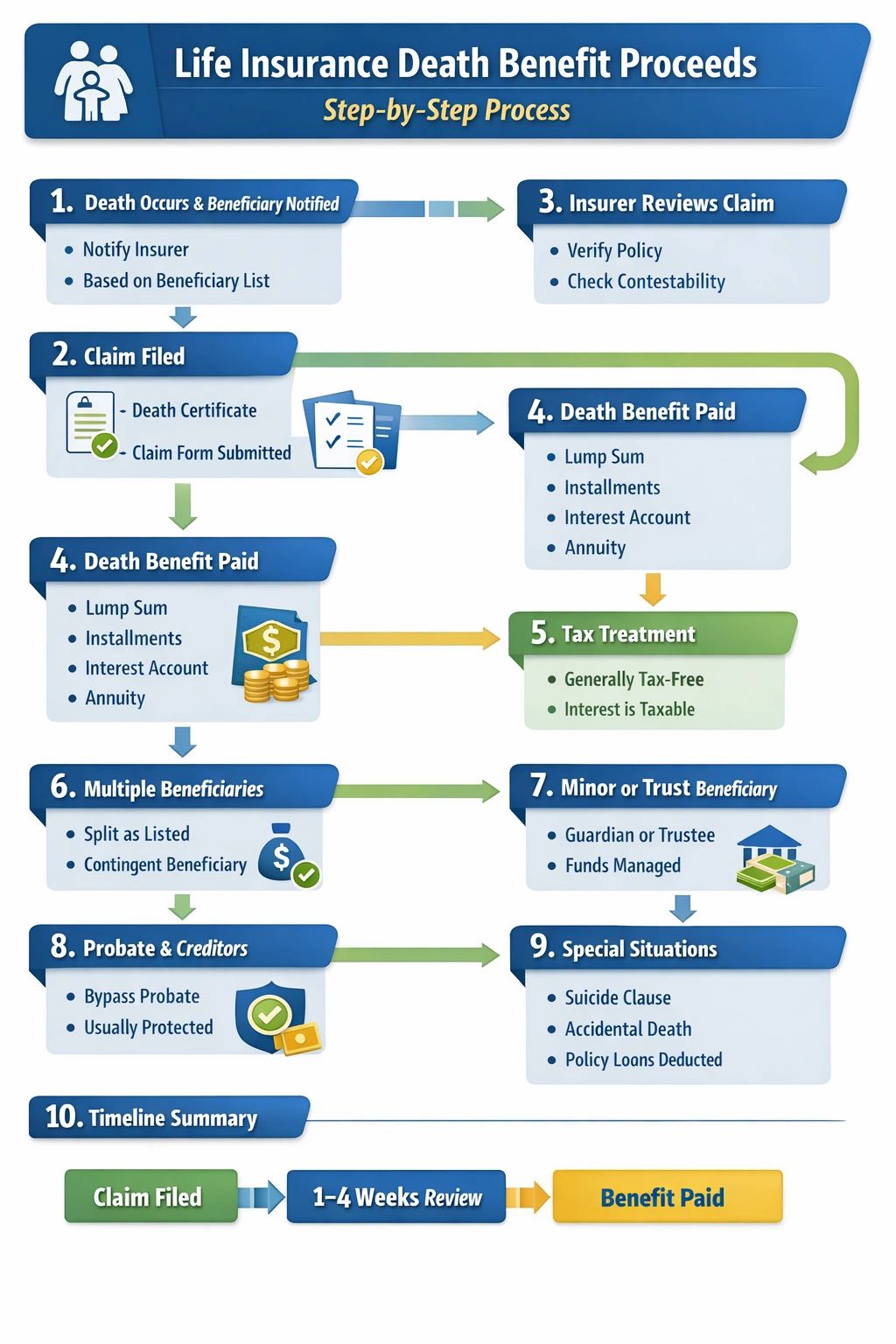
When managing a life insurance payout, beneficiaries should first request the official death certificate, contact the insurance carrier to initiate the claim paperwork, and review the settlement options provided. If the policy is large, involves complex trust structures, or includes delayed interest payments, consulting a qualified tax professional or estate planning attorney is essential to verify compliance and optimize financial outcomes.
Image Gallery