Coco Gauff’s Athletic Physique: Training, Evolution, and High-Performance Biometrics
Coco Gauff’s physique represents a masterclass in modern athletic development, blending explosive power with elite-level agility and endurance. Standing 5'9" (1.75m), her body is optimized for the high-intensity demands of the WTA tour...
Coco Gauff’s physique represents a masterclass in modern athletic development, blending explosive power with elite-level agility and endurance. Standing 5'9" (1.75m), her body is optimized for the high-intensity demands of the WTA tour, characterized by a powerful posterior chain, exceptional lateral mobility, and the lean muscle mass required for sustained professional performance at the highest level.
Contents
The Biometric Profile of a Grand Slam Champion
To understand the efficacy of Coco Gauff’s body as a tool for professional tennis, one must first look at her natural biometrics. In the context of the 2026 professional circuit, Gauff stands at 5'9", a height that is often considered the "sweet spot" for modern female tennis players. This height provides enough leverage for a high-velocity serve while maintaining a low enough center of gravity to facilitate the rapid direction changes necessary for elite defensive play.
Her wingspan is particularly notable. While official wingspan measurements are rarely published in tennis (unlike the NBA), observers and analysts consistently point to her "long levers." These long arms allow her to reach wide balls that would be winners against other players, effectively shrinking the court for her opponents. Furthermore, her limb length contributes significantly to the torque she generates on her backhand—widely considered one of the most stable and powerful shots in the women’s game.
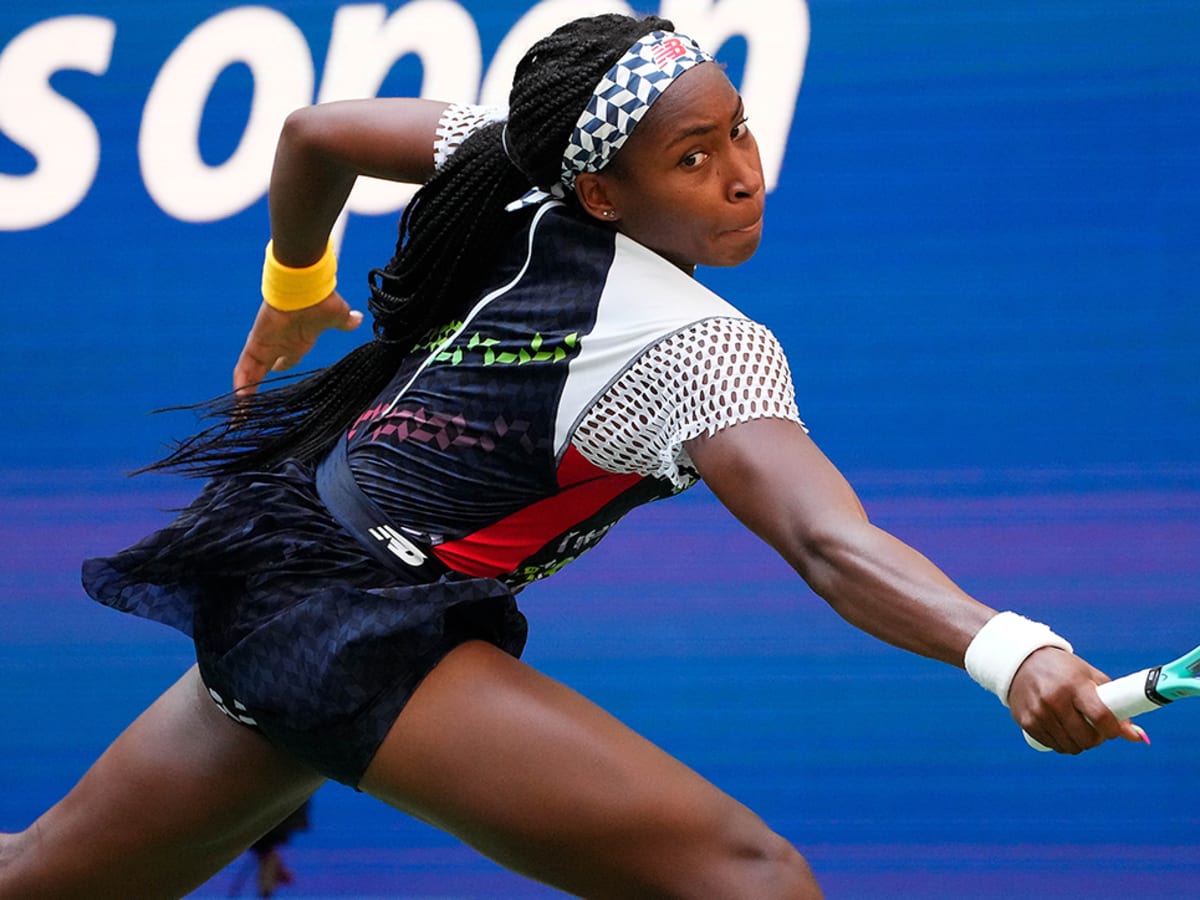
The distribution of her muscle mass is also telling. Gauff possesses significant strength in her lower body, specifically her quads and glutes. This "engine room" provides the explosive "first-step" quickness that allows her to transition from a stationary position to a full sprint in a fraction of a second. This physical attribute is what makes her arguably the best defensive player on the tour, capable of sliding on hard courts as if they were clay.
The Physical Evolution: From 2019 Debut to 2026 Dominance
The evolution of Coco Gauff’s body has been a deliberate and carefully managed process. When she first burst onto the international scene at Wimbledon in 2019 as a 15-year-old, her physique was that of a typical, albeit highly gifted, teenager—lean, wiry, and still growing. Over the subsequent seven years leading into 2026, her physical transformation has been focused on "bulletproofing" her frame against injury while adding the functional strength needed to compete with the tour’s biggest hitters.
Between 2022 and 2024, there was a visible shift in her upper-body definition. Working with specialized strength and conditioning coaches, Gauff added lean muscle to her shoulders and core. This was not merely for aesthetic purposes but to support a more reliable and powerful service motion. In the early stages of her career, her serve was prone to double faults under pressure; by 2026, the added stability in her kinetic chain—the coordinated movement of the legs, hips, trunk, and shoulders—has turned her serve into a consistent weapon.
The Role of the Kinetic Chain
In sports science, the kinetic chain refers to the notion that the human body is a series of interconnected segments. For Gauff, the power for her 120+ mph serves does not come solely from her arm. It begins with the "loading" of her legs, moves through the rotational force of her core, and is finally delivered through her shoulder and wrist. Her training has prioritized the synchronization of these segments, ensuring that her body works as a single, efficient unit.
The Pillars of Gauff’s Training Regimen
Gauff’s physique is maintained through a rigorous, multi-disciplinary approach to fitness. While tennis practice takes up a significant portion of her day, her off-court work is what defines her physical capabilities.
1. Plyometrics and Explosive Power
To maintain her status as one of the fastest players on tour, Gauff engages in heavy plyometric training. This involves explosive movements like box jumps, lateral bounds, and sprint starts. These exercises train her fast-twitch muscle fibers, which are essential for the short, intense bursts of energy required during a tennis rally.
2. Functional Strength Training
Unlike traditional bodybuilding, Gauff’s weightlifting is functional. She focuses on compound movements—squats, deadlifts, and lunges—that mimic the movements of a tennis match. Special attention is paid to the posterior chain (the muscles on the back of the body). A strong posterior chain is vital for decelerating the body after a sprint, a movement that puts immense strain on the knees and ankles.
3. Core Stability and Rotational Force
Tennis is a sport of rotation. Every forehand and backhand requires the trunk to rotate with force. Gauff’s training involves extensive work with medicine balls, cable rotations, and plank variations. A stable core ensures that the power generated by her legs is efficiently transferred to the ball, rather than being "leaked" through a weak midsection.
The Impact of Fitness on Gauff’s Defensive Strategy
The most significant advantage of Coco Gauff’s body is her ability to play "extended defense." In professional tennis, the ability to stay in a point when an opponent hits a near-winner is invaluable. Gauff’s combination of reach and foot speed allows her to force opponents to hit "one more ball."
This defensive capability is physically taxing. It requires incredible aerobic and anaerobic capacity. By 2026, Gauff has optimized her VO2 max (a measure of the maximum amount of oxygen an individual can use during intense exercise), allowing her to recover between points in a matter of seconds, even after a 30-shot rally. This cardiovascular fitness is a psychological weapon; opponents often find themselves exhausted by Gauff’s relentless retrieval skills, leading to unforced errors.
| Physical Attribute | On-Court Benefit | Technical Training Focus |
|---|---|---|
| 5'9" Height | Optimal serve leverage & court vision | Service toss consistency & overhead timing |
| Exceptional Reach | Defensive coverage & wide-ball retrieval | Lateral lunging & sliding mechanics |
| High Power-to-Weight Ratio | Explosive first-step quickness | Plyometrics & HIIT (High-Intensity Interval Training) |
| Core Rotational Strength | Increased ball speed on groundstrokes | Medicine ball throws & anti-rotational holds |
| Aerobic Endurance | Performance stability in 3rd-set scenarios | Zone 2 cardio & interval sprinting |
Nutrition, Recovery, and the 24-Hour Athlete
Maintaining a world-class physique requires more than just gym work; it requires a scientific approach to recovery and nutrition. For Gauff, her body is her business, and every input is monitored.
Fueling the Performance
Gauff’s diet is high in complex carbohydrates to fuel her high-energy matches, complemented by lean proteins for muscle repair and healthy fats for hormonal balance. During the 2026 season, her team utilizes real-time sweat analysis to determine the exact electrolyte balance she needs during matches to prevent cramping—a common issue for elite athletes playing in humid environments like the Australian Open or the US Open.
Recovery Protocols
Recovery is where the gains from training are actually realized. Gauff’s routine typically includes:
- Cryotherapy and Ice Baths: To reduce systemic inflammation after long matches.
- Compression Technology: Using pneumatic sleeves to enhance blood flow and lymphatic drainage in the legs.
- Sleep Hygiene: Prioritizing 8–10 hours of sleep, which is the primary window for muscle protein synthesis and mental recovery.
- Physiotherapy: Daily manual therapy to address "hot spots" before they turn into chronic injuries.
FAQs: Understanding the Science Behind Gauff’s Build
How tall is Coco Gauff and how does it help her game?
Coco Gauff is 5'9" (1.75m). This height is considered ideal for tennis because it provides a significant "strike zone" and leverage for a powerful serve without sacrificing the agility and low-center-of-gravity movement characteristic of shorter players. It allows her to compete both as a "power" player and a "movement" player.
What is the focus of Coco Gauff’s weight training?
Gauff focuses on functional strength rather than bulk. Her routine emphasizes explosive movements and lower-body stability. By strengthening her glutes, hamstrings, and core, she protects her joints from the high-impact nature of hard-court tennis and ensures she can generate power from the ground up.
Has Coco Gauff’s body changed since she started on the tour?
Yes, significantly. Since her debut at age 15, Gauff has undergone a natural maturation combined with professional-grade conditioning. She has added noticeable muscle definition in her upper body and improved her overall strength-to-weight ratio, which has directly contributed to the increased speed of her serve and the depth of her groundstrokes.
How does Coco Gauff prevent injuries despite her aggressive movement?
Gauff’s injury prevention strategy centers on flexibility and eccentric strength training. By training her muscles to handle the load of "stopping" and "starting" (eccentric loading), she reduces the risk of ligament tears. Her team also emphasizes "pre-hab" exercises for the ankles and shoulders, which are high-stress areas for tennis players.
What makes Coco Gauff one of the fastest players in tennis?
Her speed is a combination of genetic fast-twitch muscle fibers and specific plyometric training. Furthermore, her technical "footwork" allows her to take efficient routes to the ball, using small "adjustment steps" that ensure she is perfectly balanced when she arrives at the point of contact.
The Future of the Gauff Model
As of 2026, Coco Gauff has set a new standard for what a female tennis athlete can look like. Her physique is a departure from the traditional binary of "power hitter" versus "counter-puncher." She represents a hybrid model: an athlete with the frame to dictate play and the conditioning to outlast anyone on the circuit.
For aspiring athletes, Gauff’s journey highlights that a professional "body" is not built overnight. It is the result of years of incremental gains, a focus on functional movement over aesthetics, and a disciplined approach to recovery. As she continues her career, her physical maintenance will likely shift toward longevity, ensuring that her explosive style of play remains sustainable for years to come.
Practical Action: For those looking to emulate Gauff's fitness, prioritize functional mobility and core stability before adding heavy weights. Use a combination of lateral lunges and interval sprints to build the kind of "tennis-specific" cardio that Gauff uses to dominate the court.
Image Gallery