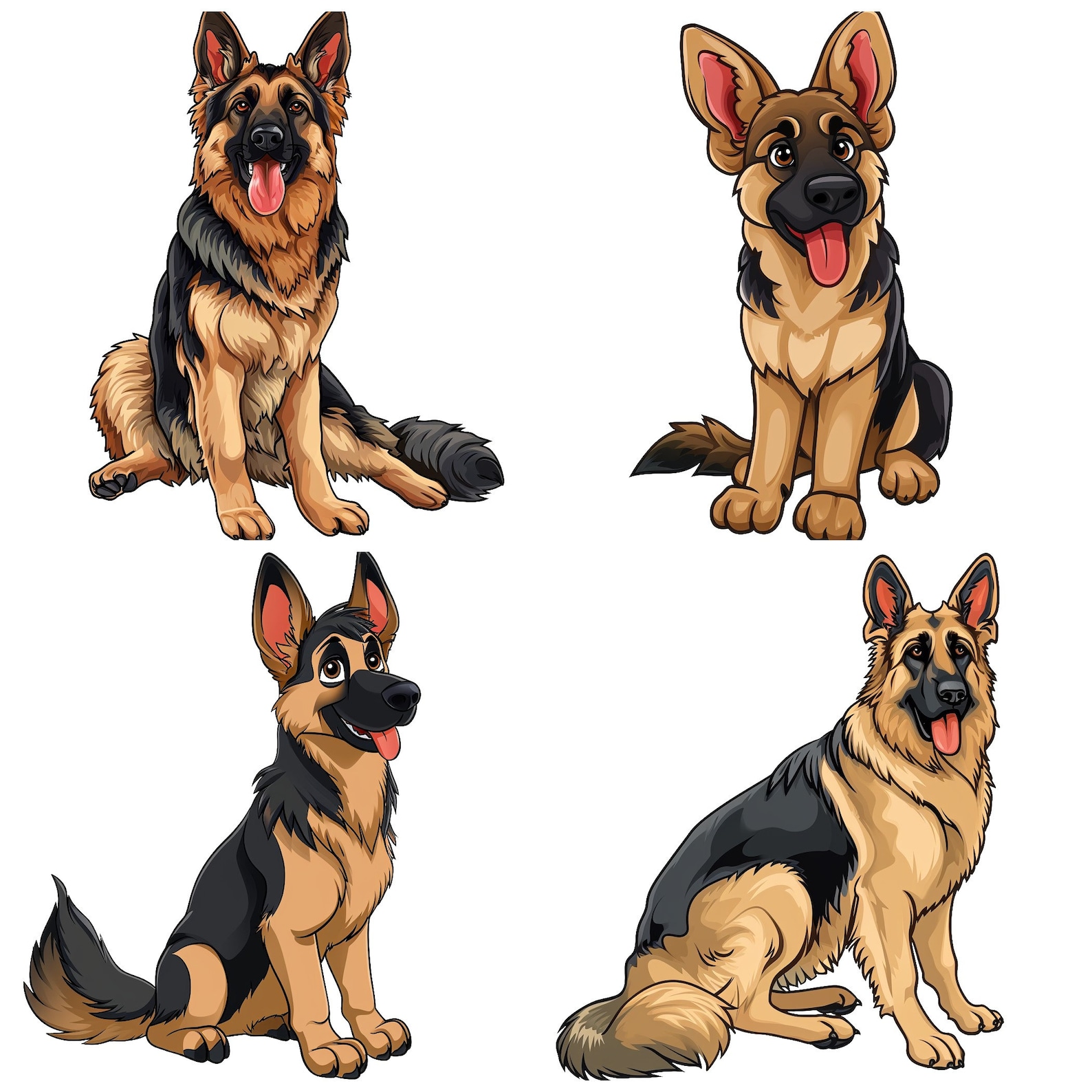
Understanding the Character of the German Shepherd: Temperament, Drive, and Instincts
The character of the German Shepherd Dog is defined by exceptional intelligence, unwavering loyalty, high working drive, and a balanced, confident disposition. Naturally protective yet poised, this breed exhibits a calm self-assurance...
The character of the German Shepherd Dog is defined by exceptional intelligence, unwavering loyalty, high working drive, and a balanced, confident disposition. Naturally protective yet poised, this breed exhibits a calm self-assurance and an aloofness toward strangers, requiring consistent mental engagement, structured socialization, and clear leadership to thrive as both a working companion and family dog.
Contents
Core Temperament: Key Traits of the German Shepherd
The German Shepherd Dog (GSD) is recognized globally for its distinct behavioral profile. Originally bred in late 19th-century Germany by Captain Max von Stephanitz for herding and protecting sheep, the breed's foundational character traits emphasize utility, nerve strength, and emotional stability. Understanding these core personality attributes is essential for prospective owners, handlers, and trainers.
- German Shepherd Character
- Intelligence & Trainability
- Loyalty & Attachment
- Balanced Nerve & Vigilance
Intelligence and Rapid Adaptability
German Shepherds consistently rank among the most intelligent canine breeds. Their cognitive capacity allows them to understand new commands in very few repetitions and assess complex operational situations quickly. This intelligence goes beyond rote memorization; German Shepherds demonstrate adaptive problem-solving skills, enabling them to evaluate environment dynamics, anticipate hander expectations, and perform intricate tasks such as search-and-rescue, scent discrimination, and assistance work.
However, high intelligence requires continuous engagement. A German Shepherd left without constructive tasks will often invent its own entertainment, which can manifest as persistent barking, destructive chewing, or fence-pacing.
Loyalty and Deep Family Attachment
Loyalty is a hallmark of the German Shepherd's character. These dogs form strong bonds with their primary handlers and immediate human families. Rather than displaying indiscriminate affection toward everyone they encounter, German Shepherds select their core social circle and remain deeply attentive to them.
This attachment makes them exceptionally responsive working partners, but it also means they require frequent human interaction. Prolonged isolation or separation without proper preparation can lead to separation anxiety, vocalization, and distress behaviors.
Confidence, Courage, and Aloofness
A fundamental trait of a well-bred German Shepherd is poise under pressure. The official breed standard mandates that the dog display a calm, self-assured demeanor rather than nervous agitation or unprovoked aggression.
When encountering strangers, a German Shepherd typically displays an aloof neutrality. They do not immediately seek attention from unfamiliar people; instead, they observe quietly from a distance. Once a stranger is accepted by the handler, the dog will generally grant quiet acceptance. This combination of natural alertness and restrained composure makes the breed formidable in personal protection and law enforcement applications.
Breed Standards and Lineage Variations
While general behavioral traits apply to the breed overall, significant character variations exist depending on official breed standards and bloodlines. The International Cynological Federation (FCI) and the American Kennel Club (AKC) establish precise guidelines for character and temperament, while distinct breeding lines produce marked operational differences.
Official Temperament Guidelines
Official canine registries evaluate the German Shepherd’s mental stability as rigorously as its physical structure:
- FCI Standard (No. 166): Requires the German Shepherd to be well-balanced, sound in nerves, self-confident, completely composed, and (except when provoked) agreeable, attentive, and tractable. Shyness, fearfulness, or unwarranted aggression are considered disqualifying faults.
- AKC Standard: Emphasizes a distinct personality marked by direct and fearless, but not hostile, expression. The dog should be self-confident and possess an obvious composure that does not lend itself to immediate or indiscriminate friendships.
Working Lines vs. Show Lines
The character of a German Shepherd is heavily influenced by whether the dog originates from working stock or show-focused breeding programs.
- Working Lines (DDR, Czech, West German Working)
- High Drive & Stamina
- Strong Prey & Defense Instincts
- Requires Intensive Operational Tasks
- Show Lines (West German Show, American Show)
- Moderate Drive & Energy
- Lower Defense Instincts
- Adapted for Family Life & Conformation Ring
- West German Working Lines & East German (DDR) / Czech Lines: Bred primarily for police work, military service, and competitive dog sports (such as IGP/Schutzhund). These dogs possess high prey drive, intense focus, thick nerve thresholds (resilience to stress), and high physical stamina. They require experienced handlers capable of managing high energy and intense work ethics.
- West German Show Lines: Bred to conform to FCI physical and temperamental standards. While they retain functional working instincts, their drive and energy levels are generally lower and more balanced than working lines, making them more adaptable to active companion households.
- American Show Lines: Selected primarily for movement, structure, and temperament suited for the conformation ring and family life. These dogs tend to have lower working drives, softer temperaments, and lower reactivity, though they still require regular exercise and structured obedience training.
Instinctual Drives and Energy Requirements
A German Shepherd's character is built on internal drives that govern how the dog interacts with its environment. Understanding these drives prevents behavioral misunderstandings and helps direct the dog's natural energy productively.
Prey and Herding Instincts
Because the breed was created to manage livestock, German Shepherds possess an active prey and herding drive. This manifests in behaviors such as:
- Following fast-moving objects (cars, cyclists, runners, or small animals).
- Nipping at heels or circling children and family members during active play.
- Persistent fetching, tracking, and retrieving.
Without structured outlets such as ball play, agility, or obedience routines, an unchannelled prey drive can turn into reactive chasing or unwanted livestock harassment.
Defensive and Territorial Traits
German Shepherds have a natural defensive drive that develops as they mature, typically surfacing fully between 12 and 24 months of age. This drive alerts the dog to changes in its territory or threats to its social group.
Unlike purely aggressive breeds, a stable German Shepherd relies on posture, deep vocalization, and positioning to deter threats rather than immediately biting. Managing this instinct requires handlers to establish clear boundaries so the dog does not feel obligated to make protective decisions independently.
Physical and Cognitive Demands
The German Shepherd is a high-energy working breed requiring substantial physical effort and mental stimulation. Physical exercise alone (such as long walks or backyard access) is rarely enough to exhaust a German Shepherd.
Daily Needs Profile:
- Physical Exercise: 60 - 90 Minutes (Running, Fetch, Swimming)
- Mental Stimulation: 30 - 45 Minutes (Tracking, Obedience, Puzzles)
- Social Interaction: Continuous integration with household routines
Mental fatigue via structured obedience, scent work, search games, or trick training is vital for maintaining an even-tempered character.
Character Comparison Across Lineages
The table below outlines key character attributes across the primary German Shepherd bloodlines to help evaluate household or operational suitability.
| Lineage Profile | Prey Drive Level | Defense / Guarding Drive | Nerve Threshold (Stress Resilience) | Energy & Activity Needs | Primary Environment Suitability |
|---|---|---|---|---|---|
| West German Working Line | Very High | High | Very High / Hard | Extreme | Police, Military, Competitive IGP, Advanced Handlers |
| DDR / Czech Working Line | High to Very High | Very High | High / Resilient | Very High | Search & Rescue, Detection, Property Protection, Experienced Owners |
| West German Show Line | Moderate to High | Moderate | Moderate to High | High | Active Families, Herding, Companion Homes, Obedience |
| American Show Line | Moderate | Low to Moderate | Moderate / Soft to Medium | Moderate to High | Family Companion, Conformation, Therapy Work |
Socialization, Training, and Behavior Management
A German Shepherd's character develops through a combination of genetic inheritance and early environmental conditioning. Proper management ensures that natural protective instincts do not convert into fear-based reactivity or unwanted aggression.
Developmental Timeline:
- 0 - 16 Weeks: Intensive Socialization (Expose to sounds, surfaces, people)
- 4 - 12 Months: Basic to Intermediate Obedience & Impulse Control
- 12 - 24 Months: Maturity & Defense Drive Integration (Establish clear rules)
Early Socialization Requirements
The critical socialization window occurs between 3 and 16 weeks of age. During this phase, puppies must be safely exposed to a wide variety of environments, noises, surface textures, animals, and neutral humans.
Effective socialization does not mean allowing every stranger to pet the puppy; rather, it means teaching the puppy to remain calm, confident, and focused on the handler in diverse settings. Early exposure builds resilience and prevents the development of fear-induced territoriality.
Managing Interactions with Children and Pets
German Shepherds can be excellent family companions when raised with firm guidelines and mutual respect:
- Children: Children must be taught how to interact calmly with the dog, avoiding high-pitched screaming or sudden lunging, which can trigger herding or prey responses. Supervise all interactions, particularly with young children.
- Other Dogs and Pets: Early exposure to non-canine household pets (such as cats) helps reduce prey drive triggers. While many German Shepherds coexist peacefully with other dogs, dog selectivity can develop as they reach emotional maturity.
Preventing Behavioral Challenges
Common behavioral issues in German Shepherds include leash reactivity, barrier frustration, excessive vocalization, and resource guarding. These behaviors usually stem from insufficient physical exercise, lack of mental engagement, or inconsistent handler leadership.
Common Behavioral Challenges & Solutions:
- Problem: Leash Reactivity / Barking at Strangers
- Solution: Focus training, counter-conditioning, maintaining distance threshold
- Problem: Destructive Chewing / Digging
- Solution: Increased physical exercise, daily scent work/puzzle toys
- Problem: Over-protective Gate/Door Guarding
- Solution: Place command training, handler asserting control over access points
Frequently Asked Questions
Are German Shepherds naturally aggressive?
No. A stable, well-bred German Shepherd is self-assured, observant, and neutral, not naturally aggressive. Aggression in German Shepherds usually stems from poor breeding (weak nerves), lack of socialization, fear, or deliberate mistreatment. Their natural instinct is to protect when challenged, but they should remain calm and under control in everyday situations.
How does the character of male and female German Shepherds differ?
Male German Shepherds are typically larger, more territorial, and may display stronger protective instincts over physical spaces. Females tend to mature faster emotionally, are often more handler-focused, and can be slightly more reserved with strangers. However, individual genetics and training influence personality far more than sex alone.
Can a German Shepherd be a good dog for first-time owners?
Yes, but only if the first-time owner is dedicated to researching the breed, providing structure, investing in professional obedience training, and committing to daily exercise and mental enrichment. First-time owners should generally seek low-to-moderate drive lines (such as show lines) rather than high-drive working bloodlines.
How much daily exercise does a German Shepherd require to stay calm?
An adult German Shepherd requires approximately 60 to 90 minutes of active physical exercise daily, supplemented by 30 to 45 minutes of mental work such as advanced obedience, tracking, or interactive puzzle toys. Without mental stimulation, physical exercise alone can simply build physical stamina without relaxing the dog.
At what age does a German Shepherd's character fully mature?
German Shepherds mature slower than smaller breeds, reaching full physical and emotional maturity between 2 and 3 years of age. Defensive instincts and territorial awareness typically become more pronounced between 12 and 24 months, requiring consistent reinforcement of rules during this transitional stage.
Practical Recommendations for Prospective Owners
To successfully raise a German Shepherd with a balanced character, follow these core recommendations:
- Select the Right Lineage: Honest assessment of your lifestyle is vital. Avoid high-drive working lines unless you participate in competitive dog sports, working disciplines, or advanced training regimes. Show or companion lines are better suited for typical active households.
- Verify Breeder Health and Temperament Testing: Choose breeders who test parent dogs for hip and elbow dysplasia (via OFA or SV/PennHIP) and evaluate temperament using standardized tests such as the AKC Temperament Test (ATT) or Canine Good Citizen (CGC).
- Prioritize Impulse Control and Obedience: Begin crate training, leash manners, and basic commands immediately upon bringing your dog home. Emphasize impulse control games (such as waiting at doors or holding a steady stay) to manage natural drive.
- Engage in Structured Mental Work: Incorporate scent work, tracking games, or structured retrieve routines into daily exercise to satisfy the breed's working intelligence and prevent boredom-induced behavioral problems.
Image Gallery