The Evolution of the Peyton Manning Contract: A Financial Blueprint of an NFL Legend
Peyton Manning’s NFL contracts represent a masterclass in professional sports negotiation, shifting from traditional high-guarantee rookie deals to complex, incentive-laden veteran agreements. Over his 18-season career, Manning earned...
Peyton Manning’s NFL contracts represent a masterclass in professional sports negotiation, shifting from traditional high-guarantee rookie deals to complex, incentive-laden veteran agreements. Over his 18-season career, Manning earned approximately $248 million in on-field salary alone, setting a precedent for how elite quarterbacks leverage their value to secure both long-term stability and performance-based rewards.
Contents
The Foundation: The 1998 Rookie Era
When Peyton Manning entered the NFL as the first overall pick in the 1998 NFL Draft, the league operated under a significantly different financial landscape than the one we see in 2026. There was no strict rookie wage scale, allowing top picks to command massive leverage before even taking a professional snap. Manning’s initial contract with the Indianapolis Colts was a six-year deal valued at approximately $46.3 million, which included an $11.6 million signing bonus.
This contract was revolutionary at the time because of its structure. It wasn't just about the total value; it was about the escalators and incentives that rewarded Manning for immediate success. By 2004, it was clear that Manning had outplayed his rookie deal, leading to one of the most significant negotiations in the history of the franchise.
The 2004 Market-Setter
In 2004, Manning signed a seven-year, $98 million contract extension with the Colts. This deal was a watershed moment for the "Quarterback-as-CEO" financial model. The contract included a record-breaking $34.5 million signing bonus. At that time, such a large upfront payment was rare, as it put a significant strain on the team's immediate cash flow while providing a massive accounting hurdle for the salary cap.
The 2004 contract was notable for several reasons:
- Cap Management: To accommodate the $34.5 million bonus, the Colts had to structure the deal with low base salaries in the early years.
- Guarantees: While NFL contracts are famously not fully guaranteed, the size of the signing bonus effectively guaranteed Manning would remain a Colt for the majority of the deal's duration.
- Leverage: Manning used the threat of the franchise tag to secure a deal that at the time made him the highest-paid player in league history.
The 2011 Extension and the "Neck Injury" Clause
The most complex chapter of Manning's financial history occurred in 2011. Coming off a series of neck surgeries, Manning signed a five-year, $90 million extension with Indianapolis in July 2011. However, the timing was precarious. The NFL was in the midst of a lockout, and Manning’s health was a major question mark.
The 2011 contract included a $28 million roster bonus due in March 2012. This was essentially an "opt-out" point for the Colts. If Manning’s neck had not healed sufficiently, the team could release him before the bonus was due without being on the hook for the remaining $90 million. Ultimately, after Manning missed the entire 2011 season and the Colts secured the first overall pick (used on Andrew Luck), Indianapolis chose to release him. This move made Manning the most high-profile free agent in the history of the sport, leading to a new era of contract innovation in Denver.
The Denver Broncos Pivot: Innovation Through Uncertainty
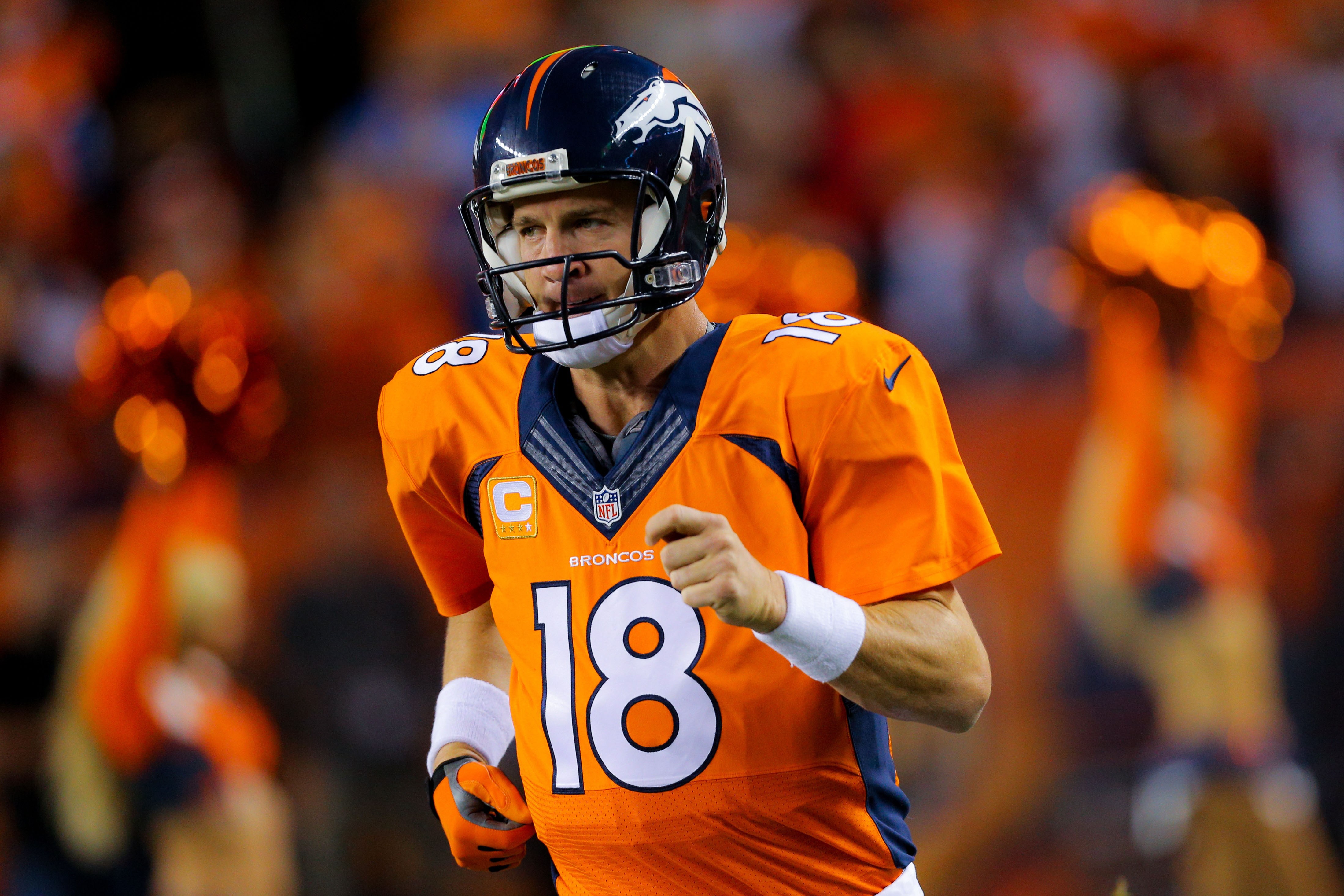
When Manning signed with the Denver Broncos in 2012, the contract structure had to address the elephant in the room: his health. How does a team commit nearly $100 million to a 36-year-old quarterback with four neck surgeries?
The resulting five-year, $96 million contract was a marvel of sports law and financial engineering. Unlike his previous deals, it featured no signing bonus. Instead, it relied on "rolling guarantees."
How the Denver Contract Worked:
- Yearly Protections: The contract was fully guaranteed for $18 million in 2012 once Manning passed his initial physical.
- Annual Triggers: In subsequent years, Manning had to pass a physical by the start of the league year for his salary to become fully guaranteed. This protected the Broncos against a catastrophic re-injury to his neck.
- Total Cash Flow: Despite the lack of a signing bonus, Manning was paid $18 million to $20 million annually, keeping him at the top of the market while giving the team an exit strategy if his body failed him.
This structure is still studied by agents and front offices in 2026 when dealing with veteran players returning from significant injuries. It balances the player’s need for high annual cash flow with the team’s need for insurance against physical decline.
The 2015 Pay Cut and the "Bet on Yourself" Clause
By 2015, Manning’s physical tools were visibly waning, though his mental command of the game remained elite. The Broncos, facing salary cap constraints, asked Manning to take a pay cut. In a rare move for a superstar of his stature, Manning agreed to reduce his $19 million base salary to $15 million.
However, Manning’s legal and management team negotiated an "incentive recovery" clause. The $4 million he surrendered could be earned back through performance:
- $2 million for winning the AFC Championship.
- $2 million for winning Super Bowl 50.
Manning successfully achieved both milestones in his final season, retiring with his full $19 million salary for the year intact. This remains one of the most poetic financial conclusions to a Hall of Fame career, proving that even at the end, Manning’s contract was as strategic as his pre-snap audibles.
Summary of Major Peyton Manning Contracts
The following table outlines the progression of Manning’s primary NFL contracts, illustrating the escalation of his earnings and the changing nature of his guarantees.
| Year | Team | Contract Duration | Total Value | Key Financial Feature |
|---|---|---|---|---|
| 1998 | Colts | 6 Years | ~$46.3M | $11.6M signing bonus; pre-rookie wage scale. |
| 2004 | Colts | 7 Years | $98M | $34.5M signing bonus; set record for total value. |
| 2011 | Colts | 5 Years | $90M | Included a $28M roster bonus trigger for 2012. |
| 2012 | Broncos | 5 Years | $96M | No signing bonus; annual injury-protected guarantees. |
| 2015 | Broncos | (Restructured) | $15M Base | $4M in incentives based on playoff/Super Bowl wins. |
The Legacy of Manning's Earnings
Looking back from the perspective of 2026, Manning’s career earnings of roughly $248.7 million (on-field) paved the way for the $50 million and $60 million annual salaries seen in the current era. Manning was one of the first players to treat his contract as a partnership with the franchise, often restructuring his deals to help the team sign other free agents, such as when he helped create room for the Broncos to sign defensive stalwarts in 2014.
His approach to contracts was synonymous with his approach to football: meticulous, calculated, and focused on long-term success. He utilized the "Franchise Tag" period as a negotiation floor rather than a ceiling and was never afraid to test the open market when he knew his value was at its peak.
Frequently Asked Questions
Did Peyton Manning ever play under the Franchise Tag?
Technically, the Indianapolis Colts applied the franchise tag to Peyton Manning in 2004 to prevent him from hitting free agency. However, he never actually played a game under the tag. The designation was used as a placeholder until the two sides could finalize the seven-year, $98 million mega-deal later that offseason. This is a common tactic used by teams to buy more time for long-term negotiations.
How much did Peyton Manning lose by being cut by the Colts in 2012?
While the 2011 contract was for $90 million, Manning only received the first year's salary of approximately $23 million (which included a $20 million "signing bonus" equivalent paid in the first year). By releasing him before the $28 million roster bonus was due in March 2012, the Colts avoided paying the remaining $67 million. However, Manning quickly recovered this "loss" by signing a $96 million deal with the Broncos, essentially ensuring his career earnings remained largely unaffected.
Was Peyton Manning's Broncos contract fully guaranteed?
No, Manning’s contract with the Broncos was not fully guaranteed in the way modern NBA contracts are. Instead, it used a "conditional guarantee" system. He had $18 million guaranteed for the first year, but for the second and third years, the money only became guaranteed if he passed a team physical by a certain date in March. This protected the Broncos in case his previous neck injuries prevented him from playing.
Did Manning receive a bonus for winning Super Bowl 50?
Yes. As part of his restructured 2015 contract, Manning earned a $2 million incentive for winning the AFC Championship and an additional $2 million for winning Super Bowl 50. These incentives allowed him to reclaim the $4 million pay cut he had taken earlier that year to help the Broncos with their salary cap management.
How do Manning's career earnings compare to today's quarterbacks?
As of 2026, Manning's $248 million in career earnings ranks high, but it has been surpassed by several modern quarterbacks like Patrick Mahomes and Joe Burrow, whose career earnings are projected to exceed $400 million to $500 million due to the exploding salary cap and media rights deals. However, when adjusted for the percentage of the salary cap at the time of signing, Manning remains one of the highest-paid players relative to his era's economy.
Strategic Takeaway for Contract Analysis
When evaluating a "Peyton Manning contract," the lesson is clear: the guarantee structure and roster triggers are more important than the total headline figure. Manning’s ability to navigate a career-threatening injury while still maintaining top-tier compensation provides a blueprint for any professional athlete. For teams, the Manning-Denver deal remains the gold standard for mitigating risk while still securing an elite, franchise-altering talent.
Image Gallery