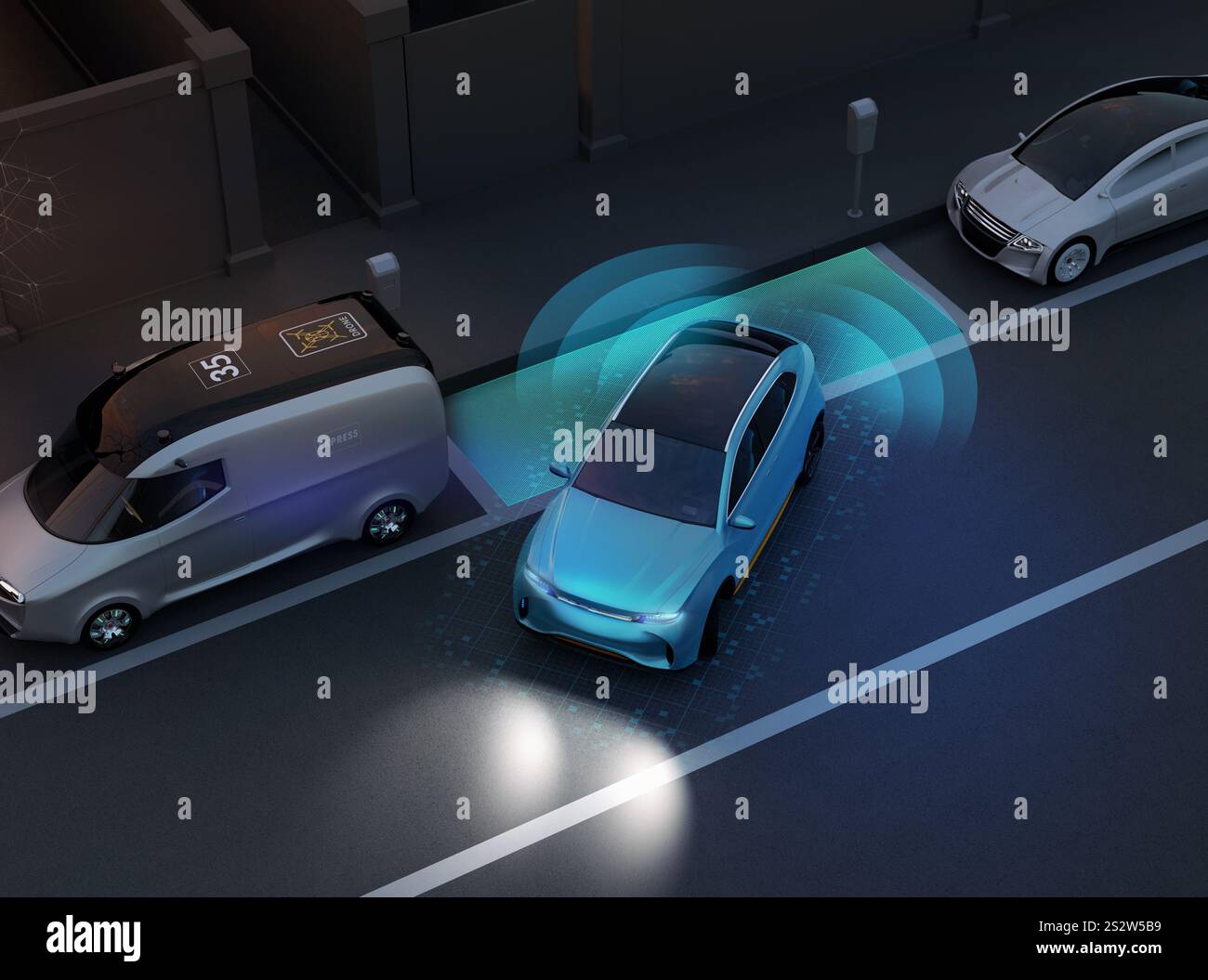
Best SUVs with Parking Assist for 2026: A Technical Guide to Automated Maneuvering
Selecting an SUV with parking assist in 2026 involves choosing between various levels of automation, ranging from basic proximity alerts to fully autonomous remote maneuvering. Most modern SUVs now utilize a combination of ultrasonic s...
Selecting an SUV with parking assist in 2026 involves choosing between various levels of automation, ranging from basic proximity alerts to fully autonomous remote maneuvering. Most modern SUVs now utilize a combination of ultrasonic sensors, high-definition cameras, and AI-driven software to identify spaces and execute parking maneuvers with minimal or no driver intervention.
Contents
Understanding the Hierarchy of Parking Assist Systems
As we navigate the automotive landscape of 2026, "parking assist" is no longer a single feature but a spectrum of technologies. To make an informed purchase, it is vital to distinguish between the various tiers of assistance available in the current market.
Level 1: Passive Assistance (Parking Sensors and Cameras)
This is the baseline for nearly all SUVs. It involves ultrasonic sensors located on the front and rear bumpers that emit high-frequency sound waves to detect obstacles. In 2026, the standard has moved toward 360-degree "birds-eye" views, where software stitches together feeds from four or more cameras to provide a top-down perspective. While helpful, these systems do not move the vehicle; they merely provide data to the driver.
Level 2: Semi-Autonomous Parking (Steering Control)
In these systems, the vehicle takes control of the steering wheel while the driver remains responsible for the accelerator, braking, and shifting between Drive and Reverse. The SUV’s computer calculates the steering angle required to enter a parallel or perpendicular spot. Examples include older versions of Ford’s Active Park Assist and Volkswagen’s Park Assist.
Level 3: Fully Autonomous Parking (Full Control)
Leading SUVs in 2026, particularly from luxury and high-end EV brands, offer systems that manage every aspect of the maneuver. Once a space is identified, the driver simply holds a button or monitors the screen while the car handles steering, speed, braking, and gear transitions. Systems like Mercedes-Benz’s Active Parking Assist with PARKTRONIC and GM’s Enhanced Automatic Parking Assist fall into this category.
Level 4: Remote Smart Parking
The pinnacle of current convenience is Remote Smart Parking Assist (RSPA). This allows the driver to exit the vehicle and use a smartphone app or the key fob to "summon" the car into or out of a tight garage or parking stall. This is particularly valuable for large SUVs where opening doors in narrow spaces is difficult.
Top SUVs with Advanced Parking Assist in 2026
The following models represent the best-in-class integration of parking technology, categorized by their segment and system reliability.
1. Hyundai Tucson and Kia Telluride (Remote Smart Parking Assist 2.0)
The Hyundai Motor Group has democratized high-end parking tech. Their RSPA 2.0 system is available on the 2026 Tucson and Telluride models. It excels in "dead-reckoning" maneuvers—moving the car in a straight line—and complex diagonal parking.
- Key Advantage: The interface is incredibly intuitive, using the key fob buttons to move the vehicle while the driver stands safely on the sidewalk.
- Technical Note: These systems rely heavily on ultrasonic sensors, making them highly effective even in low-light conditions where camera-only systems might struggle.
2. BMW X5 and X7 (Parking Assistant Professional)
BMW’s 2026 SUV lineup features some of the most sophisticated software in the industry. Their "Reversing Assistant" is a standout feature; it remembers the last 50 meters driven forward and can autonomously retrace those exact steering paths in reverse—perfect for backing out of long, winding driveways.
- Maneuver Assistant: This allows the X5 to store up to 10 programmed maneuvers. If you park in the same complex spot at work every day, the car can recognize the GPS coordinates and perform the entire parking sequence automatically.
3. Tesla Model Y and Model X (Vision-Based Autopark)
Tesla transitioned to a "Vision-only" approach, removing ultrasonic sensors in favor of high-resolution cameras and neural networks. In 2026, the "Tap to Park" feature allows drivers to select a spot on the screen, exit the vehicle, and watch the car park itself via the Tesla app.
- Pros: Frequent over-the-air (OTA) updates mean the system theoretically improves over time without a trip to the dealership.
- Cons: Vision-only systems can occasionally struggle with depth perception in heavy rain or when cameras are obscured by salt or mud.
4. Mercedes-Benz GLE and EQS SUV (Intelligent Park Pilot)
Mercedes-Benz has pioneered Level 4 "Valet Parking" in specific jurisdictions. Their SUVs are equipped with the hardware necessary to communicate with "smart" parking garages. In a compatible facility, you can drop the car at an entry zone, and it will find its own spot and park without anyone inside.
Comparative Features of Leading 2026 SUV Parking Systems
| Brand | System Name | Max Autonomy Level | Remote Capability | Sensor Type |
|---|---|---|---|---|
| Hyundai/Kia | RSPA 2.0 | Fully Autonomous | Yes (Key Fob/App) | Ultrasonic + Camera |
| BMW | Parking Asst. Prof. | Fully Autonomous | Yes (Smartphone) | Ultrasonic + Radar + Camera |
| Tesla | Autopark (Vision) | Fully Autonomous | Yes (App) | Camera Only |
| Ford | Active Park Assist 2.0 | Fully Autonomous | No (In-vehicle only) | Ultrasonic + Camera |
| Mercedes-Benz | PARKTRONIC / Pilot | Fully Autonomous | Yes (Smartphone) | Multi-modal (LiDAR/Cam/Ultra) |
Hardware and Technical Requirements
The reliability of a parking assist system depends on its hardware suite. By 2026, the standard hardware package for a high-functioning system includes:
- Ultrasonic Sensors: Usually 12 sensors (6 front, 6 rear) that detect objects within a 15-foot range. They are immune to lighting conditions but can be "blinded" by heavy snow or mud buildup.
- Short-Range Radar: Used in premium models to detect cross-traffic while backing out of a spot, providing a wider field of view than ultrasonic sensors.
- High-Definition Cameras: 1-megapixel to 8-megapixel cameras located in the grille, side mirrors, and tailgate. These are essential for identifying painted lines on the pavement.
- Central Processing Unit (CPU): Parking maneuvers require significant real-time "spatial mapping." The vehicle's computer must process thousands of data points per second to ensure the wheels don't strike a curb or another vehicle.
Common Limitations and Operational Risks
While parking assist technology has matured, it is not infallible. Drivers should be aware of several critical limitations that persist in 2026:
- Curb Detection: Many systems are excellent at detecting other cars but may struggle to see low-profile curbs. This can lead to "curb rash" on expensive alloy wheels.
- Unusual Obstacles: Thin objects like bicycles, signposts, or trailer hitches can sometimes fall into "dead zones" between sensors.
- Surface Consistency: Steep inclines or extremely slippery surfaces (ice) can interfere with the system's ability to accurately modulate braking and torque.
- Legal Responsibility: In almost all jurisdictions, the human driver remains legally responsible for any collision that occurs while using parking assist. The system is classified as a "driver convenience" feature, not a replacement for driver vigilance.
Maintenance and Troubleshooting
To keep these systems operational, specific maintenance is required. Because the sensors are exposed to the elements, they are the most common point of failure.
- Sensor Cleaning: Regularly wipe down the circular sensors on your bumpers with a soft cloth. Do not use high-pressure washers directly on the sensors, as this can damage the seals.
- Calibration: If your SUV is involved in even a minor "fender bender," the sensors or cameras may move slightly out of alignment. Most systems require professional recalibration at a dealership to ensure the spatial mapping remains accurate.
- Software Updates: Ensure your vehicle's infotainment system is connected to Wi-Fi. Manufacturers frequently release patches to improve "edge case" parking scenarios, such as recognizing non-standard parking lines.
How to Choose the Right System for Your Needs
When shopping for an SUV with parking assist, consider your specific environment. If you frequently park in a narrow home garage, a system with Remote Smart Parking (like that found in the Genesis GV80 or Hyundai Santa Fe) is the highest priority. If you live in an urban area with tight parallel spots, look for a system with high-speed automated steering and "Auto-Exit" features, which help you get back out of a spot when someone has parked too close to your bumper.
For those prioritizing safety, ensure the vehicle includes Rear Cross-Traffic Collision-Avoidance Assist. This feature doesn't just help you park; it monitors for approaching vehicles while you are backing out and can automatically apply the brakes to prevent a collision.
FAQ
Does parking assist work for trailers?
Most standard parking assist systems are automatically disabled when a trailer is detected via the hitch connection. However, some 2026 SUVs, such as the Ford Expedition and Chevrolet Tahoe, offer specific "Pro Trailer Backup Assist" or "Hitch Guidance" which uses specialized camera angles and a separate control knob to help park while towing.
Can parking assist detect pedestrians or pets?
Yes, most systems in 2026 are integrated with the vehicle’s Automatic Emergency Braking (AEB). If a person or animal moves behind the vehicle during an automated maneuver, the system should detect the motion and trigger an immediate "hard stop."
Is parking assist available on manual transmission SUVs?
Parking assist is almost exclusively found on vehicles with automatic transmissions. Because the system needs to control the clutch and gear selection to be fully autonomous, manual transmissions are technically incompatible with the higher levels of parking automation.
Will the system work if the parking lines are faded?
Systems that rely primarily on cameras (like Tesla’s) may struggle with faded lines. However, most "hybrid" systems use surrounding vehicles as anchors. If there are cars parked on either side, the system can usually center itself between them even if the lines are invisible.
Does parking assist increase insurance premiums?
Actually, many insurers in 2026 offer small discounts for vehicles equipped with active parking and collision-avoidance tech, as these features significantly reduce low-speed "fender bender" claims, which are common and costly to repair.
Final Recommendation
If you are looking for the most reliable and versatile parking assist in 2026, the Hyundai/Kia/Genesis group offers the best balance of price and functionality with their Remote Smart Parking Assist. For those in the luxury market, the BMW X-series provides the most advanced "memory" features for navigating complex driveways. Regardless of the model you choose, always treat parking assist as a secondary monitor rather than a substitute for your own mirrors and spatial awareness.
Image Gallery