Missouri Workers Compensation Reciprocal With California Explained
For businesses operating across state lines, the interaction between Missouri and California workers’ compensation laws is governed by extraterritoriality provisions rather than a formal, seamless reciprocity agreement. While Missouri...
For businesses operating across state lines, the interaction between Missouri and California workers’ compensation laws is governed by extraterritoriality provisions rather than a formal, seamless reciprocity agreement. While Missouri recognizes coverage for employees temporarily working out-of-state if the contract was made in Missouri, California law is exceptionally strict, often requiring California-specific coverage for any work performed within its borders, regardless of the employer's home state.
Contents
Managing workers’ compensation for employees moving between Missouri and California is a complex legal balancing act. Because California is a high-benefit, high-litigation state with unique regulatory hurdles, and Missouri operates under a more conservative, administrative-heavy framework, "reciprocity" is less about a mutual treaty and more about how each state’s statutes handle "extraterritorial" claims.
The Foundation of Extraterritoriality in Missouri
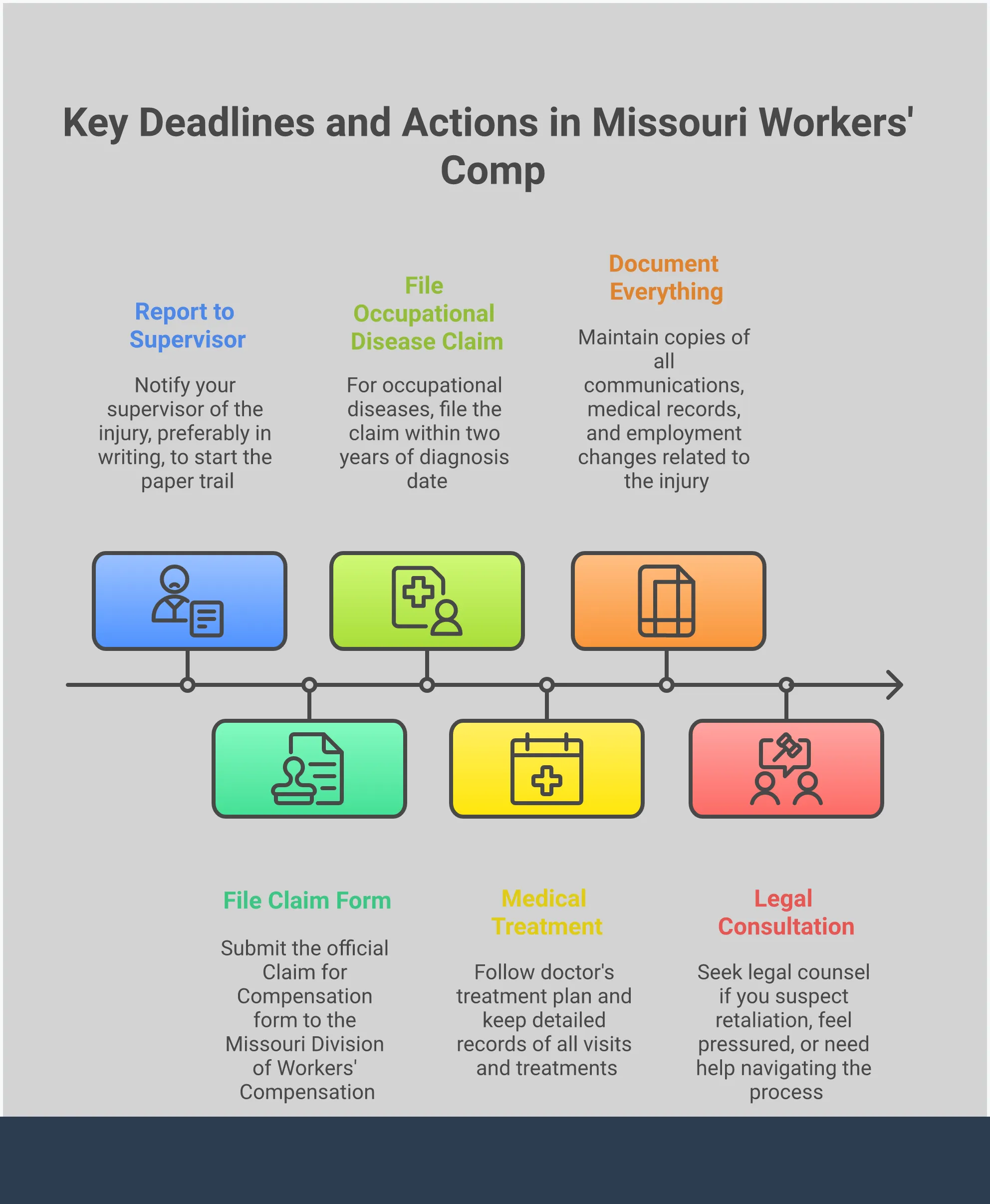
Missouri workers’ compensation law is designed to follow the employee, provided certain triggers are met. Under the Missouri Revised Statutes Section 287.110, the state’s workers' compensation act applies to all injuries received inside the state, but it also extends to injuries received outside of Missouri under two specific conditions:
- The Contract of Hire: If the employment contract was entered into within the state of Missouri, the employee is generally covered by Missouri law even if they are injured while working in California.
- Principal Localization: If the employee’s employment is "principally localized" in Missouri, Missouri law applies regardless of where the injury occurs.
However, Missouri law also includes a "reciprocal" clause. Section 287.110.3 states that an employee from another state (like California) who is working temporarily in Missouri is exempt from Missouri’s law if their employer has furnished workers' compensation insurance under the laws of their home state, provided that the home state (California) recognizes Missouri's extraterritorial provisions.
The challenge arises because California’s definition of "temporary" and its requirements for out-of-state employers are significantly more restrictive than Missouri’s.
California’s Strict Approach to Out-of-State Workers
California is notorious among insurance professionals for its aggressive stance on jurisdiction. Under California Labor Code Section 3600.5, any employee injured while working in California is generally entitled to California benefits unless a very narrow "reciprocity" exception is met.
For a Missouri employer to avoid purchasing California-specific workers' compensation for a worker entering California, the following conditions must be satisfied:
- The employee is only in California temporarily.
- The employer has insurance in Missouri that covers work performed in California.
- Missouri law recognizes California’s extraterritorial provisions (which it generally does).
- The extraterritorial provisions of Missouri are the "exclusive remedy" for the employee.
In practice, "temporary" is a term often litigated in California. If a Missouri-based construction crew spends three months on a project in San Diego, California regulators and courts may determine that the work is no longer temporary, or that the risks associated with the work mandate California-level coverage. If an injury occurs, California judges often default to providing California benefits because they are typically higher than Missouri’s, citing the state’s public policy interest in protecting workers within its borders.
Key Differences Between Missouri and California Systems
When considering reciprocity, it is vital to understand what is at stake. The costs and benefits in these two jurisdictions vary wildly, which influences where an injured worker will attempt to file a claim—a practice known as "forum shopping."
| Feature | Missouri Workers’ Comp (2026) | California Workers’ Comp (2026) |
|---|---|---|
| Primary Oversight | Division of Workers’ Compensation (DWC) | Division of Workers’ Compensation (DWC) |
| Medical Control | Employer/Insurer chooses the doctor. | Employee may choose via Medical Provider Network (MPN). |
| Temporary Total Disability (TTD) | 66.6% of average weekly wage (subject to state max). | 66.6% of average weekly wage (usually higher state max). |
| Permanent Disability (PPD/PD) | Based on "Body as a Whole" or "Scheduled Member" loss. | Based on a complex Rating Schedule (AMA Guides + Modifiers). |
| Statute of Limitations | Generally 2 years from date of injury or last payment. | Generally 1 year from date of injury. |
| Dispute Resolution | Administrative Law Judges (ALJs). | Workers' Compensation Appeals Board (WCAB). |
The Risk of "Dual Jurisdiction"
The most significant risk for an employer operating between Missouri and California is dual jurisdiction. This occurs when an employee is eligible to file a claim in both states.
If a worker hired in St. Louis is injured on a job site in Los Angeles, they may file a claim in Missouri (because the contract was made there) and in California (because the injury happened there). While the laws prevent "double recovery" (the worker cannot get paid twice for the same loss), the worker can "top off" their benefits. If Missouri awards $50,000 for a permanent disability but California’s rating system calculates the same injury at $80,000, the worker may be able to pursue the $30,000 difference in the California system.
For the employer, this means you must ensure your insurance policy is not just "Missouri-listed." Your policy must include Other States Insurance (Section 3) coverage that specifically names California, or you must have a separate California endorsement.
Common Pitfalls in Missouri-California Reciprocity
1. The Remote Work Trap
In 2026, the rise of permanent remote work has complicated reciprocity. If a Missouri company hires a software engineer who lives and works in California, that employee is a California employee. Missouri reciprocity does not apply. The employer must pay California workers' compensation premiums, follow California’s workplace safety (Cal/OSHA) rules, and provide California-mandated benefits. Failure to do so can result in massive uninsured employer penalties in California.
2. Misunderstanding "Temporary"
Many Missouri business owners assume that if they send a salesperson or a consultant to California for a week, they are perfectly safe. While a one-week trip is almost certainly "temporary," if that salesperson begins spending 50% of their time in a California satellite office, the "principally localized" argument shifts. California may then require the employer to secure a California policy.
3. Medical Provider Control
In Missouri, the employer has the right to direct medical care. This is a major cost-control tool. However, if the injury happens in California and the claim is handled under California jurisdiction, the employer loses much of that control. California’s Medical Provider Network (MPN) rules are vastly different, and failing to provide a worker with a California-compliant DWC-1 claim form within 24 hours of notice can lead to legal penalties.
How to Protect Your Business
Because there is no formal "reciprocal certificate" you can simply download to exempt yourself from California law, protection comes through insurance structure and contractual clarity.
Secure an "All-States" Endorsement
Consult with your insurance broker to ensure your Missouri policy includes an "All-States" endorsement. Specifically, verify that California is not an "excluded state." Some private carriers in Missouri are not licensed to write in California and will explicitly exclude it. If California is excluded, you may need to purchase a policy through the California State Compensation Insurance Fund (SCIF) or a national carrier licensed in both states.
Document the "Contract of Hire"
Ensure all employment contracts for Missouri-based employees clearly state that the employment is localized in Missouri and that the contract was executed in a Missouri office. While this won't stop a California judge from asserting jurisdiction over an in-state injury, it strengthens the argument for Missouri jurisdiction if the injury occurs while the worker is traveling in a third state or back in Missouri.
Audit Payroll Allocation
Ensure your payroll is being reported correctly. If you are paying Missouri premium rates for work being performed in California, you may be flagged during a premium audit. Worse, if an injury occurs, the carrier may deny the claim if they were not notified of California operations, leaving the business owner personally liable for medical bills and indemnity payments.
Frequently Asked Questions
Does Missouri have a formal reciprocity agreement with California?
No. There is no bilateral signed treaty between the two states. Instead, both states have "extraterritoriality" statutes. Missouri's law is more permissive in allowing out-of-state coverage, while California's law is very restrictive and often requires California-specific coverage for work performed within its borders.
If my Missouri employee is injured in California, which state's benefits do they get?
The employee can often choose or may be eligible for both. Typically, they will file in the state that offers higher benefits—usually California. However, the employer's insurance must be set up to handle "Other States" to cover a California-based award.
Do I need a separate California workers' comp policy for a one-week business trip?
Usually, no. Short, incidental business trips are typically covered under the Missouri policy's extraterritorial provisions. However, the Missouri policy must not explicitly exclude California, and the "Other States" section of the policy should be active.
What happens if I don't have California coverage and an employee is injured there?
California is a "no-fault" state but is very punitive toward uninsured employers. You could face a "Stop Work Order," fines of up to $10,000 per employee, and the injured worker may be allowed to sue you in civil court in addition to receiving workers' compensation benefits through the Uninsured Employers Benefits Trust Fund (UEBTF), which will then seek reimbursement from you.
Does the Missouri "Contract of Hire" rule protect me from California lawsuits?
It protects the "exclusive remedy" provision in Missouri, meaning the employee generally cannot sue you in Missouri civil court for a work injury. However, it does not prevent California from asserting its own jurisdiction over the injury if it happened on California soil.
Final Recommendation for Multistate Employers
If your Missouri-based business has any regular presence in California—whether through remote employees, recurring projects, or frequent sales travel—do not rely on the assumption of reciprocity. The financial disparity between Missouri and California benefits creates a high incentive for litigation.
Immediate Action Step: Review "Section 3: Other States Insurance" of your current Workers' Compensation Information Page. If California is not listed or is specifically excluded, contact your agent to add a California endorsement or secure a separate policy to bridge the gap between Missouri's extraterritoriality and California's strict compliance mandates.
Image Gallery