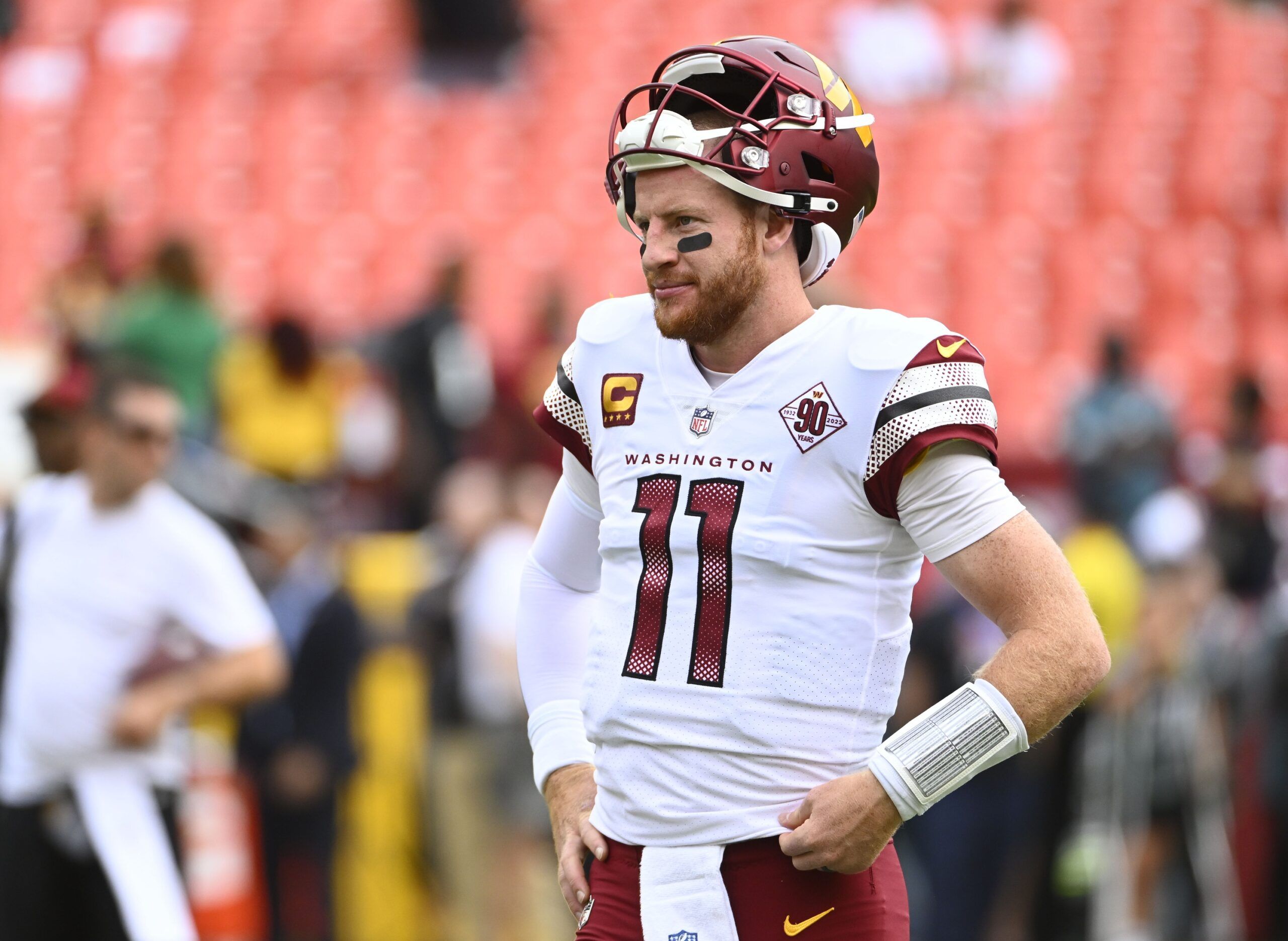
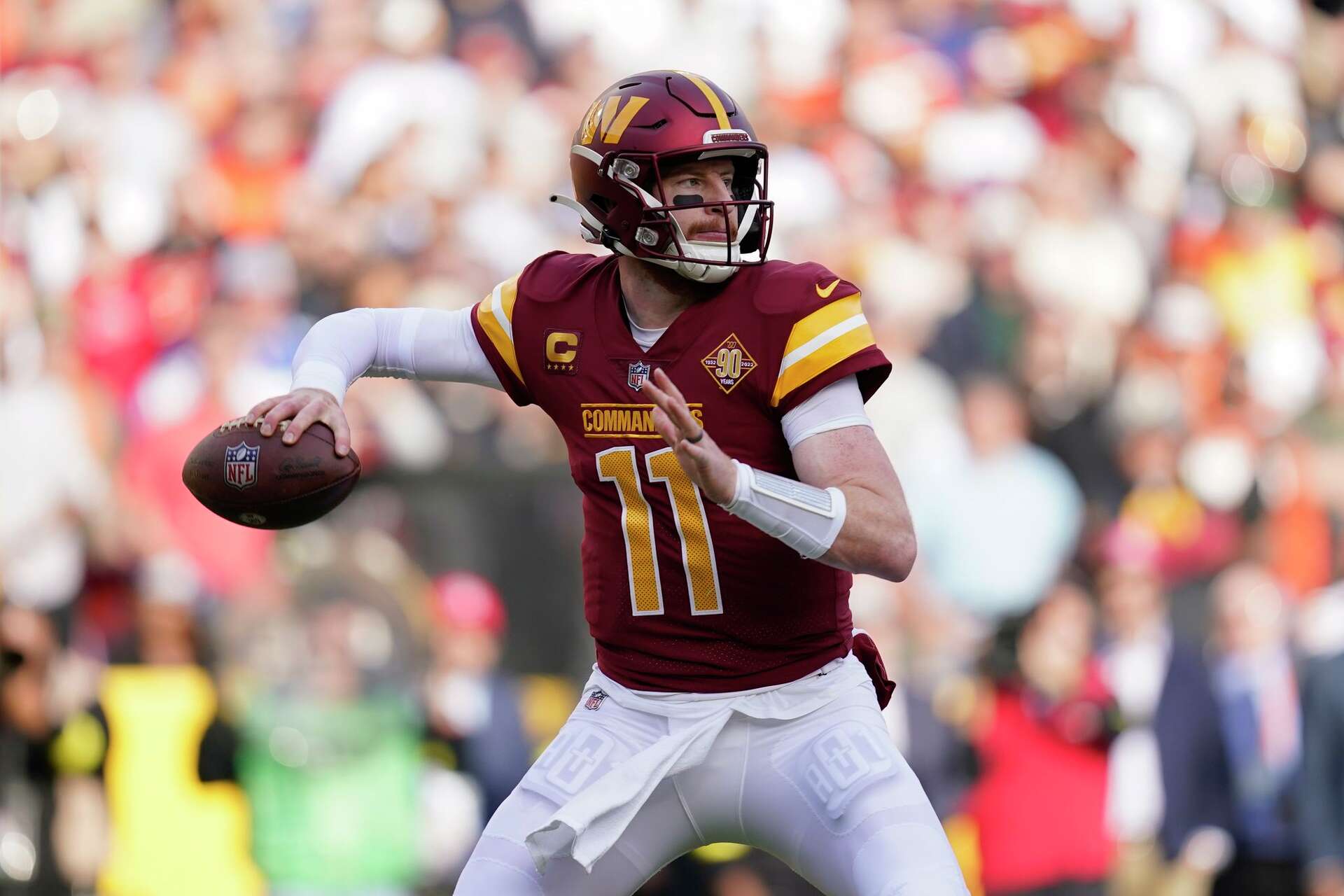
The Carson Wentz Era: A Pivot Point in the Washington Commanders’ Transition
Carson Wentz’s tenure with the Washington Commanders in 2022 represented a high-stakes attempt to stabilize a franchise undergoing a total identity transition. While the experiment lasted only one season, it served as the final catalys...
Carson Wentz’s tenure with the Washington Commanders in 2022 represented a high-stakes attempt to stabilize a franchise undergoing a total identity transition. While the experiment lasted only one season, it served as the final catalyst for the organizational overhaul that eventually led to a change in ownership, coaching, and long-term quarterback strategy.
Contents
The acquisition of Carson Wentz in March 2022 was more than just a roster move; it was a symbolic effort by a franchise in flux to find relevance. At the time, the Washington Commanders were navigating a multi-layered transition: a new brand identity, a shifting front office philosophy under Ron Rivera, and the looming end of the Dan Snyder ownership era. To understand the "transition" mentioned in the team's history, one must look at the intersection of Wentz’s performance, the financial commitment made by the team, and the cultural vacuum that existed within the organization at that time.
The Context of the 2022 Trade: A Desperate Search for Stability
By early 2022, the Washington franchise had exhausted a long list of starting quarterbacks. Following the 2021 season, where Taylor Heinicke served as the primary starter, head coach Ron Rivera made it clear that the team was "swinging big" for a veteran signal-caller. The transition from the temporary "Washington Football Team" moniker to the "Commanders" brand in February 2022 required a "face of the franchise" to lead the new era.
The trade with the Indianapolis Colts involved Washington taking on Wentz’s full $28.3 million salary for the 2022 season. In exchange, Washington sent a 2022 second-round pick, a 2022 third-round pick, and a conditional 2023 third-round pick (which became a second-round pick if Wentz played 70% of the snaps). This move was widely criticized at the time because the Colts had grown disillusioned with Wentz after only one season, yet Washington was willing to pay a premium price for a player whose market value had significantly dipped.
Why the Commanders Chose Wentz
The "transition" strategy relied on the belief that Wentz’s physical tools—his arm strength and ability to make off-platform plays—would elevate a roster that Rivera believed was "win-now" ready. The coaching staff hoped that a change of scenery and a surrounding cast featuring Terry McLaurin and Curtis Samuel would recapture the 2017 MVP-caliber form Wentz showed in Philadelphia. However, this ignored the mechanical inconsistencies and decision-making lapses that had characterized his final years with the Eagles and his lone season in Indianapolis.
The Rebranding Transition: New Name, Old Problems
The 2022 season was the inaugural year of the "Commanders" brand. For a fan base already weary of off-field scandals and years of mediocrity, the transition to the new name was met with mixed reviews. The organization viewed Carson Wentz as the bridge to a more professional, competitive future. Unfortunately, the transition on the field was as clunky as the transition in the front office.
Wentz started the season with a rollercoaster performance against the Jacksonville Jaguars, throwing four touchdowns but also two costly interceptions. This game encapsulated the Wentz experience: flashes of brilliance overshadowed by a lack of situational awareness. As the season progressed, the offensive line struggled to protect him, and Wentz’s tendency to hold onto the ball too long led to a league-high sack rate during the first month of the season.
The Finger Injury and the Shift to Heinicke
The defining moment of Wentz’s transition in Washington occurred in Week 6 against the Chicago Bears. Despite a win, Wentz suffered a fractured ring finger on his throwing hand. This injury forced him onto Injured Reserve and opened the door for Taylor Heinicke to return to the starting lineup.
The contrast between the two quarterbacks was stark. While Wentz possessed the superior physical profile, Heinicke offered a "scrappiness" and mobility that seemed to galvanize the locker room. During Wentz’s absence, the team went on a winning streak, complicating the narrative of the "transition." The coaching staff was faced with a dilemma: return to the expensive veteran they traded for or stick with the fan-favorite underdog.
The Financial Fallout and Salary Cap Implications
One of the most critical aspects of the Carson Wentz era was the financial burden it placed on the organization. Washington’s decision to absorb his entire contract limited their ability to pursue other free agents during a crucial rebuilding window.
In the NFL, a "transition" period is often defined by how a team manages its cap space. By the end of the 2022 season, it was clear that Wentz was not the long-term solution. Because his contract had no guaranteed money remaining after the 2022 league year, Washington had a "clean" exit path, but the opportunity cost—the draft picks and the $28 million spent—was a heavy price for a 2-5 record as a starter.
| Metric | Carson Wentz (2022 Washington Stats) | Taylor Heinicke (2022 Washington Stats) |
|---|---|---|
| Games Started | 7 | 9 |
| Passing Yards | 1,755 | 1,859 |
| Passing TDs | 11 | 12 |
| Interceptions | 9 | 6 |
| Sacks Taken | 26 | 19 |
| Record as Starter | 2-5 | 5-3-1 |
| Passer Rating | 80.2 | 89.6 |
The table above illustrates the efficiency gap. While Wentz threw for nearly as many yards in fewer games, his inability to avoid sacks and turnovers ultimately stalled the offense's transition into a top-tier unit.
The Climax of the Transition: The Browns Game and Release
The final chapter of Wentz’s time in Washington came in Week 17 of the 2022 season. With the Commanders still in the playoff hunt, Ron Rivera made the controversial decision to bench Heinicke and start Wentz against the Cleveland Browns. The rationale was that Wentz’s higher "ceiling" was necessary to beat elite competition.
The result was a disaster. Wentz threw three interceptions in a 24-10 loss that effectively eliminated Washington from playoff contention. The post-game press conference became an infamous moment in franchise history, as it appeared Rivera was unaware that the team could be eliminated that day. This lack of organizational synergy highlighted that the "transition" was failing at every level.
On February 27, 2023, the Commanders officially released Carson Wentz. This move saved the team $26.175 million in cap space for the 2023 season, marking the end of one of the shortest and most expensive quarterback experiments in D.C. history.
The Ownership Transition: From Snyder to Harris
It is impossible to discuss the Carson Wentz era without mentioning the overarching transition of the franchise’s ownership. During 2022, the pressure on Dan Snyder to sell the team reached a boiling point. Investigations by the NFL and Congress into the team’s workplace culture and financial dealings were nearing their conclusions.
The acquisition of Wentz was seen by many analysts as a "desperation move" by an embattled owner and a head coach fighting for their jobs. When the team was eventually sold to the group led by Josh Harris in July 2023, the Wentz era was viewed as the final gasp of the previous regime's flawed decision-making process. The new ownership prioritized a complete "transition"—purging the roster of bloated veteran contracts and focusing on a homegrown, draft-centric approach (eventually leading to the selection of Jayden Daniels in 2024).
Historical Lessons: Why the Transition Failed
Looking back from 2026, the Carson Wentz transition serves as a textbook example of "process vs. result" in NFL management. The process was flawed because it prioritized a player's past pedigree over his current trajectory and fit within the offensive system.
- Systemic Mismatch: The Commanders’ offensive line in 2022 was transitioning from a veteran-heavy group to a younger, less experienced unit. Wentz, who requires a clean pocket to be effective, was the worst possible fit for a line that allowed high pressure rates.
- Cultural Friction: While Wentz was professional, he never seemed to galvanize the locker room the way Heinicke did. A successful transition requires a leader who can navigate the turmoil of a rebrand; Wentz, dealing with his own career crossroads, was unable to provide that stability.
- Draft Capital Loss: By trading second and third-round picks, Washington lost the ability to add cheap, young talent during the first year of the Commanders' identity. This delayed the true rebuilding process by at least two seasons.
FAQs About Carson Wentz and the Commanders Transition
Why did the Commanders trade for Carson Wentz in the first place?
The team was desperate for a veteran upgrade after failing to land Russell Wilson or Matthew Stafford in previous cycles. Head coach Ron Rivera believed Wentz’s arm talent could unlock a stagnant offense and provide the "star power" needed for the team's rebrand to the Commanders.
How much did Carson Wentz cost the Commanders?
Washington traded a 2022 2nd-round pick, a 2022 3rd-round pick, and a 2023 3rd-round pick. They also paid his full $28.3 million salary for the 2022 season. Because he did not play 70% of the snaps, the 2023 pick did not escalate to a 2nd-round pick, remaining a 3rd.
What happened to the Commanders after Wentz was released?
The team transitioned to a youth-focused movement. They started Sam Howell in 2023, which led to a difficult season but ultimately allowed the new ownership group (Josh Harris) to clean house, hire Dan Quinn and Adam Peters, and draft Jayden Daniels as the new franchise cornerstone.
Did Carson Wentz’s injury change the team’s trajectory?
Yes. The finger injury in Week 6 forced Taylor Heinicke into the lineup. Heinicke went 5-3-1 as a starter, making the playoffs a possibility. Had Wentz stayed healthy, the team might have committed to him longer, but his poor performance upon returning in Week 17 solidified his release.
Was the "transition" only about the quarterback?
No. The term "transition" in this era refers to three distinct shifts: the name change (Football Team to Commanders), the roster philosophy (from veteran-heavy to draft-focused), and the ownership change (Snyder to Harris). Wentz was the centerpiece of the failed athletic portion of that transition.
Recommendation for Future Analysis
For fans and analysts studying this period, it is recommended to view the Carson Wentz era not as an isolated failure, but as the final symptom of the "Snyder Era" of management. To understand the current success of the franchise in 2026, one must appreciate how the total collapse of the 2022 veteran-heavy strategy forced the organization to finally embrace a modern, data-driven approach to team building. For more on the official history of the team's rebranding and roster moves, visit the Washington Commanders Official Site.
Image Gallery