What to Do When Bitten by a Cat With Rabies: Immediate Emergency Steps and Treatment
If you are bitten by a cat suspected of having rabies, immediately wash the wound thoroughly with soap and running water for at least 15 minutes. Seek emergency medical care right away to begin Rabies Post-Exposure Prophylaxis (PEP), w...
If you are bitten by a cat suspected of having rabies, immediately wash the wound thoroughly with soap and running water for at least 15 minutes. Seek emergency medical care right away to begin Rabies Post-Exposure Prophylaxis (PEP), which is nearly 100% effective when administered before symptoms develop.
Contents
Medical Disclaimer
This article is for educational and informational purposes only and does not constitute formal medical advice. A rabies exposure is a life-threatening emergency. If you have been bitten, scratched, or exposed to the saliva of an animal suspected of having rabies, contact emergency medical services or visit an emergency room immediately.
Understanding the Medical Emergency of a Rabid Cat Bite
Rabies is a fatal viral zoonosis caused by neurotropic lyssaviruses, most commonly the rabies virus (Rabies lyssavirus). The virus targets the central nervous system (CNS). Once the virus enters the body through broken skin or mucous membranes—typically via saliva from a bite or scratch—it travels along peripheral nerves to the spinal cord and brain.
Once clinical symptoms of rabies manifest, the disease is almost 100% fatal. There is no established, effective cure once the virus enters the central nervous system and symptoms begin. However, rabies is entirely preventable if appropriate medical interventions—specifically immediate wound cleansing and Rabies Post-Exposure Prophylaxis (PEP)—are administered promptly after exposure.
Cat bites carry a double medical risk:
- Viral Pathogenesis (Rabies): Cats are susceptible host species for rabies. Depending on geographic location, feral, stray, or unvaccinated domestic cats can contract rabies through contact with wildlife reservoirs such as bats, raccoons, skunks, or foxes.
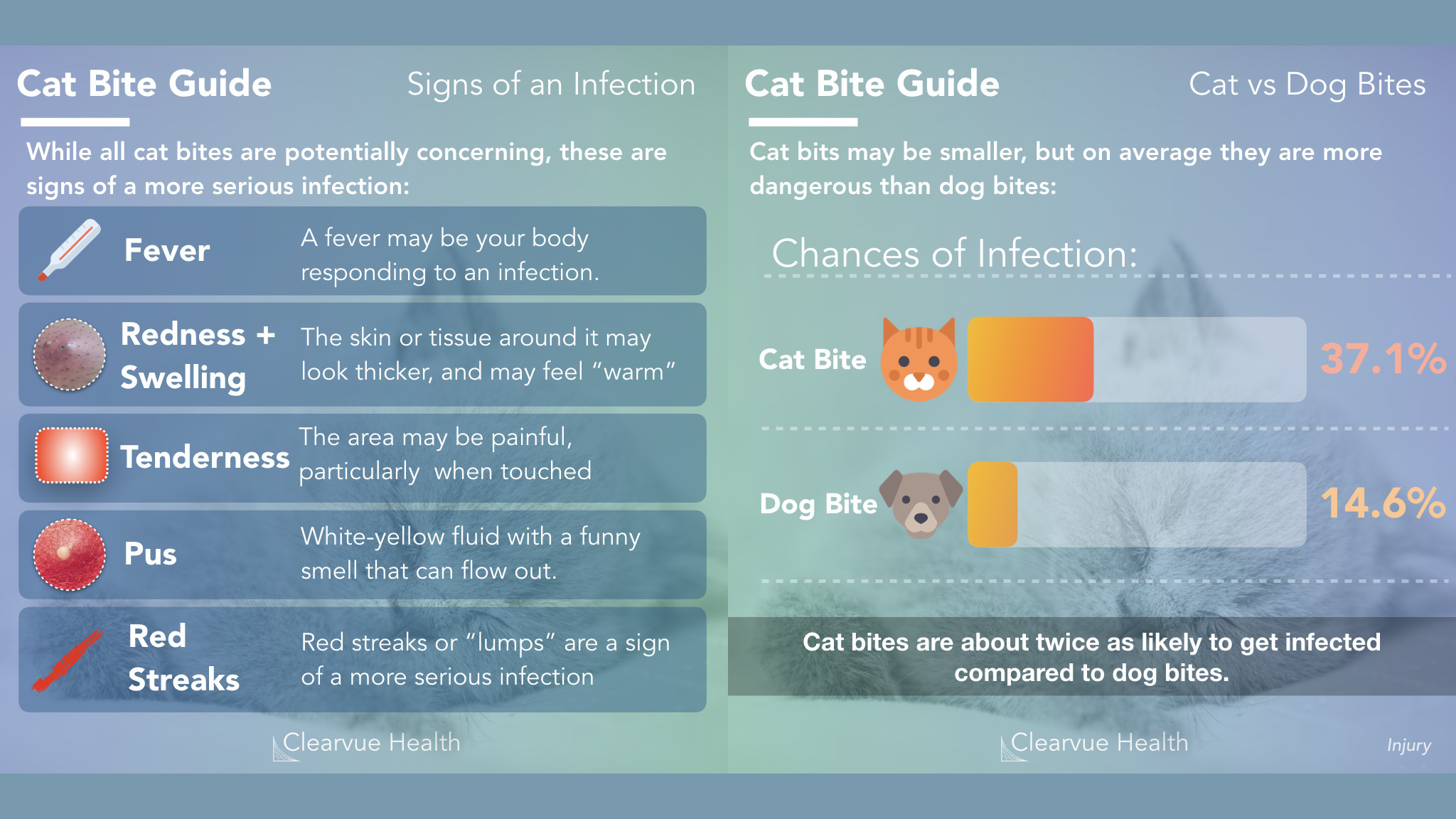
- High Risk of Severe Bacterial Infection: Cat canine teeth act like hypodermic needles, penetrating deep into sub-dermal tissues, muscle fascia, tendon sheaths, and joint capsules. This introduces bacteria—most notably Pasteurella multocida, Staphylococcus aureus, and anaerobic organisms—into anaerobic tissue spaces, resulting in rapid-onset cellulitis, tenosynovitis, or osteomyelitis.
Because of this dual threat, every bite from a cat with unknown or confirmed rabies status must be treated as a critical emergency requiring structured medical evaluation.
Step-by-Step Immediate First Aid: The First 15 Minutes
The physical action taken in the first few minutes following a bite significantly influences viral transmission risk. The World Health Organization (WHO) and the Centers for Disease Control and Prevention (CDC) emphasize that mechanical cleansing of the wound is the single most effective initial step in reducing viral load.
- STEP 1: IMMEDIATE WASHING
- Wash wound thoroughly with soap & running water for at least 15 mins.
- STEP 2: APPLY ANTISEPTIC
- Apply 70% ethanol, povidone-iodine, or chlorhexidine solution.
- STEP 3: DRESS & PROTECT
- Cover loosely with a clean, dry sterile bandage. Do not suture.
- STEP 4: EMERGENCY MEDICAL CARE
- Proceed to ER immediately for PEP, tetanus, and antibiotic evaluation.
1. Wash the Wound Immediately and Thoroughly
- Time Duration: Flush the wound continuously under warm or room-temperature running tap water with mild soap for a minimum of 15 minutes.
- Mechanism: The rabies virus is an enveloped virus. Surfactants in common household soap disrupt the lipid envelope of the virus, rendering it inactive, while the mechanical action of running water flushes viral particles and bacterial pathogens out of the deep puncture tracks.
2. Apply Topical Antiseptic Solutions
- After thorough washing, gently pat the area dry with a clean cloth or sterile gauze.
- Apply a virucidal disinfectant solution such as povidone-iodine (7.5%–10% solution), 70% ethyl alcohol (ethanol), or chlorhexidine. Povidone-iodine is particularly effective at inactivating enveloped viruses remaining in the wound bed.
3. Dress the Wound Correctly
- Apply a loose, sterile, dry gauze dressing over the bite site.
- Do not apply airtight, occlusive dressings, as anaerobic bacteria thrive in low-oxygen environments created by sealed punctures.
Critical First-Aid Warnings: What NOT to Do
- Do NOT Suture the Wound Immediately: Primary closure (stitching) of a high-risk rabies or cat bite wound is strongly contraindicated unless anatomically mandatory (e.g., extensive facial lacerations). Suturing traps viral particles and bacteria deep within tissue spaces and can force viral material deeper into local nerve endings. If suturing is mandatory, it must only occur after local administration of Human Rabies Immune Globulin (HRIG).
- Do NOT Scrub Aggressively: Avoid harsh scrubbing with stiff brushes, which causes micro-abrasions and furthers tissue damage, potentially facilitating viral entry into surrounding capillary networks and nerve fibers.
- Do NOT Squeeze or Cauterize the Injury: Attempting to "bleed out" the wound, applying heat, or using chemical cauterization causes unnecessary tissue necrosis and does not neutralize the virus.
Medical Protocol: Rabies Post-Exposure Prophylaxis (PEP)
Upon arrival at an emergency department or specialized healthcare facility, medical professionals will evaluate the exposure level and initiate Rabies Post-Exposure Prophylaxis (PEP). PEP consists of a combination of passive immunization (rabies immune globulin) and active immunization (rabies vaccine series).
Exposure Categorization
The WHO classifies rabies contact into three distinct categories to guide medical management:
- Category I: Touching, feeding animals, or licks on intact skin. Action: None (if history is reliable).
- Category II: Nibbling of uncovered skin, minor scratches or abrasions without bleeding. Action: Immediate vaccination and local wound treatment.
- Category III: Single or multiple transdermal bites or scratches, contamination of mucous membranes or broken skin with saliva, or direct contact with bats. Action: Immediate local wound treatment, administration of Rabies Immune Globulin, and immediate rabies vaccination.
A transdermal puncture or bite from a rabid cat falls directly under Category III, requiring the full PEP protocol.
| MEDICAL INTERVENTION | DOSING & ADMINISTRATION PROTOCOL |
|---|---|
| Human Rabies Immune Globulin (HRIG) | - Weight-based: 20 IU/kg body weight (single dose on Day 0)- Infiltrated around and into the wound site- Remaining volume injected IM at distant anatomical site |
| Active Rabies Vaccine (Unvaccinated) | - 4-dose IM series: Days 0, 3, 7, and 14- (Day 28 dose added for immunocompromised individuals)- Administered in deltoid muscle (never gluteal) |
| Active Rabies Vaccine (Previously Vaccinated Individuals) | - 2-dose IM series: Days 0 and 3- HRIG is NOT indicated or administered |
1. Passive Immunization: Human Rabies Immune Globulin (HRIG)
HRIG provides immediate, short-term neutralizing antibodies at the bite site before the patient’s immune system can produce its own antibody response from the vaccine.
- Dosing: Standard dosage for HRIG is 20 International Units per kilogram (20 IU/kg) of body weight.
- Administration Site: The full calculated dose—or as much as anatomically feasible—must be infiltrated directly into and around the margins of all bite wounds. Any remaining portion of the calculated dose should be injected intramuscularly (IM) at an anatomical site distant from the rabies vaccine injection site (such as the deltoid muscle of the opposite arm or the anterolateral thigh).
- Timing: HRIG is administered on Day 0 (the day PEP is initiated). If HRIG is not immediately available when the first vaccine dose is given, it can be administered up to and including Day 7 of the vaccine series. Beyond Day 7, HRIG is not indicated because the host's immune response to the vaccine has already begun producing endogenous antibodies.
2. Active Immunization: Cell-Culture Rabies Vaccine Series
Modern rabies vaccines (such as Human Diploid Cell Vaccine [HDCV] or Purified Chick Embryo Cell Vaccine [PCECV]) induce robust, long-lasting neutralizing antibody titers.
- For Previously Unvaccinated Individuals: A 4-dose regimen is administered intramuscularly on Days 0, 3, 7, and 14.
- Note: Patients with documented immunocompromising conditions (e.g., HIV, organ transplant recipients, active chemotherapy) receive a 5-dose regimen on Days 0, 3, 7, 14, and 28, alongside serological testing to confirm adequate antibody titers.
- For Previously Vaccinated Individuals: Persons who have documented completion of pre-exposure prophylaxis (PrEP) or a prior full PEP series receive only 2 doses of rabies vaccine on Days 0 and 3. HRIG is not administered to previously vaccinated individuals, as it can inhibit the rapid protective recall response of the immune system.
- Injection Site: The vaccine must be injected into the deltoid muscle in adults and older children, or the anterolateral thigh in infants and young children. Never inject the rabies vaccine into the gluteal region, as clinical studies show this leads to lower antibody response rates due to subcutaneous fat absorption.
Managing the Animal: Observation, Isolation, and Testing
Managing the cat that inflicted the bite is a core component of rabies risk assessment and public health control. Actions depend on whether the cat is a domestic pet, a stray, or unavailable for capture.
- CAT BITE OCCURS
- Is the cat available for isolation?
- YES: Is it a domestic pet or healthy stray?
- YES: 10-Day Quarantine & Observation
- NO: Euthanize & DFA Test
- NO: Feral / Stray / Escaped Animal
- Assume Rabid: Initiate PEP immediately. Notify Animal Control.
- YES: Is it a domestic pet or healthy stray?
- Is the cat available for isolation?
The 10-Day Observation Protocol (Domestic Cats)
If the cat is a domestic pet or a healthy, captureable stray:
- Quarantine Period: The animal should be isolated and observed by a licensed veterinarian or public health authority for exactly 10 days from the time of the bite.
- Biological Basis: Cats emit the rabies virus in their saliva only during the final stage of the disease, typically within 1 to 10 days before succumbing to viral encephalitis. If the cat remains completely healthy, active, and free of neurological symptoms throughout the 10-day quarantine period, it was not shedding the virus at the time of the bite.
- Medical Decision: If the cat remains healthy at day 10, PEP can be safely discontinued or omitted entirely under public health supervision. If the cat displays neurological signs, exhibits sudden behavioral changes, or dies during the 10 days, PEP must begin immediately, and the animal's brain tissue must undergo testing.
Feral, Stray, or Unconfined Animals
If the cat is feral, visibly ill, highly aggressive, or untraceable:
- Immediate PEP: Do not delay PEP while searching for an unconfined animal. Begin the full vaccine protocol immediately on Day 0.
- Testing via Euthanasia: If a wild or stray cat is captured and suspected of being rabid, it should be humanely euthanized by trained animal control personnel. Human rabies diagnosis in animals cannot be performed on live animals; it requires brain tissue examination.
- Laboratory Confirmation: The gold standard test is the Direct Fluorescent Antibody (DFA) test performed on brainstem and cerebellar tissue by a certified public health laboratory. If the DFA test is negative, PEP can be discontinued.
Decision Matrix: Exposure Scenarios and Action Protocols
The following reference table outlines required clinical and public health actions based on bite circumstances, animal status, and patient immunization history.
| Scenario / Exposure Type | Cat Status & Availability | Patient Immunization History | Action Plan & Clinical Interventions |
|---|---|---|---|
| Category III Transdermal Bite | Confirmed rabid or visibly symptomatic (paralyzed, aggressive) | Unvaccinated | 1. Wash wound for 15 minutes with soap/water.2. Administer HRIG (20 IU/kg) into/around wound on Day 0.3. Administer Rabies Vaccine IM on Days 0, 3, 7, 14. |
| Category III Transdermal Bite | Stray, wild, or escaped (unavailable for testing/observation) | Unvaccinated | 1. Wash wound for 15 minutes.2. Initiate full PEP immediately (HRIG + 4-dose vaccine series).3. Report incident to local public health/animal control. |
| Category III Transdermal Bite | Healthy domestic cat (available for 10-day quarantine) | Unvaccinated | 1. Wash wound for 15 minutes.2. Place cat under 10-day veterinary quarantine.3. Consult public health; start PEP immediately if cat develops symptoms. |
| Category III Transdermal Bite | Confirmed rabid, stray, or escaped cat | Previously Fully Vaccinated | 1. Wash wound for 15 minutes.2. Administer Rabies Vaccine IM on Days 0 and 3.3. Do NOT administer HRIG. |
| Category II Minor Scratch (No blood/saliva contact) | Healthy domestic cat | Unvaccinated | 1. Wash area thoroughly with soap and water.2. Observe animal for 10 days.3. PEP usually unnecessary unless animal develops neurological signs. |
Tetanus Prophylaxis and Antibiotic Therapy
Beyond rabies protection, every animal bite evaluation must address tetanus and high-risk bacterial contamination.
Tetanus Prevention Protocol
Cat bite wounds are classified as contaminated, dirty puncture wounds. Tetanus prophylaxis must be evaluated based on the patient's vaccination history:
- Fully Vaccinated (3+ lifetime doses):
- If the last tetanus-containing vaccine (Tdap or Td) was administered less than 5 years ago, no tetanus vaccine is required.
- If the last dose was administered 5 or more years ago, a Tdap (or Td) booster must be given on Day 0.
- Unvaccinated or Incomplete History (<3 lifetime doses):
- Administer a tetanus-toxoid-containing vaccine (Tdap preferred) plus Tetanus Immune Globulin (TIG) intramuscularly at separate injection sites.
Empirical Antibiotic Coverage
Because of the deep structural penetration of cat canine teeth, prophylaxis against bacterial infection is standard medical practice for puncture wounds.
- First-Line Oral Antibiotic: Amoxicillin-clavulanate (Augmentin) for 7 to 10 days. This broad-spectrum combination covers Pasteurella multocida, Staphylococcus aureus, streptococcal species, and oral anaerobes.
- Penicillin-Allergic Patients:
- Adults: Combination therapy of Doxycycline or Ciprofloxacin or Levofloxacin PLUS Clindamycin or Metronidazole (to cover both Gram-negative pathogens including Pasteurella and anaerobes).
- Note: Macrolides like erythromycin or cephalexin (a first-generation cephalosporin) have poor activity against Pasteurella multocida and should not be used as single-agent therapy.
Rabies Incubation and Clinical Progression
Understanding the biological timeline of rabies highlights why immediate medical intervention before symptoms start is necessary.
- BITE EXPOSURE
- INCUBATION PERIOD
- Usually 1–3 months (range: 1 week to 1 year)
- Virus travels along peripheral nerves
- PRODROMAL PHASE (2–10 days)
- Fever, tingling/numbness at bite site, malaise
- ACUTE NEUROLOGICAL PHASE (2–7 days)
- Furious Rabies OR Paralytic Rabies
- (Hydrophobia, confusion, autonomic dysfunction)
- COMA & DEATH
Incubation Period
The incubation period for rabies in humans typically ranges from 1 to 3 months. However, it can vary from less than 1 week to more than 1 year, depending on key factors:
- Location of the Bite: Bites closer to the central nervous system (e.g., face, neck, head) result in shorter incubation periods because the virus has a shorter distance to travel along peripheral nerves.
- Viral Load: Higher concentrations of virus injected into the tissue shorten incubation time.
- Depth of Puncture: Deep muscular penetration provides direct access to nerve tissue.
Clinical Phases (Once Disease Manifests)
Once the virus breaches the central nervous system, clinical progression follows three distinct phases:
- Prodromal Phase (2 to 10 days): Initial non-specific symptoms occur, including fever, headache, fatigue, muscle aches, and general malaise. A characteristic symptom is paresthesia—pain, burning, itching, or tingling sensations localized directly at the site of the original bite wound.
- Acute Neurological Phase (2 to 7 days): The disease manifests in one of two clinical forms:
- Furious Rabies (80% of cases): Characterized by hyperactive behavior, agitation, confusion, hallucinations, and autonomic instability. Patients develop hydrophobia (involuntary, painful spasms of the pharyngeal and laryngeal muscles when trying to drink water) and aerophobia (spasms triggered by breeze or air currents).
- Paralytic Rabies (20% of cases): Characterized by a slower, progressive flaccid muscle paralysis starting from the bitten limb and spreading throughout the body, eventually leading to respiratory failure.
- Coma and Death: Without life support interventions, cardiorespiratory arrest and brain death occur within days of neurological symptom onset.
Frequently Asked Questions
What should I do if a cat bites me and runs away?
If the cat cannot be identified or captured, treat the situation as an active rabies exposure. Wash the bite site thoroughly with soap and water for 15 minutes, then visit an emergency medical facility immediately. Healthcare providers will initiate the full Rabies Post-Exposure Prophylaxis (PEP) protocol (HRIG and a 4-dose vaccine series), as animal health status cannot be verified.
Can I wait to see if the cat develops symptoms before getting the rabies vaccine?
No. You should never delay medical evaluation while waiting to see if an untracked animal develops symptoms. If the cat is a domestic pet that can be reliably isolated and monitored by public health authorities, medical professionals may observe the animal under quarantine before or during vaccine administration. However, if the animal is wild, stray, or acting overtly rabid, PEP must begin immediately on Day 0.
Is the rabies vaccine series painful, and where is it given?
Modern rabies vaccines are cell-culture vaccines administered in the arm (deltoid muscle), similar to a standard flu shot. They are much less painful than older nerve-tissue vaccines used decades ago. The vaccine is never given in the stomach. HRIG is infiltrated around the bite site, which may cause temporary localized pressure or soreness.
What are the main signs of rabies in a cat?
Rabid cats exhibit distinct physical and behavioral changes. Early signs include fever, altered vocalization (unusual meowing), loss of appetite, and behavioral shifts (a friendly cat becoming fearful or aggressive, or a shy cat becoming unusually affectionate). As encephalopathy progresses, symptoms include unprovoked aggression, excessive salivation (foaming at the mouth), loss of muscle coordination, tremors, seizures, and progressive paralysis.
If I was vaccinated for rabies in the past, do I still need treatment after a cat bite?
Yes, but your treatment protocol will be simplified. If you have documented proof of a previous full rabies vaccination series (either pre-exposure or post-exposure), you do not require Human Rabies Immune Globulin (HRIG). However, you must still receive 2 booster doses of the rabies vaccine—one on Day 0 and one on Day 3—alongside standard wound cleansing, tetanus risk assessment, and antibiotic evaluation.
Summary and Immediate Action Steps
If you or someone near you has been bitten by a cat suspected of carrying rabies, execute the following steps in exact order:
- Immediate Decontamination: Run warm tap water over the bite wound and wash continuously with soap for 15 minutes. Apply povidone-iodine or 70% alcohol antiseptic.
- Seek Immediate Emergency Care: Go to the nearest hospital emergency department or public health clinic. Request evaluation for Rabies Post-Exposure Prophylaxis (PEP), tetanus vaccination, and prophylactic antibiotic therapy.
- Notify Public Health and Animal Control: Report the incident to local animal control authorities to assist in capturing, isolating, or testing the animal. If the cat is a domestic pet, ensure it enters an official 10-day quarantine.
- Complete the Full Vaccination Series: Ensure all scheduled vaccine doses (Days 0, 3, 7, and 14) are completed precisely on time. Missing scheduled doses can compromise neutralizing antibody titers and leave you vulnerable to viral invasion.
Image Gallery