Songs in the Super Bowl Halftime Show: Tracklists, Medleys, and Setlist Evolution
The songs in the Super Bowl halftime show represent a curated medley of global chart-toppers compressed into a high-octane, 12-to-15-minute live performance. Since Michael Jackson redefined the spectacle in 1993, headliners have blende...
The songs in the Super Bowl halftime show represent a curated medley of global chart-toppers compressed into a high-octane, 12-to-15-minute live performance. Since Michael Jackson redefined the spectacle in 1993, headliners have blended their biggest hits, strategic guest features, and smooth musical transitions to maximize television viewership and post-show streaming revenue.
Contents
Selecting and arranging songs for the NFL's flagship entertainment program requires navigating unique creative, technical, and commercial constraints. Unlike a standard concert where artists perform full tracks across two hours, a Super Bowl setlist is a masterclass in musical compression. Artists must select 7 to 13 songs from catalog discographies spanning decades, weave them together using key transitions and beats-per-minute (BPM) alignment, and deliver a universally resonant performance to an audience exceeding 100 million live viewers.
The Art and Engineering of Halftime Show Setlists
Designing the musical sequence for a Super Bowl halftime performance differs fundamentally from structuring a arena tour. Production teams, musical directors, and headlining artists operate within a rigid broadcast window where every second is budgeted.
- Opening Fanfare / Anthem (0:00 - 2:00)
- High-BPM Medley Shift (2:00 - 6:00)
- Mid-Tempo / Guest Cameo (6:00 - 10:00)
- Climactic Finale Anthem (10:00 - 13:00)
Musical Compression and Segues
To fit more than a decade of hits into a dozen minutes, musical directors rely heavily on truncated arrangements. Verses are routinely cut down to a single 8-bar phrasing, bridge sections are frequently eliminated, and choruses are merged using key transposition and harmonic matching.
For instance, during Rihanna’s 2023 performance, 12 songs were woven together without a single spoken break, transitioning seamlessly from the aggressive synth-driven bounce of "Bitch Better Have My Money" to dance-pop tracks like "Where Have You Been" and "Only Girl (In the World)." The tempo shifts must feel organic to prevent the performance from sounding like an abrupt megamix, requiring meticulous pre-production and arrangement by top-tier musical directors.
Genre Adaptation and Dynamic Pacing
The halftime stage demands continuous kinetic energy. Artists who master the format build a dynamic curve:
- The Impact Opener: A iconic, high-recognition hook designed to capture immediate attention (e.g., Lady Gaga jumping off the stadium roof into "Poker Face" in 2017, or Usher opening with "Caught Up" in 2024).
- The Mid-Show Pivot: A shift in genre, tempo, or physical stage level, frequently used to introduce special guest performers (e.g., Dr. Dre bringing out 50 Cent for "In Da Club" in 2022).
- The Emotional / Stadium-Scale Anthem: A slow build into a broad, sing-along chorus that leverages stadium lighting and pyrotechnics (e.g., Prince performing "Purple Rain" in a downpour in 2007, or The Weeknd closing with "Blinding Lights" in 2021).
Master Setlist Breakdown: Iconic Super Bowl Halftime Performances
The structure of halftime show setlists has evolved alongside changing consumer musical tastes—shifting from classic rock revivals in the 2000s to pop spectacles in the 2010s and hip-hop/R&B celebrations in the 2020s.
| Year & Super Bowl | Headliner(s) | Key Songs Included in Setlist | Total Tracks / Snippets | Musical Director / Arranger Focus |
|---|---|---|---|---|
| 2025 (LIX) | Kendrick Lamar | "HUMBLE.", "DNA.", "Alright", "Not Like Us", "m.A.A.d city" | 9 | Hip-hop storytelling, West Coast basslines, drum corps integration |
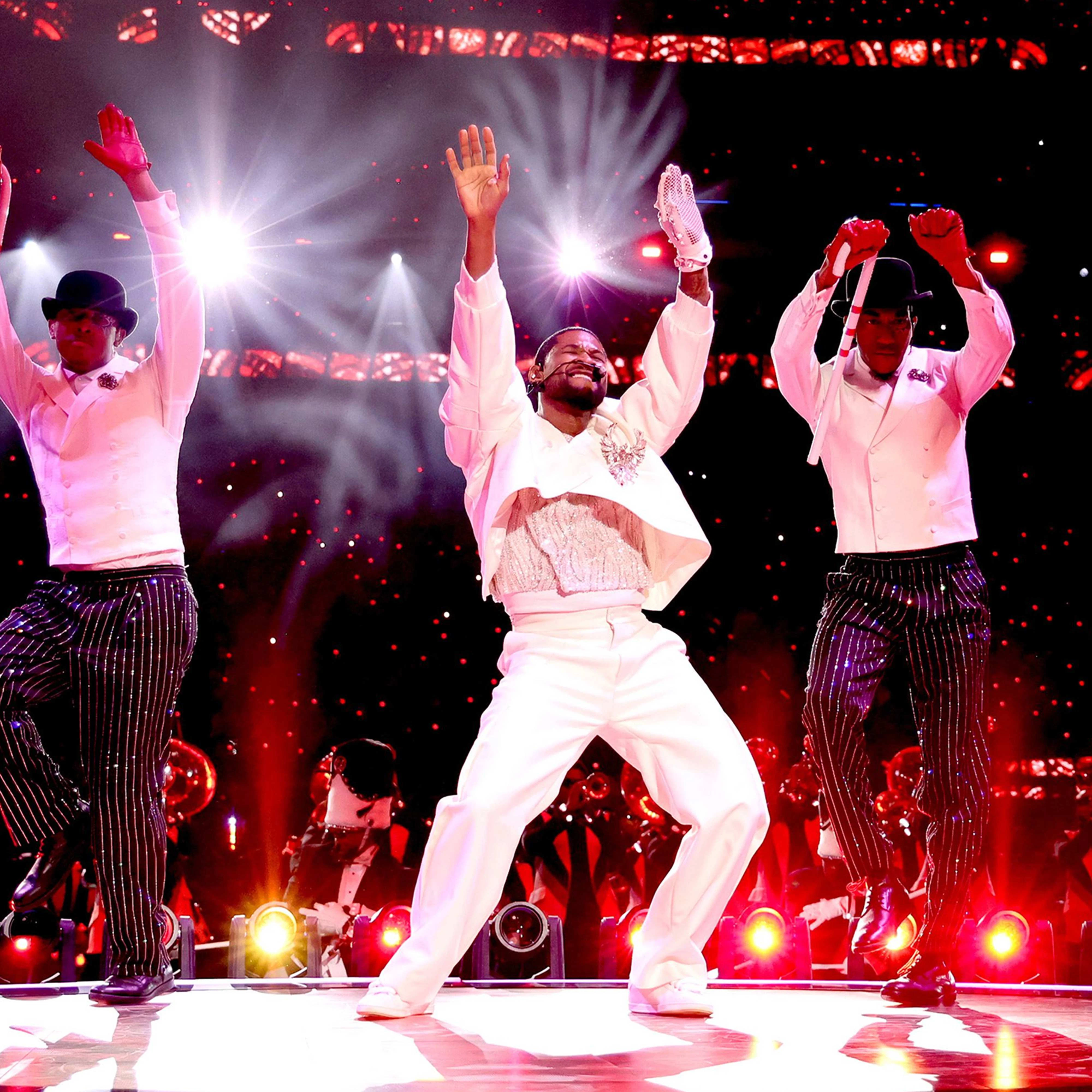
| 2024 (LVIII) | Usher | "Caught Up", "U Don't Have to Call", "My Boo", "Confessions Part II", "OMG", "Yeah!" | 13 | R&B vocal medleys, roller-skating breaks, Atlanta crunk brass |
| 2023 (LVII) | Rihanna | "Bitch Better Have My Money", "We Found Love", "Rude Boy", "Work", "Umbrella", "Diamonds" | 12 | Floating platform choreography, synth-pop to dancehall transitions |
| 2022 (LVI) | Dr. Dre, Snoop Dogg, Eminem, Mary J. Blige, Kendrick Lamar, 50 Cent | "The Next Episode", "California Love", "In Da Club", "Family Affair", "Alright", "Lose Yourself", "Still D.R.E." | 11 | West Coast hip-hop medley, live piano riffs, multi-stage house sets |
| 2021 (LV) | The Weeknd | "Starboy", "The Hills", "Can't Feel My Face", "I Feel It Coming", "Earned It", "Blinding Lights" | 7 | Cinematic dark-pop, choir arrangements, mirrored maze choreography |
| 2020 (LIV) | Shakira & Jennifer Lopez | "She Wolf", "Whenever, Wherever", "Hips Don't Lie", "Jenny from the Block", "Waiting for Tonight", "On the Floor" | 16 | Latin pop, reggaeton fusion, salsa dance breaks, co-headliner handoffs |
| 2017 (LI) | Lady Gaga | "God Bless America/This Land", "Poker Face", "Born This Way", "Telephone", "Just Dance", "Bad Romance" | 7 | Solo acrobatics, synth-pop energy, live vocal emphasis |
| 2015 (XLIX) | Katy Perry | "Roar", "Dark Horse", "I Kissed a Girl", "Teenage Dream", "California Gurls", "Get Ur Freak On", "Firework" | 9 | Visual pop props, guest integration (Lenny Kravitz, Missy Elliott) |
| 2013 (XLVII) | Beyoncé | "Run the World (Girls)", "Love on Top", "Crazy in Love", "Bootylicious", "Single Ladies", "Halo" | 9 | All-female backing band, Destiny's Child reunion, intense choreography |
| 2007 (XLI) | Prince | "Let's Go Crazy", "Baby I'm a Star", "Proud Mary", "All Along the Watchtower", "Best of You", "Purple Rain" | 7 | Live electric guitar solos, rock/R&B cover medleys, natural rain finale |
| 1993 (XXVII) | Michael Jackson | "Jam", "Billie Jean", "Black or White", "We Are the World", "Heal the World" | 5 | Modern blueprint: theatrical silence, moonwalk, global anthem choir |
Historical Eras of Halftime Show Music
1. The Genesis of Pop Spectacle (1993)
Before 1993, Super Bowl halftime entertainment primarily featured collegiate marching bands, drill teams, and legacy performance groups like Up with People. When ratings dipped during Super Bowl XXVI in 1992—as viewers switched channels to watch a live episode of In Living Color—the NFL pivoted strategically.
Michael Jackson’s performance at Super Bowl XXVII set the modern benchmark. Opening with absolute silence for over a minute while standing atop giant video screens, Jackson launched into "Jam," followed by "Billie Jean" and "Black or White," before closing with a stadium-wide card stunt for "Heal the World." This established that halftime shows required major recording artists playing instantly recognizable hits.
- Pre-1993: Marching Bands & Drill Teams
- 1993 (Michael Jackson): Pop Megastars & Broadcast Ratings Strategy
- 2005–2010: Post-Janet Jackson Classic Rock Era (Safe, Live Guitar Acts)
- 2011–Present: Multi-Genre Spectacle, Streaming Integration & Guest Cameos
2. The Classic Rock Era (2005–2010)
Following the controversial Super Bowl XXXVIII halftime show in 2004, the NFL adopted a conservative booking strategy for six consecutive years, focusing on established classic rock acts. This period produced some of the most musical and vocally raw setlists in halftime history:
- Paul McCartney (2005): Delivered timeless stadium anthems including "Drive My Car," "Get Back," "Live and Let Die," and a stadium-wide chorus of "Hey Jude."
- The Rolling Stones (2006): Played a blues-driven rock trio: "Start Me Up," "Rough Justice," and "(I Can't Get No) Satisfaction."
- Prince (2007): Widely regarded as one of the greatest halftime shows in history. Prince blended his own hits ("Let's Go Crazy") with unexpected covers of Jimi Hendrix's "All Along the Watchtower," Creedence Clearwater Revival's "Proud Mary," and Foo Fighters' "Best of You," culminating in an iconic performance of "Purple Rain" in a torrential downpour at Miami’s Dolphin Stadium.
- Bruce Springsteen & The E Street Band (2009): Packed "Ten Seconds of Sin" into a four-song set featuring "Every Time You Touch That Band," "Born to Run," "Working on a Dream," and "Glory Days."
3. The Modern Pop and Dance Era (2011–2020)
Beginning with The Black Eyed Peas in 2011, the NFL transitioned back to contemporary pop icons to target younger demographics and international audiences. This era introduced hyper-choreographed medleys, elaborate stage props, and surprise guest appearances:
- Beyoncé (2013): Rejoined members of Destiny's Child (Kelly Rowland and Michelle Williams) to perform "Bootylicious" and "Independent Women Part I" before transitioning into her solo hit "Single Ladies (Put a Ring on It)."
- Katy Perry (2015): Brought out Missy Elliott for a three-song hip-hop interlude ("Raincoat", "Get Ur Freak On", "Work It"), which briefly eclipsed the main act in television chatter and social media engagement.
- Lady Gaga (2017): Conducted a solo set without guest stars, carrying six songs through continuous acrobatics, quick costume changes, and keytar solos.
4. The Hip-Hop and R&B Renaissance (2021–Present)
Under the partnership between the NFL and Roc Nation (which began managing the halftime show strategy in 2019), the music selection shifted to celebrate hip-hop and R&B culture:
- Super Bowl LVI (2022): A milestone event curated by Dr. Dre, marking the first time hip-hop was the central theme. The setlist functioned as a historic tour of West Coast hip-hop and 2000s rap, featuring "The Next Episode," "In Da Club," "Family Affair," "Alright," and "Lose Yourself."
- Usher (2024): A tribute to 30 years of R&B, featuring guest cameos from Alicia Keys, Will.i.am, Lil Jon, and Ludacris across 13 fast-paced tracks.
- Kendrick Lamar (2025): Solidified hip-hop's dominance on the global broadcast stage, leveraging intricate storytelling, intricate lyricism, and chart-dominating anthems like "Not Like Us."
Production Mechanics, Licensing, and the "Super Bowl Bounce"
Audio Engineering: Live vs. Pre-Recorded Tracks
One of the most complex technical aspects of executing a Super Bowl halftime song list is stadium acoustic management. Open-air stadiums present echo latency issues, while enclosed domes present reflections that can disorient singers relying on stage monitors.
According to standard NFL production guidelines established by veteran sound directors:
- Instrumentation & Orchestrations: Band instrumentation (guitars, drums, horn sections, synthetic tracks) is typically pre-recorded during early rehearsal weeks to guarantee broadcast mix stability in the event of equipment failure or adverse weather conditions.
- Lead Vocal Deliveries: Main vocals are performed live over the pre-recorded instrumental stems, though artists utilize custom ear-monitor mixes containing vocal click tracks or back-up vocal support on high-intensity dance passages.
Licensing, Publishing Rights, and Clearances
Clearing songs for a Super Bowl halftime performance involves complex legal navigation across music publishing and master rights:
- Synchronization (Sync) Licenses: Because the show is a live television broadcast re-transmitted globally, every song snippet must secure sync licenses from writers, co-writers, and publishers.
- Medley Approval: Publishers frequently mandate that interpolated or shortened versions of their compositions preserve the integrity of the original chorus and refrain.
- Censorship & Clean Edits: Federal Communications Commission (FCC) broadcast decency standards require headliners to alter explicit lyrics. Songs like Dr. Dre’s "The Next Episode" or Kendrick Lamar’s "Alright" undergo lyric rewrites or instrument-only mutes for broadcast compliance.
Financial Dynamics: The "Super Bowl Bounce"
A common misconception is that headliners receive millions of dollars in performance fees from the NFL. In reality, the NFL does not pay an appearance fee to headlining artists; the league covers all production expenses, stage construction fees, logistics, and backup dancer budgets—costs that regularly range between $10 million and $15 million.
In exchange, artists receive exposure to over 100 million live viewers, triggering a commercial phenomenon known as the "Super Bowl Bounce":
- Live Halftime Performance (100M+ Viewers)
- Mass Viewership Exposure (Global Audience)
- Instant Streaming & Sales Surge (Spotify / Apple / Amazon)
- Ticket Demand Spike (Global Arena Tours)
Data compiled by music analytics firms like Luminate details the immediate impact on song catalog performance following the show:
- Rihanna (2023): Her overall Spotify streaming numbers surged by over 640% globally standard hours after the broadcast, with her opening track "Bitch Better Have My Money" seeing a streaming spike exceeding 2,600%.
- Usher (2024): Spotify streams for "Yeah!" and "My Boo" rose by hundreds of percentage points overnight, driving thousands of new ticket sales for his nationwide concert tour announcements.
- Dr. Dre & Snoop Dogg (2022): Album sales for 2001 soared into the Billboard Top 10 over two decades after its initial release.
Common Pitfalls in Halftime Setlist Curation
Not every halftime show setlist achieves critical or commercial success. Analyzing past performances reveals distinct structural traps that artists can fall into:
1. The Deep Cut Trap
Super Bowl audiences are broad, non-specialized, and international. Including obscure album tracks or unreleased new singles instead of recognized hits often causes stadium energy to drop. The halftime stage rewards catalog familiarity over experimentation.
2. Over-Cramming Medleys
Attempting to fit 15 or 16 song snippets into 12 minutes can create a disjointed viewing experience. When songs play for under 45 seconds, audiences cannot engage with the groove or melody before the track shifts. The most effective setlists balance fast-paced transitions with extended 2-to-3-minute arrangements of their biggest anthems.
3. Guest Cameo Mismanagement
Bringing guest artists onstage can create viral moments, but overusing guest features risks overshadowing the primary headliner. Successful shows integrate guests seamlessly into the headliner's existing narrative arc—such as Alicia Keys joining Usher for "My Boo"—rather than stopping the show's momentum for an unrelated guest track.
Frequently Asked Questions
How many songs are typically performed in a Super Bowl halftime show?
Most modern Super Bowl halftime setlists feature between 7 and 13 songs. Headliners perform abbreviated versions or medleys of their hits, spending anywhere from 45 seconds to 3 minutes on a single track to maximize energy within the 12-to-15-minute timeframe.
Do artists get paid money to perform their songs at the Super Bowl?
No, the NFL does not pay a standard performance fee to halftime show headliners. However, the NFL and its primary sponsors cover all production costs, staging expenses, lighting setups, travel, and logistics. Artists accept the arrangement for global broadcast exposure, which leads to massive increases in music streams, digital sales, and concert ticket demand.
Are all songs in the halftime show performed completely live?
Lead vocal performances are typically delivered live, while complex background instrumental tracks, horn arrangements, and synth stems are pre-recorded during rehearsals. This setup ensures audio clarity and protects against technical failure during live network broadcast in fluctuating stadium conditions.
Which halftime show song performance had the highest television audience?
Performances by Katy Perry (2015), Lady Gaga (2017), Rihanna (2023), and Usher (2024) each set broadcast audience records, drawing over 115 million to 120+ million direct live TV and digital viewers during their respective halftime slots.
How do musical directors choose which songs make the final cut?
Musical directors evaluate an artist's discography based on global popularity metrics, key compatibility, tempo matching, and visual staging potential. Songs are arranged into a fluid dynamic flow—typically opening with a high-impact hit, transitioning through guest features or dynamic mid-tempo tracks, and concluding with a universally recognized stadium anthem.
Strategic Summary for Music and Production Enthusiasts
The song selection process for a Super Bowl halftime show requires balancing musical heritage, broadcast constraints, and theatrical showmanship. To evaluate how effective a halftime setlist is, consider these key indicators:
- Dynamic Flow: Does the setlist transition smoothly across tempos and musical keys without feeling disjointed?
- Catalog Balance: Does the headliner balance iconic legacy hits with contemporary chart-toppers?
- Guest Integration: Do featured guest appearances enhance the core performance or break the show's momentum?
- Broadcast Compliance & Audio Execution: Are explicit lyrics adjusted naturally without ruining the song's rhythmic flow?
When planned and executed effectively, a halftime show setlist does more than entertain a stadium—it defines a cultural moment, reshapes streaming charts, and sets a benchmark for live televised music performance.
Image Gallery