How Long Did Jeffrey Dahmer Kill? A Detailed Timeline of the Milwaukee Cannibal
Jeffrey Dahmer’s killing spree spanned approximately 13 years, beginning with his first victim in June 1978 and ending with his arrest in July 1991. While he committed his first murder shortly after high school, there was a significant...
Jeffrey Dahmer’s killing spree spanned approximately 13 years, beginning with his first victim in June 1978 and ending with his arrest in July 1991. While he committed his first murder shortly after high school, there was a significant nine-year hiatus before he resumed killing consistently between 1987 and 1991.
Contents
The Chronology of a 13-Year Spree
When analyzing the criminal career of Jeffrey Dahmer, historians and forensic psychologists often divide his activity into three distinct phases: the isolated origin, the period of suppression, and the final escalation. Although his name is synonymous with the late 1980s and early 1990s, the "Milwaukee Cannibal" actually claimed his first victim in the late 1970s.
As we examine these events from the perspective of 2026, over three decades since his death in prison, the timeline serves as a chilling case study in the failure of early intervention and the "cooling-off" periods that characterize certain types of serial offenders. The total duration from the first act of homicide to his final capture encompasses 13 years and one month.
The First Victim: Steven Hicks (1978)
Jeffrey Dahmer’s first murder occurred on June 18, 1978, in Bath Township, Ohio. Dahmer was 18 years old and had just graduated from high school. His victim was 18-year-old Steven Hicks, a hitchhiker whom Dahmer invited to his family home for a drink while his parents were away.
When Hicks attempted to leave, Dahmer struck him with a barbell and subsequently strangled him. This initial murder is significant because it established the "how" of Dahmer's future crimes—luring victims with the promise of companionship or alcohol—but it was followed by a massive temporal gap. At the time, Dahmer disposed of the remains by disarticulating the body and burying it in the woods behind his house, later crushing the bones with a sledgehammer. This forensic detail highlights a level of calculation that would reappear years later.
The Nine-Year Hiatus (1978–1987)
One of the most frequent questions regarding Dahmer’s timeline is why he stopped killing for nearly a decade. Between 1978 and 1987, there are no known victims. This "cooling-off" period is exceptionally long for a serial killer whose later crimes were so frequent.
During this interval, several major life events occurred:
- Military Service: Dahmer enlisted in the U.S. Army in 1979 and served as a combat medic in West Germany. He was eventually discharged in 1981 due to worsening alcoholism.
- Relocation to Florida: After his discharge, he spent time in Miami Beach, where he struggled with unemployment and his addiction.
- Return to the Midwest: By late 1981, he moved in with his grandmother, Catherine Dahmer, in West Allis, Wisconsin.
Criminologists suggest that his environment (the structured military life followed by the supervision of his grandmother) and his heavy alcohol consumption may have suppressed his homicidal urges during this time, though he continued to engage in voyeuristic and fetishistic behaviors.
The Resumption: Steven Tuomi (1987)
The hiatus ended on September 15, 1987. While staying at the Ambassador Hotel in Milwaukee, Dahmer met 24-year-old Steven Tuomi. Dahmer later claimed he had no memory of the actual killing, asserting that he woke up to find Tuomi’s battered body next to him after a night of heavy drinking.
This second murder marked a turning point. Dahmer did not wait another nine years; instead, the interval between his crimes began to shrink. He transported Tuomi’s body in a suitcase to his grandmother’s basement, where he began the grisly process of dismemberment that would become his primary method of body disposal.
The Escalation at his Grandmother's House (1988–1990)
Between 1988 and 1990, Dahmer murdered three more individuals while living in his grandmother’s home: Jamie Doxtator, Richard Guerrero, and Anthony Sears. During this period, his methods became more ritualistic. He began attempting to create "zombies" by performing crude lobotomies on his victims—a desperate and failed attempt to keep them in a permanent state of submission.
The constraint of living in his grandmother's basement eventually became an obstacle to his increasing frequency of violence. Catherine Dahmer became increasingly suspicious of the smells and the late-night activities, leading Jeffrey to seek his own residence.
The Oxford Apartments Period (1990–1991)
In May 1990, Dahmer moved into Apartment 213 at the Oxford Apartments in Milwaukee. This move facilitated the most violent and rapid phase of his 13-year timeline. Within the confines of this apartment, the frequency of his killings reached a fever pitch.
The 1991 Killing Spree
The year 1991 was the deadliest in Dahmer’s history. In the seven months leading up to his arrest, he murdered eight people. This represents nearly half of his total victim count in less than 5% of his total active years.
| Victim Name | Date of Death | Age |
|---|---|---|
| Curtis Straughter | February 18, 1991 | 18 |
| Errol Lindsey | April 7, 1991 | 19 |
| Tony Hughes | May 24, 1991 | 31 |
| Konerak Sinthasomphone | May 27, 1991 | 14 |
| Edward Smith | June 14, 1991 | 28 |
| Ricky Beeks | June 30, 1991 | 33 |
| Ernest Miller | July 1991 | 22 |
| David Thomas | July 12, 1991 | 23 |
| Matt Turner | July 15, 1991 | 20 |
| Jeremiah Weinberger | July 19, 1991 | 23 |
| Oliver Lacy | July 15, 1991 | 23 |
| Joseph Bradehoft | July 19, 1991 | 25 |
The 1991 timeline is particularly tragic due to the Konerak Sinthasomphone incident. On May 27, 1991, the 14-year-old victim managed to escape the apartment while dazed and bleeding. Despite the intervention of neighbors, Milwaukee police officers returned the boy to Dahmer’s custody, accepting Dahmer’s claim that the boy was an adult lover who was intoxicated. Dahmer killed him shortly after the police left.
The End of the Timeline: July 22, 1991
The 13-year span of violence ended on the night of July 22, 1991. Dahmer lured 32-year-old Tracy Edwards to his apartment. Edwards managed to escape with a pair of handcuffs dangling from his wrist and flagged down two police officers, Robert Rauth and Rolf Mueller.
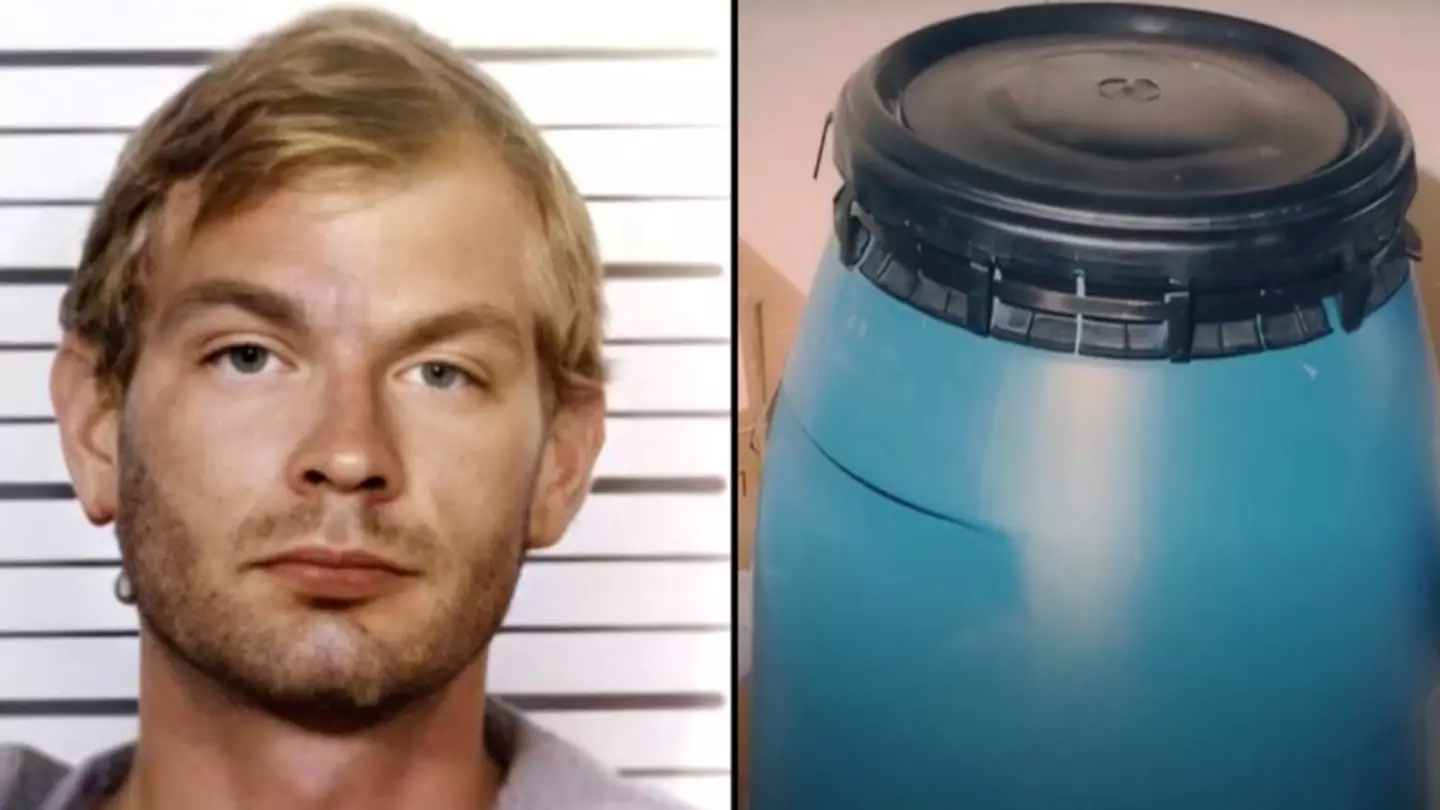
Upon entering Apartment 213, officers discovered a Polaroid camera and numerous photographs of dismembered bodies. A subsequent search revealed the full extent of the horrors: several human heads in the refrigerator, two skulls on top of the refrigerator, and a 57-gallon drum containing three torsos dissolving in acid.
Statistical Summary of Dahmer’s Activity
To understand the duration and intensity of Jeffrey Dahmer’s crimes, it is helpful to look at the distribution of his murders over the 13-year period.
- Total Years Active: 13.1 years (June 1978 – July 1991)
- Total Confirmed Victims: 17
- Longest Gap Between Murders: 9 years and 3 months
- Shortest Gap Between Murders: 3 days (between his final two victims)
- Most Active Year: 1991 (8 victims in 7 months)
Forensic Perspective: Why Did He Kill for So Long?
The 13-year duration of Dahmer's activity is largely attributed to a combination of his selective hunting grounds, his disposal methods, and systemic failures. Dahmer targeted marginalized communities—primarily young men of color and those in the LGBTQ+ community—at a time when missing person reports from these groups were often not given high priority by law enforcement.
Furthermore, his method of dismemberment and chemical disposal meant there were no bodies to be found, preventing the discovery of a "cluster" of crimes that usually alerts police to a serial killer's presence. It was only when his internal compulsion outpaced his ability to hide the evidence that he was finally caught.
Frequently Asked Questions
Did Jeffrey Dahmer kill anyone before 1978?
There is no evidence to suggest that Dahmer committed any murders prior to Steven Hicks in 1978. While he engaged in animal cruelty and dissection as a teenager, these behaviors are categorized as "precursor activities" rather than lethal violence against humans.
How many people did Jeffrey Dahmer kill in total?
Dahmer confessed to and was convicted of 17 murders. There have been various attempts to link him to other cold cases, most notably the 1981 disappearance of Adam Walsh in Florida, but no forensic evidence has ever conclusively tied him to victims outside of the confirmed 17.
Why did Jeffrey Dahmer have a nine-year gap?
The hiatus is attributed to a lack of privacy and opportunity. During his military service in Germany and his time living with his grandmother, he was under constant supervision or lacked a private space to carry out his complex post-mortem rituals. His escalating alcoholism also played a role in fluctuating his focus.
Where did most of Jeffrey Dahmer’s murders take place?
The majority of the murders occurred in Milwaukee, Wisconsin. Specifically, 12 of the 17 victims were killed in his Oxford Apartments residence between 1990 and 1991. The others took place at his family home in Ohio, the Ambassador Hotel, and his grandmother’s home in West Allis.
How was Jeffrey Dahmer finally caught?
Dahmer was caught after his intended victim, Tracy Edwards, escaped the apartment and led police back to the scene. The discovery of Polaroid photographs of previous victims provided the immediate probable cause for his arrest.
Final Summary of the Case
The question of how long Jeffrey Dahmer killed is answered by a timeline that stretches from a 1978 graduation summer to a humid July night in 1991. For 13 years, the "Milwaukee Cannibal" operated largely in the shadows, punctuated by a massive hiatus and a final, frantic year of unprecedented violence. Understanding this timeline is crucial for forensic studies, highlighting how serial offenders can remain dormant for years before entering a "spree" phase that ultimately leads to their downfall.
Image Gallery