Pennsylvania State System Enrollment and Funding: 2026 Trends and Fiscal Analysis
The Pennsylvania State System of Higher Education (PASSHE) currently faces a pivotal era defined by stabilized enrollment and a redesigned state funding model. By 2026, the system has leveraged university integrations and multi-year tu...
The Pennsylvania State System of Higher Education (PASSHE) currently faces a pivotal era defined by stabilized enrollment and a redesigned state funding model. By 2026, the system has leveraged university integrations and multi-year tuition freezes to maintain affordability, while advocating for increased state appropriations to address workforce shortages in nursing, education, and social services across the Commonwealth.
Contents
The State of PASSHE Enrollment in 2026
Enrollment within the Pennsylvania State System of Higher Education is the primary barometer for the health of the Commonwealth’s public teaching institutions. After a decade of contraction—driven largely by a shrinking demographic of high school graduates in the Northeast—enrollment figures in 2026 have reached a state of "dynamic stabilization." While the total headcount is lower than the peaks seen in 2010, the composition of the student body has evolved significantly.
The system now prioritizes three distinct student populations to maintain its fiscal and academic viability:
- Traditional Undergraduates: Despite the "demographic cliff," PASSHE institutions remain the most affordable four-year option for Pennsylvania residents. Universities like West Chester and Millersville continue to see robust demand due to their proximity to population centers.
- Nontraditional and Adult Learners: With the rise of credentialing and the need for career pivoting, PASSHE has expanded its "finish-what-you-started" programs. These initiatives target the hundreds of thousands of Pennsylvanians who have some college credit but no degree.
- Graduate and Professional Students: Expansion into high-demand healthcare and technical fields has bolstered graduate enrollment. Programs in physician assistant studies, data analytics, and educational leadership provide higher per-student revenue and meet critical state labor needs.
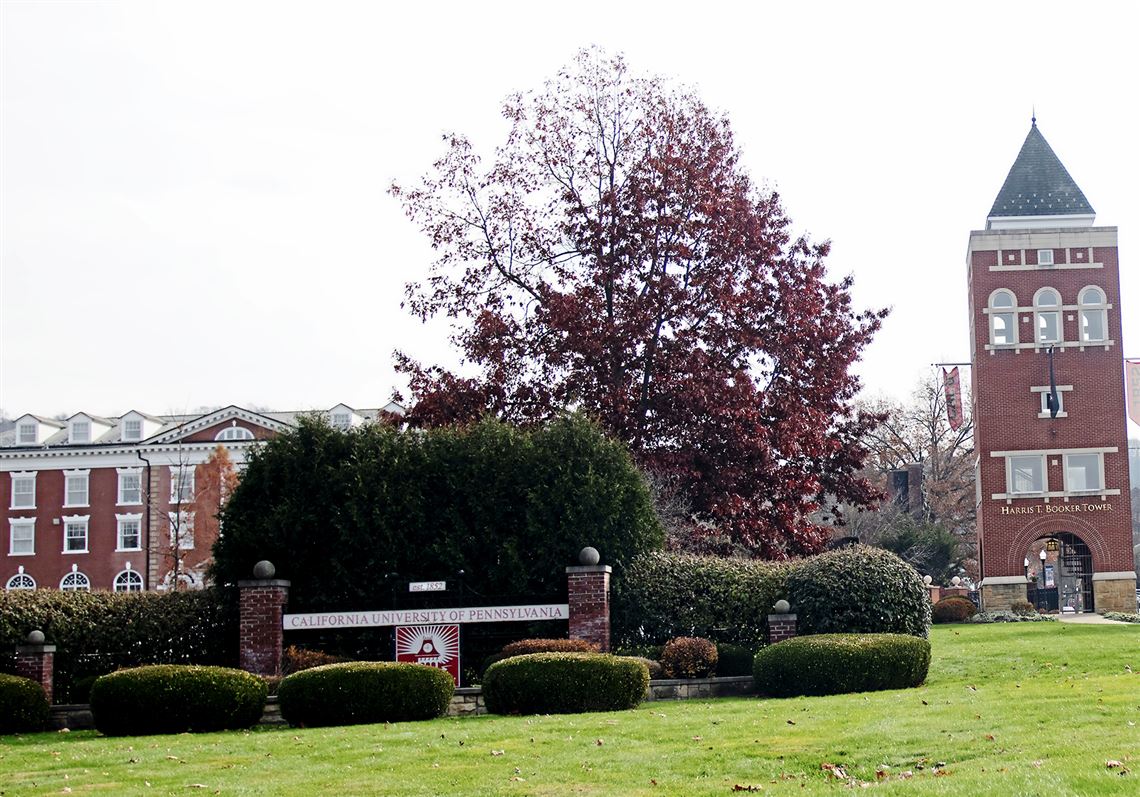
The integration of several campuses into Commonwealth University (Bloomsburg, Lock Haven, Mansfield) and Pennsylvania Western University (California, Clarion, Edinboro) has reached its fourth year of full operational maturity. This structural change was designed specifically to combat enrollment declines by sharing faculty and curriculum across multiple geographic sites, ensuring that students at smaller campuses still have access to a wide array of majors.
Funding Mechanisms and State Appropriations
The financial backbone of the State System is a combination of state tax dollars (appropriations) and student tuition. Historically, the balance has shifted; whereas the state once covered nearly 75% of the cost of education decades ago, that burden shifted toward students in the early 21st century.
The Direct State Subsidy
In 2026, the advocacy focus remains on the "State Appropriation." This is the lump sum provided by the Pennsylvania General Assembly to the Board of Governors, which then distributes the funds to the 10 universities. The current funding climate is characterized by a push for a "predictable funding formula." Rather than negotiating from zero each year, the system seeks a baseline that accounts for inflation and the specific costs of high-cost programs like nursing and engineering.
Performance-Based Funding Metrics
The Board of Governors utilizes a funding formula that moves beyond simple "headcount" metrics. In 2026, a significant portion of a university’s allocation is tied to:
- Student Success: Graduation rates and retention, particularly for first-generation and low-income students.
- Affordability: Keeping the net price manageable for the average Pennsylvania family.
- Workforce Alignment: Increasing the number of degrees awarded in "high-priority" occupations as defined by the Pennsylvania Department of Labor and Industry.
Tuition Strategy and the "Affordability Freeze"
One of the most significant developments in the 2020s has been the multi-year tuition freeze. As of the 2025-2026 academic year, the State System has maintained a commitment to keeping the base tuition rate stable for seven consecutive years. This strategy is a double-edged sword: it makes PASSHE incredibly competitive against private and state-related institutions (like Pitt or Penn State), but it also places immense pressure on the universities to find internal efficiencies.
To sustain this freeze, the system relies on "shared services." By centralizing payroll, human resources, and IT procurement at the system level in Harrisburg, individual campuses have reduced their administrative overhead. However, critics note that without a corresponding increase in state funding, the freeze can lead to "fee creep," where universities increase mandatory student fees (technology fees, wellness fees) to cover the rising costs of utilities and labor that tuition no longer covers.
2026 Cost Comparison Overview
The following table outlines the estimated average costs and enrollment distribution across the different tiers of the State System for the 2026 academic cycle.
| University Category | Key Institutions | Est. Undergraduate Enrollment (Full-Time) | Annual Base Tuition (Resident) | Focus Areas |
|---|---|---|---|---|
| High Growth / Regional | West Chester, Slippery Rock | 12,000 - 17,000 | ~$7,716 | Business, Health Sciences, Music |
| Integrated Clusters | PennWest, Commonwealth | 8,000 - 11,000 (Combined) | ~$7,716 | Online Learning, Applied Tech, Rural Health |
| Mid-Sized Specialist | Millersville, Shippensburg, IUP | 6,000 - 9,000 | ~$7,716 | Education, STEM, Criminology |
| Special Mission | Cheyney (HBCU) | 800 - 1,200 | ~$7,716 | Social Justice, Bioscience |
Note: Base tuition is set by the Board of Governors; individual university "total cost of attendance" varies based on housing, meal plans, and regional fees.
The Impact of University Integrations
The "mergers" of 2022 are no longer new experiments; by 2026, they are the established operating model for six former standalone institutions. This consolidation was a direct response to a fiscal crisis where some campuses were facing insolvency due to plummeting enrollment and stagnant funding.
The Benefits Realized:
- Expanded Academic Catalog: A student at the Mansfield campus of Commonwealth University can now take a specialized environmental science course taught by a professor at the Bloomsburg campus via synchronous remote learning.
- Financial Stability: Pooling resources has allowed these "integrated" universities to maintain a higher credit rating, lowering the cost of borrowing for essential infrastructure projects.
The Ongoing Challenges:
- Local Identity: Alumni and local communities continue to advocate for the preservation of distinct campus identities. The "PennWest" branding, for instance, still manages the delicate balance of three distinct athletic programs (California Vulcans, Clarion Golden Eagles, and Edinboro Fighting Scots).
- Operational Complexity: Managing a single university across three physical sites separated by hundreds of miles requires significant investment in digital infrastructure and travel logistics.
Workforce Development and the "Blueprint for Higher Education"
The 2026 funding landscape is heavily influenced by the Governor’s "Blueprint for Higher Education." This policy initiative seeks to better integrate PASSHE with Pennsylvania’s Community Colleges. The goal is a seamless "1+3" or "2+2" pathway where students can start at a community college and finish at a State System university with no loss of credit and a guaranteed tuition rate.
Funding is now increasingly tied to how well a university serves as an economic engine. For example, if the Lehigh Valley needs more K-12 teachers, Kutztown University receives targeted grants to expand its student-teaching placements and scholarship offerings. This "targeted funding" model ensures that tax dollars are being spent on degree programs that result in immediate employment within the state, thereby increasing the state's tax base.
FAQs: Enrollment and Funding
Has the tuition freeze ended in 2026?
As of the current 2025-2026 academic year, the Board of Governors has continued to prioritize affordability. While there is annual debate regarding a small inflationary increase, the system has successfully utilized increased state subsidies and administrative savings to keep the base tuition rate at or near levels set years ago. However, students should always check specific university "mandatory fees," which are adjusted more frequently.
How does PASSHE funding differ from Penn State or Pitt?
PASSHE universities are "state-owned," meaning they are agencies of the Commonwealth. Their employees are state employees, and the state has a direct fiduciary responsibility for their assets. Penn State, Pitt, Temple, and Lincoln are "state-related" institutions; they are private entities that receive a "non-preferred" appropriation from the state in exchange for offering tuition discounts to PA residents. PASSHE generally receives a higher level of direct oversight but also more consistent base support per student.
Are enrollment numbers increasing in 2026?
Enrollment has stabilized rather than surged. While some campuses like West Chester remain at capacity, others are seeing "flat" growth. The success in 2026 is defined by high retention rates—keeping the students who do enroll—rather than simply recruiting larger freshman classes.
What happens if a university's enrollment continues to fall?
Under the current sustainability framework, the State System no longer allows individual universities to fail in isolation. If a campus faces a severe enrollment drop, the system intervenes through further integration of services or programmatic shifts (e.g., turning a campus into a specialized center for healthcare training) to ensure the physical infrastructure remains an asset to the region.
How can I verify the current funding status of a specific PA university?
The PASSHE official website provides an annual "Accountability Report" and "Financial Statements." These documents break down revenue by source (tuition, state aid, grants) and expenditure by category for each of the 10 member universities.
Recommendations for Stakeholders
For prospective students, the 2026 landscape offers unprecedented value. The tuition freeze makes a PASSHE degree one of the best returns on investment in the country. Students should focus on institutions that have strong partnerships with regional employers to ensure a smooth transition into the workforce.
For policymakers, the focus must remain on the long-term capital needs of the campuses. While operational funding has improved, many PASSHE buildings require modernization to support 21st-century STEM and healthcare education. Investing in the "bricks and mortar" of these institutions is essential to maintaining the quality of the student experience.
For community leaders, the integrated universities represent a new type of regional partner. Engaging with the "new" versions of these institutions (like PennWest or Commonwealth) can lead to specialized training programs that keep local industries competitive.
Image Gallery