Lawrence Taylor Size: The Physical Profile of the NFL’s Greatest Outside Linebacker
During his legendary career with the New York Giants, Lawrence Taylor stood 6 feet 3 inches (1.91 meters) tall and maintained a playing weight typically ranging between 237 and 245 pounds (107–111 kg). This specific physical profile, c...
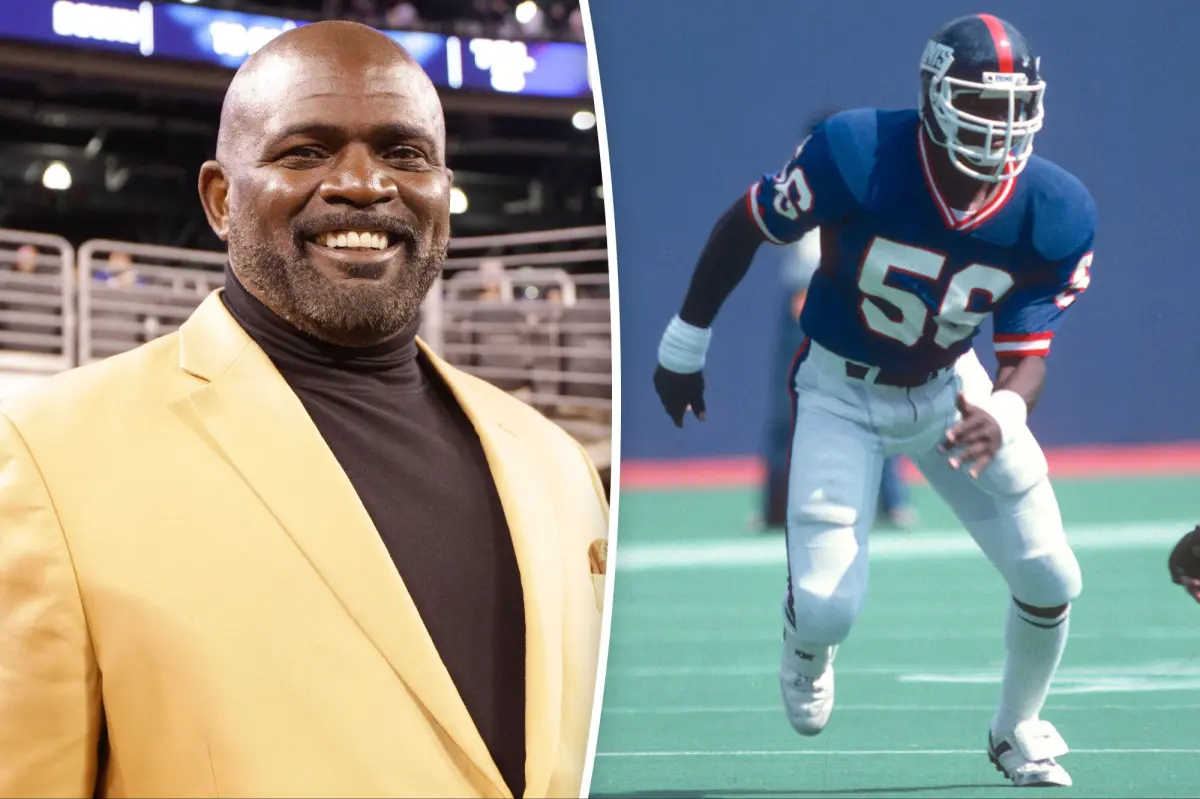
During his legendary career with the New York Giants, Lawrence Taylor stood 6 feet 3 inches (1.91 meters) tall and maintained a playing weight typically ranging between 237 and 245 pounds (107–111 kg). This specific physical profile, combined with rare speed and explosive power, allowed him to redefine the outside linebacker position and become one of the most feared defensive players in NFL history.
Contents
The "size" of Lawrence Taylor (often referred to simply as "L.T.") was about more than just numbers on a scale or a height chart. In the context of the 1980s and early 1990s, Taylor represented a new breed of athlete—the "hybrid" defender who possessed the frame of a defensive end but the agility of a safety. As we evaluate his physical legacy from the perspective of 2026, his measurements provide a fascinating blueprint for the evolution of the modern edge rusher.
Historical Context of Taylor’s Physical Dimensions
When Lawrence Taylor entered the NFL in 1981, the league was accustomed to linebackers who were either "pluggers" (stout, heavy run-stoppers) or "cover men" (leaner, faster players who tracked tight ends). Taylor effectively merged these archetypes.
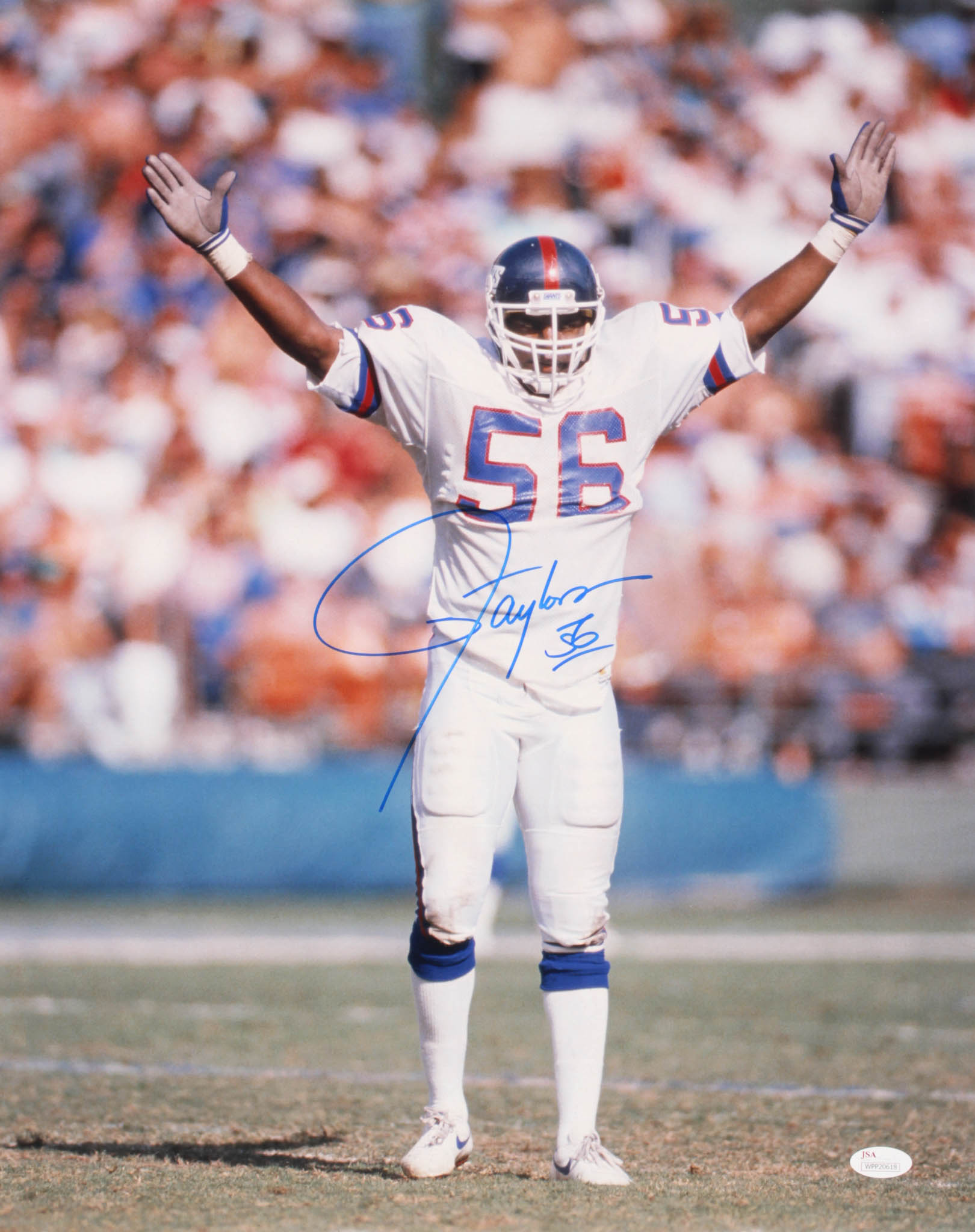
At 6'3", Taylor had the ideal height to maintain a low center of gravity while still possessing enough length to contend with offensive tackles who were beginning to grow toward the 6'5" and 6'6" range. His weight of approximately 240 pounds was considered heavy for an outside linebacker in a 3-4 defensive scheme at the time, yet he moved with a fluid speed that defied his mass.
The Significance of 6'3" in the 3-4 Defense
Height in the NFL is a game of leverage. For Taylor, being 6'3" was a tactical advantage. It allowed him to get "under" the pads of taller offensive linemen. In the trenches, the player who stays lower usually wins the battle of leverage. Taylor’s height allowed him to transition from a standing position to a dip-and-rip pass-rush move with elite efficiency. He wasn't so tall that he struggled with balance, nor so short that he was easily engulfed by the massive "Hogs" of the Washington Redskins or other rival offensive lines.
Detailed Physical Specifications of Lawrence Taylor
To understand the dominance of Lawrence Taylor, one must look at the specific metrics that defined his career. While official "Pro Day" stats from the early 1980s are not as meticulously documented as today’s NFL Combine data, scouts and historians have reconstructed his profile based on team records and verified reports.
| Physical Attribute | Measurement (Approximate) | Impact on Performance |
|---|---|---|
| Height | 6'3" (191 cm) | Optimal for leverage and visibility over the line. |
| Playing Weight | 237–245 lbs (107–111 kg) | Balanced power for rushing and speed for pursuit. |
| 40-Yard Dash | 4.53–4.60 seconds | Elite closing speed for a player of his mass. |
| Arm Length | 33–34 inches | Exceptional reach for shedding blocks and "strip-sacks." |
| Vertical Leap | 32+ inches | Aided in batting down passes and high-pointing interceptions. |
| Position | Outside Linebacker (OLB) | The prototype for the modern "Edge" rusher. |
Weight Fluctuations and Career Longevity
Throughout his 13-season career (1981–1993), Taylor’s weight was a point of focus for the Giants' coaching staff. Early in his career, he was a lean 235 pounds, which maximized his sideline-to-sideline range. As he aged and the league moved toward heavier offensive fronts, Taylor reportedly played closer to 250 pounds in certain seasons to better withstand the physical toll of the "bull rush." Despite these fluctuations, his body fat percentage remained low, ensuring that his weight was primarily functional muscle mass.
The "Speed-to-Power" Ratio
The most significant aspect of Lawrence Taylor's size was how he utilized it through acceleration. In physics, Force = Mass × Acceleration. Taylor’s 240-pound frame moving at a 4.5-second 40-yard dash pace generated an amount of kinetic energy that changed the way offensive coordinators planned their protection schemes.
Before Taylor, the "blind side" tackle was an important role, but Taylor’s speed off the edge forced NFL teams to prioritize elite, high-paid left tackles to protect the quarterback. His ability to convert his size into raw power meant that even if a blocker matched his height and weight, they could rarely match his explosive burst.
Reach and Hand Usage
While his 6'3" height is the most cited stat, Taylor’s functional reach was equally important. He possessed long arms that allowed him to strike the chest of an offensive lineman before the lineman could "get into his body." This "first contact" advantage is what allowed Taylor to rack up 132.5 official sacks (and many more unofficial ones prior to 1982). His hands were large and strong, enabling his signature "strip-sack" technique, where he would use his size to bowl over a blocker while simultaneously reaching out to swat the ball from the quarterback’s grasp.
Comparative Analysis: Lawrence Taylor vs. Modern Edge Rushers
In 2026, the average NFL edge rusher (formerly categorized as outside linebackers or defensive ends) has grown larger. Modern stars often stand 6'4" or 6'5" and weigh between 255 and 270 pounds.
- Weight Comparison: Taylor would be considered "light" by today’s standards for a pure defensive end, but he would fit perfectly as a "joker" or "stand-up" linebacker.
- Speed Comparison: Taylor’s speed remains elite. Even in the current era, a 240-pound man running a 4.5 is a top-tier athletic prospect.
- Versatility: What made Taylor's size unique was that it didn't pigeonhole him into one role. He was large enough to play the "Mike" (Middle Linebacker) if needed, but fast enough to drop into coverage against running backs—a rare feat for someone with his pass-rushing pedigree.
The Impact of Physiology on the "L.T. Style"
Taylor’s size dictated his aggressive style of play. Unlike some defenders who relied on finesse or complex footwork, Taylor often used a "bull-in-a-china-shop" approach. His broad shoulders and thick lower body provided the stability needed to take on double teams.
Bill Parcells, Taylor’s long-time coach, often noted that Taylor’s "functional strength" was higher than his weight room numbers suggested. He wasn't necessarily the strongest man on the team in a bench press competition, but his "football strength"—the ability to use his size to displace an opponent—was unparalleled.
Summary of Physical Legacy
Lawrence Taylor's size was the catalyst for the "modern era" of NFL defense. He proved that a player didn't have to be 280 pounds to dominate the line of scrimmage, nor did they have to be 215 pounds to be fast. He occupied the "sweet spot" of athletic dimensions: 6'3" and 240 lbs. This allowed him to be:
- Too fast for offensive tackles.
- Too powerful for running backs to block in pass protection.
- Too large for wide receivers or tight ends to effectively chip.
Frequently Asked Questions
How tall was Lawrence Taylor in his prime?
Lawrence Taylor was consistently measured at 6 feet 3 inches (approx. 1.91 meters) throughout his professional career. This height is generally considered the "ideal" for an outside linebacker, providing a balance between reach and leverage.
What was Lawrence Taylor's playing weight?
His official playing weight was listed as 237 pounds, though he often played at 240 to 245 pounds. In the latter stages of his career, especially in the early 1990s, he reportedly reached closer to 250 pounds to maintain his physical presence against increasingly larger offensive lines.
How fast was Lawrence Taylor?
While the 40-yard dash was not as public an event in 1981 as it is today, Taylor was recorded running in the 4.53 to 4.60-second range. For a 240-pound linebacker in the 1980s, this speed was revolutionary and allowed him to chase down quarterbacks and running backs from across the field.
Did Lawrence Taylor's size change during his career?
Like most professional athletes, Taylor’s body composition evolved. He entered the league as a leaner, more explosive speed rusher and gradually added muscle mass and "playing weight" to transition into a more power-oriented defender as the NFL’s offensive schemes became heavier.
Is Lawrence Taylor's size considered small by 2026 standards?
By 2026 standards, Taylor’s weight (240 lbs) would be considered slightly below average for a dedicated "Edge" defender, where 255–265 lbs is common. However, his height (6'3") remains the standard, and his athletic metrics (speed/burst) would still rank him in the top percentile of modern athletes.
Final Perspective on Taylor’s Physicality
When analyzing "Lawrence Taylor size," it is essential to look beyond the raw data. His size was a tool—a perfectly calibrated instrument that allowed him to dominate a decade of professional football. He was the rare athlete whose physical dimensions matched his psychological intensity, creating a standard that every outside linebacker since 1981 has been measured against. If you are evaluating a prospect today, the "L.T. Profile" of 6'3" and 240+ lbs with sub-4.6 speed remains the gold standard for defensive dominance.
Image Gallery